Battle for Embolia Crash on Launch Windows 11 Fix: 2026 Guide
When I first installed Battle for Embolia, I expected to spend the evening exploring its world—not troubleshooting a game that refused to reach the main menu. Instead, every launch attempt ended the same way: a black screen, a few seconds of hope, and then Windows dropped me straight back to the desktop without any explanation.
After years of playing PC games—from massive AAA releases to tiny indie RPGs—I’ve learned that launch crashes usually aren’t as mysterious as they seem. Every new game arrives with its own quirks, especially when it relies on modern DirectX features while trying to work across thousands of different hardware and software combinations.
Over the years I’ve dealt with similar problems in dozens of games, and although every title is different, the solutions often follow the same pattern. After experimenting with multiple fixes, reading community discussions, and comparing what worked for other players, I managed to get Battle for Embolia running reliably on Windows 11.
If you’re stuck staring at crashes before the game even starts, these are the troubleshooting steps I would personally try—in the exact order I’d recommend them.
Before Changing Anything, Make Sure Your PC Meets the Requirements
It sounds obvious, but this is where I always begin.
Many startup crashes are blamed on Windows when the actual issue is unsupported hardware or missing features. Battle for Embolia isn’t particularly demanding, but it still expects a reasonably modern system capable of running DirectX 12 properly.
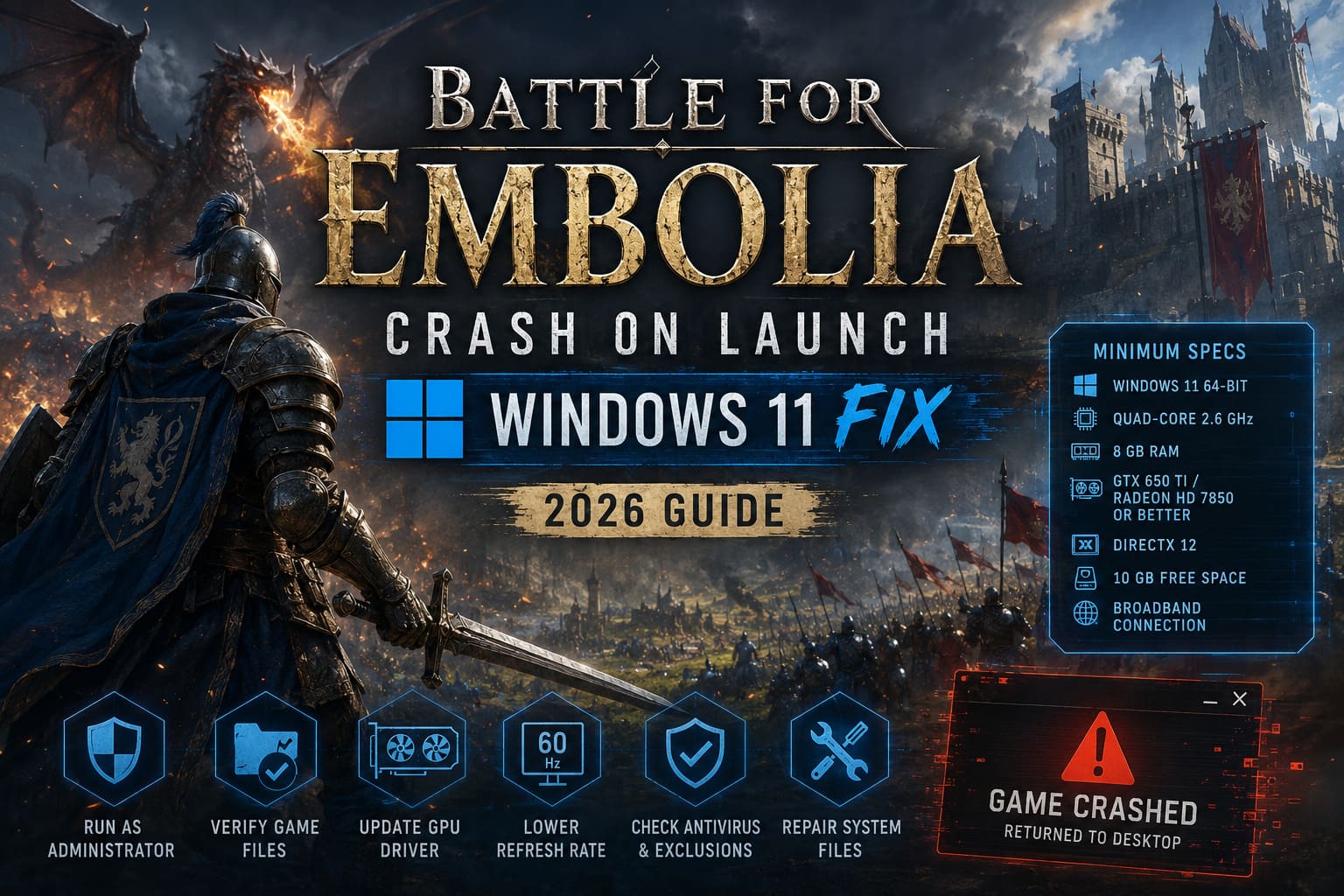
Here’s a quick overview.
| Component | Minimum Requirement |
|---|---|
| Operating System | Windows 11 64-bit |
| Processor | Quad-Core 2.6 GHz |
| Memory | 8 GB RAM |
| Graphics Card | GTX 650 Ti / Radeon HD 7850 or Better |
| Graphics API | DirectX 12 |
| Storage | 10 GB Free Space |
| Internet | Broadband Connection |
If your PC comfortably exceeds these specs, chances are the crash comes from software rather than hardware.
Launch the Game with Administrator Rights
This is surprisingly effective for indie games.
Windows 11 has become increasingly strict about file permissions, especially when games try to write configuration files during their first launch. If those permissions fail, the executable may simply terminate without displaying an error.
Here’s what I usually do:
- Open your Steam Library.
- Browse the game’s local files.
- Locate the main executable.
- Open Properties.
- Enable Run this program as administrator.
- Apply the changes.
If your system still refuses to cooperate, testing Windows 8 Compatibility Mode is worth a try. I normally don’t leave compatibility mode enabled forever, but it’s useful for identifying whether Windows itself is causing initialization problems.
Verify the Steam Installation
One thing I’ve learned after countless Steam releases is that downloads aren’t always perfect.
I’ve had games crash because a single archive failed verification during installation, especially after large updates.
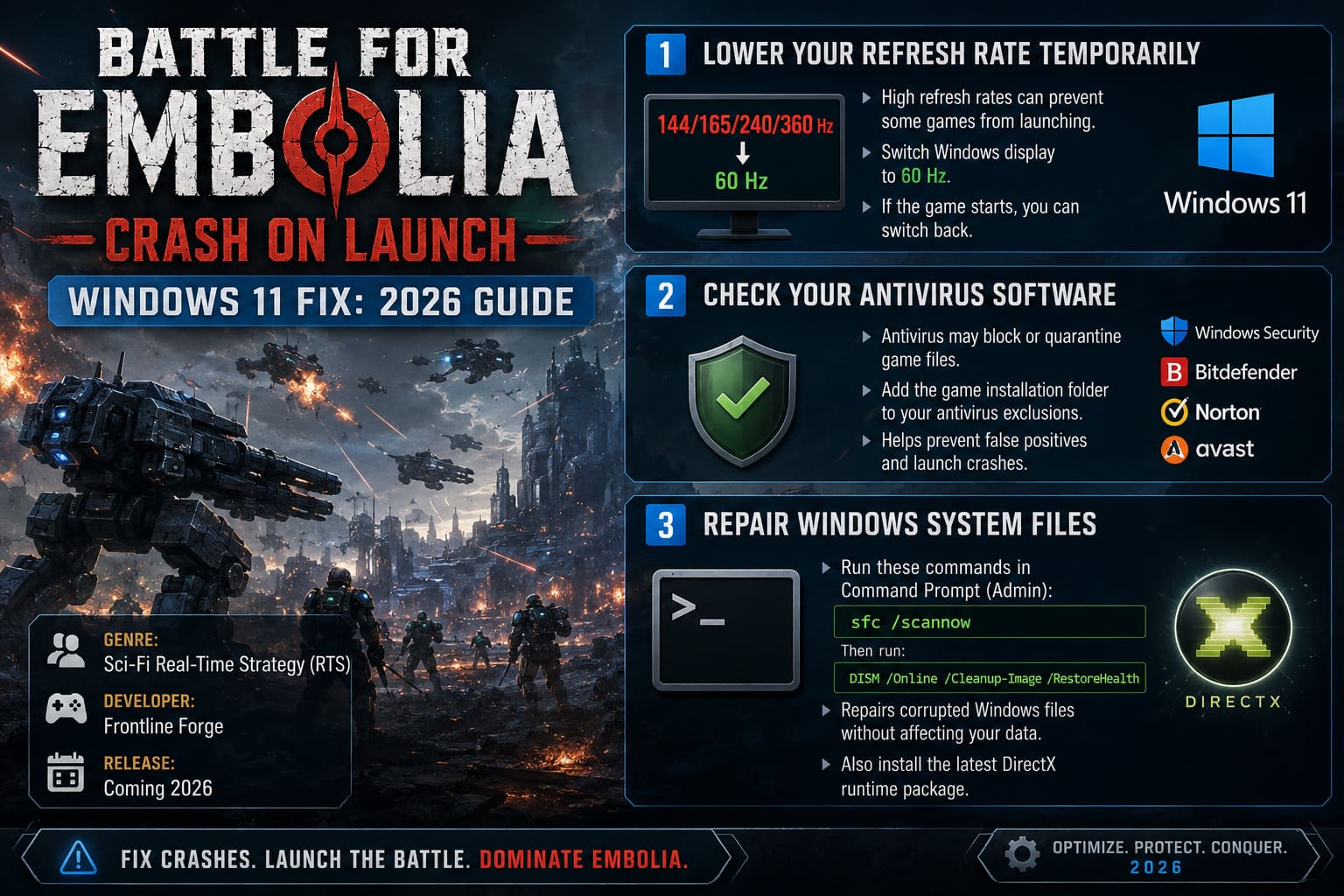
Fortunately, Steam makes this easy.
Simply verify the integrity of the installed files. Steam compares every important file against its servers and replaces anything that’s missing or corrupted automatically.
This process only takes a few minutes and has solved launch problems for me more times than I can count.
Update Your GPU Driver — Or Perform a Clean Installation
Many people install the newest graphics driver and assume the job is finished.
Unfortunately, Windows graphics drivers sometimes carry old settings and registry entries from previous versions, creating conflicts with brand-new game engines.
Whenever I encounter persistent launch crashes, I skip the quick update and perform a completely clean installation.
The process usually looks like this:
- Remove the existing driver using Display Driver Uninstaller (DDU) in Safe Mode.
- Restart Windows.
- Install the latest stable driver directly from NVIDIA or AMD.
- Reboot once more before launching the game.
It takes longer than a normal update, but I’ve seen it eliminate random DirectX crashes in numerous games.
Adjust Windows Graphics Settings
Windows 11 includes several graphics optimization features that are supposed to improve performance.
Ironically, these same features occasionally prevent games from launching correctly.
The first setting I experiment with is Hardware-Accelerated GPU Scheduling (HAGS).
If it’s enabled, disable it temporarily.
If it’s disabled, enable it instead.
There’s no universal answer because different driver versions behave differently.
While you’re inside Windows Graphics Settings, it’s also worth assigning Battle for Embolia to the High Performance graphics profile.
Doing so forces Windows to prioritize the dedicated GPU instead of relying on automatic selection.
Lower Your Refresh Rate Temporarily
This solution sounds strange until you’ve experienced it firsthand.
I’ve seen several games fail during startup simply because they attempted to initialize on ultra-high refresh rate monitors.
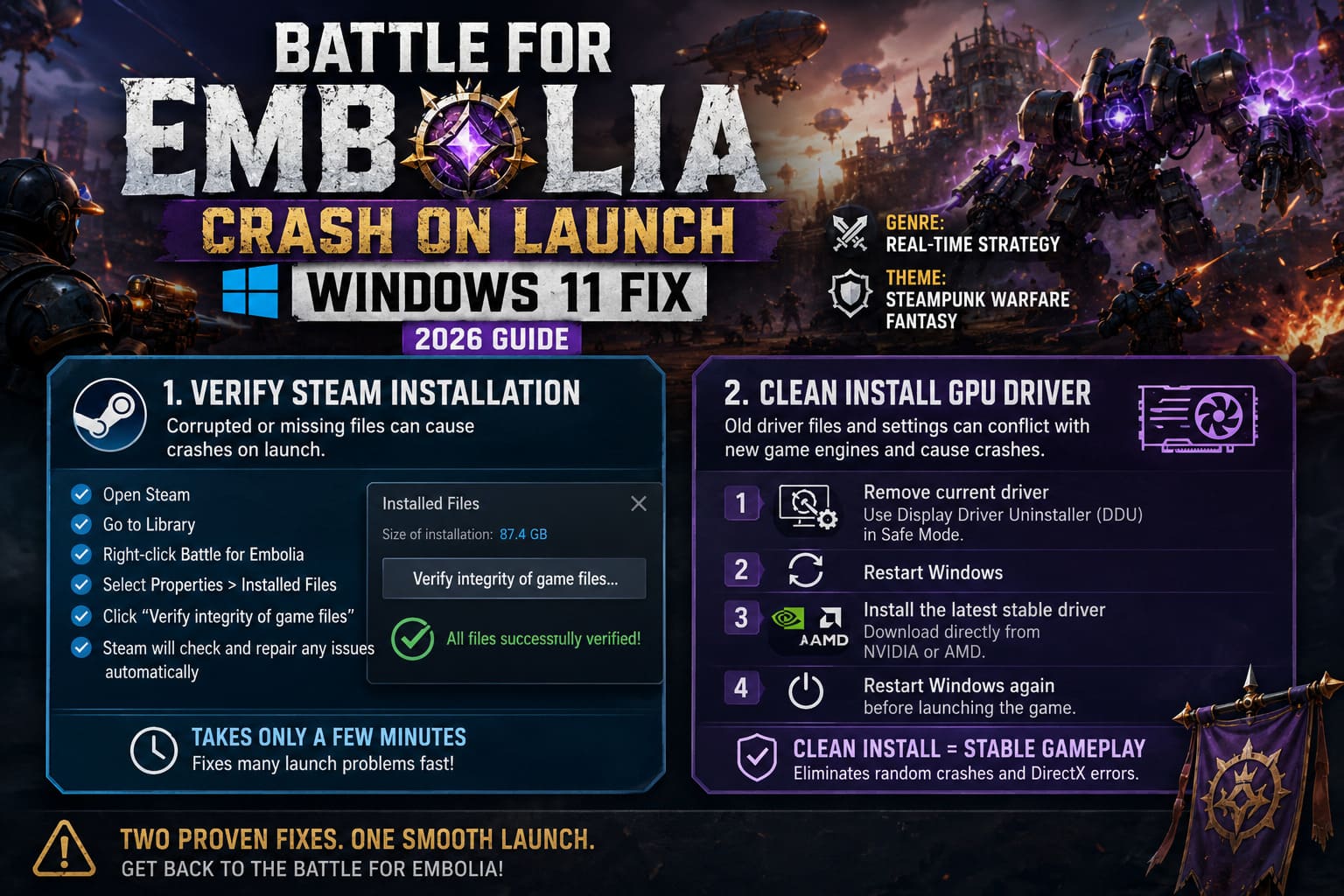
If you’re using:
- 144 Hz
- 165 Hz
- 240 Hz
- 360 Hz
Try switching Windows to 60 Hz just long enough to test whether the game launches.
If it starts successfully, you can usually return to your preferred refresh rate afterward.
It’s certainly not the most common fix, but it’s one I’ve personally used more than once.
Check Your Antivirus Software
Security software has become much more aggressive over the past few years.
Brand-new indie games sometimes trigger behavioral protection because the executable hasn’t yet built a widespread reputation.
Windows Security, Bitdefender, Norton, Avast, and several other antivirus suites may silently quarantine or restrict important game files.
Whenever a game crashes immediately after pressing Play, I always verify that the installation folder has been added to the antivirus exclusion list.
This simple step has prevented countless false positives on my own system.
Repair Windows System Files
Sometimes the game isn’t actually broken.
Windows itself is.
If DirectX libraries or system components become damaged, every game using those files can begin crashing in similar ways.
Two built-in Windows commands have rescued my installation more than once:
sfc /scannowAfter that finishes, run:
DISM /Online /Cleanup-Image /RestoreHealthThese utilities repair corrupted operating system files without affecting your personal data.
It’s also worth installing the latest DirectX runtime package if you suspect missing runtime libraries are involved.
Disable Background Overlays
One lesson I’ve learned after years of PC gaming is that overlays love causing conflicts.
I normally disable every unnecessary overlay before blaming the game itself.
- Steam Overlay
- Discord Overlay
- Xbox Game Bar
- MSI Afterburner OSD
- RivaTuner Statistics Server
- RGB control software
- GPU monitoring utilities
Each overlay injects code into the game process, and occasionally one of them prevents successful startup.
Testing with a completely clean background environment often makes troubleshooting much easier.
Battle For Embolia Class Guide 2026: Best Characters, Weapons, and Builds
Restart Before Every Major Test
This might sound overly simple, but it’s a habit I’ve developed over the years.
Changing multiple settings without restarting Windows makes it difficult to determine which adjustment actually fixed the issue.
Instead, I change one setting, reboot, and test again.
It’s slower, but it produces much more reliable results and avoids creating new problems while chasing the old ones.
Battle For Embolia PvP Guide: Top Mechanics, Combat Strategies, and Meta Build Tips
Final Thoughts
After troubleshooting hundreds of PC games over the years, I’ve realized that launch crashes almost always come down to a handful of recurring causes: damaged game files, outdated graphics drivers, Windows permission issues, security software interference, or graphics configuration conflicts.
Battle for Embolia is no exception.
The good news is that most players won’t need to perform every fix listed above. In my experience, verifying the Steam installation, running the game as administrator, performing a clean graphics driver installation, and checking Windows Security exclusions solve the majority of startup problems.
As the developers continue releasing patches, compatibility should improve naturally. Until then, working through these solutions methodically gives you the best chance of getting back into Embolia without spending another evening staring at your desktop instead of the game world.