A Game About Chopping Trees Multiplayer Co-Op Guide & Full Walkthrough (2026)
Most new games try to grab your attention with explosions, endless combat, massive skill trees, or another open world packed with objectives. Every once in a while, though, a title appears that succeeds by doing the complete opposite.
After spending several evenings streaming A Game About Chopping Trees, I realized why so many people kept recommending it. At first glance, it looks almost too simple. You cut trees, sell logs, improve your tools, and keep expanding your little corner of the forest. That’s it.
But after a few hours, something interesting happens—you stop rushing. You stop thinking about efficiency every second. Instead, you start enjoying the rhythm.
As someone who plays dozens of new releases every year, I honestly didn’t expect a game centered around chopping trees to keep me entertained for this long. Yet here I am, still jumping back in with friends because the gameplay loop is surprisingly satisfying.
If you’re wondering whether it’s worth playing in co-op or you’re looking for tips before starting, here’s everything I learned during my time with the game.
First Impressions
From the moment you load into the world, it’s obvious that the developers weren’t trying to create another survival simulator.
- No hostile creatures
- No hunger or thirst meters
- No countdown timers
- No forced PvP
- No constant pressure to optimize every second
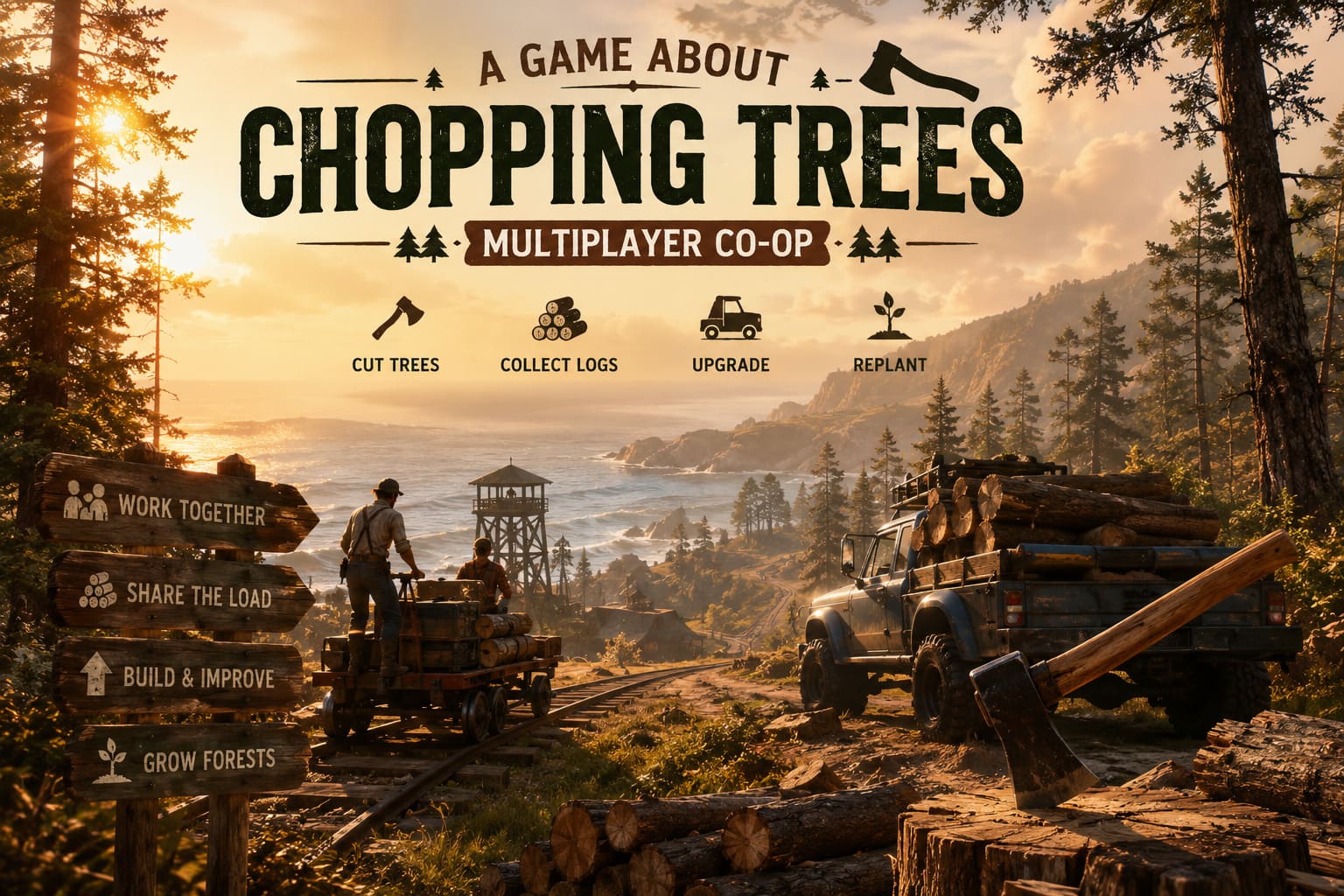
Instead, you’re dropped into a peaceful forest with one objective—build your own lumber operation while restoring nature instead of destroying it.
That balance is what immediately stood out to me.
You aren’t simply clearing forests for profit. You’re encouraged to replant trees, expand transportation routes, and slowly improve your equipment without ever feeling punished for taking your time.
For stream sessions, that’s surprisingly refreshing because viewers can actually relax instead of watching another stressful grind.
The Gameplay Loop That Somehow Never Gets Old
The core mechanics are incredibly easy to understand, but they’re satisfying enough that you naturally keep playing “just one more trip.”
| Activity | What You Do | Why It Matters |
|---|---|---|
| Cut Trees | Fell different tree types with your axe. | Earn wood resources. |
| Collect Logs | Carry timber to your transport. | Generate income. |
| Upgrade Equipment | Improve axes, stamina, and movement. | Work faster. |
| Replant Forests | Place new saplings in cleared areas. | Maintain long-term resources. |
Nothing here is revolutionary.
The difference is how polished every small interaction feels.
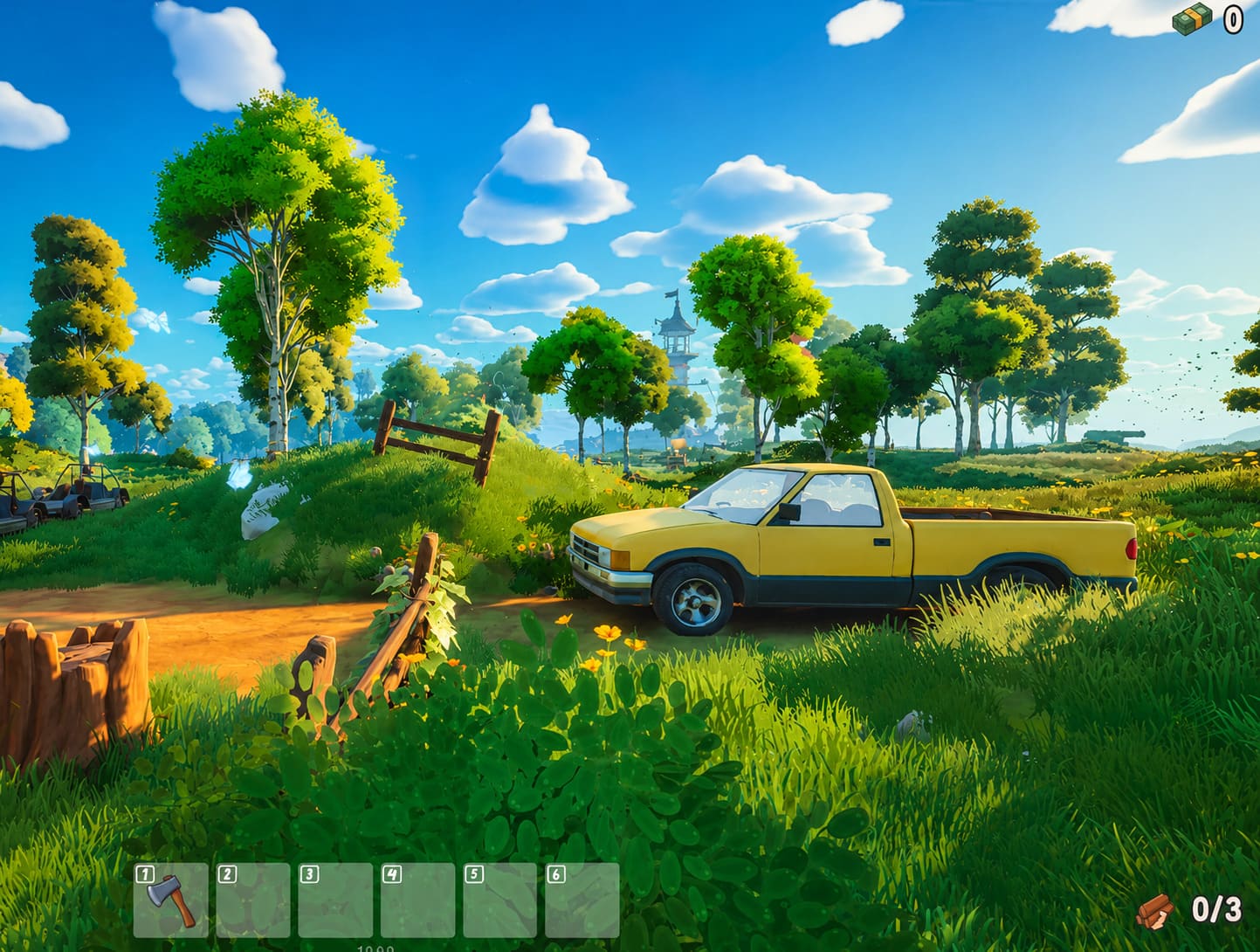
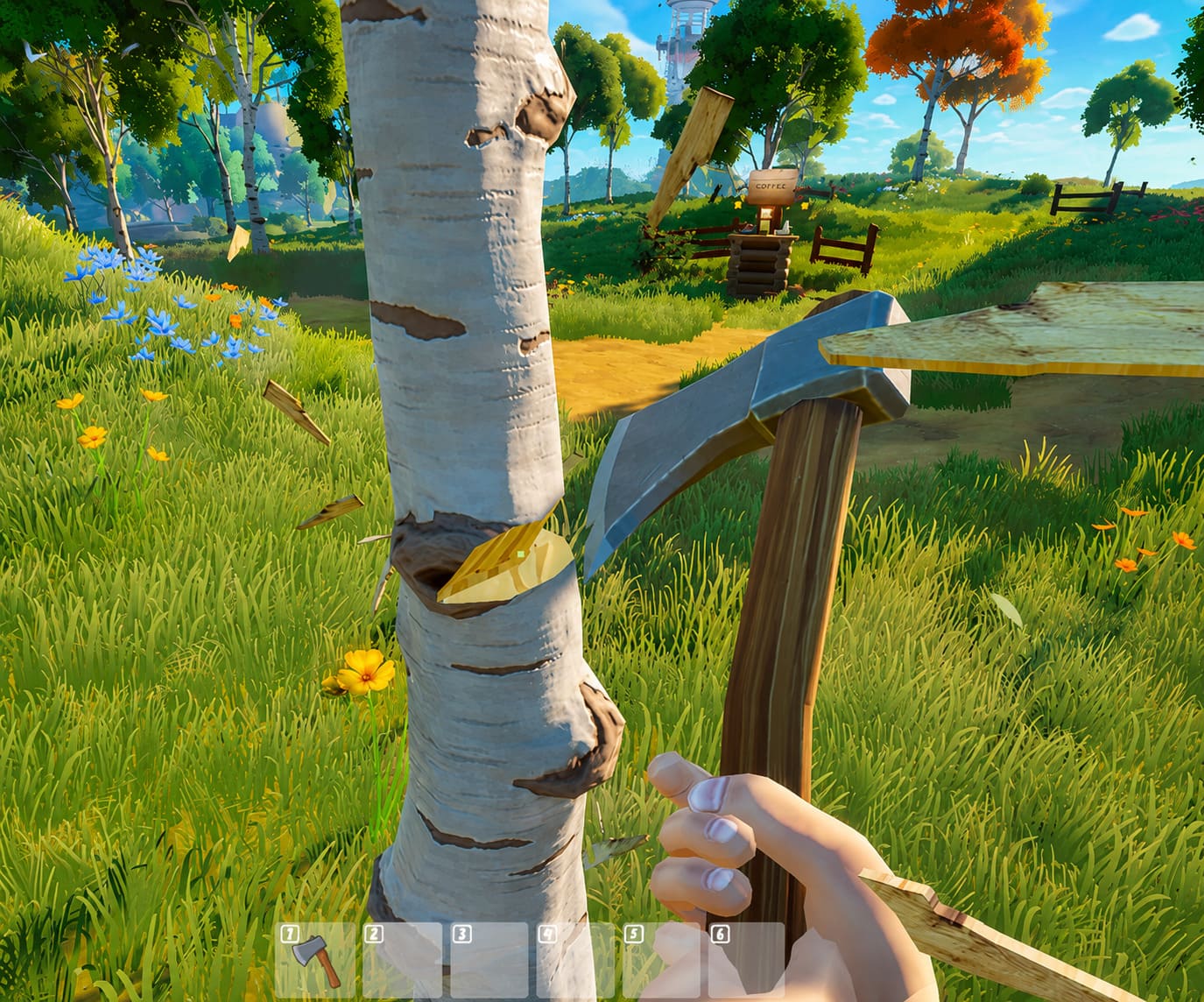
Landing clean axe swings, hearing the tree crack before it falls, loading logs onto your vehicle, then watching your money slowly increase creates an oddly relaxing gameplay rhythm.
It’s one of those games where progression feels natural rather than forced.
Why Co-Op Is Easily the Best Way to Play
I spent several hours playing solo before inviting a friend.
The difference was massive.
This isn’t because multiplayer adds completely new mechanics.
Instead, every existing mechanic becomes smoother once two people split responsibilities.
One of my favorite decisions from the developers is giving every player their own economy.
That means:
- Everyone earns their own money.
- Upgrade choices remain completely independent.
- Nobody argues about spending shared resources.
I’ve played enough co-op games where one teammate accidentally buys something expensive and slows everyone else down.
Thankfully, that problem simply doesn’t exist here.
If I want to invest everything into a powerful axe while my teammate upgrades carrying capacity and movement speed, both strategies work perfectly.
It encourages specialization instead of competition.
My Favorite Team Strategy
After experimenting with different approaches, this setup consistently produced the best results.
Player One: The Lumberjack
This player focuses almost entirely on cutting speed.
Priority upgrades include:
- Axe sharpness
- Swing speed
- Reduced stamina usage
The goal is simple.
Keep moving from tree to tree without stopping.
Leave the cleanup for your teammate.
Player Two: The Transport Expert
Meanwhile, the second player becomes the logistics manager.
Their priorities are:
- Faster movement
- Better stamina recovery
- Larger carrying capacity
- Vehicle improvements
Instead of waiting for the lumberjack, they continuously collect and organize logs before transporting them to the sawmill.
It sounds basic, but eliminating downtime makes progression noticeably faster.
More importantly, it keeps both players busy instead of standing around waiting.
Transportation Is More Important Than You Think
Early on, I underestimated just how much time you spend moving logs around.
Eventually I realized that transportation upgrades save more time than another small axe improvement.
Handcar
The railway handcar becomes your primary travel method early in the game.
I honestly love this thing.
Rather than pressing one button and watching a loading screen, both players physically operate the vehicle.
One person pumps the handles while the other manages cargo.
It’s surprisingly immersive.
The slow pace also gives you time to appreciate the scenery, discover new areas, and simply enjoy the soundtrack.
Pickup Truck
Later, you unlock a pickup truck that completely changes how larger operations work.
Once this becomes available, transporting massive loads becomes significantly easier.
Combined with additional railway infrastructure, it dramatically reduces travel time between harvesting zones and the sawmill.
Walkthrough: Progressing Through Every Major Area
Starting Forest
The opening area serves as your training ground.
Don’t rush through it.
Instead, focus on learning stamina management.
Smaller trees fall quickly, meaning you can build your first savings without exhausting your character.
My recommendations:
- Upgrade stamina efficiency before anything else.
- Improve axe sharpness as early as possible.
- Buy saplings before leaving.
Replanting early saves time later if you ever return.
Autumn Forest
This region introduces noticeably stronger trees.
If you’re still using basic equipment, every tree starts feeling like a chore.
Before moving deeper into the map, I strongly recommend upgrading your axe.
Playing co-op helps here because one player can continue harvesting while the other builds railway extensions toward new logging locations.
This was the point where our sessions became much smoother.
The longer transportation distances make proper logistics essential.
Coastal Cliffs
The final major biome ended up being my favorite visually.
The ocean backdrop combined with fog creates some fantastic screenshots.
It also introduces terrain that changes how you harvest.
Instead of carrying logs uphill, simply position your transport vehicle lower on the slope.
Once the tree falls, gravity handles most of the work.
It’s a small detail, but moments like this make the physics system surprisingly enjoyable.
The developers also improved the sound effects here.
After a while, you begin recognizing exactly when a tree is about to collapse simply by listening to the cracking wood.
That little bit of audio feedback makes harvesting feel more satisfying than I expected.
Beginner Tips That Saved Me Hours
If you’re just starting, these are the biggest lessons I learned.
- Don’t spam swings. Missing still drains stamina, so taking an extra half-second to line up each hit is actually faster.
- Upgrade stamina early. More swings without stopping always beats slightly higher damage during your first few hours.
- Keep replanting trees. You’ll appreciate having nearby resources later instead of running across the map.
- Split responsibilities. Trying to have both players perform every task slows everything down.
- Invest in transportation. Your future self will thank you once harvesting areas become much larger.
What I Loved Most
The atmosphere deserves special praise.
There are moments where nothing “exciting” happens.
You’re simply walking through the woods with soft ambient music playing while sunlight filters through the trees.
Normally that would sound boring.
Instead, it became one of the reasons I kept launching the game after finishing streams.
The dedicated relaxation spots along the coastline also deserve recognition.
Stopping to make tea while watching the sunset sounds almost ridiculous on paper.
In-game?
It somehow works.
Few games today are comfortable enough to encourage players to slow down instead of constantly chasing objectives.
Is It Perfect?
Not quite.
Players looking for action, combat, or complex progression systems may lose interest fairly quickly.
The gameplay intentionally repeats itself.
Fortunately, that’s also the game’s biggest strength.
If you enjoy relaxing simulators like farming games, management sandboxes, or peaceful exploration titles, repetition becomes part of the experience rather than a flaw.
I also think the game reaches its full potential with a friend.
Solo play is enjoyable, but cooperative sessions create memorable moments that simply don’t happen alone.
Final Thoughts
After covering countless new releases this year, A Game About Chopping Trees ended up being one of the biggest surprises I’ve streamed.
It never tries to overwhelm you with unnecessary systems.
Instead, it focuses on making every small interaction enjoyable.
Every chopped tree, every upgraded tool, every completed railway line, and every quiet trip through the forest feels rewarding because the game never rushes you.
Not every release needs giant boss fights or endless action to leave an impression.
Sometimes all it takes is a peaceful forest, a reliable axe, a good friend, and a few uninterrupted hours where the only thing on your mind is deciding which tree to chop next.
If you’ve been searching for a relaxing co-op experience that rewards teamwork without adding unnecessary pressure, this is easily one of the standout indie games of 2026—and one I genuinely expect to keep returning to long after the next wave of blockbuster releases arrives.