Shadow Dungeon (OO Cat) Beginner Guide: Essential Tips, Tricks, and Strategies (2026)
There are games you play for an hour and completely forget, and then there are games like Shadow Dungeon that make you say, “Okay, one more run,” at 2 AM. OO Cat’s new retro-inspired action RPG caught me off guard in the best possible way. It looks simple at first glance, with its pixel-art presentation and old-school dungeon-crawling atmosphere, but underneath that nostalgic surface is a surprisingly demanding game.
I’ve spent enough time crawling through its dark corridors to learn one important lesson: Shadow Dungeon is not really interested in making you feel powerful early on. It wants you to earn it.
The traps are nasty, enemies have very different resistances, visibility becomes a genuine gameplay problem, and rushing into deeper levels without preparation is basically asking for trouble.
So, if you’re just starting your first character, here’s the advice I wish someone had given me before I started throwing away perfectly good runs.
Why Shadow Dungeon Is Harder Than It Looks
The basic idea is familiar. You explore increasingly dangerous dungeon levels, fight monsters, collect equipment, improve your character, and push deeper toward increasingly difficult Sentinels.
The twist is that almost every part of the dungeon can punish careless play.
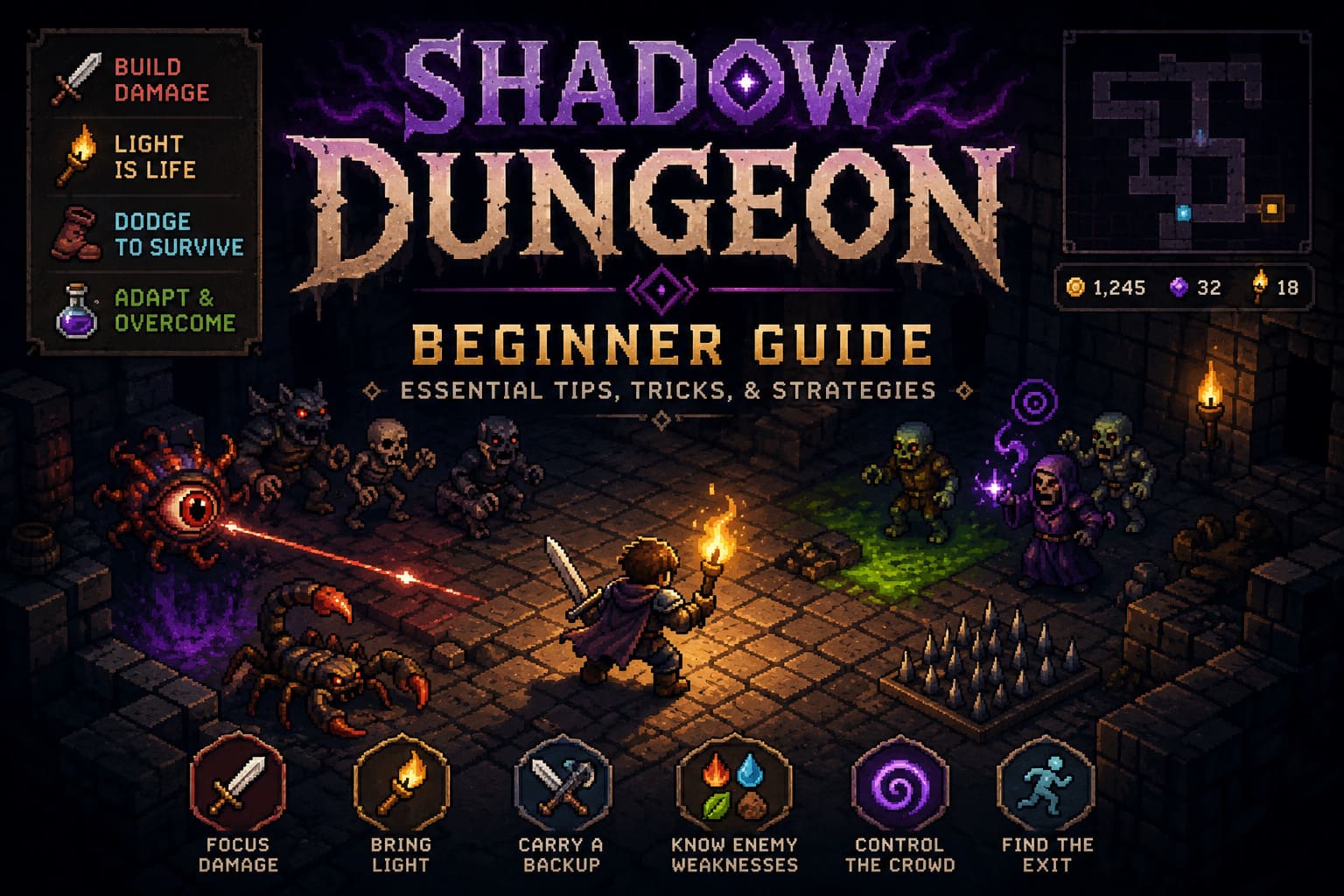
You aren’t simply walking from room to room and clicking enemies until they disappear. Positioning matters. Light matters. Elemental damage matters. Your equipment matters. Even knowing when not to fight can save a run.
The game uses a hybrid movement system that combines grid-based exploration with freer combat movement. Personally, I really like this approach. It gives Shadow Dungeon that classic dungeon-crawler feeling without making combat feel painfully slow.
And once the game starts throwing groups of enemies, hazards, and ranged attackers at you simultaneously, the simple-looking combat system suddenly becomes much more interesting.
Your First Priority: Build for Damage
One of the biggest beginner mistakes is trying to create a perfectly balanced character.
I understand the temptation. You see defensive stats, offensive stats, mobility options and elemental abilities, and your first instinct is probably to spread everything around.
Don’t.
At least during the early game, I strongly recommend specializing.
A dead enemy cannot apply Bleed, Blight, or any other nasty status effect. This makes early offensive investment much more valuable than it might initially appear.
If you’re playing a physical character, lean into damage and attack efficiency. If you’re building around magic, start developing the elemental direction that fits your preferred playstyle.
Mobility is another excellent investment. Being able to reposition quickly is incredibly valuable once dungeon rooms become crowded.
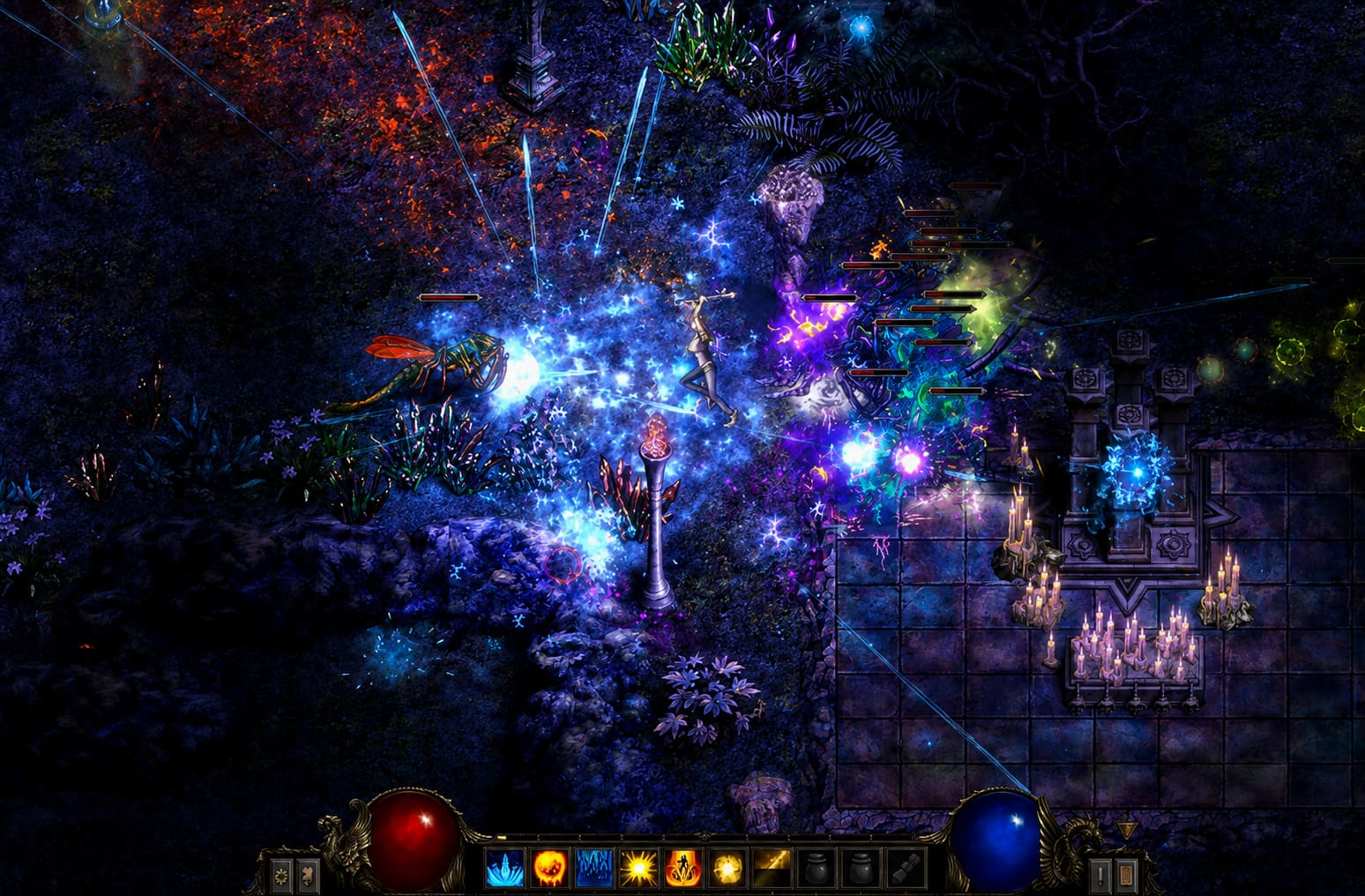
My Early-Game Priority
| Priority | What I Recommend | Why |
|---|---|---|
| 1 | Damage | Faster kills mean fewer opportunities for enemies to hurt you |
| 2 | Mobility | Makes dodging and positioning much easier |
| 3 | Accuracy | Particularly useful for magic-focused builds |
| 4 | Defense | Important later, but less impressive during the opening levels |
This doesn’t mean defensive stats are useless. Far from it. I just wouldn’t sacrifice your ability to kill things quickly in the first few levels.
Never Underestimate Light
This is probably my number-one piece of Shadow Dungeon beginner advice.
Bring torches. Seriously.
The deeper you go, the more important your light level becomes. Darkness isn’t just an atmospheric effect. It directly affects how safely you can explore.
Low visibility can reduce your combat effectiveness while also making encounters more dangerous. The deeper sections of the dungeon can feel completely different when you’re running around with barely enough light to see what’s in front of you.
I always try to enter a serious run with a healthy supply of torches and vision-related consumables.
It may feel wasteful to spend money on them early, but losing an entire run because you decided to save a few coins is considerably more expensive.
Treat light as part of your equipment, not as decoration.
That mindset alone makes the dungeon much more manageable.
Don’t Bring Only One Weapon
Another lesson I learned the hard way: your best weapon isn’t necessarily your best weapon for the entire dungeon.
Equipment can suffer from durability issues, especially when you’re constantly using heavier attacks and abilities. Even if you have a weapon that feels unstoppable at the beginning of a run, relying on it exclusively can leave you in a terrible position later.
I recommend keeping a backup weapon with respectable damage.
It doesn’t have to be perfect. It just needs to be good enough to get you through an emergency.
Personally, I like keeping my strongest weapon in reserve whenever I know I’m approaching an important encounter. There is nothing worse than reaching a major Sentinel and realizing your primary weapon has been worn down from clearing random mobs.
Learn Enemy Weaknesses Instead of Fighting Everything the Same Way
This is where Shadow Dungeon really starts to show its RPG depth.
Different enemies have different elemental properties and resistances. If you’re constantly hitting everything with the same attack because it happens to be your strongest ability, you’re leaving damage on the table.
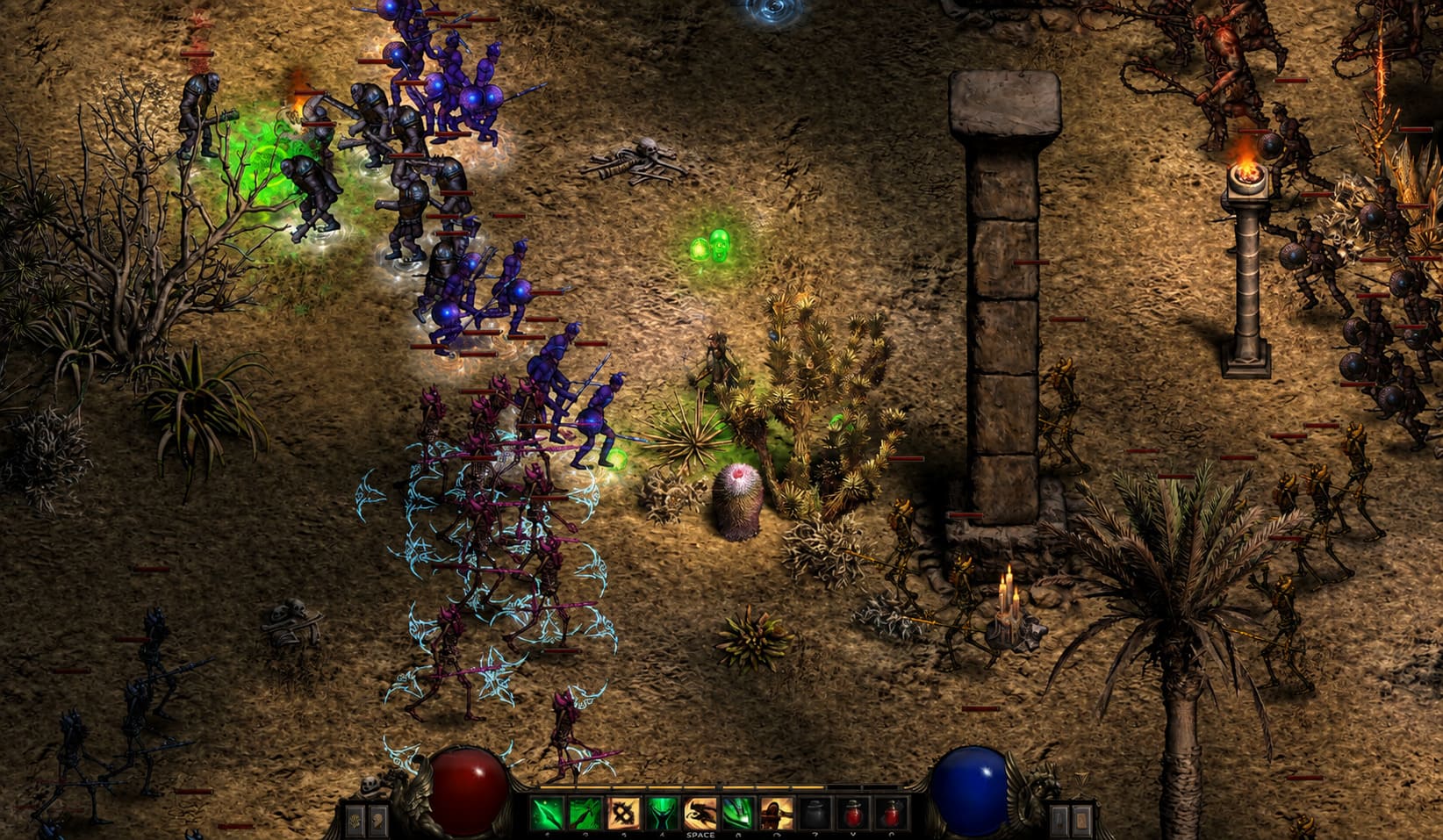
The deeper you progress, the more obvious this becomes.
A build that destroys one type of enemy can suddenly feel terrible against another. That’s not necessarily a problem with your character. It’s the game’s way of encouraging you to adapt.
I recommend carrying a small selection of different offensive options whenever possible.
You don’t need ten different spells or weapons. You just want enough flexibility to avoid being completely countered by one resistance type.
The Sentinel Problem
The level 10 and level 20 Sentinels are particularly important progression checks.
The final encounters aren’t simply tests of how much health you have. Some bosses can recover enormous amounts of health, meaning your damage output has to be high enough to overcome their sustain.
One commonly discussed benchmark is around 1,400 Earth Damage for the final Sentinel encounter.
I wouldn’t treat that number as a magical rule that guarantees victory, because your exact build and execution obviously matter. But it is a useful warning: don’t arrive at the final stages assuming raw survival will carry you through.
You need a real damage plan.
Use Fear and Confusion to Control Crowds
Some of the most satisfying moments I’ve had in Shadow Dungeon came from realizing that I didn’t actually need to kill every enemy myself.
Mind Vision Potions combined with effects such as Terror or Psionic abilities can completely change the way a crowded room plays out.
Instead of charging into a group and trying to survive a chaotic melee, you can disrupt the enemies first.
If the monsters scatter, turn on each other, or lose their formation, you suddenly have breathing room.
That extra few seconds can be the difference between a clean victory and watching your entire run collapse.
Crowd control is not a luxury. In the deeper dungeon, it’s survival equipment.
Let Ranged Enemies Kill Their Friends
Here’s one of those little tricks that makes the game feel much smarter than it initially looks.
Certain ranged enemies, including Evil Eye and Scorpio-type monsters, can potentially hit their own allies with projectile attacks.
So why stand in the middle of a room and absorb everything?
Use the environment.
Narrow corridors and awkward corners can be your best friends. If you position yourself correctly, melee enemies can block movement while ranged enemies continue firing.
The result is exactly what you want: enemies damaging each other while you stay out of unnecessary danger.
This is particularly useful when you’re underpowered for the current floor.
If the dungeon gives you an opportunity to make monsters fight each other, take it.
Dodge First, Attack Second
Shadow Dungeon’s dodge mechanic is one of the most important combat tools for new players to learn.
When a room starts filling with enemies, panic attacking usually makes things worse. You get surrounded, take unnecessary hits, and suddenly you’re burning through healing items.
Instead, learn the rhythm:
Dodge → reposition → attack.
The temporary invulnerability from a well-timed dodge gives you a small window to escape dangerous situations.
I’ve found that this is especially effective in tight rooms where several enemies are trying to occupy the same space.
Don’t think of dodge as an emergency button.
Think of it as part of your normal attack rotation.
Should You Fully Clear Every Dungeon?
Early on, yes.
Later, not always.
For the first several stages, I usually recommend clearing as much as possible. The experience, tokens, gold, and consumables help accelerate your progression, and the early rooms are generally manageable enough to justify the extra time.
Once you start reaching the deeper levels, the calculation changes.
Light becomes more expensive to maintain, enemies become more dangerous, and exploration itself starts consuming resources.
At that point, finding the exit can be more valuable than killing one more random group of monsters.
My general approach would be:
- Early stages: Explore and farm.
- Mid-game: Balance exploration with resource conservation.
- Deep stages: Prioritize progression and the exit.
This is one of those mechanics I really appreciate because it prevents every run from becoming a mindless full-clear routine.
Watch the Floor Before You Walk
Some of the dungeon’s hazards are deliberately easy to miss.
Acid pools and suspicious-looking tiles can turn a successful run into a disaster surprisingly quickly. Certain environmental hazards can damage your equipment as well as your character.
My rule is simple:
If the floor looks strange, don’t immediately walk over it.
Use a ranged ability or another safe method to investigate suspicious areas whenever possible.
It might sound overly cautious, but this is exactly the kind of habit that saves equipment during long runs.
Don’t Waste Mapping Scrolls
Mapping Scrolls are another resource I would treat as premium equipment.
It’s tempting to use one as soon as you become slightly confused. I get it. Nobody enjoys wandering through a dark maze while trying to remember which hallway they’ve already explored.
But later levels can become significantly more complicated, with hidden routes, strange layouts, invisible pathways, and traps.
That’s where mapping tools become incredibly valuable.
If you’re pushing toward the deepest levels, I’d personally keep at least three mapping scrolls available for the late-game stages, particularly around stages 22–24.
Saving consumables is one of the hardest habits for new RPG players to learn, but Shadow Dungeon rewards it heavily.
Gold Farming: Don’t Be Afraid of the Dark
This is probably my favorite unusual trick.
Darkness can be dangerous, but it can also be profitable.
Some players use low-light conditions to increase their chances of getting better rewards from treasure sources. If you’re experimenting with this strategy, the safest approach is to clear the enemies first, then manipulate your light level while opening treasure, and restore visibility immediately afterward.
The important part is not getting greedy.
The extra loot isn’t worth dying for.
And honestly, this is one of the reasons I enjoy Shadow Dungeon. Even something as simple as opening a chest can become a small strategic decision rather than an automatic interaction.
What Should You Do With Old Equipment?
Don’t fill your inventory with junk because you’re worried you might need it later.
You probably won’t.
Selling, melting, or refining outdated equipment can provide useful materials for upgrading your more important gear.
Instead of carrying five mediocre weapons, I’d rather have one strong primary weapon, one dependable backup, and enough consumables to handle an unexpected situation.
Inventory space should support your build, not become a museum of old gear.
Those crafting materials can become particularly useful when you’re preparing for stronger elemental-focused encounters.
Aliens Fireteam Elite 2 Steam Deck OLED Best Settings for Smooth 45FPS
My Recommended Beginner Loadout
If I were starting a fresh character today, this is roughly what I’d want before entering a serious dungeon run:
| Item | Suggested Amount | Purpose |
|---|---|---|
| Torches | 10+ | Maintain visibility |
| Antidotes | 3+ | Handle dangerous status effects |
| Mapping Scrolls | 3 reserved | Save for deep levels |
| Backup Weapon | 1 | Emergency damage option |
| Vision Potions | Several | Improve exploration and combat |
| Elemental Options | 2–3 | Deal with different resistances |
You don’t need to follow this table like a strict formula. Your build and playstyle will naturally change the ideal setup.
But as a starting point, it’s much better than entering the dungeon with a backpack full of random loot and three healing potions.
Final Thoughts From My Runs
What I like most about Shadow Dungeon is that it rewards players who actually pay attention.
The pixel-art presentation initially made me expect something much simpler. Instead, OO Cat has built a dungeon crawler where small decisions matter.
Do I fight this group or sneak past?
Do I spend a torch now?
Is that floor tile safe?
Should I use my strongest spell here or save it?
Can I force those ranged enemies to hit their own allies?
Do I really need to explore this room?
Those questions are what make the dungeon memorable.
My biggest advice is to stop treating every run like a race. Learn the enemy patterns, understand elemental weaknesses, manage your light, conserve your best resources, and get comfortable with dodging.
And don’t be embarrassed by failed runs. Some of my most useful discoveries came immediately after getting absolutely destroyed by something I thought would be easy.
Shadow Dungeon is at its best when you start feeling like you’ve learned the dungeon rather than simply leveled past it.
And that’s when Shadow Dungeon gets really addictive.
If you’re heading into your first serious run, prioritize damage, mobility, light management, enemy weaknesses, and resource conservation. Once those fundamentals become second nature, the deeper levels stop feeling like an unfair maze and start feeling like a puzzle you can actually solve.
And that’s exactly what makes Shadow Dungeon worth coming back to.