1666: Amsterdam Full Story Explained – From Cancellation Drama to 2026 Release
There are some video games that disappear and are eventually forgotten. Then there are games like 1666: Amsterdam, projects that somehow become more interesting the longer they remain missing.
After more than a decade of development drama, legal battles, corporate fallout, and an almost unbelievable amount of waiting, Patrice Désilets’ long-lost project is finally becoming a real game that players can actually experience. And after spending time with what has been shown of the project, my biggest reaction isn’t simply “It’s finally here.” It’s more complicated than that.
1666: Amsterdam feels like a game that has been waiting for the industry to catch up with its original idea.
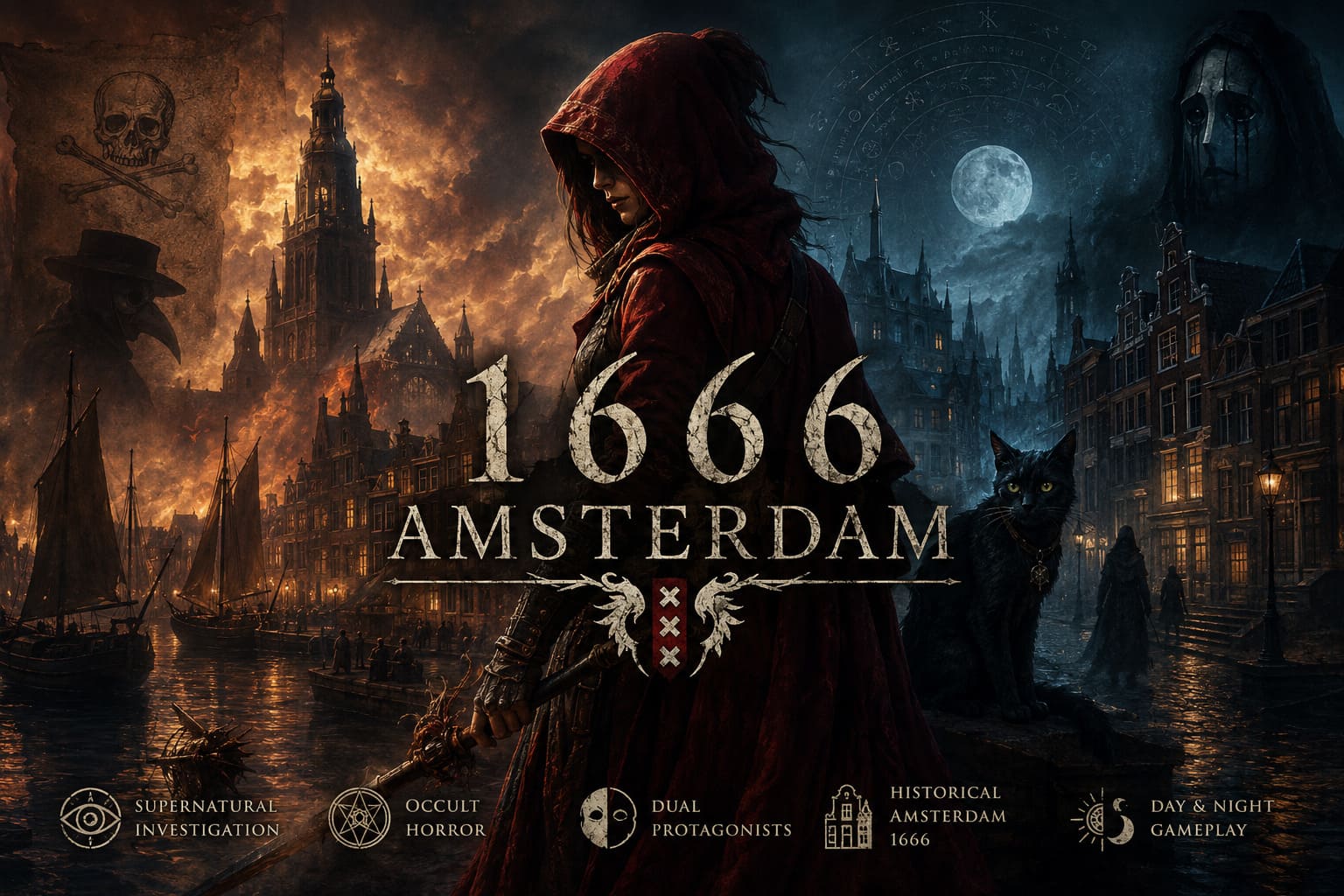
I’ve played enough historical open-world games to know that simply putting a game in a beautiful old city isn’t enough anymore. We’ve seen Renaissance Italy, Victorian London, ancient Greece, feudal Japan, medieval Europe, and countless fictional versions of historical locations. What makes 1666: Amsterdam interesting is the decision to combine that historical immersion with occult horror, supernatural investigation, animal control, and a deliberately strange dual-protagonist structure.
It sounds ambitious. Maybe even too ambitious.
But that’s exactly why I’m interested.
A Game With One of the Craziest Development Histories
The story behind 1666: Amsterdam is almost as fascinating as the game itself.
The project originated around 2011 when Patrice Désilets was working at THQ Montreal. By that point, Désilets had already established himself as one of the most influential designers in modern action-adventure games, having played a major role in the creation of Prince of Persia: The Sands of Time and the original Assassin’s Creed games.
His new project was supposed to move away from conventional historical adventure and into something much darker.
The basic philosophy was summed up by the wonderfully provocative phrase:
“Be worse than the devil.”
That immediately tells you that 1666 was never intended to be another straightforward historical action game.
The original concept revolved around a plague-ridden Amsterdam filled with supernatural forces, strange creatures, occult powers, and characters capable of controlling animals. Even the early footage that eventually surfaced online suggested that the project was experimenting with mechanics that were wildly different from the typical sword-and-stealth formula.
Then everything collapsed.
THQ went bankrupt, Ubisoft acquired THQ Montreal, and Désilets unexpectedly found himself working for Ubisoft again. The relationship didn’t last. Development of 1666 was suspended, Désilets was dismissed, and the project entered a period of uncertainty that seemed to have no ending.
For most players, that would have been the end of the story.
It wasn’t.
Désilets fought to regain control of his intellectual property, eventually reaching a settlement with Ubisoft in 2016. The rights returned to him, and 1666 was finally free from its corporate prison.
There was just one problem.
The game still wasn’t ready to be made.
Why Ancestors Was More Important Than It Looked
After founding Panache Digital Games, Désilets didn’t immediately jump back into 1666: Amsterdam.
Instead, the studio created Ancestors: The Humankind Odyssey.
At first glance, the connection between a prehistoric survival game and a supernatural 17th-century adventure might seem almost nonexistent. But mechanically, there is an important link.
Ancestors allowed the developers to experiment with animal behavior, environmental interaction, exploration, survival systems, and controlling creatures within a living ecosystem.
Those ideas could eventually become incredibly useful for 1666.
And honestly, I think this is one of the most interesting parts of the entire development story. Instead of trying to resurrect an ambitious game using technology and design ideas that were already outdated, Désilets’ team spent years developing experience that could potentially make the original concept more achievable.
That doesn’t guarantee success.
But it does make the game’s resurrection feel much more believable.
Welcome to the Amsterdam of 1666
The setting is arguably the strongest part of the entire concept.
Amsterdam in 1666 gives the developers an extraordinary playground.
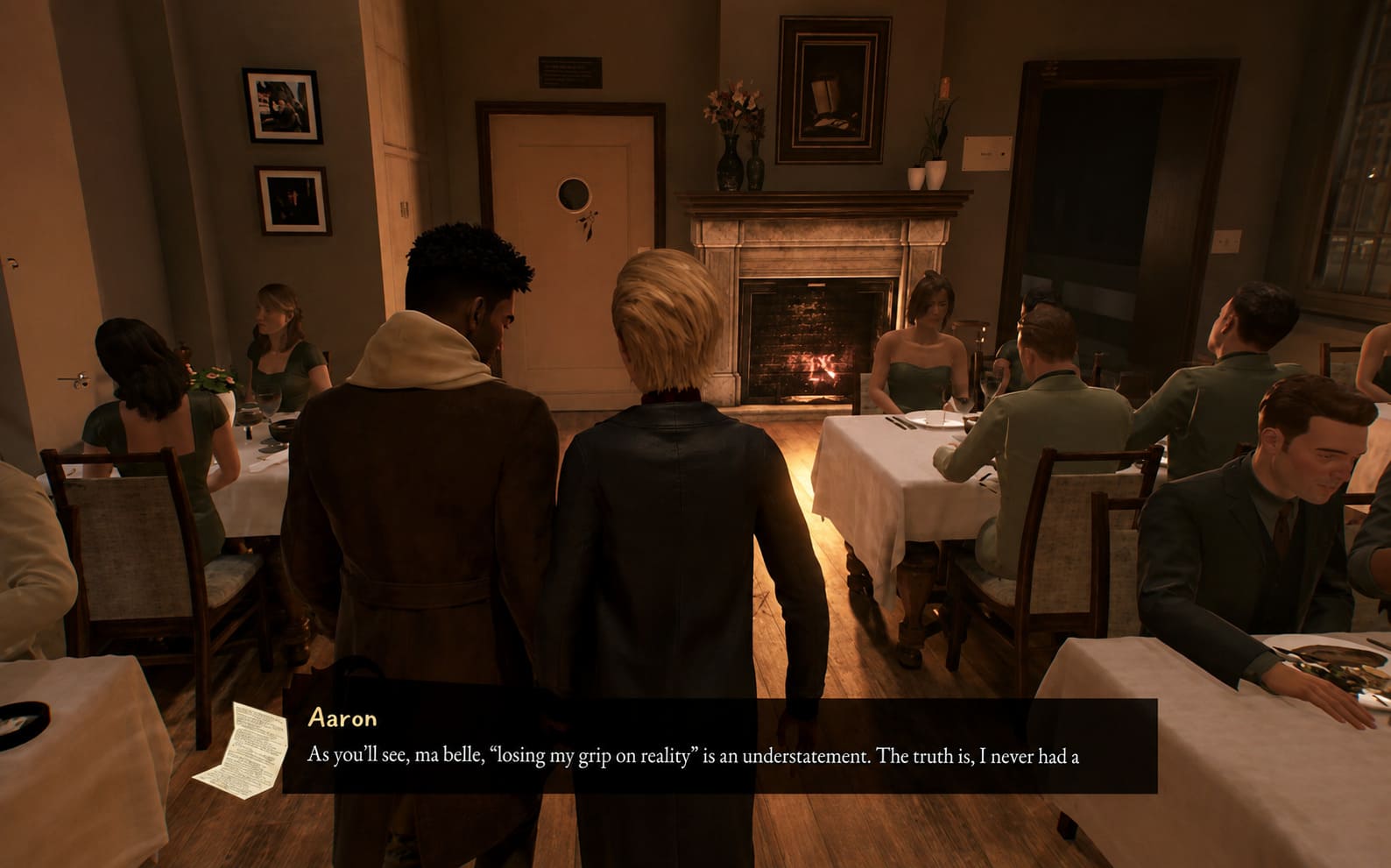
The city was wealthy, crowded, politically complicated, commercially powerful, and full of striking architecture. Instead of treating history as nothing more than decoration, 1666 attempts to use that environment as part of its supernatural mystery.
During the day, Amsterdam feels comparatively normal.
People move through the streets, merchants conduct business, guards patrol important areas, and the canals and buildings create the kind of dense urban environment that historical games can use extremely well.
But beneath that normality is something much darker.
The game introduces the Originals, supernatural entities that have manipulated human society for generations. They can hide behind ordinary human appearances, meaning that discovering who is actually dangerous becomes one of the game’s central mysteries.
This is where 1666 starts feeling less like a conventional action game and more like a combination of historical detective story and supernatural horror.
Noa and Aaron: The Gameplay Twist I Like Most
The central protagonist is Noa Brooklyn, a member of the Zaindaris and a supernatural hunter known as the Collector.
Noa is essentially the character who handles the dangerous work.
She can investigate supernatural activity, use magic, track targets, and eventually confront the Originals directly.
But then there’s Aaron.
Aaron is a man from 1999 who becomes trapped in the body of a black cat.
Yes, that’s exactly as strange as it sounds.
And surprisingly, I think the idea works.
Rather than making the second character simply another combat-focused hero, the developers use Aaron as an exploration and reconnaissance tool.
As a cat, Aaron can enter places that Noa can’t safely access. He can move through restricted areas, climb rooftops, observe conversations, sneak through small openings, and uncover information without immediately attracting attention.
That creates an interesting relationship between the two characters.
Noa investigates the supernatural world. Aaron helps her understand it.
I’ve played plenty of games where stealth characters and combat characters feel like two versions of the same mechanic. Aaron seems more interesting because his limitations are actually what make him useful.
Day and Night Completely Change the Experience
The day-night system is another feature that could determine whether 1666 becomes something special or simply another ambitious open-world game.
Daytime: Investigation
During the day, the player is encouraged to investigate.
You explore Amsterdam, talk to inhabitants, search buildings, gather clues, and use Noa’s supernatural abilities to identify suspicious individuals.
The city itself becomes a giant puzzle.
One especially unusual detail involves the decorative stones found on Dutch buildings. These gablestones contain hidden symbols and information connected to the game’s supernatural mythology.
I love mechanics like this when they’re implemented properly.
A historical detail that would normally be nothing more than environmental decoration suddenly becomes something the player actually has to understand.
The catch is that Noa can’t simply run around using supernatural abilities in front of everyone.
Suspicious behavior can attract attention from the authorities and civilians, potentially making the investigation considerably harder.
That’s where Aaron becomes essential.
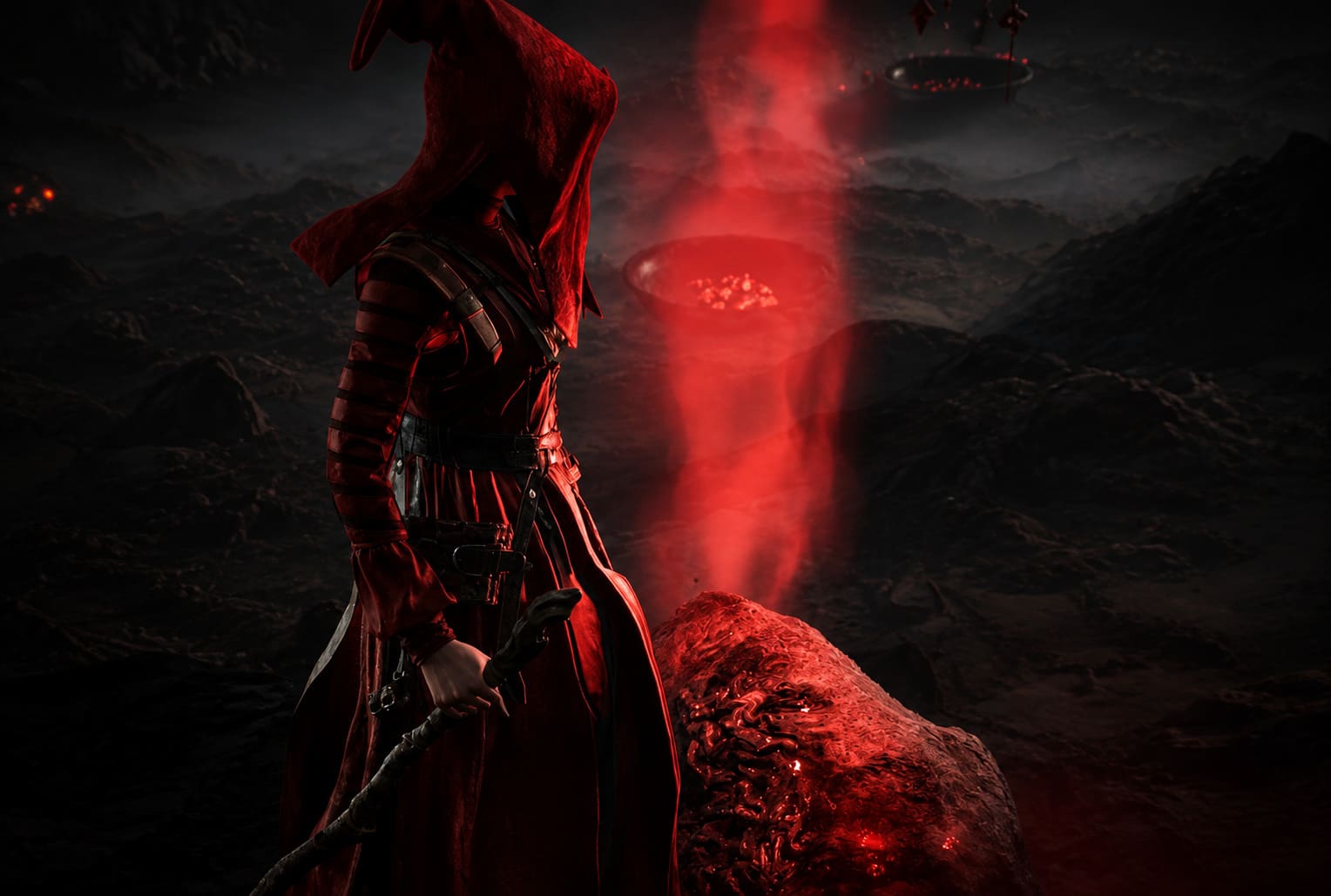
Nighttime: The Hunt Begins
At night, the entire mood changes.
The streets become darker, more dangerous, and considerably less welcoming. Supernatural creatures emerge, and Noa can finally unleash the abilities that would be too risky to use during the day.
Combat revolves around magic, movement, environmental interaction, and different supernatural abilities.
The important part, however, is that the game doesn’t seem to treat every boss as a simple damage sponge.
The Originals have different strengths, weaknesses, and defensive properties.
That means the information you collect during the day actually matters.
If you discover how a target behaves, identify its weakness, and prepare the correct strategy, the nighttime encounter should be much easier.
If you skip the investigation?
Good luck.
And that’s exactly the sort of cause-and-effect design I want from an open-world game.
The Biggest Question: Does the Combat Actually Work?
This is where I’m slightly more cautious.
The atmosphere looks excellent. The setting is distinctive. The investigation mechanics are promising.
Combat is where I’m not completely convinced yet.
Some early impressions have pointed toward stiff animations and slightly awkward targeting. That’s not necessarily a disaster for an Early Access title, but combat is going to be extremely important if the game expects players to spend dozens of hours hunting supernatural bosses.
We’ve seen ambitious games collapse because their world was excellent while the actual moment-to-moment gameplay wasn’t satisfying enough.
1666: Amsterdam cannot rely on its concept forever.
Eventually, the spells need to feel powerful. Movement needs to feel responsive. Enemies need to react convincingly. And defeating an Original needs to feel like something the player accomplished through skill and preparation rather than simply following a predetermined sequence.
That’s the part I’ll be watching most closely.
The AI Art Controversy Is Harder to Ignore
The game’s return hasn’t been completely positive.
One of the biggest controversies surrounding the 2026 re-reveal involved the use of AI-assisted assets and artwork.
Players noticed questionable environmental artwork and textures, leading to a broader discussion about how a small independent studio should use generative tools while creating a project with AAA ambitions.
Désilets’ explanation was essentially that AI tools could help a small team produce variations and prototypes much faster.
I understand the argument.
Small studios don’t have the same resources as Ubisoft, Rockstar, or Sony’s biggest internal teams. If a tool helps developers experiment quickly, I can understand why they would be tempted to use it.
But there’s an important distinction between using AI during development and shipping visibly unfinished AI-generated artwork as part of the final experience.
For a game whose biggest selling point is atmosphere and historical authenticity, visual consistency matters enormously.
The studio has indicated that controversial assets will be reviewed and replaced during Early Access. Personally, I think that’s the correct approach.
If the final version looks substantially better than the Early Access build, this controversy may eventually become a footnote.
If not, players will remember it.
What You Actually Get at Early Access Launch
The August 25, 2026 Early Access launch is positioned as a substantial starting point rather than a tiny technical demo.
Here’s the basic picture:
| Feature | Early Access Details |
|---|---|
| Platforms | PC via Steam and Epic Games Store |
| Launch Date | August 25, 2026 |
| Price | $29.99 |
| Initial Content | Around 15 hours |
| Story | First major act |
| Setting | Multiple districts of 17th-century Amsterdam |
| Main Gameplay | Investigation, Stealth, Magic, Combat |
| Development Plan | Approximately one year of Early Access |
| Consoles | PlayStation 5 and Xbox Series X/S planned |
The inclusion of roughly 15 hours of content is particularly important.
For an Early Access game, that’s enough material to give players a meaningful impression of the overall design rather than asking them to judge the project from a handful of missions.
The studio also plans to expand the city, add new gameplay systems, improve Aaron’s stealth mechanics, expand Noa’s supernatural abilities, and address technical issues based on player feedback.
How to Fix Audio Crackling During Emissions in STALKER 2 (PC Guide)
My Verdict So Far
After following the project and looking at what has finally emerged, I don’t think 1666: Amsterdam should be judged as a forgotten Assassin’s Creed prototype.
That would be unfair.
It has clearly evolved into something much stranger.
It’s a historical open-world game mixed with supernatural investigation, dark fantasy, stealth, magic, animal control, and a bizarre time-travel story. That combination could become a disaster if the individual systems don’t work together.
But it could also become exactly the kind of game that we don’t get very often anymore.
Personally, the day-versus-night structure is what interests me most. I like games where preparation changes the outcome rather than simply giving the player another weapon or a bigger health bar. If 1666 can make me spend an afternoon investigating a suspicious merchant, follow clues through Amsterdam, use Aaron to infiltrate his building, discover his weakness, and then return at night to hunt him down, that’s a gameplay loop I can absolutely get behind.
The biggest concern is polish.
The biggest opportunity is originality.
And after waiting this long, I don’t think 1666: Amsterdam needs to be perfect on day one.
It needs to prove that the strange idea at its heart actually works.
A cursed Amsterdam, a witch hunter, a man trapped inside a cat, immortal supernatural enemies, and a city hiding centuries of secrets.
That’s a ridiculous pitch.
And honestly?
After thirteen years, I’m just glad we’re finally getting to play it.