Trails in the Sky SC Hard Mode Party Guide: Best Character Setups & Builds
If there is one thing The Legend of Heroes: Trails in the Sky SC taught me after spending far too many hours with the Trails series, it is that Hard Mode is not simply “the same game, but enemies have more HP.” SC actually asks you to rethink how you approach combat.
After playing a lot of turn-based RPGs, I tend to look for the same things when a difficulty mode starts getting serious: speed, reliable defensive options, resource management, and ways to control the enemy rather than simply hitting harder. Trails in the Sky SC rewards exactly that mindset.
On Normal, you can get away with a fairly straightforward party. On Hard, some of those comfortable habits start falling apart. Enemies hit harder, punish positioning mistakes, and make inefficient physical builds feel noticeably weaker. Meanwhile, Arts, buffs, turn manipulation, and defensive Crafts become much more important.
After experimenting with different combinations, I think the strongest approach is surprisingly simple: build your party around fast casters and defensive utility rather than trying to make everyone a conventional damage dealer.
Why Hard Mode Changes the Way You Build Your Party
The biggest mistake I see when approaching SC Hard Mode is treating it like an extension of First Chapter.
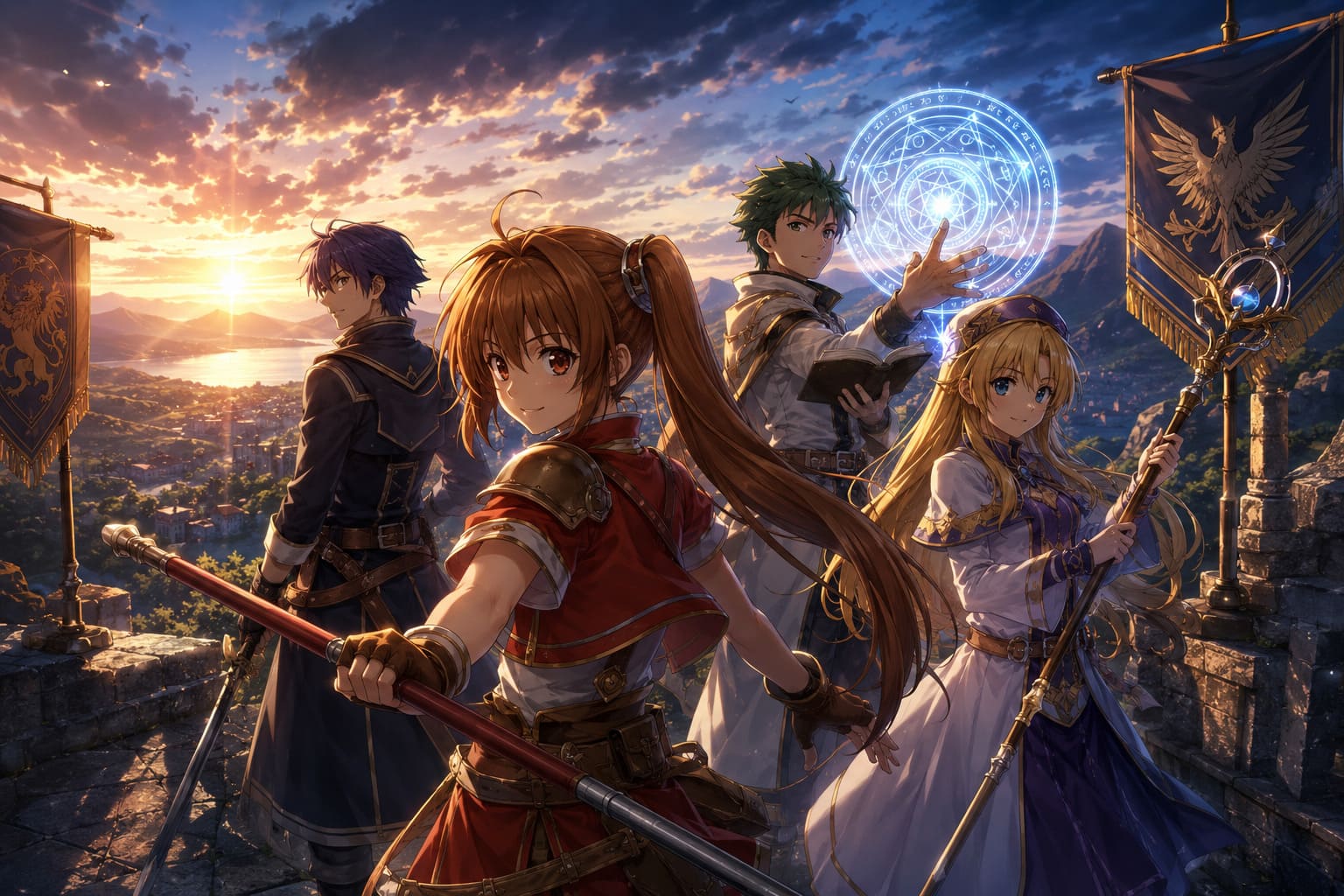
FC allows you to get away with a lot of brute force. In SC, especially against stronger bosses, that approach becomes unreliable. Physical attacks can struggle against high-defense enemies, while a well-built caster can consistently exploit elemental weaknesses and deal enormous damage from a safe position.
The most important stat is arguably Action, because speed determines how often you actually get to play the game. A theoretically powerful character is much less impressive if the enemy gets two turns before they act again.
That is why my priority when building characters is generally:
- Speed and Action
- Cast speed
- ATS for offensive and healing Arts
- EP efficiency
- Turn manipulation and defensive utility
This naturally pushes the best Hard Mode parties toward caster-heavy compositions.
My Hard Mode Character Tier List
Not every character needs to be equally strong. What matters is what they contribute to a difficult fight.
| Tier | Character | Main Strength | Hard Mode Role |
|---|---|---|---|
| S | Kevin Graham | Grail Sphere and flexibility | Defensive Support |
| S | Kloe Rinz | Healing, ATS, Kaempfer | Healer / Debuffer |
| A | Estelle Bright | Versatility and buffs | Support / Caster |
| A | Olivier Lenheim | Excellent Arts potential | Main Magic DPS |
| A | Zane Vathek | HP and defensive strength | Physical Tank |
| B | Joshua Bright | Speed and Crafts | Delay / Physical DPS |
| B | Schera | Turn manipulation | Support |
| B | Agate Crosner | CP generation | Burst DPS |
| C | Tita Herschel | Situational utility | Specialized Support |
| C | Mueller Vander | Durable physical option | Frontline Fighter |
Kevin Graham — The Character I Rarely Want to Remove
Kevin is probably the most valuable character to have available when things go wrong.
His biggest selling point is Grail Sphere. Having a defensive option capable of protecting the entire party from a devastating attack completely changes how you approach dangerous encounters.
This is especially important on Hard Mode because sometimes the correct strategy isn’t “kill the boss before it attacks.” Sometimes the boss is going to get its turn, and you need an emergency button that prevents that turn from becoming a disaster.
Kevin also has enough Orbment flexibility to function as a secondary caster and healer, which makes him even more useful.
My advice is simple: don’t waste Kevin’s CP casually. If you’re approaching a major boss, I want him ready to use Grail Sphere when the situation demands it.
Kloe Rinz — The Safest Healer and Debuffer
Kloe is another character who becomes much more valuable on Hard.
Her excellent ATS gives her strong healing and offensive Arts, while her Water affinity naturally supports some of the game’s most useful recovery options. But what really makes her stand out is Kaempfer.
Reducing an enemy’s Strength and Defense can completely change the rhythm of a boss fight. A boss that previously threatened to delete one of your characters suddenly becomes much easier to manage.
Kloe is therefore much more than “the healer.” She’s a healer, debuffer, and magic damage dealer in one slot.
Estelle Bright — The Ultimate Flex Character
Estelle is not necessarily the strongest specialist, but that is exactly why I like using her.
Her Orbment setup gives you enormous freedom. You can turn her into a caster, support character, item specialist, or hybrid depending on what the encounter requires.
Her buffs are particularly useful in a caster-oriented team. I usually prefer to build her around speed, casting efficiency, and support Arts, allowing her to keep the rest of the team operating at maximum efficiency.
She’s the character I use when I don’t want my strategy to depend too heavily on one specific gimmick.
Olivier Lenheim — The Magic Damage Monster
If Kevin keeps the party alive, Olivier is the character I expect to do the most actual killing.
His long Orbment line is one of his greatest advantages. It gives him tremendous flexibility when building toward high-level Arts, and his naturally strong ATS makes those Arts hit extremely hard.
This is where the Hard Mode strategy really starts making sense. Instead of asking Olivier to run into melee range and trade blows with heavily armored enemies, you keep him safely behind the frontline and let him throw increasingly ridiculous Arts at the enemy.
Once his Action and Cast values are properly optimized, he becomes one of the most reliable sources of damage in the entire roster.
Zane Vathek — When You Really Want a Tank
Zane is the obvious alternative for players who don’t enjoy sitting back and solving every encounter with magic.
He has enormous HP and impressive defensive statistics, and his self-buffing abilities can make him incredibly difficult to remove.
I wouldn’t call him the best character for every Hard Mode strategy, but if you want a traditional tank who stands between the boss and everyone else, Zane is one of the most convincing options.
The Best Endgame Party: Estelle, Kevin, Kloe, and Olivier
Once the game finally gives you enough freedom to construct your ideal party, my favorite composition is:
Estelle + Kevin + Kloe + Olivier
It isn’t flashy. It doesn’t involve some complicated gimmick that only works under perfect circumstances. That’s precisely why I like it.
The party essentially works as a triple-caster formation with Kevin providing emergency defensive coverage.
Estelle handles buffs and utility. Kevin provides protection and additional magic support. Kloe covers healing and debuffs. Olivier focuses almost entirely on destroying things.
Estelle Build
For Estelle, I’d prioritize:
| Quartz Focus | Purpose |
|---|---|
| Action | Maximum speed |
| Cast | Faster Arts |
| Mind | Higher ATS |
| EP Cut | Better EP economy |
| HP / Defense | Additional survivability |
| Move | Better positioning |
Her first priority in difficult battles should generally be getting your key characters accelerated. A properly buffed Olivier or Kloe feels dramatically different from an unbuffed one.
Estelle can then switch between healing, support Arts, defensive utility, and offensive casting depending on what the battle demands.
Kevin Build
Kevin’s setup should emphasize speed, casting efficiency, EP management, and survivability.
Action, Cast, EP Cut, Mind, and other useful support quartz are all valuable. His exact configuration can change depending on the dungeon and boss.
The important part isn’t maximizing Kevin’s damage.
It’s preserving his ability to respond.
I strongly recommend entering difficult fights with at least 100 CP available, and preferably more. His emergency defensive ability is far more valuable than squeezing out another few hundred points of damage with a normal attack.
Kloe Build
Kloe should be built around three things: ATS, speed, and healing efficiency.
Action and Cast help her respond quickly, while Mind improves both offensive and healing Arts. EP-related quartz are also extremely useful because long boss fights can turn into resource wars.
Her role should change according to the battle.
If the boss is dangerous, open with her debuff. If the party is taking damage, heal. If everyone is healthy and the enemy is vulnerable, start casting offensive Water Arts.
That’s what makes Kloe so dependable.
Olivier Build
Olivier is the character where I would invest most heavily in offensive casting efficiency.
His Orbment configuration makes him particularly well suited to high-level Arts, so I would focus on:
- Action
- Cast
- Mind
- EP Cut
- Elemental quartz required for your preferred Arts
- Mirage-related options that complement his Orbment
Don’t build Olivier like a hybrid fighter. In this particular party, his job is simple:
Cast. Cast again. Keep casting.
If the boss has an elemental weakness, exploit it. If it doesn’t, use your strongest efficient Arts and let his ATS do the work.
Alternative Party: Estelle, Joshua, Zane, and Kevin
Not everyone enjoys the “four people standing at the back and throwing magic” approach.
If you prefer a more traditional RPG setup, I’d use:
Estelle + Joshua + Zane + Kevin
Here, Zane becomes your frontline anchor.
Before combat, place him toward the front while the rest of the party stays farther away. Once the fight starts, use Zane’s defensive tools and let him attract the attention of dangerous melee enemies.
Joshua is particularly useful because his speed gives him excellent utility in fights where turn order matters. Depending on the situation, he can contribute physical damage, delay enemies, or help maintain the party’s momentum.
Kevin remains the emergency safety net, while Estelle fills the gaps with healing, buffs, and Arts.
This setup isn’t as consistently safe as the caster-heavy party against every boss, in my opinion, but it is much more satisfying if you enjoy having an actual frontline.
Trails in the Sky SC Max BP Guide: 100% Walkthrough for Second Chapter
Hard Mode Combat Rules I Actually Follow
Party composition only gets you so far. After playing enough turn-based RPGs, I’ve learned that good positioning and turn management often matter more than having the theoretically strongest build.
1. Never Ignore the Turn Bar
Turn bonuses can completely change an encounter.
If an enemy is about to receive a powerful bonus, don’t just accept it. Use your available tools to manipulate the timeline, interrupt the sequence, or force your strongest action immediately.
Turn order is effectively another resource.
2. Keep Speed Buffs Active
Speed buffs are among the most important tools available to a caster-heavy party.
Without them, your characters can feel painfully slow against powerful enemies. With them, the entire battle becomes more manageable.
I would rather sacrifice some raw damage to gain additional speed than build a character who hits slightly harder but gets fewer opportunities to act.
3. Spread Out
This sounds obvious, but it’s incredibly easy to forget during a long dungeon.
Don’t stack all four characters together unless you have a very good reason. Bosses with strong AoE attacks can punish clustered formations brutally.
Keeping characters separated forces the enemy to make harder targeting decisions and reduces the chance that one attack wipes out your entire party.
Is Trails in the Sky SC Worth Playing in 2026? Retro JRPG Review & Fan Guide
Final Verdict
After spending a lot of time with different party combinations in Trails in the Sky SC, I keep coming back to the same conclusion: Hard Mode rewards control more than raw aggression.
You don’t necessarily need the character with the biggest physical attack. You need characters who can act quickly, manipulate the timeline, reduce enemy effectiveness, restore the party, and survive the turns when everything goes wrong.
That’s why my preferred endgame team remains Estelle, Kevin, Kloe, and Olivier.
It has answers to almost everything. Estelle provides flexibility, Kevin gives you an emergency defensive shield, Kloe handles healing and debuffs, and Olivier supplies the overwhelming magical damage.
If you prefer a more traditional setup, Zane, Joshua, Estelle, and Kevin is a strong alternative and gives combat a much more physical, frontline-oriented feel.
Ultimately, the biggest Hard Mode lesson is one I’ve learned from plenty of difficult RPGs: don’t fight the game on its terms. If enemies are faster, make your party faster. If physical defense is becoming a problem, use Arts. If a boss can wipe your party in one turn, build around preventing that turn from ending the fight.
Once you start thinking that way, SC Hard Mode becomes much less about surviving impossible encounters and much more about controlling the battle before it ever gets out of hand.