Beastfolk Barber Walkthrough: The Ultimate Strategy Guide and Tips
Beastfolk Barber looks cozy at first glance, but don’t let the warm barbershop atmosphere fool you. This is not one of those narrative games where you can mash through dialogue, pick whatever hairstyle looks cool, and still expect everything to work out. Your scissors matter, your conversations matter, and sometimes one badly judged haircut can completely change what happens to a customer later.
Developed by Safe Flight Games and GameWorks Ventures and published by SIGONO INC., Beastfolk Barber mixes relationship-driven storytelling with hands-on barber mechanics. You play as Freddie, a barber trying to keep his little shop alive in a city populated by humans and beastfolk. The interesting part is how naturally the two sides of the game connect: what a customer tells you during a conversation can directly affect what you should do with their hair.
I’ve played plenty of cozy narrative games where the supposed ‘choices’ are basically cosmetic. Beastfolk Barber isn’t quite that forgiving. Customers have personalities, insecurities, expectations, and personal problems, and your job is to figure out what they actually want rather than simply following the most obvious dialogue option. If you want the best outcomes, you need to pay attention.
Beastfolk Barber Guide: How to Get the Demon Perfect Haircut
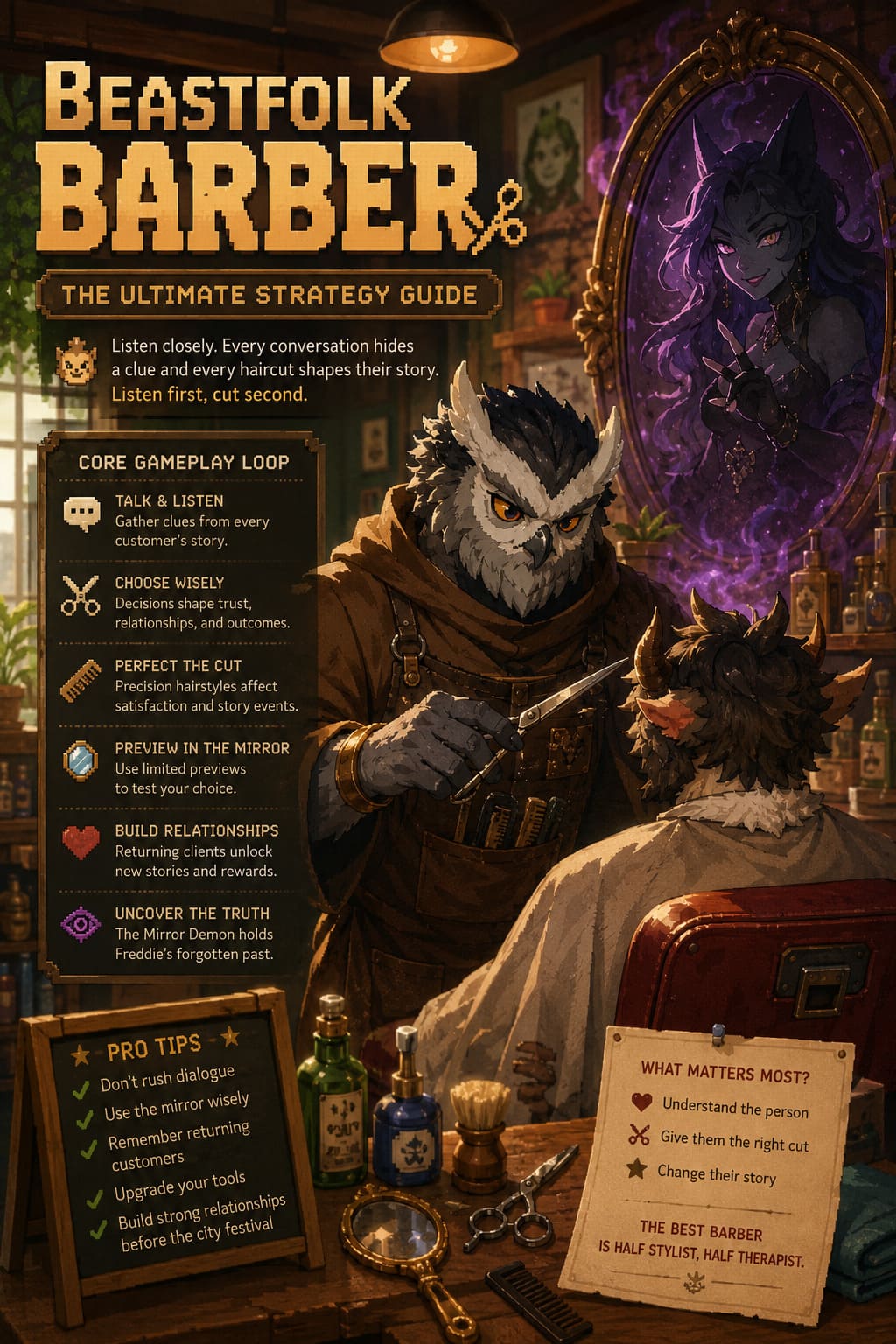
How the Beastfolk Barber Gameplay Loop Works
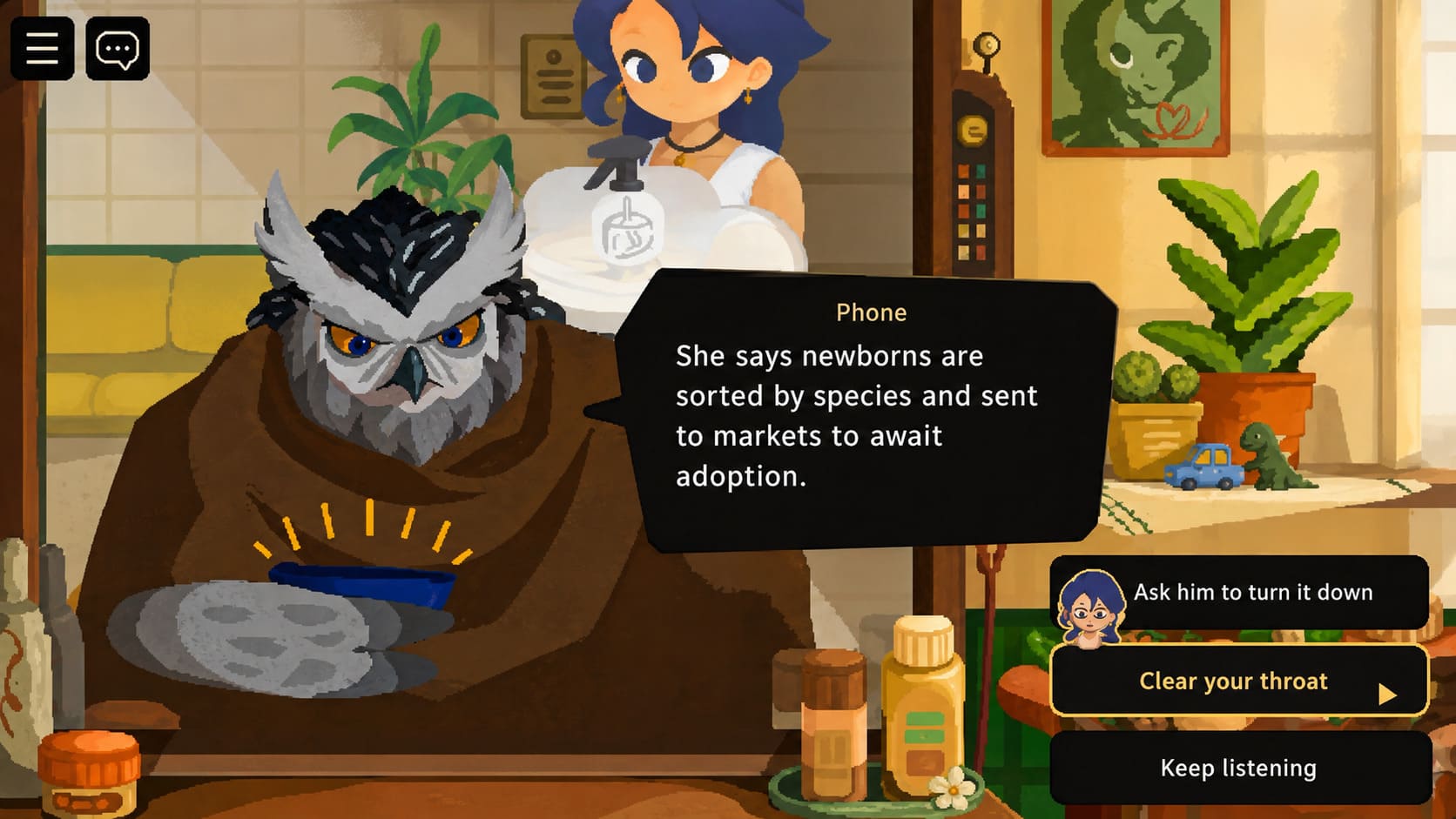
The basic gameplay loop is deceptively simple. A customer enters the shop, sits in Freddie’s chair, starts talking, and eventually gives you enough information to figure out the haircut they need. You then switch from conversational detective to precision barber and attempt to turn those clues into the correct style.
That transition is what makes the game work. One minute you’re listening to someone complain about their boss, family, relationship, or place in society. The next minute you’re worrying about whether you’ve trimmed too much from one side of their head. The haircut isn’t separate from the story; it’s part of the storytelling.
| Gameplay Element | Why It Matters |
|---|---|
| Dialogue Choices | Reveal personality, emotions, preferences, and hidden hints. |
| Haircut Mechanics | Determine customer satisfaction and can influence future story events. |
| Mysterious Mirror | Provides limited hairstyle previews before committing to a cut. |
| Customer Relationships | Returning clients can unlock additional conversations and story branches. |
| Shop Upgrades | Improve your ability to perform difficult and precise hairstyles. |
| Mirror Demon Quest | Connects the shop’s everyday routine to Freddie’s larger personal mystery. |
Don’t Rush Through Customer Conversations
The biggest mistake you can make early in Beastfolk Barber is treating conversations like filler between haircut minigames. They’re not. Dialogue is essentially your information-gathering phase, and impatient players are going to miss useful clues that later become extremely important.
Listen for words that describe weight, shape, visibility, personality, or attitude. A customer talking about wanting something ‘lighter’ may not literally be discussing hair length. Another character might describe themselves as needing something more ‘professional’ because of their job. These comments can point toward the style they actually want without the game simply spelling it out.
Pay attention to repeated complaints as well. If a character keeps mentioning that other people don’t take them seriously, that emotional thread can be more important than a direct statement about their appearance. The best barber in this game is basically half stylist and half therapist.
Words That Can Hide Haircut Clues
Keep an eye out for descriptive language during conversations. Words such as light, heavy, bold, clean, hidden, sharp, soft, professional, wild, and similar expressions can carry more meaning than they initially appear to.
You don’t need to memorize every line of dialogue, but you should remember the general emotional direction of the conversation. If the customer’s entire story revolves around wanting freedom, giving them an ultra-conservative style just because it looks neat probably isn’t going to end well.
How to Use the Mysterious Mirror Properly
The Mysterious Mirror is one of Freddie’s most useful tools, but wasting its limited previews is a rookie mistake. The mirror was created by Freddie’s late friend and has a supernatural connection to the larger story, yet its practical function is what you’ll care about most during normal appointments.
It lets you preview a hairstyle before committing to the actual cut. That’s incredibly useful when you’ve narrowed the possibilities down but aren’t completely certain. The problem is that the number of previews available to you is limited, so using one every time a customer sits down is a terrible habit.
The Best Mirror Strategy
First, talk to the customer. Don’t immediately reach for the mirror. Gather as much information as possible from their dialogue, narrow the potential hairstyles to two or three options, and only then use a preview when the decision is genuinely unclear.
The customer’s reaction during a preview can also give you information. Watch their face and body language instead of focusing exclusively on the hairstyle itself. A subtle positive reaction can confirm your interpretation of the conversation, while discomfort or hesitation is often a warning that you’re moving in the wrong direction.
- Early appointment: Gather dialogue clues before using the mirror.
- Mid-decision: Narrow the haircut down to a small number of possibilities.
- Final choice: Use the mirror only when you’re genuinely uncertain.
Customer Relationships Are More Important Than They Look
One of the smartest things you can do in Beastfolk Barber is remember returning customers. The game isn’t designed around isolated appointments where every NPC disappears once you finish the haircut. Familiar faces can return with new problems, new dialogue, and new expectations.
If someone previously talked about workplace pressure, don’t act as if you’ve never heard of their job when they come back. If another customer struggled with their identity or appearance, remember the emotional context of their previous visit. Freddie’s ability to make customers feel understood is one of his strongest tools.
This also means that a successful haircut has value beyond the immediate reward. Keeping customers happy helps build the shop’s reputation while potentially opening additional story content. A failed appointment can have the opposite effect, especially when that customer is connected to a larger narrative branch.
How to Handle Dialogue Choices
There isn’t one universal dialogue option that will magically produce the best ending. What works for an anxious character may completely fail with someone who hates being questioned. You need to adapt your approach to the person sitting in the chair.
Be Curious Without Becoming Pushy
Asking questions is useful because you need information, but interrogating someone about their personal life can make the conversation uncomfortable. The safest approach is to encourage customers to talk while giving them room to decide how much they want to reveal.
Supportive responses are generally stronger when a character is opening up about something painful. On the other hand, excessive sympathy can feel artificial with characters who prefer direct communication. Read the personality in front of you rather than following a single dialogue strategy for every appointment.
Watch the Calendar and City Events
The city’s upcoming celebration gives the overall story a sense of momentum. As the event gets closer, familiar characters can become more important, and their personal storylines begin to intersect more strongly with the wider narrative.
If you’re trying to see as much content as possible, don’t treat the festival as something you can ignore until the last minute. Work through important customer arcs while you have the opportunity. Waiting too long can mean missing moments that are tied to the larger event.
Beastfolk Barber Mirror Demon Guide
The mirror demon is where the game’s cozy barber fantasy takes a sharp turn into something much stranger. The demon offers Freddie a deal: deliver the perfect haircut, and she can undo a regret from his past. Sounds easy, right? It isn’t.
The demon’s storyline requires more preparation than a standard customer appointment. You can’t simply walk up to the mirror, grab your scissors, and expect to stumble into the correct answer. The game uses the surrounding story to gradually reveal what you need to know.
What You Need Before Tackling the Demon
Start by building relationships with regular customers. Successful appointments can provide access to resources, equipment, products, and information that become useful later. Certain character storylines can also unlock advanced styling options, giving you more flexibility when dealing with difficult customers.
Don’t ignore seemingly random conversations either. Small pieces of lore scattered throughout the shop’s daily routine can eventually help explain the demon’s behavior and motives. The mirror storyline rewards players who actually listen instead of skipping every conversation.
- Build strong relationships with recurring customers.
- Complete important character storylines before the major city event.
- Upgrade your barber equipment whenever possible.
- Pay attention to unusual dialogue involving the mirror.
- Collect story clues before attempting the demon’s final challenge.
Best Early-Game Strategy for New Players
During your first days, resist the temptation to experiment constantly. You don’t have enough resources or experience to recover comfortably from repeated mistakes, and there’s little benefit to gambling with customers who haven’t yet established a relationship with Freddie.
Your priority should be consistency. Give customers what they appear to be asking for, listen carefully, and use successful appointments to build your resources. Once your equipment improves and you’ve learned how the game’s haircut mechanics respond to different requests, you can start taking more calculated risks.
This approach might sound conservative, but it works. Beastfolk Barber rewards accuracy before creativity. You can get weird later; surviving the opening stretch without destroying your customer base is the smarter play.
Which Shop Upgrades Should You Prioritize?
Your resources shouldn’t disappear into cosmetic upgrades just because a nicer-looking shop is tempting. Improving the actual tools Freddie uses should usually come first, especially if you’re struggling with precision-based hairstyles.
| Upgrade Priority | Recommended Focus | Reason |
|---|---|---|
| 1 | Scissors | Improves control during detailed cuts. |
| 2 | Clippers | Useful for precise trimming and difficult styles. |
| 3 | Hair Products | Expands your options when working with demanding customers. |
| 4 | Dyes and Styling Tools | Helpful for more specialized appointments. |
| 5 | Cosmetic Decorations | Nice to have, but less important than functional upgrades. |
Better equipment effectively gives you more room for error. That’s particularly valuable when the game throws complicated styling requests at you and the customer relationship attached to that appointment is too important to risk.
Common Mistakes to Avoid
Several mistakes can make a playthrough unnecessarily difficult. The first is skipping dialogue because you assume the haircut is the only thing that matters. The second is using the Mysterious Mirror every time it becomes available. Both habits remove information from the game that you’re supposed to use to make better decisions.
Another mistake is treating every customer exactly the same. Beastfolk characters aren’t interchangeable quest markers. Their species, personality, social situation, and previous interactions with Freddie all influence how conversations develop. Remember the person, not just the hairstyle.
Finally, don’t spend all your early resources on making the shop look prettier. Cosmetics are fun, but functional upgrades directly affect your ability to handle increasingly demanding appointments. If you’re constantly failing precise cuts, another decoration isn’t going to save the run.
Final Beastfolk Barber Tips
Beastfolk Barber works best when you stop thinking of it as a simple haircut simulator. It’s a character-driven adventure where the scissors are another form of dialogue. Every customer gives you information, every conversation can hide a clue, and every successful appointment can strengthen Freddie’s connection with the people around him.
Take your time with conversations, remember returning customers, conserve Mysterious Mirror previews, and invest your money into useful equipment before cosmetic upgrades. Most importantly, don’t assume that the loudest or most obvious clue is automatically the correct one. Sometimes the smallest detail in a conversation is exactly what the game wants you to notice.
The mirror demon storyline is where all of those systems start coming together. By the time you’re ready to deal with her, you’ll want strong customer relationships, better tools, plenty of accumulated knowledge, and a good understanding of how Freddie’s conversations affect his world.
The best way to play Beastfolk Barber is simple: listen first, cut second. If you treat every customer like a real person rather than another objective on your checklist, you’ll have a much easier time finding the right hairstyles, unlocking stronger story branches, and getting closer to the truth behind Freddie’s mysterious mirror.