Jurassic World Evolution 3 Rebirth Expansion Guide: Secrets of Ile Saint-Hubert Research Complexes Revealed
When I first launched the Jurassic World Evolution 3: Rebirth Expansion, I expected another dinosaur park DLC with a few extra species and a handful of new buildings. What I got instead was something far more ambitious. This expansion doesn’t feel like a typical content pack. It feels like Frontier decided to build an entirely different management game inside Jurassic World Evolution 3.
Saint-Hubert Island is not a tourist paradise. It is a forgotten scientific nightmare buried beneath decades of corporate secrecy, abandoned experiments, and some of the most dangerous creatures ever engineered in the franchise. After spending dozens of hours exploring every corner of the campaign, rebuilding broken facilities, and desperately trying to stop my dinosaurs from turning staff members into lunch, I’ve come to one conclusion:
Saint-Hubert is easily the most challenging and rewarding location Frontier has ever created.
Why Saint-Hubert Changes Everything
Most Jurassic World Evolution maps follow a familiar formula. Build enclosures. Attract guests. Generate profit. Expand.
Saint-Hubert throws that playbook into a volcano.
Instead of running a commercial dinosaur resort, you’re effectively managing a classified research operation spread across multiple facilities. Every decision has consequences because resources, infrastructure, and security systems are deeply interconnected.
The expansion revolves around three major sectors:
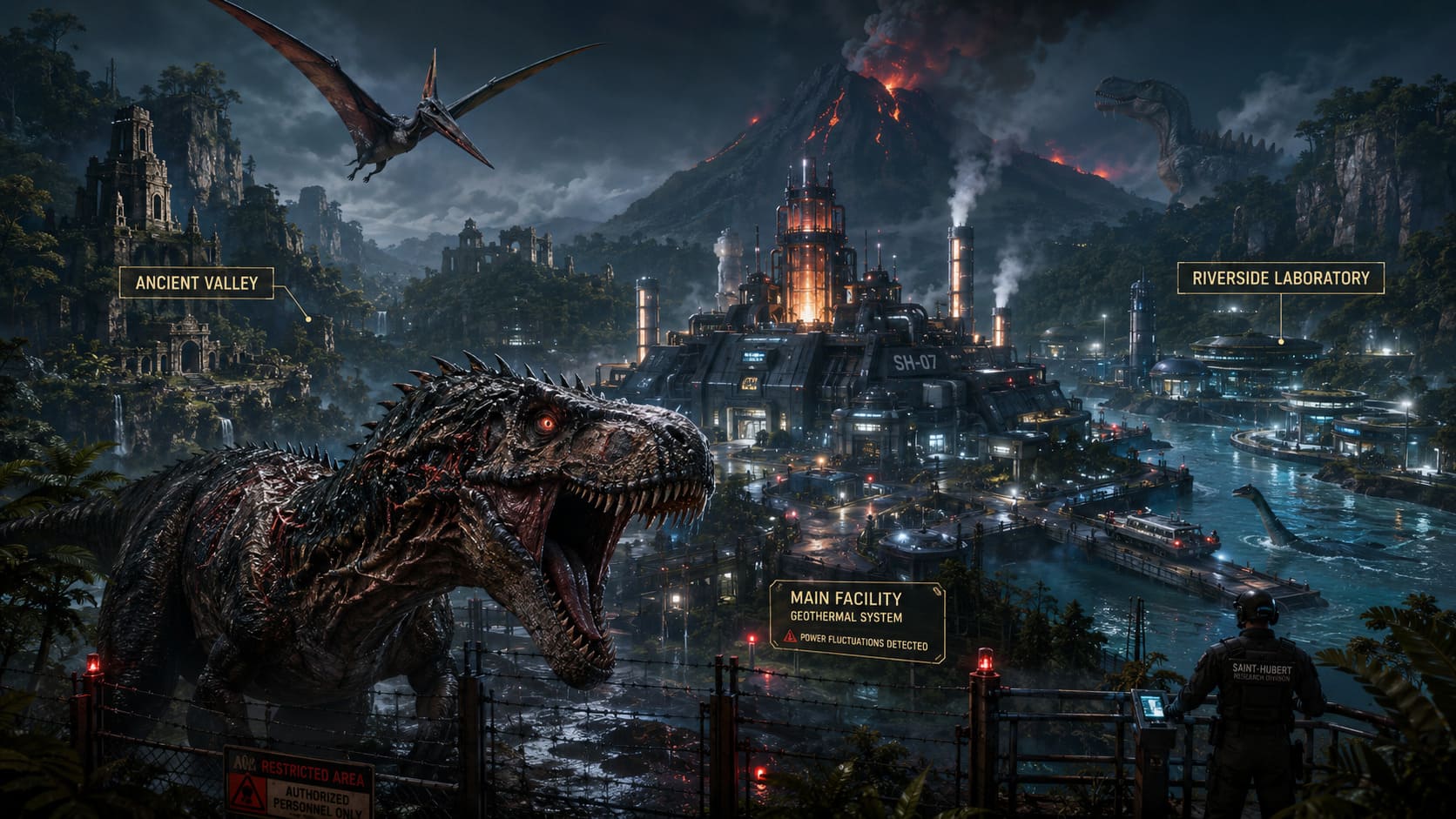
- Main Facility
- Ancient Valley
- Riverside Laboratory
Each zone feels like its own mini-campaign with unique environmental challenges, specialized construction requirements, and different approaches to dinosaur containment.
What surprised me most was how much strategic planning became necessary. You can’t simply spam buildings and expect success anymore.
Main Facility: Where Most Players Make Their First Mistake
The Main Facility serves as the operational heart of Saint-Hubert.
At first glance, it looks manageable. Then reality hits.
The area is packed with abandoned structures, restricted terrain, damaged infrastructure, and limited expansion space. My first instinct was to bulldoze everything and start fresh. Huge mistake.
The map is intentionally designed to punish reckless construction.
One of the biggest gameplay changes introduced in Rebirth is the island’s geothermal energy system. Traditional power management takes a back seat as players must restore and optimize geothermal infrastructure scattered throughout the facility.
Key Priorities for the Main Facility
| Priority | Importance | Recommendation |
|---|---|---|
| Geothermal Restoration | Critical | Repair immediately |
| Security Grid | Critical | Establish before housing predators |
| Resource Allocation | High | Balance spending across all sectors |
| Research Expansion | Medium | Upgrade gradually |
| Habitat Development | Medium | Expand only when infrastructure is stable |
The geothermal network quickly becomes the backbone of your entire operation.
Power failures aren’t just inconvenient here.
They’re catastrophic.
Particularly when you begin working with the expansion’s most terrifying attraction.
Distortus Rex Is an Absolute Monster
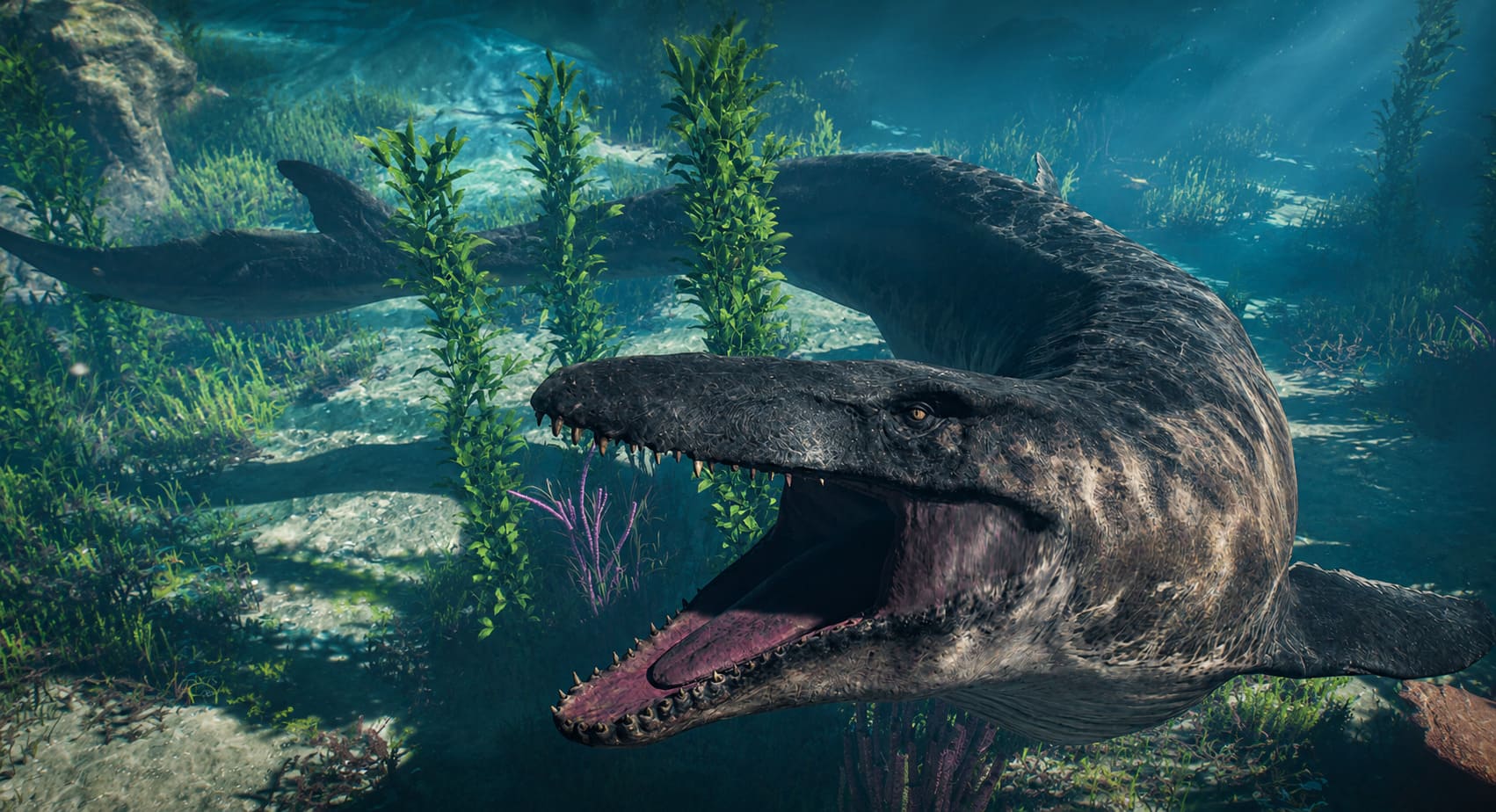
I’ve managed Indominus Rex. I’ve handled escaped Tyrannosaurs. I’ve survived some truly ridiculous sandbox disasters.
Nothing prepared me for the Distortus Rex.
This creature feels less like an animal and more like an intelligent disaster waiting for an opportunity.
The AI appears noticeably more aggressive and unpredictable than many previous apex predators. During one campaign run, a brief power disruption triggered a chain reaction that resulted in damaged fences, injured staff, and a containment operation that took nearly half an hour to resolve.
Whether intentional or not, the Distortus Rex creates constant tension.
You never fully trust the enclosure.
You never fully trust the power grid.
And honestly, that’s exactly what makes it so memorable.
Ancient Valley Delivers the Best Atmosphere in the Expansion
If the Main Facility is all steel, concrete, and corporate paranoia, Ancient Valley is pure adventure.
The first time I entered this area, I immediately stopped managing my park and started exploring.
Towering cliffs rise above dense jungle canopies. Massive stone ruins emerge through vegetation. Ancient structures dominate the landscape like forgotten monuments from another age.
This zone feels like someone blended Jurassic Park with an archaeological expedition.
The visual design alone is worth the price of admission.
Open-Air Aviaries Finally Reach Their Potential
Ancient Valley showcases one of the expansion’s coolest additions: open-air aviary systems.
Instead of trapping flying reptiles inside giant enclosed domes, players can create enormous aerial habitats that take advantage of natural terrain and elevation.
The difference is dramatic.
Watching massive flying creatures soar above cliffs and forests creates a sense of scale previous aviaries never fully achieved.
Some species become genuine stars of the show.
Quetzalcoatlus dominates the skyline with an incredible wingspan, while the bizarre Mutadon constantly keeps security teams on edge.
The Mutadon quickly became one of my favorite additions.
It’s fast.
It’s intelligent.
And it’s annoyingly good at finding weaknesses in your surveillance coverage.
Optional Missions Are More Important Than They Look
A lot of players rush through primary objectives.
Don’t.
Seriously.
One of the smartest design choices in Rebirth is how optional assignments reward exploration and experimentation.
Ancient Valley hides some of the expansion’s most valuable upgrades behind secondary objectives connected to the island’s mysterious ruins.
Completing these missions can unlock:
- Advanced genetic technologies
- Specialized facility upgrades
- Rare research bonuses
- Improved dinosaur stability modifiers
- Additional blueprint options
Skipping them makes the later campaign significantly harder.
I learned that lesson the painful way.
Riverside Laboratory Introduces a New Type of Security Challenge
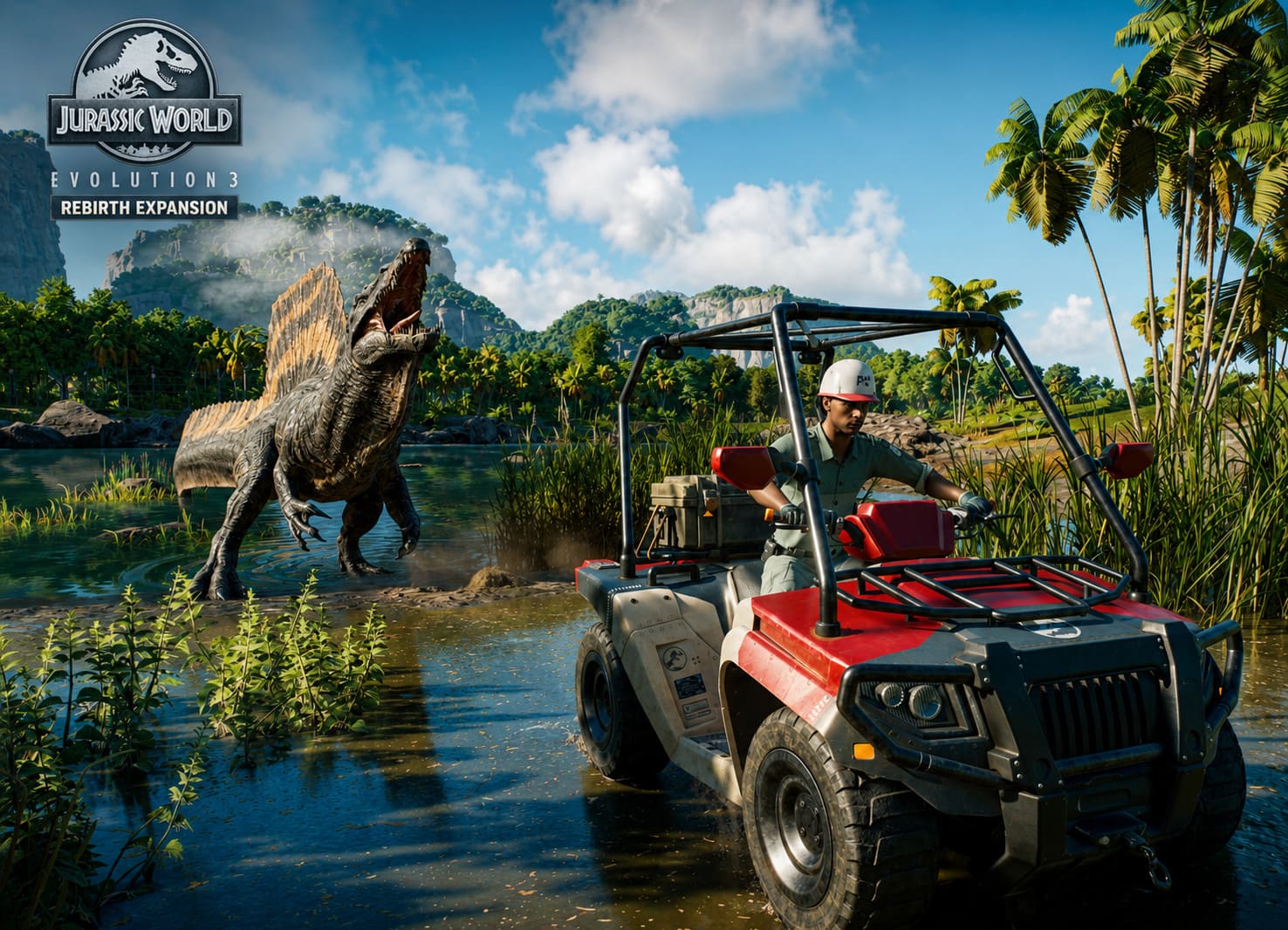
The Riverside Laboratory focuses heavily on aquatic environments and semi-aquatic dinosaur behavior.
This area completely changed how I design habitats.
For years, many players treated water as decorative scenery.
Not anymore.
The expansion introduces much deeper interaction between dinosaurs and aquatic environments. Predators actively use rivers, lakes, and deep-water areas as part of their movement and hunting patterns.
This creates entirely new security concerns.
A river is no longer a natural barrier.
It’s potentially an escape route.
The New Water Systems Feel Fantastic
One of the most immersive moments I experienced occurred when a large predator entered a deep-water section of its enclosure and unexpectedly crossed into an area I assumed was completely secure.
That incident forced a complete redesign of my containment strategy.
Rivers now demand the same attention as fences.
Sometimes even more.
Players who underestimate aquatic routes will eventually pay for it.
Usually with emergency sirens.
Cretaceous Cruise Creates Incredible Park Tours
Another standout feature is the expanded transport system.
The Cretaceous Cruise allows guests to travel through multiple habitat types without interruption.
When everything works correctly, the results are spectacular.
Guests can move through:
- Jungle environments
- Open-air aviaries
- River systems
- Predator territories
- Research zones
The immersion is fantastic.
Of course, things become significantly less fantastic when an irritated predator decides a cruise vehicle looks interesting.
Maintaining safe routes requires active monitoring and rapid response teams.
For management fans, this creates some of the expansion’s most enjoyable problem-solving scenarios.
New Species Ranking
After extensive testing, here’s my personal ranking of the new creatures introduced in Rebirth.
| Species | Gameplay Impact | Fun Factor |
|---|---|---|
| Distortus Rex | Extreme | 10/10 |
| Mutadon | High | 9/10 |
| Titanosaurus | High | 8.5/10 |
| Aquilops | Moderate | 8/10 |
The Titanosaurus deserves special recognition.
While not aggressive, its sheer size creates unique management problems. Large-scale panic events can damage infrastructure and trigger unexpected chain reactions throughout your facility.
Meanwhile, the small Aquilops proves that tiny dinosaurs can sometimes create disproportionately large headaches.
Experimental Genetics Add Welcome Depth
The new experimental trait system might be the most underrated feature in the expansion.
Instead of merely increasing ratings, genetic modifications now influence meaningful behaviors.
Players can shape how dinosaurs interact with:
- Rangers
- Other species
- Habitat conditions
- Security systems
- Environmental stress factors
The best part is the risk-versus-reward balance.
More advanced genetic enhancements generate greater research value but can also create containment nightmares if something goes wrong.
Every major genetic decision feels important.
That’s exactly how dinosaur science should work in a Jurassic game.
Jurassic World Evolution 3 Rebirth Expansion Review: How to Unlock Distortus Rex
Final Verdict: Frontier’s Most Ambitious Expansion Yet
After spending countless hours inside Saint-Hubert’s dangerous research zones, I genuinely believe Rebirth represents one of the strongest expansions Frontier has produced for the franchise.
The campaign embraces complexity instead of avoiding it.
The new species feel meaningful rather than cosmetic.
The geothermal infrastructure adds genuine strategic depth.
The open-air aviaries transform aerial dinosaur management.
Most importantly, the expansion constantly generates memorable stories.
Those unexpected disasters, last-second containment operations, and moments when an entire facility teeters on the edge of collapse are exactly why management fans love this genre.
Saint-Hubert doesn’t want you to feel comfortable.
It wants you to feel responsible.
And when a genetically engineered apex predator is staring at a fence that’s seconds away from failing, that responsibility becomes very real.
For veteran Jurassic World Evolution players looking for a tougher, smarter, and more immersive challenge, Rebirth delivers exactly what the franchise needed.