Star Wars Zero Company Gameplay Review & Guide: Squad Building Tactics, Core Mechanics, and Campaign Strategy (2026)
There are games you start because the trailer looks cool, and then there are games that quietly eat an entire evening because you keep telling yourself, “Okay, one more mission.” Star Wars Zero Company is absolutely the second kind for me.
As someone who loves quality strategy games but has become increasingly picky about them, I went into Zero Company expecting something familiar. The obvious comparison is XCOM, and honestly, that comparison is impossible to avoid. You have cover, percentage-based accuracy, overwatch, customizable soldiers, a strategic layer and plenty of opportunities to make decisions that look brilliant right up until everything goes horribly wrong.
But after spending time with the game, I think calling it “XCOM in the Star Wars universe” sells it short.
Bit Reactor has taken the familiar tactical formula and pushed it toward something faster, more aggressive and much more character-driven. The result is one of those strategy games where the individual systems actually encourage you to play like a Star Wars squad rather than simply repainting a traditional tactical RPG with blasters.
And yes, I have already had several turns where everything went according to plan.
Those are the dangerous ones.
Because once you understand how the combat works, you start thinking you are some kind of tactical genius.
Then a plan goes wrong, an elite enemy survives with one health, and suddenly your perfectly positioned squad is having the worst day in the galaxy.
A Different Side of the Clone Wars
What immediately caught my attention is the setting.
Zero Company isn’t interested in making you another legendary Jedi hero. Instead, it focuses on the people operating in the shadows during the final days of the Clone Wars.
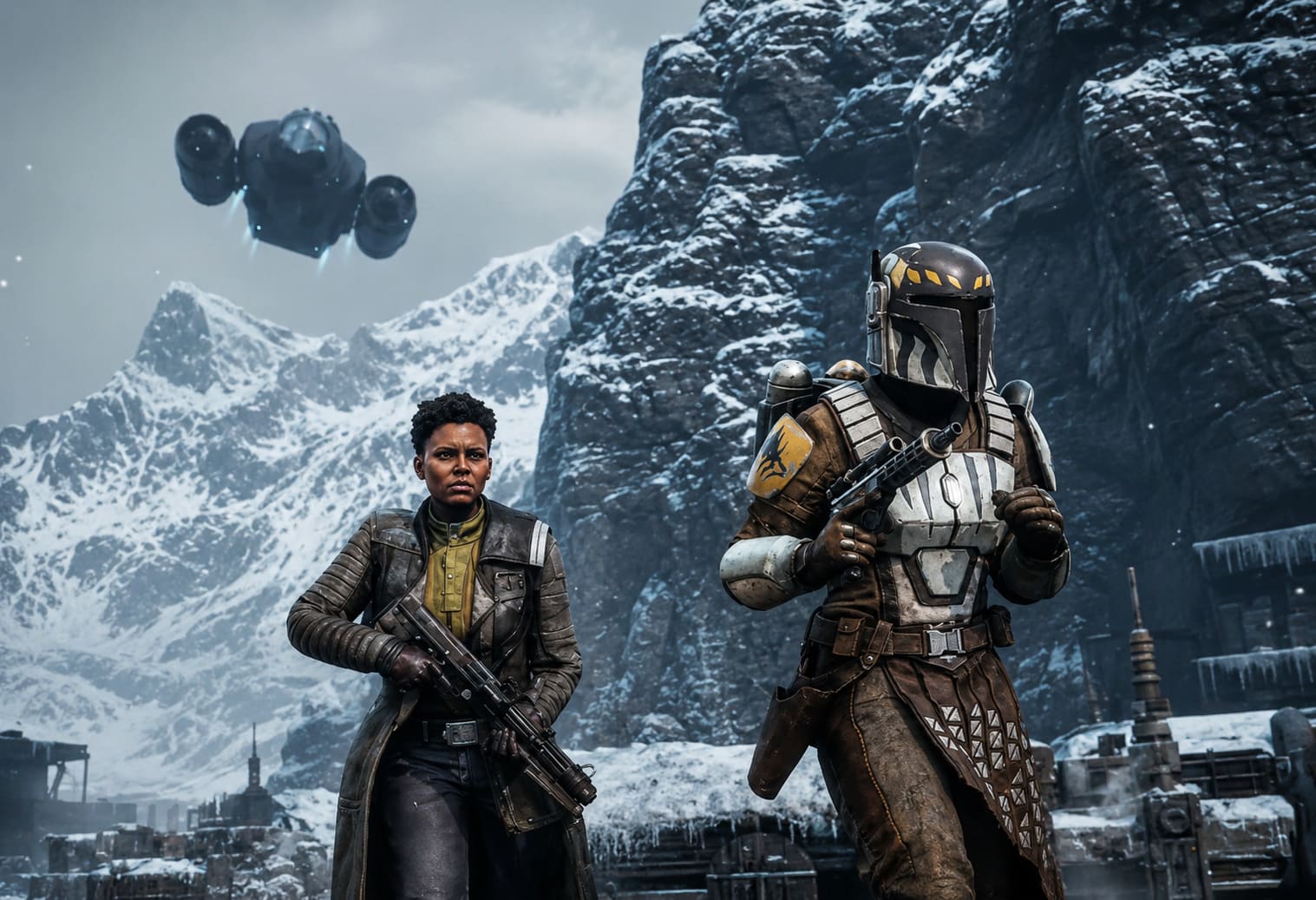
You take control of Hawks, a former Republic officer who eventually creates his own mercenary outfit, Zero Company. His past is connected to a disastrous battle under Jedi General Pong Krell, and that history gives the protagonist a much more complicated relationship with the Republic than you normally get in a Star Wars game.
Hawks is joined by Trick, a Clone trooper and survivor of that same catastrophic chapter.
From there, things get even messier.
Zero Company isn’t exactly swimming in credits. The crew is operating under financial pressure and owes money to Gorga the Hutt, which is probably not the kind of person you want to disappoint. That desperation leads the team into a dangerous covert operation for the Republic.
The bigger problem is the Infinite Coil, a mysterious organization connected to the terrifying Shadow Plague.
This is where the story gets interesting for me. Instead of simply fighting another army of droids or Republic-vs-Separatist battles, the campaign introduces something darker and more unusual. The infected enemies can develop frightening abilities, giving the combat a supernatural edge while still feeling grounded in the Star Wars universe.
It creates a nice atmosphere: you aren’t fighting a clean military campaign. You’re fighting a dirty war that nobody wants to talk about.
The 3-Action-Point System Changes Everything
The biggest mechanical change is the three Action Point system.
If you’ve played modern XCOM, you already understand the basic tactical language. Move into cover, find an angle, take a shot, watch the enemy turn and hope you haven’t just made a terrible mistake.
Zero Company gives you more freedom.
Each character gets three AP, which means you can combine movement and attacks in ways that simply wouldn’t be possible in a more restrictive system.
For example, you might:
- Spend two AP repositioning behind an enemy and use the final point for a blaster shot.
- Move into a new position, attack and then use another ability during the same turn.
- Combine movement, equipment and attacks to create a more aggressive chain of actions.
This sounds like a small adjustment on paper, but it completely changes how I approach encounters.
Instead of constantly thinking, “If I move here, I won’t be able to attack,” I’m thinking, “How much can I accomplish this turn?”
That makes the combat feel much more fluid.
And importantly, it encourages experimentation.
You can take risks because you have more tactical options available to you. Sometimes that extra flexibility saves a character who would otherwise be completely exposed.
Sometimes it simply gives you more ways to make a bad decision.
I’ve experienced both.
Advantage Rewards Aggressive Players
Another system I really like is Advantage.
Your squad builds Advantage by successfully engaging enemies and executing effective actions. You can then spend this shared resource on powerful abilities.
This is a smart alternative to simply giving every character a traditional ultimate cooldown.
The difference is psychological.
You’re constantly building toward something.
You land shots, reposition, attack vulnerable enemies and create opportunities, and suddenly your squad has enough Advantage to unleash a devastating ability.
It creates a satisfying tactical rhythm:
build momentum → create an opening → spend Advantage → completely ruin someone’s day.
For me, that’s one of the systems that makes Zero Company feel distinctly different from the games it obviously takes inspiration from.
Squad Building Is Where the Game Really Shines
Combat is great, but squad customization is where I can see myself losing ridiculous amounts of time.
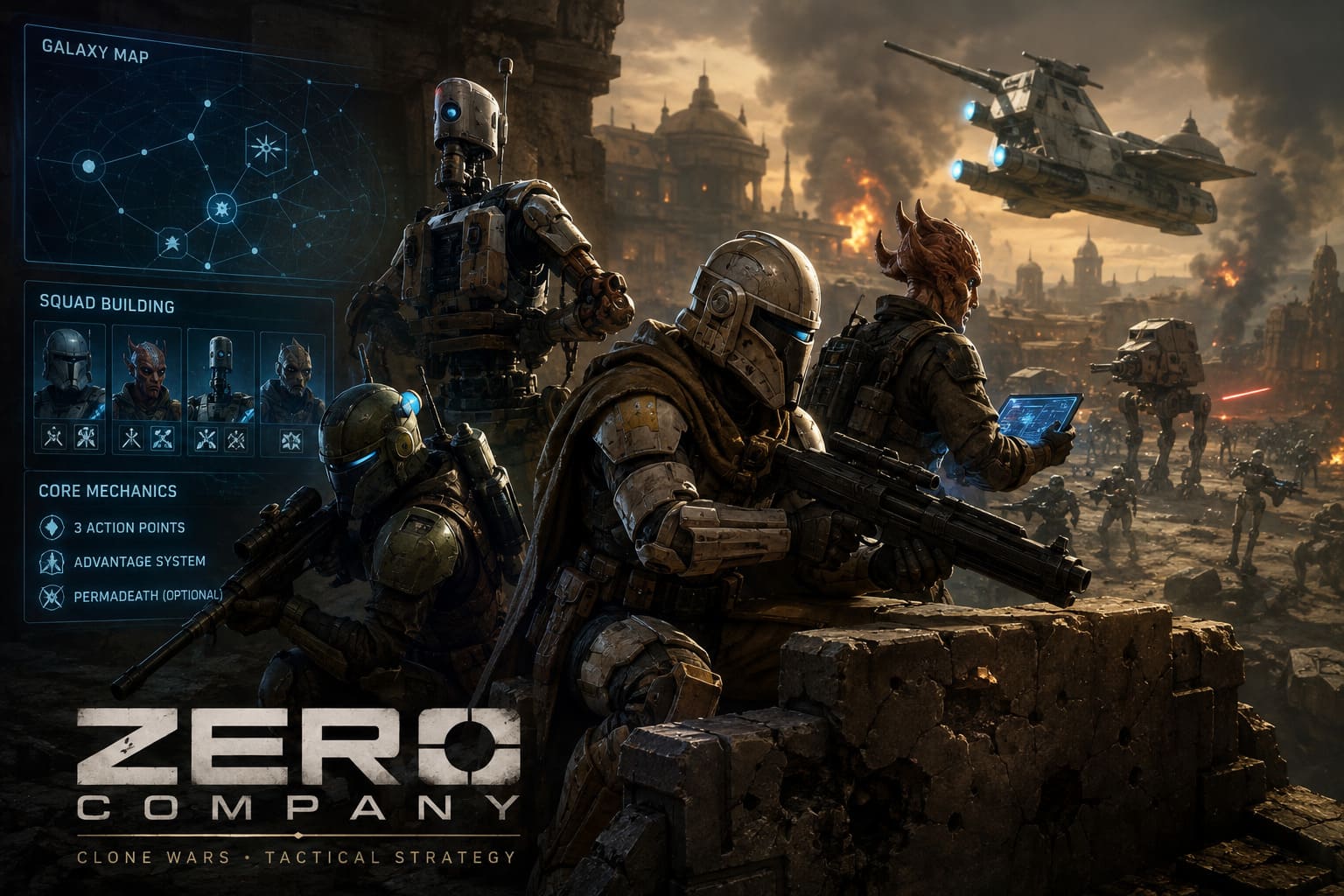
Zero Company gives you a mixture of story companions and customizable recruits, with different species, backgrounds, abilities and equipment.
The important thing is that your squad isn’t simply a collection of individually powerful characters.
The real fun comes from creating combinations.
Mandalorian-style mobility, droid defensive abilities, ranged specialists, melee-focused operators and Force-sensitive companions can all contribute to a squad with completely different tactical possibilities.
And then there is the equipment.
Gear isn’t just cosmetic.
Jump packs, specialized weapons, grenades, shields and other tools can dramatically change how an operator functions. A character who normally plays defensively can suddenly become a mobile flanker, while another can be built around protecting vulnerable teammates.
That’s exactly the kind of customization I want from a tactical RPG.
Some of the Tactical Possibilities
| Playstyle | Useful Strength | Tactical Idea |
|---|---|---|
| Aggressive | Mobility | Flank enemies and eliminate exposed targets |
| Defensive | Shields & Cover | Protect fragile ranged operators |
| Control | Force Abilities | Push or reposition dangerous enemies |
| Support | Team Synergy | Strengthen allies and extend squad efficiency |
The best moments happen when several of these ideas overlap.
For example, pushing an enemy from an elevated position into a waiting overwatch attack is exactly the kind of ridiculous Star Wars tactic that makes a system like this memorable.
Permadeath Makes Every Mistake Hurt
Now we get to the part that scares me.
Permadeath.
It’s optional, which I appreciate, because not everyone wants their favorite character permanently erased because a 72% shot decided to betray them.
But if you turn it on, losing a character can have consequences beyond simply losing a combat specialist.
Companions have their own stories, relationships, equipment and progression. Losing someone can therefore affect more than your next battle.
For players who want the ultimate challenge, Beskar Mode pushes things even further by making the campaign far less forgiving.
Personally, I think this is where Zero Company can become genuinely addictive.
You start caring about individual operators.
You remember who saved a mission.
You remember who almost died.
You remember the character who somehow survived three consecutive disasters.
And suddenly the squad stops feeling like a list of statistics.
They feel like your team.
The Den: The Part Between Battles That Actually Matters
When you’re finished blowing things up, Zero Company gives you The Den, your mobile base and strategic hub.
This is where the game slows down and lets you think about the bigger picture.
Facilities can be upgraded, characters can recover, equipment can be improved and relationships between squad members can develop.
The Med Bay is particularly important because injured characters aren’t always going to be immediately ready for another operation. That forces you to think about roster depth rather than simply taking your strongest four characters everywhere.
The Black Market provides another reason to keep investing in the base, giving you access to better gear and equipment.
Then there are the relationships between squad members.
The bonding system is something I particularly enjoy because it makes deployment decisions more complicated. You aren’t only asking which character is strongest. You’re also considering which characters work best together.
That is exactly the kind of strategic decision that makes a campaign feel personal.
The Holotable Turns the Galaxy Into Another Strategy Game
The strategic layer is centered around the Holotable and the Galaxy Map.
The campaign is divided into different zones and progression cycles, with missions and opportunities competing for your attention.
This creates one of the most important decisions in the entire game:
You can’t do everything.
Choosing one operation can mean missing another.
Story missions push the main campaign forward, while companion missions can develop relationships and unlock rewards. Other operations can generate resources, intelligence or influence.
That structure gives the campaign a sense of urgency.
You’re constantly deciding whether to pursue the immediate objective or spend time preparing for what comes next.
For a strategy-game fan, that’s exactly what I want from the layer outside combat.
Visuals and Presentation
From a presentation standpoint, Zero Company feels surprisingly ambitious for a tactical strategy game.
The Star Wars aesthetic is obviously doing some heavy lifting, but the game doesn’t rely solely on familiar sounds and locations.
The environments have that gritty Clone Wars feel, while the character presentation gives the squad enough personality to make them memorable.
The blaster sound effects, explosions, environmental destruction and cinematic presentation all help sell the fantasy.
And that’s important.
Turn-based strategy can sometimes feel sterile. Zero Company avoids that by making individual attacks feel dramatic without turning every battle into a movie.
There is still a board underneath everything.
But it feels like a Star Wars board.
Star Wars Zero Company Action Points Guide: Master the AP Economy
My Verdict: This Is More Than a Star Wars Skin
After playing through the mechanics, my biggest takeaway is that Star Wars Zero Company understands what makes tactical games addictive.
It isn’t simply about having a good story or putting recognizable Star Wars characters into a strategy game.
It’s about giving the player enough freedom to create their own stories.
The three-AP system encourages experimentation. Advantage rewards aggression. Squad bonds make roster management more personal. The Den gives you reasons to care about progression between missions, while the Galaxy Map adds another layer of decision-making.
And then there is the Star Wars setting itself.
For me, that’s the perfect combination.
I’ve played plenty of strategy games where I appreciate the mechanics but don’t become emotionally attached to the campaign. Zero Company has the opposite problem: I keep wanting to see what happens next, even when I should probably stop playing.
That “one more mission” feeling is usually the best compliment I can give a strategy game.
Can You Play Star Wars Zero Company on ROG Ally X at 60FPS? Performance Guide
Final Score
Star Wars Zero Company is a strong recommendation for fans of tactical RPGs, the Clone Wars era and anyone who enjoys building a squad that feels genuinely personal.
It borrows some familiar ideas, absolutely. But the combination of three-action-point combat, Advantage, deep customization, squad relationships and campaign management gives it enough personality to stand on its own.
If you’re looking for a Star Wars game where you can stop being the chosen hero for a while and instead command a group of dangerous, unpredictable professionals trying to survive in a galaxy that is falling apart, this is exactly the kind of game I’d recommend.
Just remember one thing:
Never trust a percentage shot.
The Force may be with you.
The RNG definitely isn’t.