Zombie Army 4 Dead War Co-Op Guide: Best LFG Strategies, Team Builds, and Nightmare Mode Tactics (2026)
I’ve played a lot of co-op shooters over the years, and Zombie Army 4: Dead War still has one of those multiplayer loops that can completely swallow an evening. You start with the intention of playing one chapter, then someone says, “Let’s do one more,” and suddenly you’re three hours deep, surrounded by undead soldiers, laughing at a ridiculous explosion that somehow saved the entire squad.
That’s what makes Zombie Army 4 special for me. It isn’t just about having good aim. You can have the best weapon in the game and still get destroyed if four players are running around like they’re playing four completely different games.
After spending plenty of time thinking about the way co-op encounters actually flow, I’ve put together my Zombie Army 4 co-op guide around the things that matter most: team roles, lobby setup, weapon choices, positioning, communication, LFG etiquette, and surviving the nastier difficulty settings.
If you’re playing with a regular squad, this should give you a strong foundation. If you’re jumping into matchmaking with random players, even better — these habits can save a run that would otherwise turn into total chaos.
Why Teamwork Matters So Much in Zombie Army 4
Zombie Army 4 looks like a straightforward third-person shooter, but the moment four players are involved, the game becomes much more tactical.
The problem is simple: zombies come from everywhere.
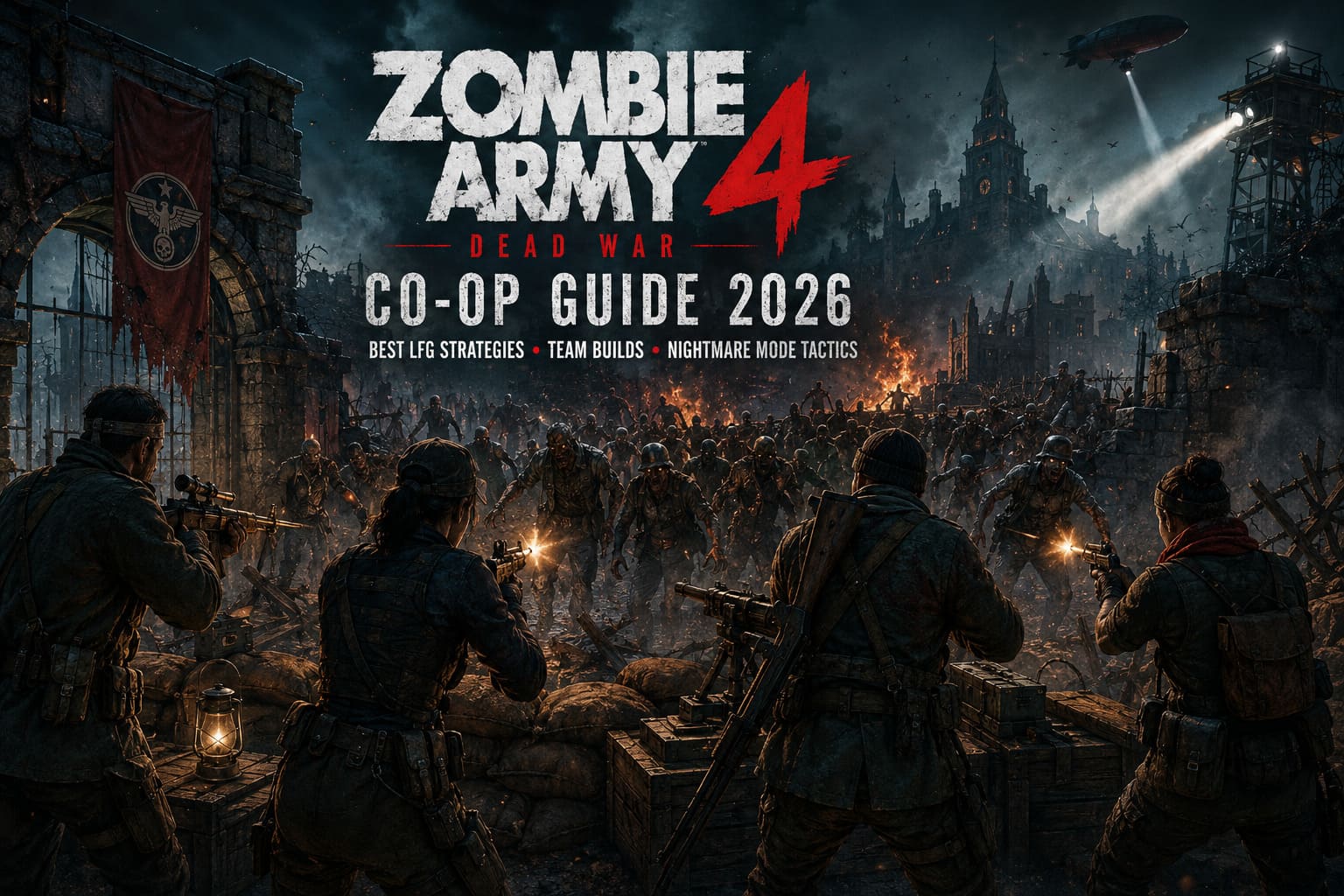
You can be focused on a heavy enemy in front of you while another wave is climbing over a wall behind you. A Sniper can appear on a distant rooftop. An Officer can start empowering nearby enemies. Then someone panics, runs through the middle of the squad, and suddenly everyone is shooting in different directions.
I actually think this is one of the best parts of the game.
The shooting feels great, but the real satisfaction comes from creating a defensive setup where every player has a job. When it works, the battlefield almost becomes a machine. One player controls the horde, another deletes elites, another watches the flanks, and the fourth keeps everyone alive.
That’s when Zombie Army 4 really shines.
Set Up Your Co-Op Lobby Before the Shooting Starts
One of the easiest mistakes is ignoring the lobby settings.
Zombie Army 4 supports up to four players in online co-op, but there’s no traditional split-screen experience to rely on. If you’re organizing a private squad, make sure your player slots are configured properly before launching.
If you’re waiting for friends, I strongly recommend checking the privacy settings on the empty slots rather than simply creating a public lobby and hoping everything works out.
There’s nothing more annoying than having a random player join, only to kick them because your friends are still loading in.
My Recommended Farming Setup
If your goal is leveling characters, experimenting with weapons, or working toward mastery and perk progression, you don’t necessarily need to torture yourself with the highest difficulty.
A very practical approach is:
| Setting | Recommended Choice |
|---|---|
| Difficulty | Easy |
| Enemy Setup | 4 Players |
| Team Size | 3–4 Players |
| Main Goal | XP, Mastery, Perks |
This gives your squad a much larger number of enemies without making every individual target unnecessarily punishing.
I like this setup because it turns a farming session into something enjoyable rather than stressful. You still get plenty of targets for headshots, explosives, melee attacks, and special abilities, but you’re not constantly fighting for your life.
For serious challenge runs, though, that changes completely.
Nightmare Mode Is Where Team Discipline Matters
Nightmare Mode is not something I’d recommend approaching like a casual four-player run.
Friendly fire becomes much more dangerous, enemy pressure is higher, and sloppy movement gets punished quickly. A player who normally runs directly through the middle of the team suddenly becomes a walking disaster.
The biggest lesson is simple:
Stop playing as four individuals. Play as one unit.
Before an encounter starts, decide who is controlling the front, who is watching long-range threats, and who is responsible for recovering teammates.
You don’t need military-level communication. Even a few basic callouts can make a huge difference:
- “Officer left.”
- “Sniper roof.”
- “Flamer incoming.”
- “Fall back.”
- “Heavy weapon here.”
- “Reviving.”
That’s enough.
My Favorite Four-Player Team Structure
I don’t think everyone should use the exact same loadout.
It might feel comfortable, but a balanced squad has much more flexibility.
I prefer dividing the team into three basic functions:
Crowd Control handles the mass of normal zombies.
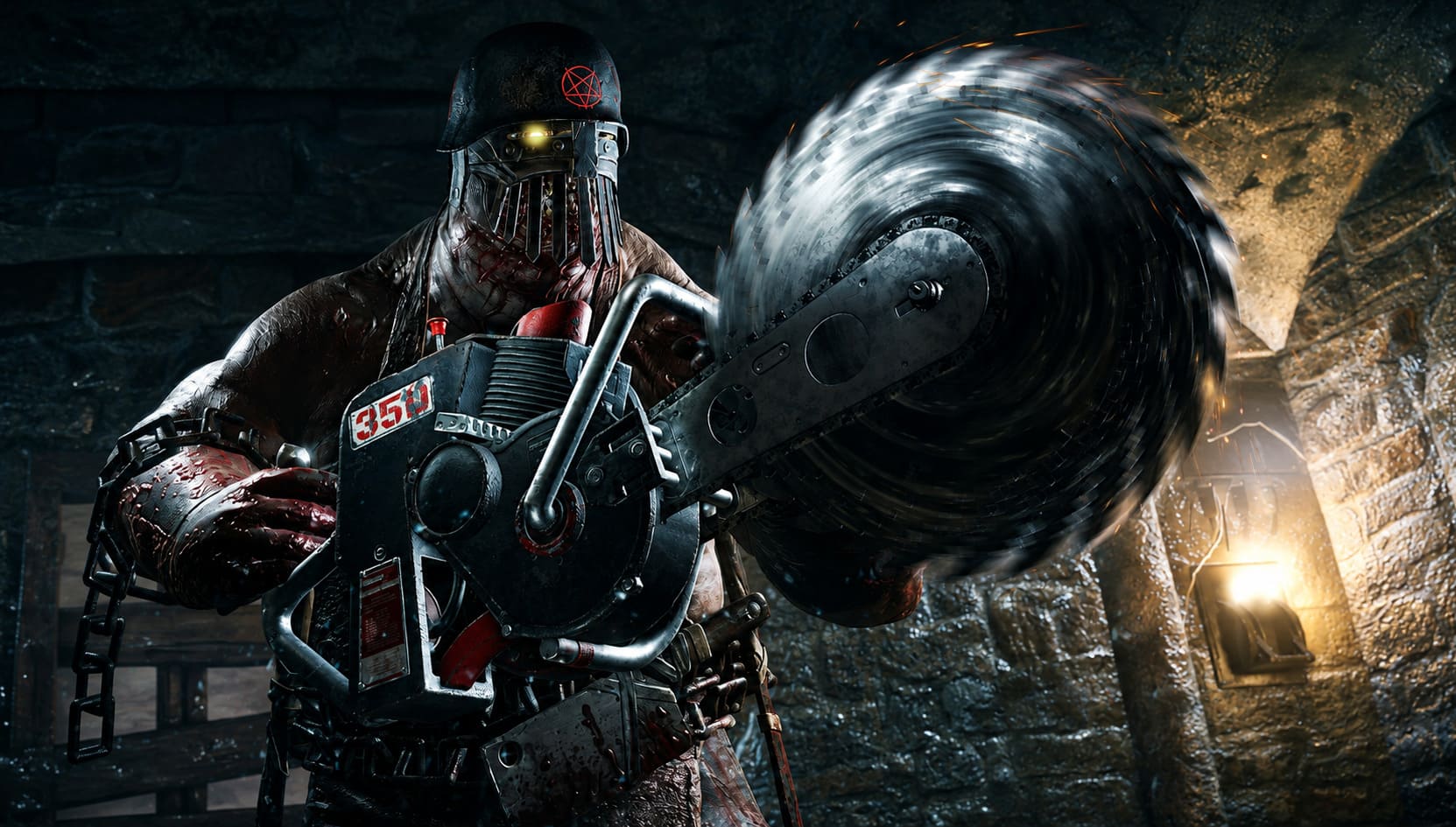
Elite Damage focuses on Officers, Gunners, Flamers, Butchers, and other high-priority targets.
Support/Utility keeps the squad functioning and reacts to emergencies.
The fourth player can flex between these roles depending on the map and encounter.
This doesn’t mean you have to choose a specific character just because they supposedly fit a particular role. Character abilities, perks, weapon upgrades, and your personal aim all matter.
A player who is extremely comfortable with a sniper rifle can contribute more as a dedicated marksman than someone forcing themselves into a “support” role they don’t enjoy.
Crowd Control Build: Keep the Horde Off Your Team
If you enjoy watching a wall of zombies suddenly collapse because your weapon started chaining elemental effects through them, this is the role for you.
For the primary weapon, I like experimenting with rifles such as the Gewehr 43 or M1 Carbine, especially when using electric modifications.
The goal isn’t necessarily to score the biggest single hit.
It’s to create breathing room.
Electric effects are particularly useful when several enemies are packed tightly together. A controlled burst can interrupt a group and give your sniper enough time to deal with a special enemy.
For a secondary weapon, a Trench Gun with suitable upgrades works beautifully when enemies start getting uncomfortably close.
And for the sidearm, a C96 Pistol configured for aggressive close-range use gives you something to fall back on when the horde breaks through.
The perks should support frequent takedowns and special attacks rather than simply stacking raw damage.
This is the build I’d give to the player who naturally enjoys being in the middle of everything.
Sniper Build: Delete the Problems Before They Reach You
This is probably my favorite role in a coordinated squad.
There’s something incredibly satisfying about watching an Officer appear in the distance, lining up the shot, and removing the problem before the frontline player even realizes how dangerous the situation could have become.
The Mosin-Nagant M91/30 is an obvious choice for players who enjoy precision shooting, while the SVT-38 can offer a different rhythm if you prefer a faster follow-up.
For your secondary, an MP44 gives you a useful emergency option when zombies start getting through the defensive line.
I also like carrying a powerful sidearm such as the Webley MKVI. It gives the sniper something dependable when wasting a valuable rifle round on a basic zombie simply isn’t worth it.
The most important thing, however, isn’t the weapon.
It’s discipline.
Do not constantly chase kills.
Your job is to remove the targets that can destroy your team’s formation.
If an Officer appears, shoot the Officer.
If a Sniper starts firing from a rooftop, deal with the Sniper.
If a Flamer is approaching the defensive position, prioritize it.
Your score will take care of itself.
Chokepoints Are Your Best Friend
This is probably the biggest gameplay tip I can give new Zombie Army 4 players.
Stop standing in open areas when you don’t have to.
Look for doors, narrow streets, staircases, gates, corridors, broken structures, and other locations that naturally force zombies into predictable lanes.
Once you find your defensive position, establish firing lanes.
The crowd-control players should stay closer to the entrance of the chokepoint. Snipers should move behind them and maintain clear sightlines.
And please, for the love of everything undead, don’t randomly run across your sniper’s screen.
It sounds obvious, but it happens constantly in co-op shooters.
If you know your teammate is lining up a headshot, stay out of the firing lane unless you have an emergency reason to move.
Save Heavy Weapons for the Moment You Actually Need Them
One of the habits I’ve started using more aggressively is treating heavy weapons like emergency equipment instead of disposable loot.
When you find something powerful such as a Flamethrower, Panzerschreck, Preacher Shotgun, Custom MG42, or Butcher’s Buzzsaw, don’t automatically burn through it because it looks cool.
Carry it toward your defensive position when possible.
If the squad eventually reaches a major defense or extraction sequence, you now have additional firepower waiting for you.
This is especially useful when the final waves start becoming overwhelming.
Think of heavy weapons as your emergency reserve.
You’ll appreciate having them later.
Target Priority: Shoot the Right Zombie First
Not every enemy deserves the same amount of attention.
This is where experienced teams separate themselves from chaotic ones.
1. Officers and Commanders
These enemies should immediately get your attention.
They can make nearby enemies significantly more dangerous and can create additional pressure with special attacks. If an Officer appears during a difficult defense, don’t ignore it because there are twenty regular zombies in front of you.
Kill the Officer first.
2. Enemy Snipers
Snipers are easy to underestimate because they’re usually nowhere near the main horde.
That’s exactly why they’re dangerous.
Assign one player to watch rooftops, towers, windows, and distant platforms. A single dedicated player can dramatically reduce the amount of random damage the team receives.
3. Gunners, Flamers, and Butchers
These enemies can destroy a defensive position if they’re allowed to walk directly into it.
The frontline should focus on staggering them with explosives or powerful attacks while the sniper looks for vulnerable areas.
The important thing is coordination.
Don’t have all four players dump ammunition into the same elite if another dangerous enemy is approaching from behind.
Communication Without a Microphone Still Works
Not everyone wants to use voice chat.
That’s completely fine.
The ping system can still be incredibly useful.
Mark special enemies. Highlight objectives. Point out heavy weapons. Warn teammates about threats.
And before activating an important objective, make sure the squad is actually together.
This is especially important before defense sequences and major progression moments.
Nothing hurts more than watching three players prepare for a brutal wave while the fourth teammate is halfway across the map looking for a collectible.
I’ve seen this kind of thing ruin otherwise perfect runs.
Keep Your Combo Alive
If you’re chasing high scores, the combo system deserves attention.
The multiplier can reach x666, and maintaining that momentum can dramatically improve the overall score of a run.
The trick is not to assume that every combo extension requires another massive fight.
When there are no obvious enemies nearby, look around the environment. Small targets such as rats, crows, and other minor environmental targets can help you keep the chain alive.
This is one of those mechanics that seems insignificant until you start deliberately building a high-score run.
Then it becomes incredibly useful.
Is Sally Face Available on PS5 and Xbox Series X/S? Next-Gen Performance Guide (2026)
LFG Strategy: How I’d Build a Random Squad
If you’re using LFG or matchmaking rather than playing with friends, I’d keep the strategy simple.
Don’t demand that everyone use a hyper-specific meta build. Instead, look for players who understand basic positioning and target priority.
My ideal random squad would have:
- One dedicated sniper
- One crowd-control player
- One flexible damage/support player
- One adaptable player who can fill whatever the team lacks
That’s enough.
The biggest red flag isn’t a strange weapon choice.
It’s a player who constantly runs ahead, ignores objectives, refuses to revive teammates, or activates encounters while everyone else is still exploring.
A slightly weaker player who stays with the squad is often far more valuable than someone with perfect aim who treats the campaign like a solo speedrun.
Final Thoughts From a Zombie Army 4 Player
What keeps me coming back to Zombie Army 4: Dead War is how much better the game becomes when everyone starts thinking about the battlefield instead of individual kills.
A good squad doesn’t simply shoot faster.
It controls space.
You establish a chokepoint. One player controls the horde. Another watches the rooftops. The sniper removes an Officer. Someone grabs the heavy weapon that was saved earlier. Suddenly the entire fight feels manageable.
And then, inevitably, something goes horribly wrong.
Someone gets surrounded. A Butcher breaks through. Everyone starts shooting. Explosions go everywhere.
Honestly?
That’s part of why I love this game.
The best co-op moments aren’t always the perfectly executed ones. Sometimes they’re the ridiculous recoveries where the entire squad is one hit away from disaster and somehow manages to survive.
So if you’re jumping back into Zombie Army 4 in 2026, my advice is straightforward: build your team around roles, use chokepoints, communicate targets, save heavy weapons, and stop treating every encounter like a race for kills.
Once your squad starts moving and fighting together, the undead hordes become far less intimidating.
And when Nightmare Mode eventually destroys you anyway, at least you’ll have a good story to tell.