
Taival Beginner Guide: Best Early Game Weapons Ranked, Crafting, and Professions Tutorial (2026)
There are plenty of survival RPGs that promise freedom, exploration, and meaningful progression. Very few actually make every system feel connected from the moment you spawn into the world. Taival, Bonobo Software’s voxel-inspired co-op RPG that entered Steam Early Access in 2026, is one of those rare exceptions.
After spending hours experimenting with different builds, testing weapon combinations, and rebuilding my base more times than I’d like to admit, one thing became obvious: the first couple of hours will determine whether your adventure becomes smooth and rewarding or turns into a constant struggle for resources.
Unlike many sandbox RPGs, Taival doesn’t simply throw stronger enemies at you. It expects you to understand how weapons, crafting stations, gathering routes, professions, and your shapeshifting Henki companion all support one another.
If you’re starting your very first world, this guide covers everything you actually need to know—from choosing the strongest beginner weapon to building your first production chain and selecting the profession that fits your preferred playstyle.
Best Early Game Weapons Ranked
No weapon category is completely useless in Taival. Each one fills a particular role, but some clearly offer a much smoother experience during the opening hours.
Here’s how I would rank them after extensive early-game progression.

| Tier | Weapon Type | Why It Works |
|---|---|---|
| S | One-Handed Sword & Shield | Best balance of offense and defense |
| S | Short Bow | Safe ranged damage and excellent utility |
| A | Two-Handed Club / Greatmace | Incredible stagger and crowd control |
| A | Daggers | Massive burst damage with skilled positioning |
| B | Spear & Polearms | Great reach but limited flexibility later |
One-Handed Sword and Shield (S Tier)
If someone asked me for only one recommendation, this would be it every single time.
The sword feels incredibly responsive. Attack animations are quick enough that mistakes rarely become fatal, while the shield completely changes how combat flows.
Early wildlife, roaming bandits, and dungeon creatures often telegraph their attacks clearly. Learning to parry them is one of the most valuable skills in the entire game.
A successful parry doesn’t simply block incoming damage.
It leaves enemies staggered, opening a massive opportunity for powerful counterattacks.
Even better, stamina consumption remains manageable compared to heavier weapon classes, allowing longer engagements without constantly retreating.
Advantages
- Fast attack speed
- Reliable stamina management
- Excellent survivability
- Strong against nearly every starter enemy
- Easy weapon progression into Copper and Iron tiers
Short Bow (S Tier)
A surprising number of new players underestimate ranged combat.
Don’t.
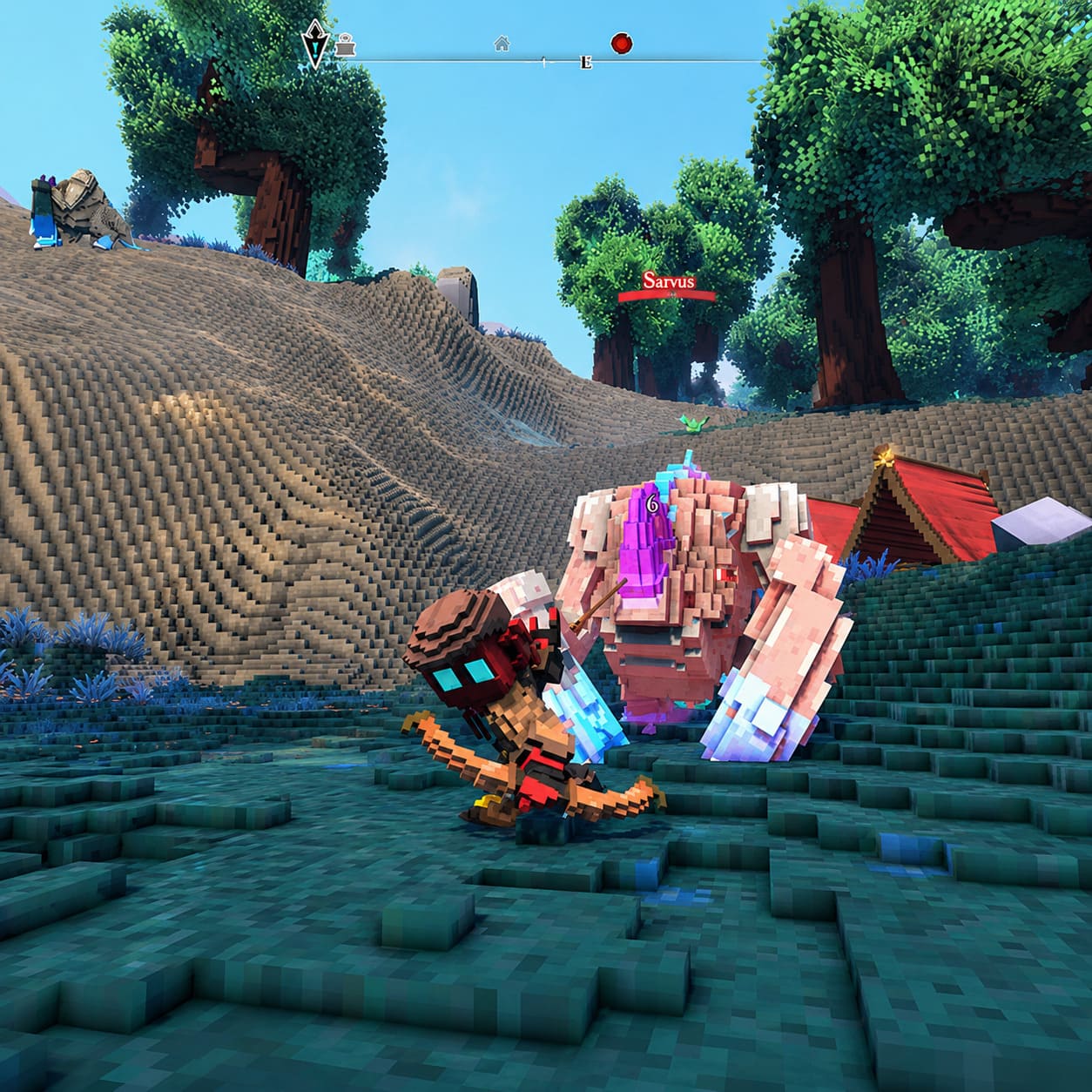
Even if you prefer melee weapons, always keep a bow in one of your quick slots.
Flying enemies become dramatically easier.
Aggressive animals can be weakened before they ever reach you.
Bandit camps become far less dangerous when guards are eliminated from elevated positions.
The bow also works beautifully alongside Henki abilities that distract enemies while you fire safely from distance.
Basic flint arrows are inexpensive, while elemental arrows become available fairly early and significantly improve overall damage.
Two-Handed Clubs and Greatmaces (A Tier)
If you enjoy watching enemies collapse after a single devastating swing, heavy blunt weapons are incredibly satisfying.
They attack slower than swords, but every hit carries enormous impact.
Large creatures frequently lose their posture after consecutive heavy strikes.
Skeletons and armored enemies also take noticeably better damage from blunt attacks than from slashing weapons.
The overhead slam deserves special mention.
When surrounded inside ruins, this attack can knock multiple opponents backward, giving both you and your teammates valuable breathing room.
The slower attack speed requires patience, but experienced players will appreciate the control these weapons provide.
Daggers (A Tier)
Daggers reward precision more than anything else.
They’re easily the fastest melee weapons available early on, consuming very little stamina while chaining together rapid attack combos.
The true highlight is stealth.
Sneaking behind unaware enemies allows devastating backstab damage capable of deleting stronger targets before combat even begins.
When paired with a defensive Henki form or a co-op teammate holding enemy attention, dagger users become terrifying assassins.
The only real downside is range.
Poor positioning gets punished immediately.
Spears and Polearms (B Tier)
Spears aren’t bad.
They’re simply more specialized.
Their extended reach makes early encounters much safer, especially while learning enemy attack patterns.
Being able to stab over rocks, fences, and environmental obstacles gives beginners additional protection.
Thrown spear attacks also deal excellent burst damage.
Unfortunately, retrieving your weapon after every throw isn’t always practical during hectic fights.
As enemy variety increases later, the straightforward moveset starts feeling restrictive compared to other weapon classes.
Understanding Taival’s Crafting Progression
Crafting isn’t just another side activity.
It is the backbone of progression.
Every major equipment upgrade begins with gathering raw resources before transforming them through multiple production stages.
Ignoring crafting means permanently falling behind enemy difficulty.

Step One: Gather Everything
During your first exploration sessions, don’t become overly selective.
Collect nearly every useful resource you encounter.
Focus especially on three major categories.
Plants
Flax, herbs, cotton fibers, and wild vegetation appear throughout the starting biome.
Most can be harvested immediately without specialized equipment.
These materials become cloth, medicine, rope, and numerous crafting ingredients.
Wood
Wood remains one of the most valuable resources throughout the game.
Softwood trees provide logs for construction, crafting stations, fuel, and early weapons.
As better axes become available, hardwood opens access to stronger structures and advanced recipes.
Never pass a dense forest without filling your inventory.
Ore
Copper represents your first major technological milestone.
Search cliff walls, caves, and rocky hillsides for exposed ore veins.
A basic pickaxe handles early deposits without much trouble.
Iron appears later but follows the same gathering principles.
Building your first base near both timber and copper dramatically reduces travel time.
Processing Resources Efficiently
Raw materials rarely become useful immediately.
Everything passes through specialized workstations.
Understanding this production chain saves countless hours.
| Workstation | Primary Function |
|---|---|
| Workbench | Basic tools, handles, cloth processing |
| Furnace | Smelting ore into metal ingots |
| Blacksmith’s Anvil | Weapons, armor, upgraded equipment |
Workbench
Your very first crafting station.
Nearly every progression path begins here.
Handles, primitive tools, linen processing, rope, construction materials, and numerous intermediate components all originate from the workbench.
Build this immediately after establishing your first shelter.
Furnace
Raw copper has no practical value until refined.
The furnace converts mined ore into usable ingots using wood or charcoal as fuel.
Maintaining a healthy stockpile of fuel becomes increasingly important as your production expands.
Smelting should remain active whenever possible.
Blacksmith’s Anvil
This is where progression truly accelerates.
Once enough ingots have been produced, constructing an anvil unlocks proper weapons and armor.
Copper gear represents an enormous leap over primitive stone equipment.
The improvement in damage, durability, and mining efficiency becomes noticeable almost instantly.
Don’t Ignore Material Properties
One feature that genuinely impressed me is Taival’s material variation system.
Resources aren’t simply stronger because they’re rarer.
Different material types influence equipment behavior.
Hard materials generally provide:
- Higher physical damage
- Better durability
- Increased armor
- Greater stagger resistance
Softer materials usually favor:
- Faster attack speed
- Improved movement
- Better magical scaling
- Reduced equipment weight
This creates meaningful decisions.
A lightweight sword crafted with flexible materials feels completely different from a heavier version designed for maximum damage.
Experimenting with combinations becomes surprisingly addictive.
Which Profession Should You Choose First?
Professions shape your long-term progression just as much as combat.
Although nothing prevents learning multiple disciplines eventually, specializing early provides significant advantages.
Blacksmithing
If combat is your primary focus, Blacksmithing deserves serious consideration.
Forging stronger weapons earlier than everyone else completely changes the pace of progression.
Benefits include:
- Better melee weapons
- Durable armor
- Advanced gathering tools
- Excellent income through crafted equipment
Groups especially benefit from having one dedicated smith.
Tailoring
This ended up being my favorite early profession.
Inventory space disappears ridiculously fast.
Tailors solve that problem.
Additional bags allow much longer exploration trips before returning home.
Tailoring also unlocks lighter armor sets perfect for archers, rogues, and mobility-focused characters.
Quality-of-life improvements alone make this profession worth choosing.
Alchemy
Healing resources always become scarce during extended adventures.
Alchemy solves this beautifully.
Crafted potions restore health, replenish stamina, and temporarily enhance combat performance.
Elemental weapon coatings provide another substantial damage boost against specific enemy types.
Players tackling difficult bosses early should never overlook this profession.
Jewelry Crafting
Jewelry starts slowly but scales incredibly well.
Simple rings already provide meaningful bonuses like:
- Increased Health
- Larger Mana Pool
- Better Resistances
- Improved Henki abilities
Later accessories become central pieces of specialized character builds.
It’s an investment that pays off throughout the entire game.
Taival Game 2026: Handcrafted Open World Map & Fast Skill Tree Leveling Guide
The First Two Hours: An Efficient Progression Route
Players often waste valuable time wandering without direction.
Following a structured opening dramatically improves overall progression.
Here’s the approach I’d recommend.
- Finish the tutorial cave and unlock your Henki companion.
- Gather every loose stone, branch, fiber, and plant you encounter.
- Craft a primitive axe and pickaxe immediately.
- Hunt weaker wildlife while practicing sword parries.
- Scout for an area containing nearby trees, water, and copper deposits.
- Establish your first magical home base.
- Build a Workbench before anything else.
- Construct a Furnace and begin refining copper continuously.
- Place a Blacksmith’s Anvil as soon as enough ingots are available.
- Upgrade into full Copper equipment before venturing into more dangerous regions.
- Select either Tailoring for inventory expansion or Blacksmithing for faster combat progression.
Taival Henki Companion Guide: How to Unlock All Shapeshifting Forms and Variants
Final Thoughts
Taival immediately stands out because none of its systems exist in isolation. Combat rewards preparation, gathering fuels crafting, professions unlock long-term specialization, and every improvement feeds directly back into exploration. That loop makes even routine resource runs feel worthwhile instead of repetitive.
For newcomers, the safest path is difficult to argue against. A One-Handed Sword and Shield offers the smoothest learning curve, a Short Bow handles threats that melee weapons struggle with, and an early investment in Tailoring or Blacksmithing provides lasting value well beyond the opening hours. Build your first settlement near copper and timber, keep your furnaces running whenever possible, and don’t underestimate the flexibility of different material types when crafting equipment.
Master those fundamentals, and you’ll spend far less time fighting the game’s progression systems—and far more time exploring Taival’s interconnected world with a well-equipped Henki companion at your side.


