
Last Pirates Die Together Solo Guide: Survival and Looting Strategy
Last Pirates Die Together looks like the kind of game built for a group of friends yelling at each other while a physics-based disaster unfolds on screen. That is absolutely part of its charm. With four pirates running around, elastic arms flailing everywhere, treasure getting dragged through doors, and monsters turning every mistake into a screaming match, the chaos practically creates itself.
Then you load into an island alone.
Suddenly, the funny physics become a survival tool. Every enemy encounter matters. Every heavy treasure item becomes a logistics problem. There is nobody behind you with a musket, nobody to revive you, and nobody to blame when your entire haul disappears because you got greedy ten seconds from the boat.
I actually think the solo experience is one of the more interesting ways to approach Last Pirates Die Together. It strips away the party-game safety net and forces you to understand what the island is really doing.
Your objective is simple: get in, grab valuable loot, avoid unnecessary fights, and get back to the ship before the island decides you’ve stayed long enough.
That sounds easy.
It isn’t.
Your Elastic Arms Are Your Best Solo Weapon
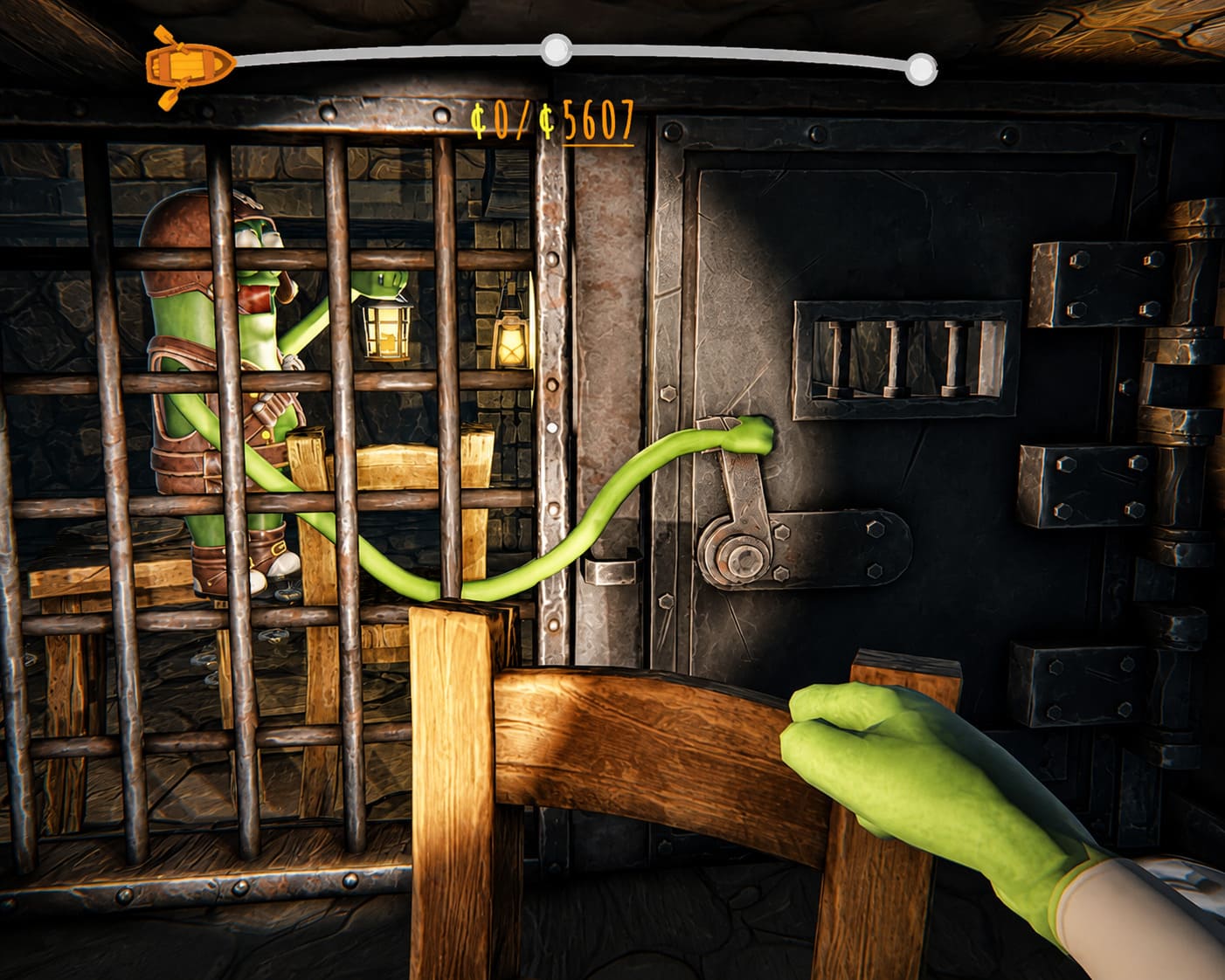
The strange, stretchy arms are easy to treat as a comedy mechanic when playing with friends. Solo, they become one of your biggest advantages.

You should constantly think about your arms as a form of remote interaction. You don’t always need to put your pirate’s body in danger just to grab something.
Grab Before You Step
See treasure sitting next to a suspicious doorway? Don’t walk straight toward it.
Stretch your arm.
If an object is sitting close to a trap, dark corner, or potentially hostile area, grabbing it from a safer position can prevent an unnecessary disaster. This becomes particularly useful when you’re already carrying valuable loot and don’t want to risk another close-range interaction.
Clear Your Escape Route Early
One of the biggest mistakes new solo players make is thinking about the escape only after they have filled their inventory.
I prefer doing the opposite.
When you enter a building, clear the route you expect to use on the way out. Pull apart loose doors, remove obstacles, and open up pathways with your elastic arms while the area is still relatively quiet.
It might feel like you’re wasting time.
You’re not.
When ghosts start appearing and you’re carrying expensive treasure, discovering that a door is blocking your escape is exactly the kind of stupid problem that ends a good run.
Don’t Fight the Physics
The physics system can make heavy treasure surprisingly awkward. Some objects are clearly intended to be handled by multiple pirates, and attempting to drag them around solo can turn your character into a slow-moving target.
That’s where carts, wheelbarrows, boxes, pots, and other storage options become incredibly important.
If something is too heavy to carry efficiently, stop trying to be a hero.
Put it in a mobile container if possible. If there is no practical way to move it without destroying your mobility, leave it.
A treasure item sitting on the island is worthless if you die trying to bring it home.
Solo Looting Is About Value Per Trip
When you’re playing with a full crew, you can spread the workload. One player handles a weapon, another carries treasure, another deals with environmental obstacles, and someone inevitably does something incredibly stupid in the background.
Solo players don’t have that luxury.
Your inventory and movement speed are your economy.

The best solo loot isn’t necessarily the biggest loot. It’s the treasure that gives you high value without turning you into a walking target.
Prioritize smaller valuables such as:
- Gold coins and other compact valuables
- Chalices and small antiques
- Jewelry and lightweight collectibles
- Items that can be stacked or stored efficiently
Heavy treasure should be treated as a logistics challenge rather than an automatic pickup.
If you find a large chest deep inside a dangerous building, ask yourself one question:
Can I get this back to the ship without making myself dramatically slower?
If the answer is no, keep searching.
That’s one of the hardest lessons to learn because your pirate brain naturally screams, “It’s treasure! TAKE IT!”
That’s exactly how the island gets you.
The Cart Is Basically Your Solo Inventory Upgrade
If you’re spending your saved gold between runs, mobile storage should be high on your priority list.
A better cart isn’t flashy. It doesn’t give you a huge combat advantage. It won’t make a ghost disappear.
But it can dramatically improve the amount of treasure you can extract during a successful run.
Instead of making repeated trips from the interior of an island back toward the ship, you can organize multiple pieces of loot and move them together.
For solo players, efficiency is survival.
Every unnecessary trip exposes you to more enemies, more traps, more physics accidents, and more time under Davy Jones’ attention.
Recommended Solo Upgrade Priority
| Priority | Upgrade Focus | Why It Matters |
|---|---|---|
| 1 | Storage / Cart | Lets you move more treasure with fewer trips |
| 2 | Reliable Weapon | Gives you an emergency option when stealth fails |
| 3 | Utility Tools | Helps clear obstacles and improve mobility |
| 4 | Additional Upgrades | Build around the problems you encounter most often |
Your exact spending order can change depending on how your runs are going, but the general philosophy stays the same: buy things that make successful extraction easier rather than things that encourage unnecessary combat.
Don’t Underestimate the Monkey
The assistant monkey might look like comic relief, but solo players should treat it as a practical resource.
It isn’t your personal bodyguard. Don’t expect it to walk into a high-tier ghost encounter and save the day.
Instead, think of the monkey as an extra set of hands.
If it can carry smaller loot or follow you with storage containers, use that capability aggressively. You effectively gain additional carrying capacity without requiring another human player.
That matters because solo extraction is fundamentally an inventory-management game.
The more valuable loot you can move without slowing your own character down, the better.
The Island Wants You to Panic
The environmental hazards are where Last Pirates Die Together can go from hilarious to brutally unforgiving.
The physics engine doesn’t care that you just found something valuable.
You can have an excellent haul and then launch yourself into a trap because you moved too quickly through a cramped hallway.
Watch the Ceiling
Guillotine-style traps are particularly nasty because players naturally focus on what is directly in front of them.
Look up.
If you’re moving through unfamiliar structures, don’t sprint blindly. Check the ceiling, inspect suspicious openings, and pay attention to areas that look deliberately designed to punish reckless movement.
Watch the Floor
Pits can be equally dangerous. Falling isn’t just about taking damage. Losing control of your character or getting stuck somewhere can destroy an otherwise successful extraction.
Solo runs demand a different rhythm.
Move deliberately when you’re in unfamiliar territory. Sprint when you know the route.
That distinction can save a lot of treasure.
Davy Jones Creates the Real Solo Timer
The most important thing to understand about a solo run is that you aren’t simply fighting enemies.
You’re fighting time and escalation.
Davy Jones acts as the pressure mechanism behind the island. The longer you remain, and the more noise you create, the more dangerous your surroundings can become.
Breaking doors.
Smashing objects.
Making noise.
Spending too long in one area.
These actions can contribute to attracting unwanted attention.
Eventually, the island can start feeling like it has decided you’re overdue for an appointment with the dead.
This is why I strongly recommend having a personal extraction threshold.
Don’t wait until the island is completely flooded with ghosts before deciding to leave.
If you’ve already collected a respectable haul and the pressure is rising, leave while the run is still under your control.
A safe extraction with 60% of your theoretical maximum loot is infinitely better than dying with 100% of it.
How to Handle Phantoms and Ghosts Solo
Combat is useful.
It should not be your default answer.
When you’re alone, killing one enemy can create another problem if the noise attracts something worse.
Basic ghosts and phantoms can become much more manageable when you control the environment.
If an enemy spots you, consider breaking line of sight rather than immediately attacking.
Turn a corner.
Close a door.
Move into a hiding position.
Use the structure around you.
The goal isn’t to prove that your weapon works. The goal is to reach the boat with treasure.
If combat becomes unavoidable, create space first. Fighting in a cramped corridor while carrying valuable loot is asking for trouble.
You want room to dodge, reposition, and retreat.
Never let one enemy turn into three because you were too stubborn to run.
What to Do When the Island Starts Swarming
There is a point during some runs where stealth stops being realistic.
The ghost population increases.
The atmosphere changes.
You hear more activity around you.
The island starts feeling less like a treasure hunt and more like a collapsing nightmare.
That’s your extraction alarm.
Do not keep looting because “one more item” is nearby.
Drop unsecured heavy treasure if necessary.
Grab the most valuable portable loot.
Take your cart if it remains manageable.
Then run.
This is where having prepared an escape route at the beginning of the run pays off. You don’t want to be improvising a route through a building while enemies are already chasing you.
Your objective has changed.
Looting is over. Survival is now the only mission.
My Ideal Solo Run Routine
After spending enough time with games built around extraction mechanics, I’ve found that the safest approach is to make each run follow a repeatable structure.
1. Landing
When you leave the ship, don’t immediately charge toward the first building.
Look around.
Check for nearby carts, boxes, or useful storage. Learn the immediate terrain and identify at least two possible routes back to the boat.
You’re establishing your emergency plan before anything goes wrong.
2. Initial Clearing
Enter the first structure carefully.
Don’t instantly grab every shiny object you see.
Use your elastic arms to remove obstacles, open paths, and create a safe retreat. Deal with isolated enemies only when doing so makes the route safer.
Think of this as building a temporary safe zone.
3. Efficient Looting
Now start collecting.
Take lightweight, high-value objects first. Use containers and carts for heavier pieces. Keep your inventory organized rather than randomly grabbing everything.
If you have to choose between a compact valuable item and a giant object that takes forever to move, I’ll take the compact item every time.
4. Constant Extraction Checks
Don’t wait until you’re overloaded before thinking about leaving.
Periodically look at your situation:
- How much loot do I have?
- How far am I from the ship?
- How dangerous has the area become?
- Do I still have a clean escape route?
If the answers are getting ugly, start heading home.
5. Extraction
Once you decide to leave, commit.
Don’t stop halfway back because you spotted another chest.
Don’t wander into another building.
Don’t turn around to investigate a noise.
Get to the ship.
Secure your treasure.
Take the successful run.
The island will still be there next time.
Solo Combat vs. Solo Stealth
| Situation | Best Approach | Reason |
|---|---|---|
| Isolated Ghost | Fight if necessary | Low immediate risk |
| Multiple Enemies | Retreat | Avoid escalation |
| Heavy Loot Nearby | Use Cart | Preserve movement speed |
| Dangerous Trap Area | Slow Down | Physics can punish rushing |
| Rising Enemy Activity | Extract | Pressure is increasing |
| Large Swarm | Run | Combat wastes time and mobility |
The important thing here is flexibility. A good solo player isn’t someone who never fights.
It’s someone who knows when fighting is stupid.
Last Pirates Die Together Gold Fast Guide: Cursed Treasures & Survival Strategies (2026)
The Golden Rule: Never Let Greed Decide the Extraction
This is the biggest lesson I’d take from solo Last Pirates Die Together.
The game constantly tempts you.
You find a valuable object.
Then another.
Then something even better.
Suddenly you’re deep inside the island with a cart full of treasure, your escape route is getting crowded with ghosts, and you’re thinking, “I can grab just one more.”
No.
You probably can’t.
That’s the exact moment when a successful run becomes a catastrophic run.
Solo extraction rewards players who recognize when they’ve already won.
You don’t need the maximum possible loot every time. You need consistent successful extractions.
Ten moderate runs where you survive will usually teach you more and earn you more than repeatedly attempting one enormous haul and losing everything.
Last Pirates Die Together Rubber Arms Guide: Looting, Maps, and Survival Mechanics (2026 Update)
Final Verdict: Play Solo Like a Pirate With Something to Lose
Last Pirates Die Together becomes surprisingly tense when you’re the only pirate on the island. Without teammates, every mechanic suddenly has more weight. The elastic arms aren’t just funny. Carts aren’t just convenient. The monkey isn’t just a joke. Even the layout of a doorway can determine whether you make it home.
The strongest solo strategy is built around four principles:
Move smart. Carry efficiently. Avoid unnecessary fights. Leave before the island overwhelms you.
Use your elastic arms to interact with dangerous objects from a safe distance. Clear escape routes before filling your inventory. Invest in carts and practical equipment. Let the monkey handle whatever extra carrying work it can manage. Watch for traps, control your noise, and treat Davy Jones’ escalating pressure as a timer rather than a suggestion.
Most importantly, don’t confuse bravery with greed.
You’re not trying to prove that you can empty the entire island.
You’re trying to return to your ship alive with enough treasure to make the next run even better.
That’s the solo pirate’s real win condition.


