Crimson Moon Gear and Weapon Arts Build Guide (2026)
After spending a lot of time with action RPGs, especially games that borrow ideas from Soulslikes and roguelites, I’ve learned one thing pretty quickly: a complicated build system isn’t automatically a good one. What matters is whether the different parts of the build actually work together when you’re under pressure.
That’s where Crimson Moon gets interesting.
There are no traditional classes telling you that you’re a tank, assassin, mage, or damage dealer. Instead, your identity as a Nephilim comes almost entirely from the equipment you bring into a hunt, the Weapon Arts attached to your weapons, the temporary Boons you pick up, and the Angel you choose to follow.
That sounds flexible on paper, but it also means you can easily create a build that looks powerful in the inventory screen and falls apart the moment a ward fills with enemies.
I’ve put together this Crimson Moon gear and Weapon Arts build guide around the things that actually matter during a run. If you’re preparing for the game’s September 1, 2026 launch, these are the systems I’d pay the most attention to.
The Nine Equipment Slots Explained
The first thing to understand is that your loadout isn’t just about finding the weapon with the biggest damage number.
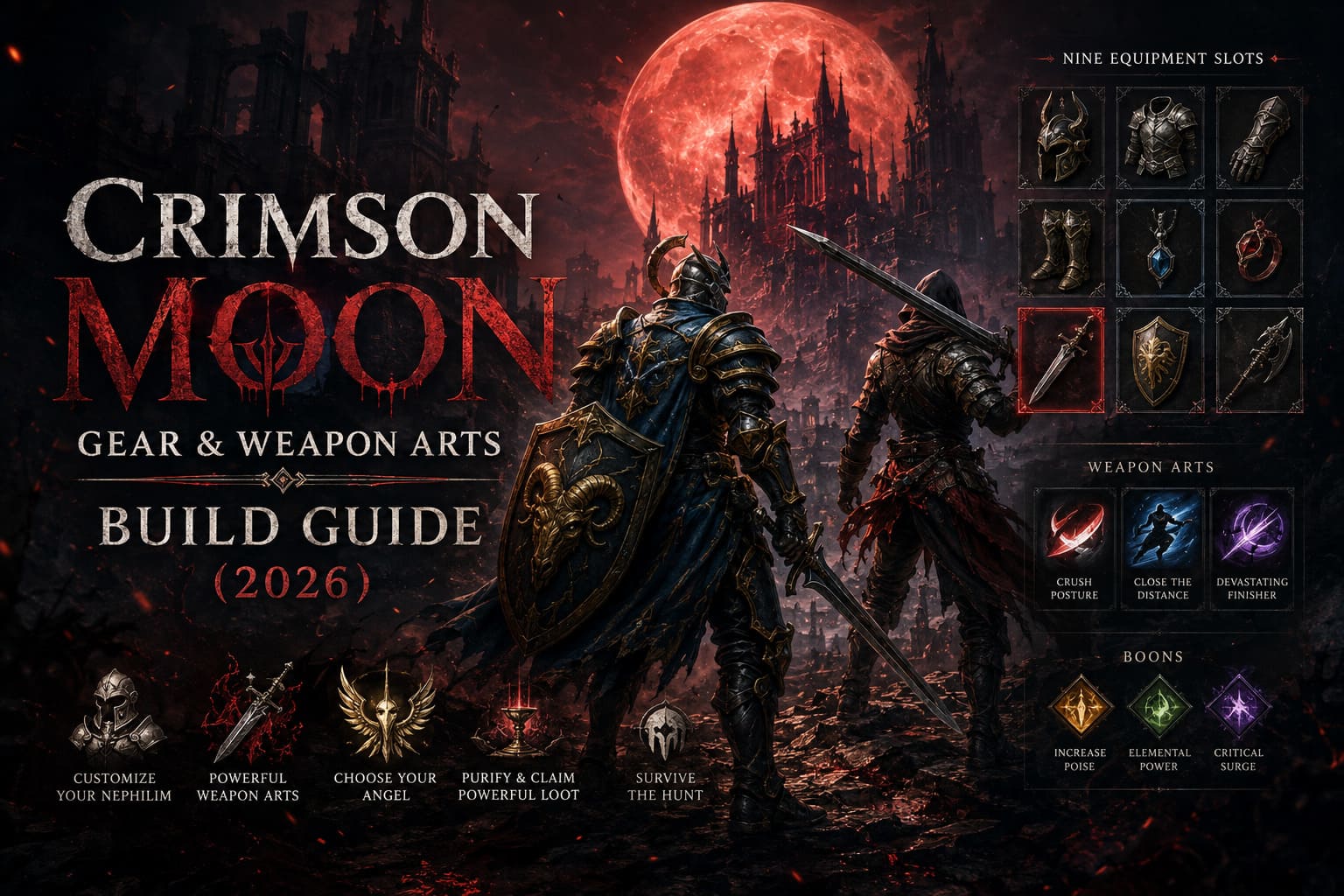
Your Nephilim has several equipment slots, and each one can contribute to the final build. Armor controls survivability and weight, while trinkets can dramatically push certain offensive or defensive stats.
| Equipment | Main Purpose | Build Impact |
|---|---|---|
| Helmet | Defense and modifiers | Survivability, resistances |
| Chestplate | Core armor | Defense, weight, set bonuses |
| Gauntlets | Protection and bonuses | Combat modifiers |
| Greaves | Defense and mobility | Weight and resistance |
| Trinket 1 | Special modifier | Damage or utility |
| Trinket 2 | Special modifier | Build specialization |
| Weapon | Primary damage | Moveset and Weapon Art |
| Shield | Defense | Blocking and parrying |
| Two-Handed Weapon | Heavy offense | Damage and posture pressure |
One detail I really like here is the choice between one-handed weapon + shield and a two-handed weapon.
That isn’t simply a visual preference. It changes how you approach practically every encounter.
A shield setup gives you more room for mistakes. You can block, parry, control enemy groups, and generally play closer to the frontline. Two-handed weapons, meanwhile, are much more about controlling the fight through aggression, reach, stagger potential, and raw damage.
For new players, I’d recommend starting with the safer shield setup. Once you understand enemy attack patterns, switching to a two-handed build becomes much more rewarding.
Gear Rarity and Why You Shouldn’t Chase Numbers Blindly
As you progress through Gildenarch, you’ll encounter gear across several rarity levels, including Common, Rare, Epic, and Legendary.
Naturally, higher rarity usually means better stats and more opportunities to customize the item. But don’t make the classic RPG mistake of immediately replacing something because another item has slightly higher armor.
A piece with the right modifiers can be considerably more useful than a higher-level item with bonuses that don’t fit your playstyle.
For example, a Weapon Art-focused build can get considerably more value from Weapon Art cooldown reduction than a small increase in raw physical defense. Likewise, a critical-focused setup will want critical-related bonuses wherever possible.
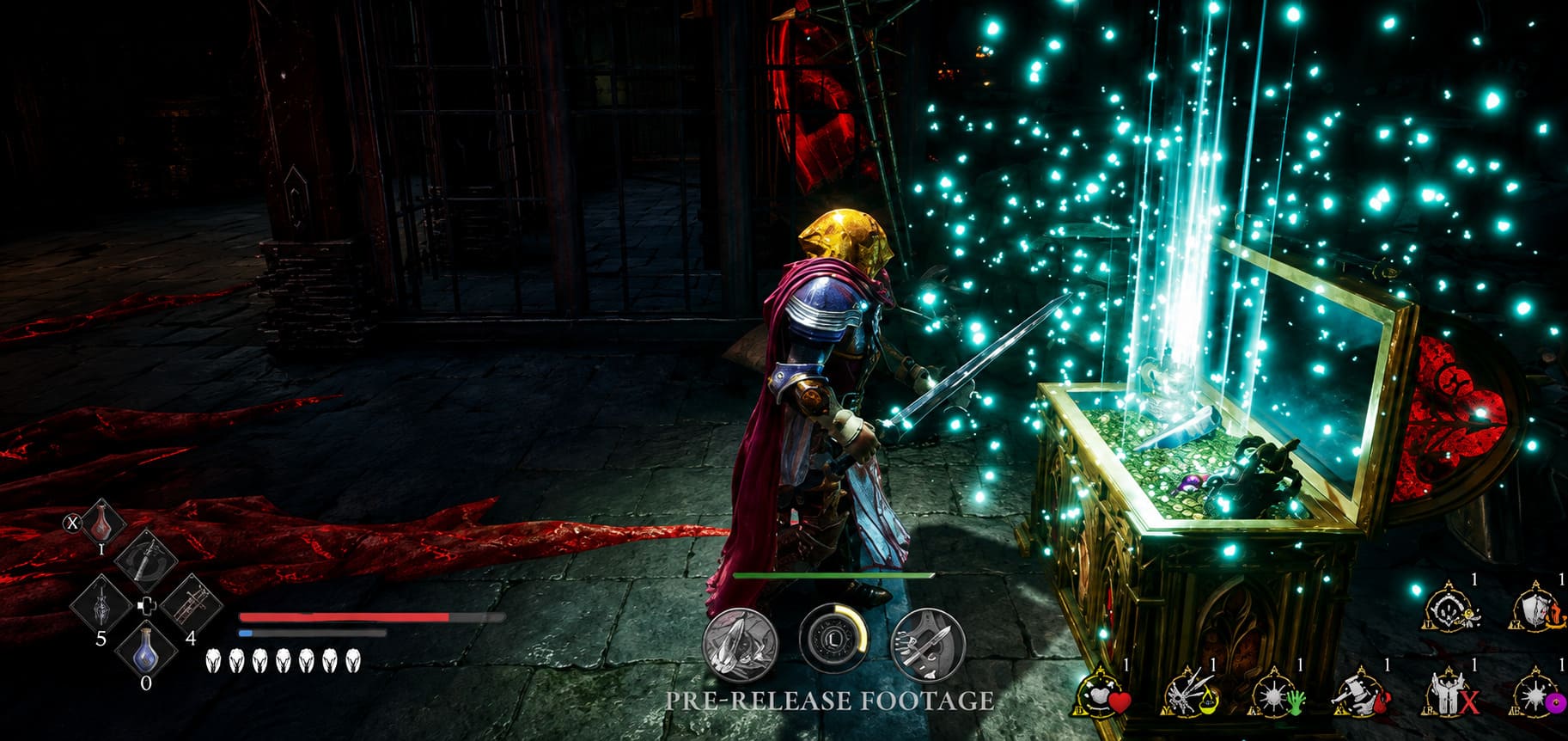
The stats I’d watch most closely are:
- Attack Power
- Physical Defense
- Elemental Resistance
- Poise
- Critical Hit Chance
- Weapon Art Cooldown Reduction
- Health Recovery
The best builds aren’t necessarily the ones with the highest individual stat. They’re the ones where several bonuses are pushing toward the same goal.
Purification Is One of the Most Important Systems
This is probably the mechanic I’d warn every new player about.
Loot found during a hunt isn’t necessarily yours forever.
Crimson Moon uses a roguelite structure where your current expedition has its own risk attached to it. You can find fantastic weapons and armor during a run, but exhausting your available Life Portals before securing that loot can turn a great expedition into a complete loss.
That’s why Purification should be a priority, especially during your early hours.
Purifying equipment allows it to become part of your permanent Arsenal at Sanctus Clypeus, meaning you can use it as part of future starting loadouts.
This changes how I’d approach exploration.
If you see a promising weapon during a run, don’t automatically think, “I’ll worry about that later.” If you can safely reach a purification point, that item can potentially become part of your long-term build library.
And that’s much more valuable than squeezing a few extra minutes out of a risky expedition.
Best Armor Approach in Crimson Moon
Armor is where your overall playstyle starts becoming much more obvious.
The game gives you enough freedom to build around defensive consistency, aggressive damage, mobility, or combinations of these ideas.
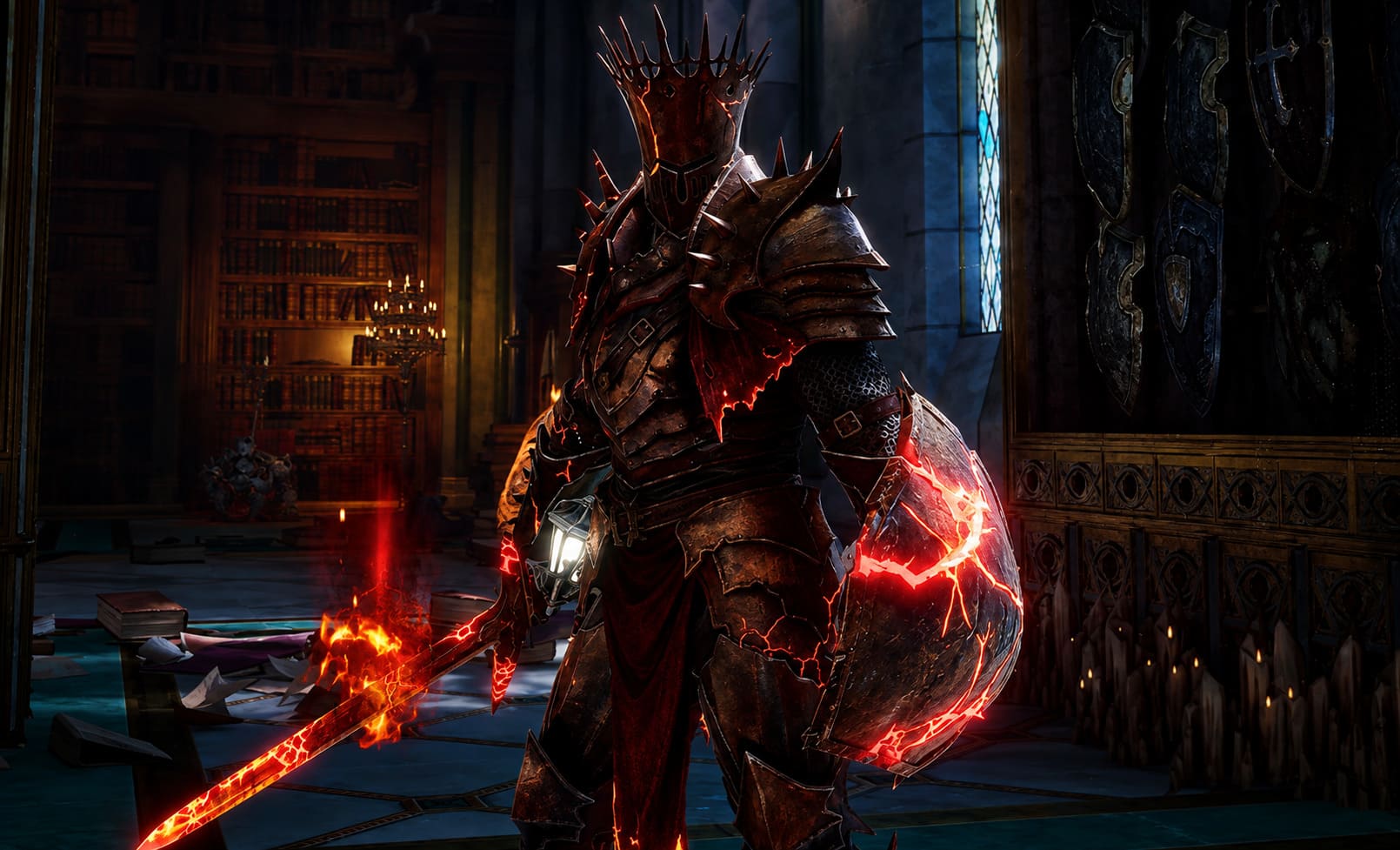
Ram Armor Set
The Ram Armor Set immediately stands out for players who enjoy playing aggressively without constantly worrying about getting staggered.
Its blue-and-gold appearance isn’t exactly subtle, but its bonuses are what make it interesting.
With two pieces equipped, the set improves Poise and reduces stamina pressure when successfully blocking or parrying.
The four-piece bonus pushes the defensive identity even further by providing additional damage reduction as you take hits.
For me, this is the kind of set that makes the most sense when you’re playing with another person. A good frontline player can stand in the middle of an enemy group, absorb pressure, and create openings for their partner.
It isn’t necessarily the fastest way to clear every encounter, but it’s dependable.
And dependable is underrated in a roguelite.
Lightweight Offensive Builds
If you’re the type of player who hates blocking and would rather roll through an attack and immediately punish the enemy, lightweight armor is going to be much more attractive.
These builds sacrifice some protection for mobility and offensive bonuses.
Some of the most interesting effects revolve around conditional damage. You might become more dangerous as your health drops or receive a temporary offensive boost after performing a successful perfect dodge.
This creates a high-risk playstyle where your mistakes are expensive but your successful execution is heavily rewarded.
Personally, this is the build style I’d use once I’d learned a ward properly. Going into an unfamiliar area with low defenses and relying entirely on perfect dodges is a great way to turn a promising run into a corpse-recovery mission.
Weapon Arts Are the Real Build Changers
If gear determines your foundation, Weapon Arts determine how your character actually fights.
This is one of the best ideas in Crimson Moon because changing weapons can effectively change your combat role without forcing you to create a new character.
A heavy two-handed sword might give you an attack designed to crush enemy posture and control groups.
A faster one-handed weapon might instead offer a mobility-focused attack that lets you close distance while applying a status effect.
That means I wouldn’t choose weapons purely based on their base damage.
Ask yourself:
Does the Weapon Art solve a problem my build currently has?
If you’re struggling with groups, look for crowd control.
If elite enemies are taking too long to kill, prioritize burst damage.
If you’re constantly getting surrounded, mobility becomes much more important.
And if you’re building around status effects, look for Weapon Arts that help apply or exploit those effects.
Don’t Ignore Boons During a Hunt
Weapon Arts become even more interesting once temporary Boons enter the equation.
These bonuses can modify your build during the current expedition, allowing a fairly ordinary weapon to become something much more specialized.
A basic slash could potentially gain an elemental effect, while another combination might turn your attacks into chain-based crowd control.
This is where Crimson Moon starts feeling much more like a roguelite rather than a traditional action RPG.
You don’t need to enter every hunt with a perfectly solved build.
Instead, you should recognize what the run is giving you and adapt.
If several Boons are pushing you toward elemental damage, don’t stubbornly continue building around physical attacks simply because that was your original plan.
The strongest run is often the one where you recognize a good combination early and commit to it.
A Strong Beginner Build
For players who don’t want to experiment with complicated setups immediately, I’d start with a relatively forgiving defensive build.
Use Ram Armor pieces, a one-handed weapon, and a shield. Prioritize Poise, stamina efficiency, physical defense, and Weapon Art cooldown reduction.
The goal isn’t to kill everything instantly.
Instead, you want to:
- Block or parry predictable attacks.
- Use your Weapon Art to control dangerous enemies.
- Maintain enough stamina to escape when things get messy.
- Take advantage of Boons that improve your weapon’s strengths.
- Purify useful equipment rather than gambling an entire run for extra loot.
Once this starts feeling comfortable, remove some defensive pieces and experiment with lighter equipment.
That’s a much better progression path than immediately trying to copy a glass-cannon build.
Best Crimson Moon Co-op Build Combination
Two-player co-op is where the equipment system gets particularly fun.
I wouldn’t recommend having two players build exactly the same character. There is much more value in giving each player a clear job.
Player One: Vanguard
Use the Ram Armor Set with a one-handed weapon and shield.
Focus on:
- Poise
- Defense
- Blocking and parrying
- Crowd control
- Enemy positioning
Your job is to keep pressure away from your partner and create openings.
Player Two: Damage Dealer
Use lighter armor and a powerful two-handed weapon.
Focus on:
- Attack Power
- Critical damage
- Mobility
- Burst Weapon Arts
- Offensive Boons
This player should take advantage of the openings created by the Vanguard rather than blindly charging into every fight.
It sounds obvious, but coordinated positioning can make a bigger difference than another 10% damage modifier.
Crimson Moon Best Nephilim Builds: Guide for Launch and Endgame (2026)
Life Portals and Co-op Survival
One of the easiest ways to waste a promising co-op run is to treat revives like they’re unlimited.
They’re not.
Life Portals are effectively part of your expedition’s survival budget. If one player repeatedly dies in situations that could have been avoided, the entire run eventually pays for it.
For that reason, communication matters.
If one player has already taken significant damage and the situation is getting chaotic, sometimes backing away is smarter than forcing another attack.
That might sound boring compared with charging into a room full of demons, but successful roguelite runs are often won by knowing when not to fight.
Crimson Moon Class System Guide: How Builds, Gear, and Weapon Arts Work
My Final Crimson Moon Build Advice
The biggest mistake you can make in Crimson Moon is trying to build a character around one impressive item.
Think about the entire chain instead:
Gear → Armor Bonuses → Weapon → Weapon Art → Boons → Angel
Each part should support the others.
If your armor rewards blocking, use a shield and capitalize on it. If your Weapon Art rewards aggression, don’t build the rest of your character around standing safely at range. If your Boons suddenly give you a strong elemental combination, adjust your strategy instead of ignoring it.
And most importantly, purify your best discoveries.
The permanent Arsenal at Sanctus Clypeus is what turns individual successful runs into long-term progression. Even a failed hunt can teach you something about which weapons, armor combinations, and Weapon Arts are worth keeping.
Crimson Moon looks like the kind of game where experimentation is going to be just as important as mechanical skill. There probably won’t be one magical build that dominates every ward, and honestly, I’m glad about that. The most enjoyable action RPGs are the ones where you eventually find a combination that feels like your character rather than simply copying a spreadsheet.
So start with a reliable foundation, learn the combat, pay attention to Weapon Arts, and let the loot from each hunt gradually shape your Nephilim.
Gildenarch is going to punish mistakes. Make sure your build gives you enough tools to survive them.