Iron Nest Heavy Turret Simulator Release Date, Gameplay, and Everything We Know So Far
There are plenty of military games where you jump into a tank, grab a rifle, or command entire armies from a distant tactical screen. IRON NEST: Heavy Turret Simulator is taking a completely different route. Instead of making players feel like a superhero on the battlefield, this upcoming indie simulator puts you inside a massive steel fortress where every shot matters, every mechanical failure can end a mission, and every decision carries serious consequences.
I have spent countless hours with military simulators, strategy games, and hardcore management titles, and the first thing that stands out about Iron Nest is how focused its idea feels. This is not trying to compete with flashy shooters or cinematic action games. The developers, Nick Nieuwoudt and Dominik Latos, are building a slow-burning tactical experience where patience, calculations, and understanding your machine are more important than quick reflexes.
The game has already attracted attention from simulation fans, alternative-history enthusiasts, and players searching for something different from the usual multiplayer grind. With its brutal dieselpunk atmosphere, mechanical complexity, and unusual first-person turret gameplay, Iron Nest could become one of the most interesting PC indie releases of 2026.
Iron Nest Heavy Turret Simulator Release Date
The biggest question for players waiting to operate this giant war machine is simple: when will Iron Nest Heavy Turret Simulator release?
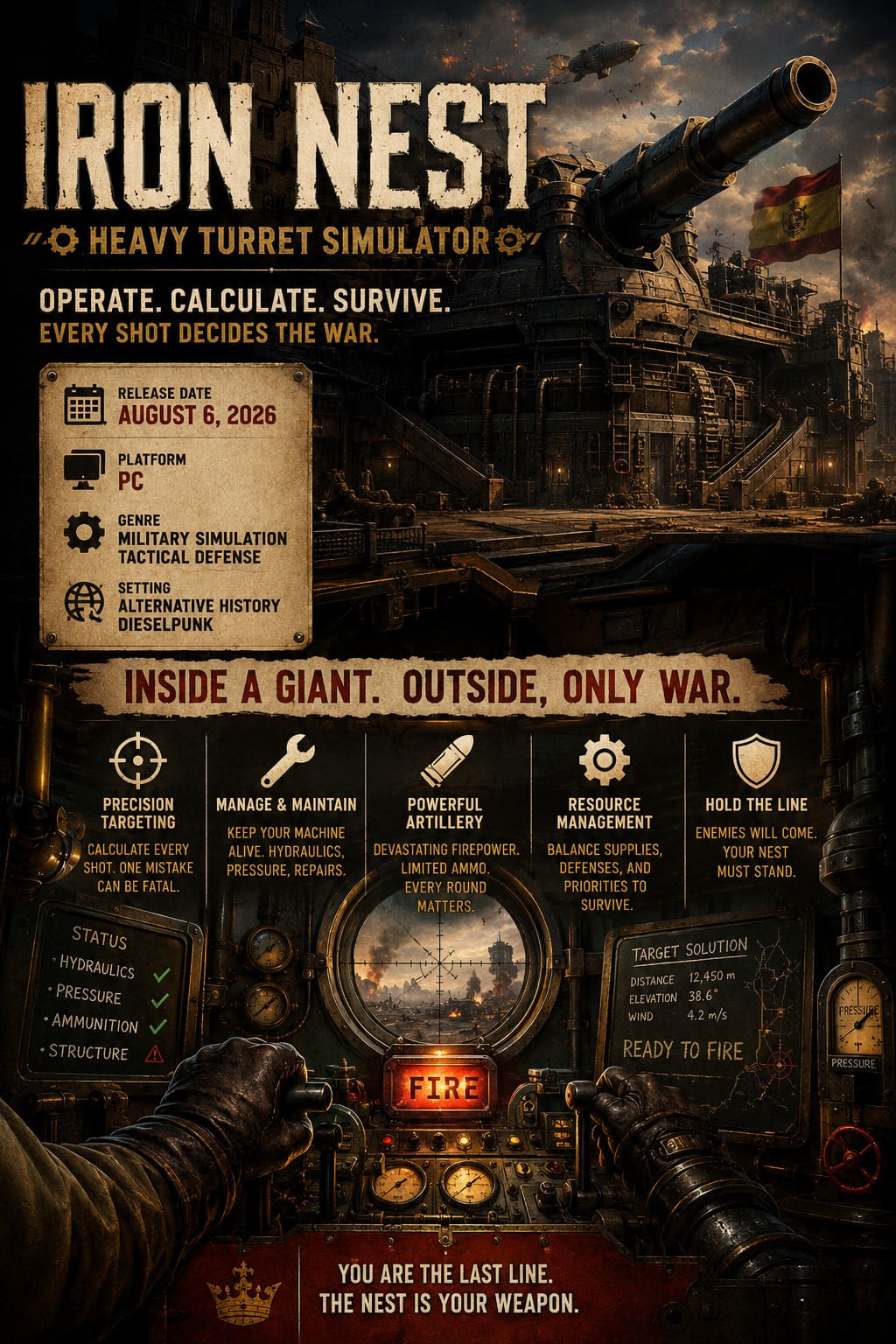
According to the official information shared by the developers, IRON NEST: Heavy Turret Simulator is scheduled to launch on August 6, 2026, for PC.
The project has slowly built a dedicated following through showcases, developer updates, and community discussions. Unlike many indie games that disappear into development limbo for years, Iron Nest has maintained a clear direction and consistent communication with players.
The August 2026 launch puts the game in an interesting position. The indie scene has been packed with creative experiments recently, but very few titles are willing to focus entirely on operating a stationary weapon platform. That risky design choice is exactly why many simulation fans are keeping an eye on it.
| Feature | Details |
| Game Name | IRON NEST: Heavy Turret Simulator |
| Release Date | August 6, 2026 |
| Developer | Nick Nieuwoudt and Dominik Latos |
| Platform | PC |
| Genre | Military Simulation, Tactical Defense |
| Setting | Alternative History Dieselpunk |
A Dark Alternative History Filled With Steel And War
The world of Iron Nest is not a peaceful historical recreation. The game creates a fictional timeline where conflicts from the early 20th century never truly ended. Instead of rebuilding after war, nations continued pushing military technology forward, creating a world dominated by industrial warfare and massive defensive structures.
The story places players inside the collapsing Spanish monarchy, a power struggling to maintain control against overwhelming enemies. Traditional armies are no longer enough, so the nation depends on enormous armored fortifications called Iron Nests.
You are not playing as a legendary commander or an unstoppable soldier. You are an operator trapped inside a gigantic machine of war. Your mission comes directly from High Command: maintain the fortress, calculate attacks, survive enemy assaults, and keep the weapon system alive no matter what happens outside.
That perspective creates a very different kind of tension. You are not running across battlefields searching for kills. You are sitting inside tons of steel, listening to enemy movements, watching instruments, and hoping your calculations are accurate before firing a devastating shell.
The atmosphere feels heavily inspired by dieselpunk fiction, old industrial technology, and the idea of warfare becoming an endless machine that consumes everything around it.
Gameplay: A Military Simulator Where Every Shot Requires Planning
Iron Nest is built around one simple idea: operating a giant turret should feel complicated.
Many games simplify artillery into pressing a button and watching an explosion. Iron Nest goes in the opposite direction. The player must understand the machine, prepare every attack, and manage limited resources throughout each mission.
The gameplay loop revolves around several important systems that make the experience feel closer to a professional military simulator than a traditional action game.
Precision Targeting And Battlefield Calculations
Before firing, players need to understand the battlefield. The game focuses heavily on observation, measurements, and planning.
You cannot simply point the cannon toward enemies and expect success. Players will need to analyze maps, calculate distances, estimate positions, and determine the correct firing solution.
This slower approach creates a completely different type of satisfaction. Landing a perfect shot after carefully calculating the coordinates feels less like getting a kill in a shooter and more like solving a dangerous mechanical puzzle.
Managing A Giant Mechanical Monster
The turret itself is basically another character in the game. It requires constant attention and maintenance.
Players must monitor hydraulic systems, pressure levels, and the overall condition of the fortress. A damaged system at the wrong moment could leave the entire position vulnerable.
This is where Iron Nest separates itself from casual military games. The machine is powerful, but it is not magical. It breaks, overheats, and demands responsibility.
The feeling reminds me of classic hardcore simulators where knowing your equipment is just as important as knowing your enemy.
Heavy Weapons With Real Consequences
When everything is prepared and the massive cannon finally fires, that moment is designed to feel incredible.
The developers are clearly focusing on impact. The sound of mechanical movement, the vibration of the turret, and the explosion outside the fortress create the fantasy of controlling something truly enormous.
However, the game does not treat ammunition like an unlimited resource. Every shell matters, and wasting shots can create serious problems later.
Resource Management And Survival
A powerful weapon does not mean victory if you cannot maintain it.
- Ammunition supplies
- Repair materials
- Mechanical systems
- Defensive priorities
- Battlefield positioning
The game encourages careful decision-making instead of constant action. Sometimes the smartest move may be waiting, repairing, or saving resources for a bigger threat.
Why Simulation Fans Are Excited About Iron Nest
The biggest reason people are talking about Iron Nest is because it fills a very specific gap.
Modern military games often focus on speed, explosions, and cinematic moments. Iron Nest focuses on tension. The fear comes from waiting inside a massive bunker while knowing that the next enemy attack could test every system you have.
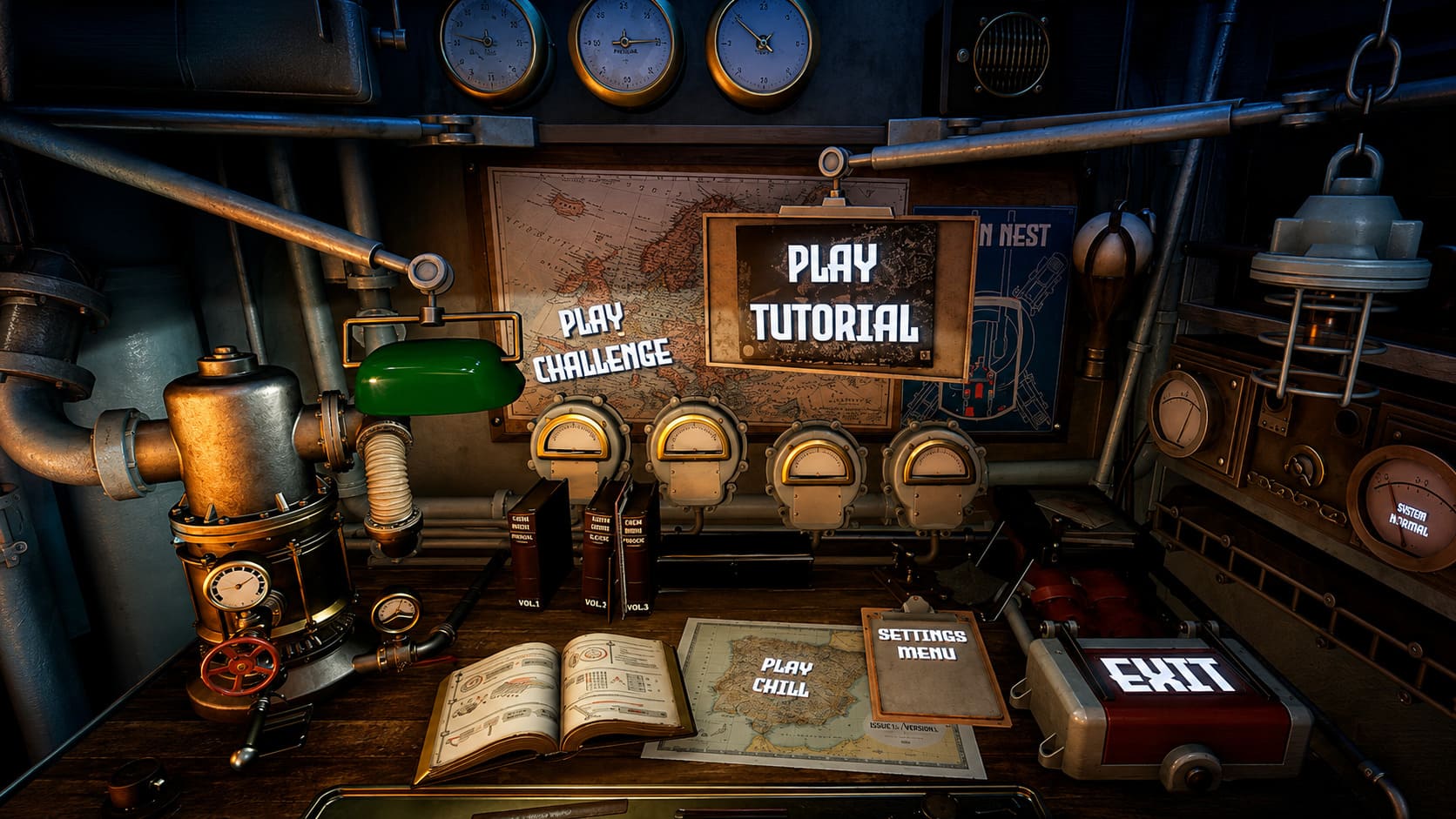
Community discussions have especially praised the game’s visual identity. The developers are not chasing ultra-realistic graphics. Instead, they are creating a strong artistic style with dark lighting, heavy metal textures, and an oppressive industrial atmosphere.
The result feels like being trapped inside a forgotten war machine.
The sound design is another major highlight. Early previews show a world filled with mechanical noises, steam pressure, heavy gears, and terrifying artillery explosions. For a simulator like this, audio is incredibly important because the player spends so much time inside the machine itself.
PC Requirements And Accessibility Features
Iron Nest: Heavy Turret Simulator is designed primarily for PC players and aims to support a wide range of hardware configurations.
Because the game focuses more on simulation systems and atmosphere rather than massive open worlds, optimization will be a major factor in its success. Players expect smooth performance because a technical simulation becomes frustrating quickly when performance problems interrupt gameplay.
The developers have also confirmed controller support, allowing players to use modern gamepads instead of only keyboard and mouse controls.
Accessibility options are another welcome addition. The game includes settings designed to improve visibility and audio customization, making the experience easier to adjust for different players.
Final Thoughts: A Risky But Fascinating Indie Experiment
IRON NEST: Heavy Turret Simulator is exactly the kind of game that makes the indie scene exciting. It is not trying to appeal to everyone, and that is probably its biggest strength.
This is a game for players who enjoy complex systems, military history, slow tactical decisions, and the satisfaction of mastering complicated machinery. It will not replace fast-paced shooters or traditional strategy games, but it offers something those genres rarely provide.
The idea of sitting inside a gigantic fortress, calculating artillery strikes, maintaining ancient technology, and surviving impossible battles has a unique appeal. If the developers deliver on their vision, Iron Nest could become one of those niche simulation games that builds a passionate community around it.
Mark August 6, 2026 on your calendar if you are looking for a military simulator that feels completely different. The battlefield is waiting, the turret is loaded, and High Command is calling.