Inside the Fable Reboot Character Debate: My Take on Lily Nichol and the Internet Backlash
As someone who has spent way too many hours across RPG worlds—from the original Fable trilogy to modern giants like The Witcher 3 and Cyberpunk 2077—I didn’t expect a character design discussion to dominate the conversation around Playground Games’ reboot. And yet here we are.
The moment the Fable reboot trailers dropped, the internet didn’t just talk about Albion, magic, or the return of that signature British humor. Instead, the spotlight shifted almost entirely to the default female protagonist and her apparent similarity—or lack of similarity—to her real-life face model, Lily Nichol, a London-based stage actress.
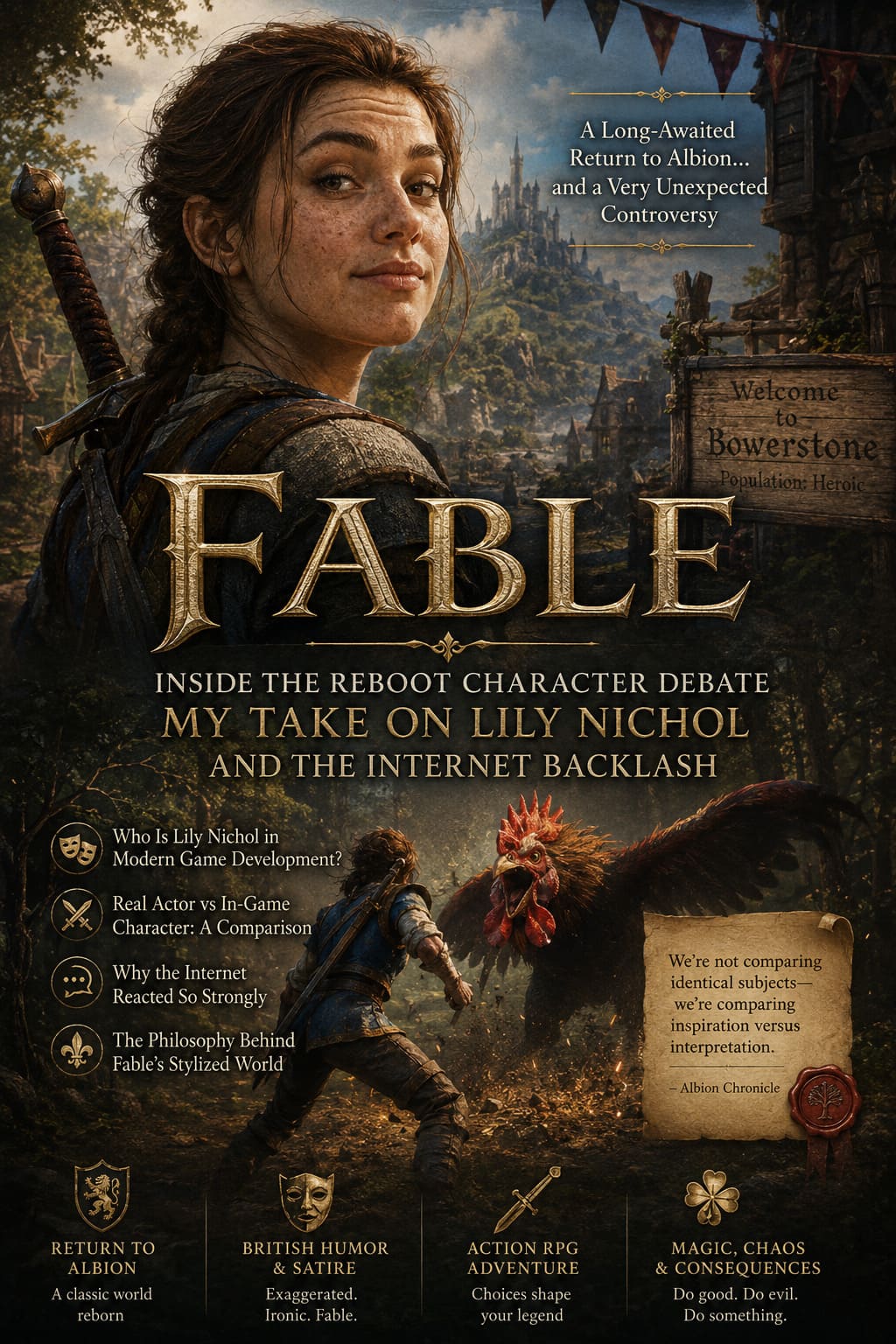
What followed wasn’t just typical gaming chatter. It turned into a full-blown culture war online, with Reddit threads, YouTube breakdowns, TikTok comparisons, and heated forum posts dissecting every pixel of her face.
But having looked at this from both a long-time gamer’s perspective and someone who’s seen how game development actually works, I think the reality is far more nuanced than either side wants to admit.
Fable Reboot and the Giant Gardener: My Take on Richard Ayoade’s “Dave”
Who Is Lily Nichol in the Context of Modern Game Development?
Before the internet turned her into a lightning rod for debate, Lily Nichol was simply a working stage actress in London. Like many modern AAA games, Fable used a real human being as a reference and performance base for its character design.
This is not unusual at all in today’s industry.
Games like Hellblade: Senua’s Sacrifice, Death Stranding, and Cyberpunk 2077 have all used real actors to ground their characters in realism. But here’s where things get interesting: developers don’t always aim for a 1:1 replica.
Instead, they often reinterpret facial scans to match tone, narrative direction, and stylization.
And Fable has always leaned heavily into stylization rather than realism.
Why the Internet Reacted So Strongly
When I first saw the comparisons circulating online—side-by-side images of Lily Nichol and the in-game protagonist—I understood why people reacted. The differences are noticeable, especially in facial structure, lighting, and expression design.
But what surprised me wasn’t the observation itself. It was how quickly the discussion escalated into extremes.
Common Arguments From the Community
Here’s a simplified breakdown of the main viewpoints I saw across forums:
- Artistic Direction Theory: The character reflects Albion’s rough, comedic, and exaggerated world.
- Model Distortion Theory: Developers altered the scan significantly, changing key facial proportions.
- Cultural Commentary Theory: The design reflects broader debates about representation in gaming.
- Realism Defense: Lighting, animation, and context are being ignored in comparisons.
None of these perspectives are entirely wrong—but none are fully complete either.
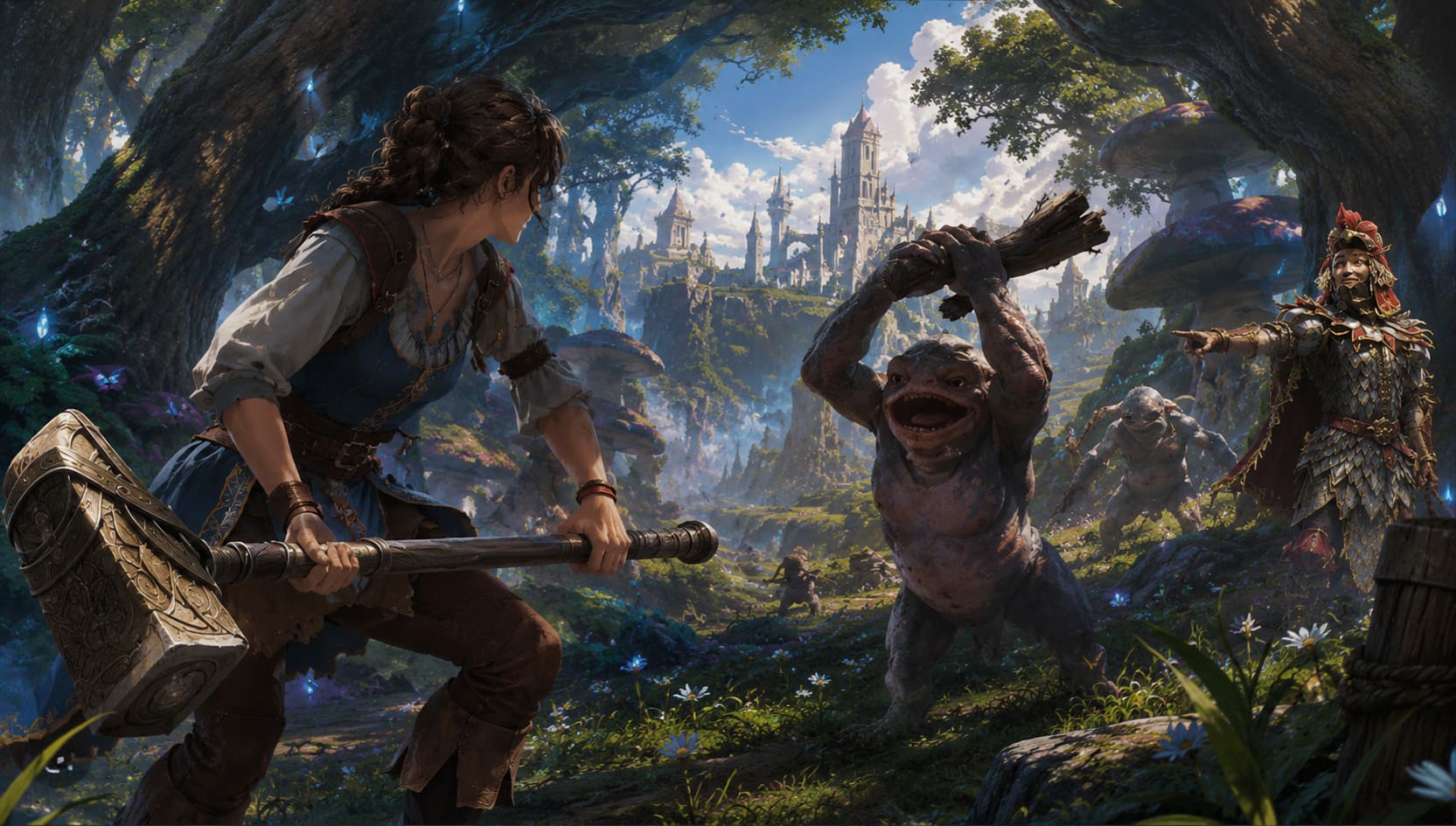
Real Actor vs In-Game Character: A Quick Comparison
Looking at the debate more analytically helps reduce emotional bias and focus on design intent.
| Aspect | Lily Nichol (Real Life) | Fable Reboot Protagonist |
|---|---|---|
| Facial Structure | Natural human proportions | Stylized and exaggerated |
| Expression Style | Neutral / theatrical | Comedic, reactive, expressive |
| Visual Tone | Real-world lighting | Game-engine lighting & mood |
| Design Intent | Reference model | Narrative-driven reinterpretation |
| Perception | Actress identity | Fictional hero identity |
We’re not comparing identical subjects—we’re comparing inspiration versus interpretation.
The “Uglification” Debate and Why It Feels Familiar
If you’ve followed gaming discussions over the last few years, you’ve probably noticed a recurring pattern. Whenever a major female protagonist is revealed, the same debates reappear.
We saw it with Aloy in Horizon Forbidden West. We saw it with characters in Star Wars Outlaws. And now we’re seeing it again with Fable.
From my perspective, the issue isn’t that developers are trying to make characters unattractive. It’s that expectations have shifted dramatically due to ultra-polished marketing visuals and photorealistic benchmarks.
But games aren’t static renders—they’re animated systems built for expression, not still-image perfection.
What I Think People Are Missing About Fable’s Design Philosophy
Having played the original Fable games multiple times, one thing stands out clearly: Albion was never meant to be beautiful in a conventional sense.
It’s chaotic, ironic, and often intentionally absurd.
The humor has always leaned into exaggeration—fat heroes, exaggerated expressions, awkward NPCs, and slapstick consequences for moral choices.
So when I look at the reboot protagonist, I don’t see a departure from tradition. I see a continuation of it.
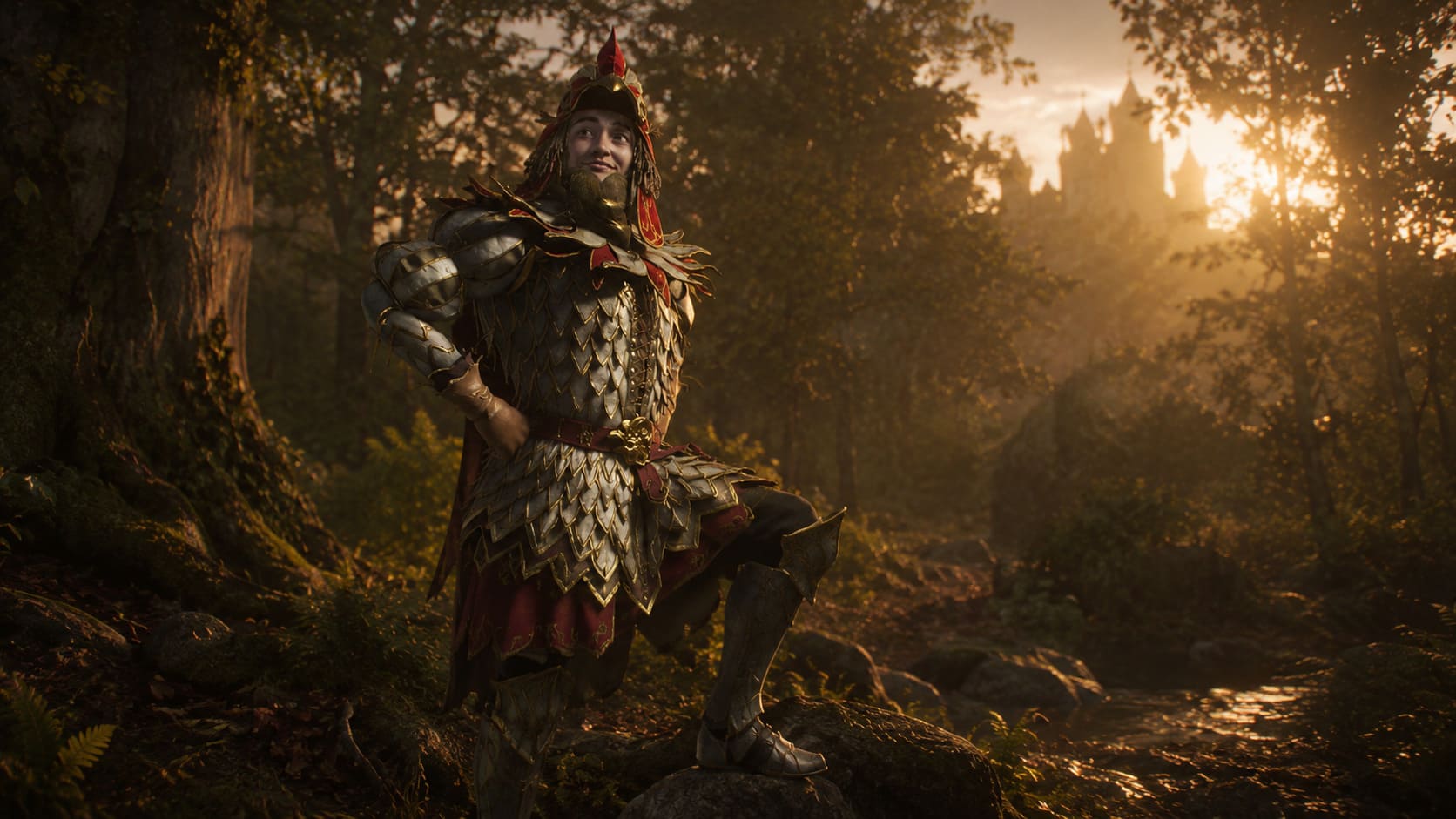
Her design feels less like “realism gone wrong” and more like “British satire turned into facial animation.”
The Role of Performance Capture and Interpretation
A common misunderstanding in online debates is how facial scanning actually works in AAA development.
A scan is not a final model. It is raw material.
Artists refine it based on:
- Narrative tone
- Emotional range
- Engine limitations
- Art direction consistency
So when people say the character doesn’t look like the actress, they are correct in a literal sense, but they miss the purpose of adaptation.
A More Balanced View of the Situation
After observing the discourse, a more grounded interpretation emerges.
Lily Nichol served as a performance and scanning foundation, while the final character was intentionally stylized for comedic tone. Online debate then amplified visual differences into ideological arguments.
Context like lighting, animation, and expression was often ignored in favor of static comparisons.
Why This Debate Feels Bigger Than It Is
Character design has become symbolic in modern gaming culture.
Players project cultural meaning onto visual choices, often reading intent where there may only be artistic direction.
But the more important question isn’t whether the character perfectly resembles Lily Nichol.
It’s whether the character belongs in Albion.
And from what has been shown so far, she does.
Final Thoughts From a Long-Time Player
Having followed game development long enough to see countless pre-release controversies, I’ve learned that early discourse rarely reflects the final experience.
The Fable reboot is clearly trying to balance nostalgia, humor, and modern design expectations. That’s a difficult line to walk.
Regardless of where people stand on the character design, Lily Nichol’s contribution remains part of the performance foundation that shaped the protagonist’s identity.
Ultimately, this controversy says more about how gaming audiences interpret media today than it does about the game itself.
And if Fable delivers on its promise, most of this debate will likely fade once players actually step back into Albion.