Crimson Desert Kliff Lore Explained: The Mind-Bending Story of the Greymanes, the Abyss, and the 108th Time Loop
When I first started playing Crimson Desert, I expected exactly what the trailers had promised: a brutal fantasy adventure filled with political conflicts, mercenary battles, and a personal journey of survival. As someone who spends countless hours streaming story-driven RPGs and dissecting their narratives with viewers, I thought I had a pretty good idea of where this game was heading.
I was wrong.
The deeper I ventured into Pearl Abyss’ ambitious world, the more I realized that Crimson Desert is hiding something far bigger beneath its gritty medieval surface. What initially looks like a straightforward tale about a warrior rebuilding his fallen mercenary brotherhood slowly transforms into one of the most fascinating pieces of fantasy storytelling I’ve seen in years.
And honestly? That’s exactly why the game has stayed in my mind long after I finished the main storyline.
A World That Feels Real Before It Feels Magical
One of the smartest things Crimson Desert does is how it introduces the continent of Pywel.
Unlike many fantasy RPGs that immediately throw dragons, gods, and world-ending threats at players, Pywel starts as a grounded and believable place. Kingdoms are struggling for power. Nobles exploit ordinary citizens. Mercenary groups survive by accepting dangerous contracts that regular armies avoid.
Everything feels human.
That realism makes the later revelations hit much harder because you’ve already spent dozens of hours believing this is a story about people rather than cosmic forces.
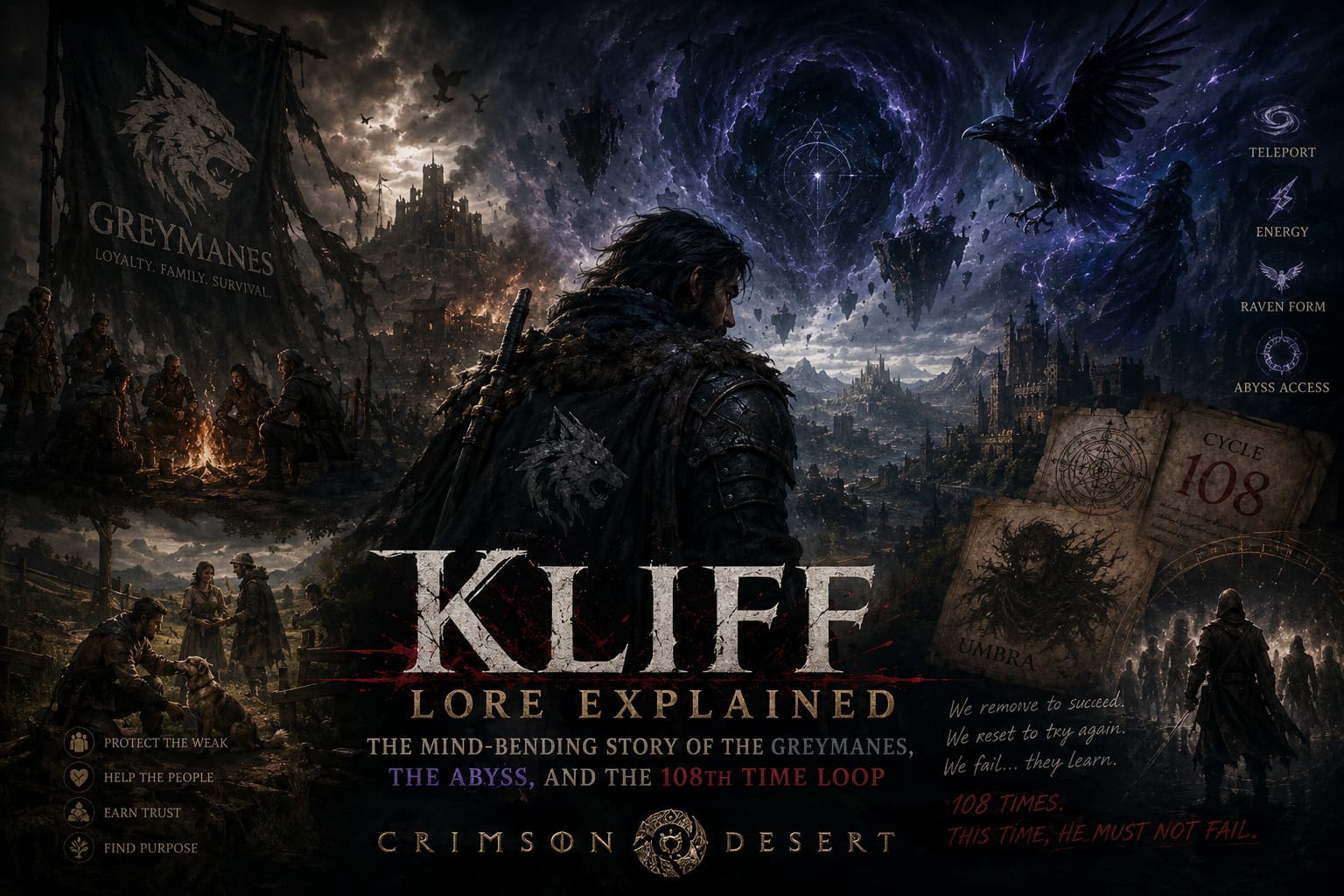
The Greymanes: More Than Just Another Mercenary Group
At the center of the story stands the Greymanes, arguably one of the most memorable factions in modern fantasy gaming.
They’re not shining heroes.
They’re not villains either.
Instead, they’re a collection of survivors, outcasts, drifters, and broken individuals who found a sense of belonging together.
Some members are reckless.
Some gamble away their earnings.
Some constantly get into trouble.
Yet despite their flaws, they genuinely care about one another and the people they protect.
That’s what makes them feel authentic.
While many RPG factions are built around simple stereotypes, the Greymanes behave like a dysfunctional family that somehow manages to stay together through loyalty rather than obligation.
What Makes The Greymanes Unique?
- Loyalty over status
- Family bonds over bloodlines
- Practical morality instead of strict heroism
- A willingness to help ordinary people
- Strong personal relationships between members
As a player, I found myself becoming attached to the group surprisingly quickly, which makes the events that follow significantly more emotional.
The Tragedy That Changes Everything
The story truly begins when disaster strikes.
A devastating attack destroys the Greymanes’ home and scatters the surviving members across Pywel.
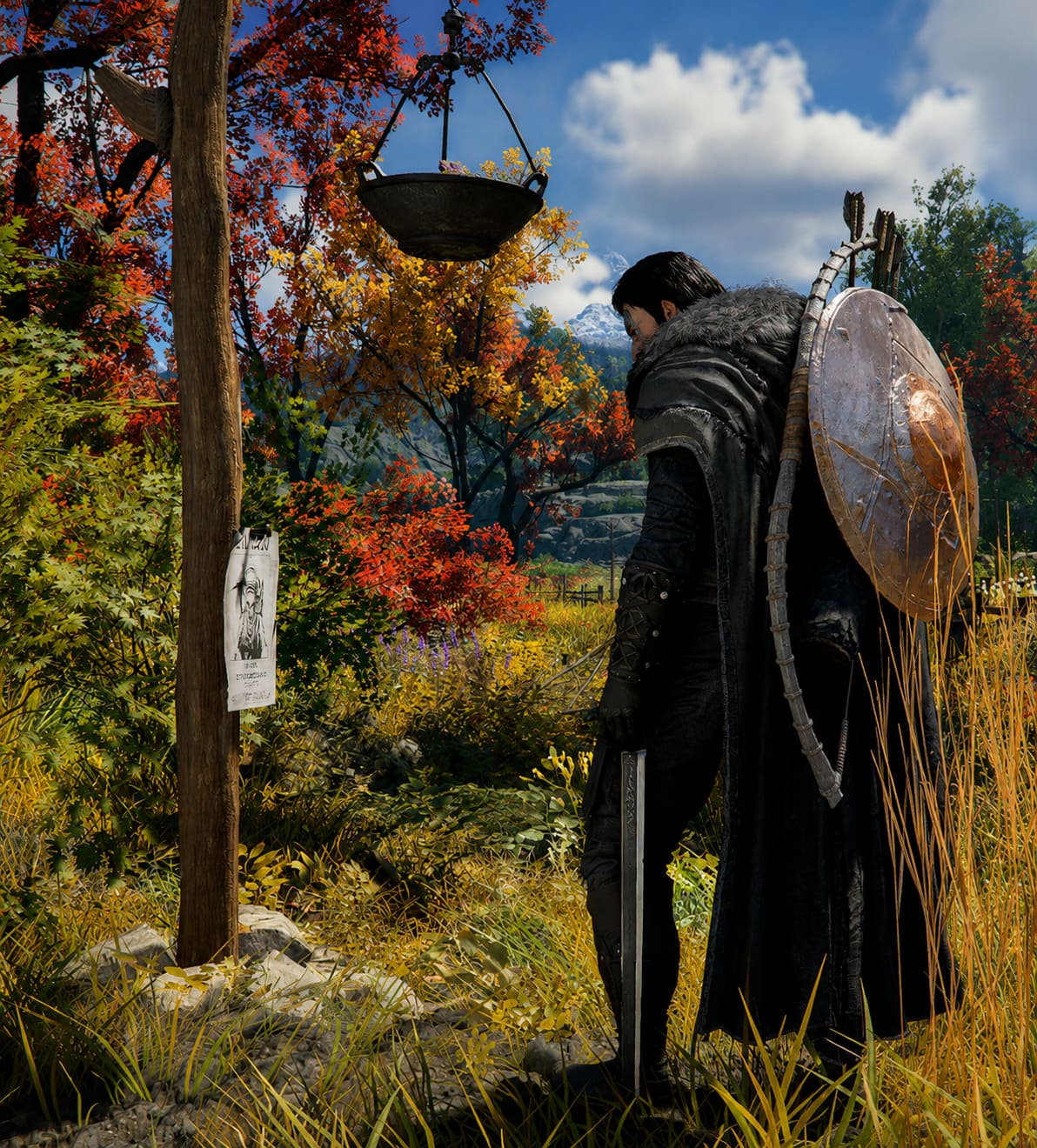
Their respected leader Gian falls during the conflict, while Kliff suffers injuries that should have killed him.
It’s one of those moments that instantly shifts the tone of the entire game.
For a while, Crimson Desert appears to become a classic revenge and redemption story. Kliff survives, recovers, and sets out to reunite his lost companions.
Nothing unusual.
At least that’s what the game wants players to believe.
Why Kliff Feels Different From Most RPG Heroes
Something felt strange about Kliff from the very beginning.
As a streamer, I often discuss character writing while playing. During my first hours with Crimson Desert, viewers repeatedly pointed out the same thing:
“Why does Kliff barely react to anything?”
Massive battles.
Terrifying monsters.
Life-changing discoveries.
Ancient mysteries.
Kliff approaches almost every situation with remarkable calmness.
At first, many players assumed this was simply a creative choice or perhaps an intentionally stoic protagonist.
But eventually, the truth becomes far more interesting.
The Abyss Changes Everything
As players progress, they gain access to mysterious dimensional rifts connected to a place known as the Abyss.
This is where Crimson Desert begins revealing its true identity.
The Abyss isn’t merely another fantasy realm.
It’s a strange space existing between realities, filled with ancient knowledge and immense power.
Inside this dimension, Kliff gains abilities that seem impossible within the normal rules of Pywel.
These powers include:
| Ability | Purpose |
|---|---|
| Short-range teleportation | Rapid movement and combat |
| Energy manipulation | Enhanced attacks and defense |
| Raven transformation | Exploration and traversal |
| Abyss interaction | Access to hidden dimensions |
Initially, these powers feel like standard RPG progression mechanics.
Later, they become critical pieces of the game’s biggest mystery.
The Discovery That Rewrites The Entire Story
The true turning point comes through hidden lore content found within the Abyss.
Players who explore thoroughly uncover evidence suggesting something impossible:
The current events of Crimson Desert have happened before.
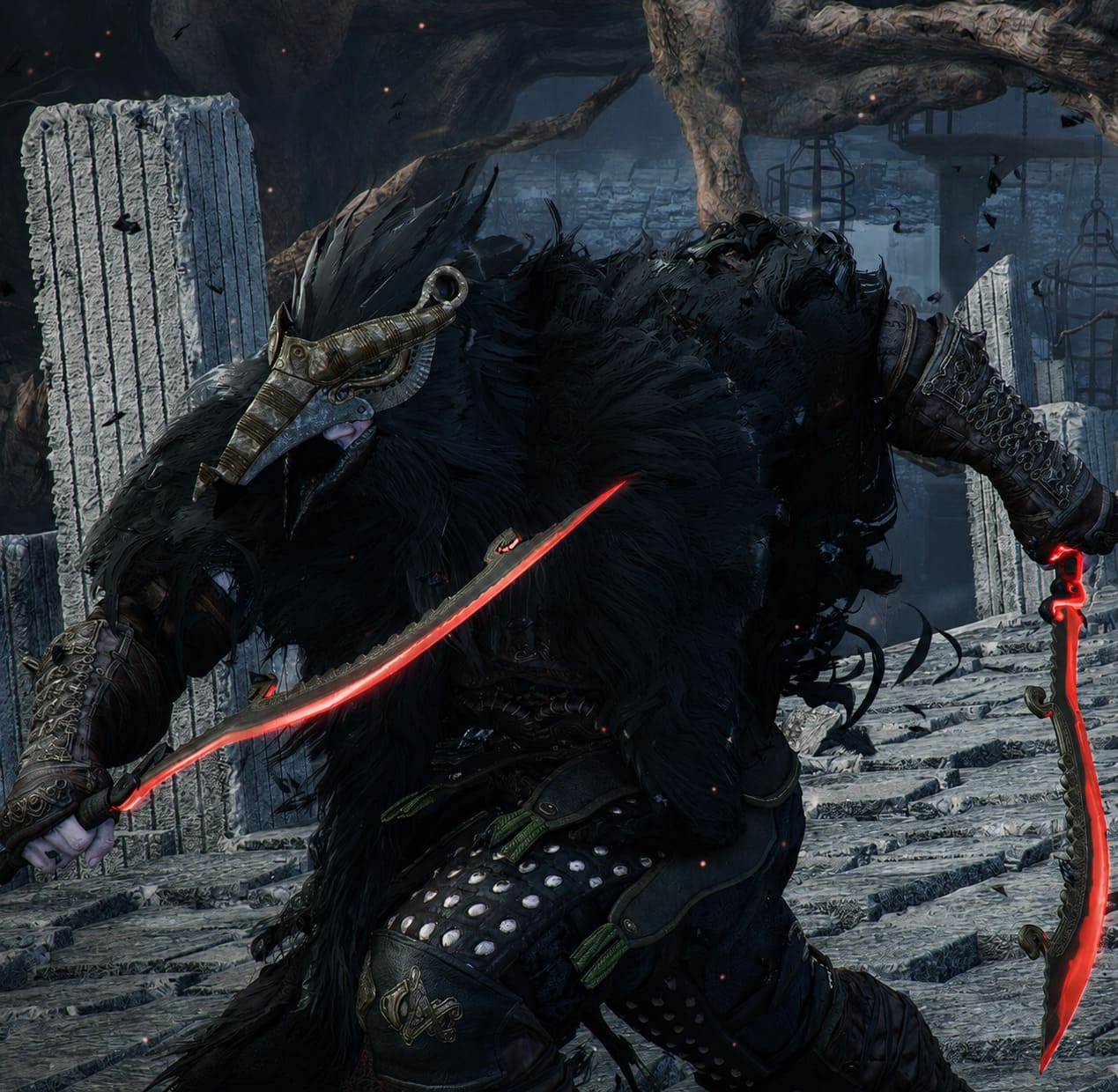
Many times.
What follows is one of the most surprising narrative twists I’ve experienced in an open-world RPG.
According to the hidden records, Pywel exists inside a repeating cosmic cycle.
Every time reality falls to a destructive force known as Umbra, powerful beings reset history and begin again.
Not once.
Not twice.
More than a hundred times.
Suddenly every strange detail starts making sense.
Kliff’s Dark Secret
Perhaps the most shocking revelation concerns Kliff himself.
In previous cycles, he always served as humanity’s chosen champion.
Every version of him possessed incredible potential.
Every version ultimately failed.
Different timelines produced different outcomes.
Sometimes he became arrogant.
Sometimes fear controlled him.
Sometimes comfort made him complacent.
No matter what happened, Umbra eventually won.
After witnessing countless failures, the mysterious powers guiding reality reached a horrifying conclusion:
Human emotions were preventing success.
Their solution was drastic.
For the latest cycle, they fundamentally altered Kliff.
They removed parts of his emotional identity.
They transformed him into a focused instrument designed for a single purpose.
Saving the world.
Why This Twist Works So Well
Personally, this is where Crimson Desert completely won me over.
Many games introduce a quiet protagonist simply because it is easier for players to project themselves onto the character.
Crimson Desert takes that familiar gaming trope and turns it into a major story element.
Kliff’s emotional distance isn’t lazy writing.
It’s evidence.
His unusual behavior isn’t accidental.
It’s part of the mystery.
Looking back, countless scenes gain entirely new meaning once players understand what happened to him.
That’s incredibly satisfying storytelling.
The Symbolism Behind The Number 108
Another detail that impressed me was the significance of the number 108.
The current storyline represents the 108th attempt to save reality.
This number carries deep spiritual symbolism in several Eastern philosophical traditions, where it is often associated with overcoming human weaknesses and achieving enlightenment.
Viewed through that lens, the previous failures become more than alternate timelines.
They represent lessons.
Each failed version of Kliff succumbed to a different flaw.
The current cycle becomes a final test.
Not simply a battle against evil, but a journey toward transcendence.
Side Quests Suddenly Become Important
One aspect of Crimson Desert that generated debate after launch was its seemingly random side content.
Players could go from fighting terrifying creatures to helping villagers with surprisingly mundane problems.
After discovering the hidden lore, these moments feel entirely different.
Saving animals.
Helping travelers.
Repairing damaged equipment.
Supporting struggling communities.
These aren’t distractions.
They’re examinations.
The world is effectively testing whether Kliff can develop wisdom, empathy, and compassion even after losing much of what once made him human.
That’s a fascinating concept and one I rarely see explored in modern RPGs.
Crimson Desert Steam Deck Best Optimization Settings: 60 FPS Guide (2026)
Major Lore Elements Explained
| Story Element | Hidden Meaning |
|---|---|
| Greymanes | Symbol of family and humanity |
| Gian’s death | Catalyst for Kliff’s growth |
| Abyss | Bridge between realities |
| Umbra | Manifestation of humanity’s corruption |
| Time loops | Repeated attempts to save existence |
| 108th cycle | Final path toward enlightenment |
Final Thoughts
Crimson Desert succeeds because it respects its audience.
It doesn’t immediately reveal its biggest secrets.
Instead, it allows players to form assumptions before carefully dismantling them piece by piece.
What starts as a tale of mercenaries and political conflict eventually becomes a philosophical exploration of destiny, sacrifice, identity, and human nature.
For me, that’s the mark of a memorable RPG.
Kliff isn’t merely a warrior trying to reunite his scattered brothers.
He’s the result of countless failed realities, a champion shaped by tragedy, experimentation, and cosmic necessity.
Whether players love every aspect of the narrative or not, it’s difficult to deny the ambition behind it.
And in a gaming industry filled with predictable stories, Crimson Desert dares to take risks.
That’s exactly the kind of game I love discovering on stream.