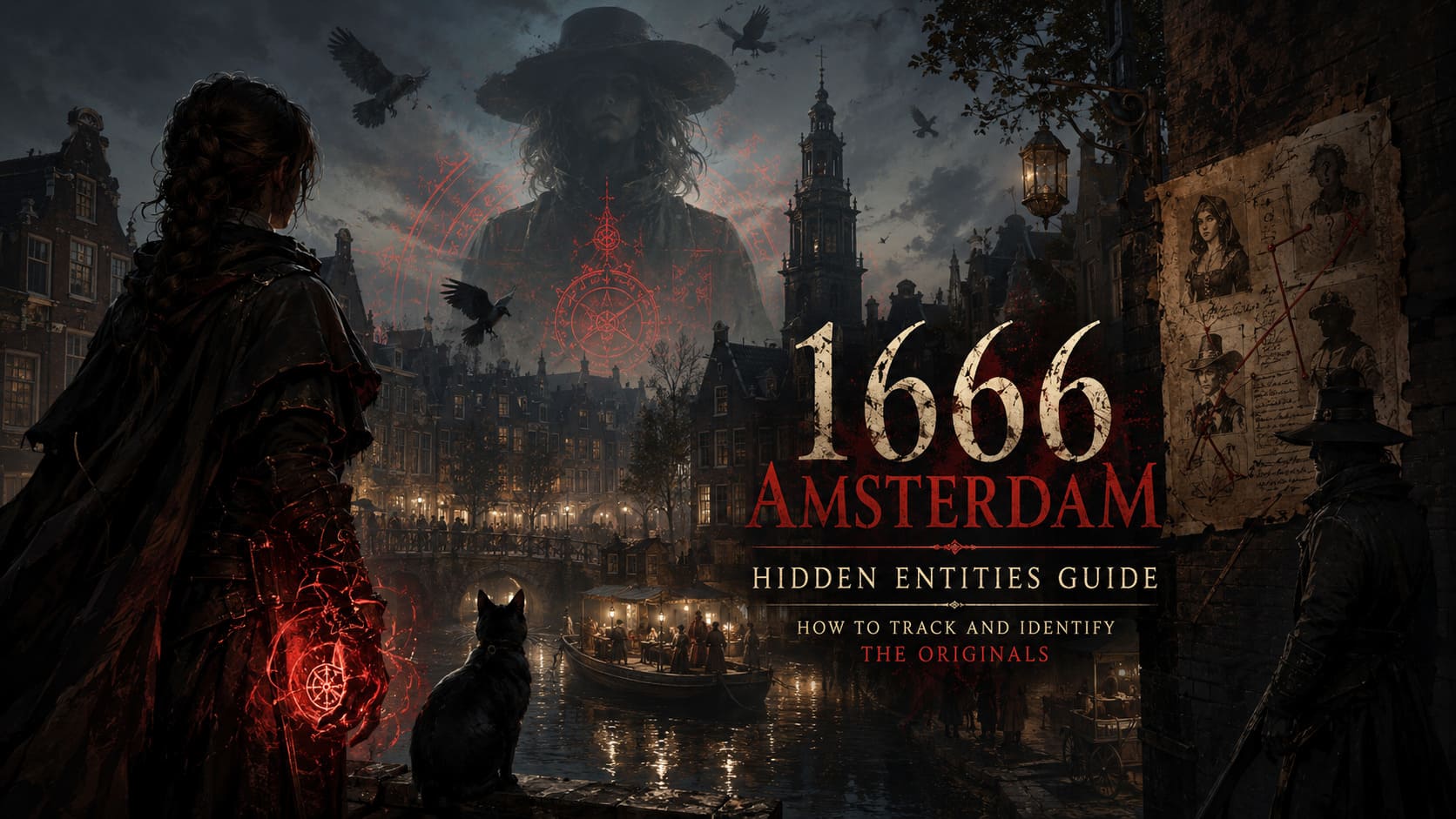
1666 Amsterdam Hidden Entities Guide: How to Track and Identify the Originals
If there is one thing I love about 1666: Amsterdam, it is that the game does not simply throw a monster in front of you and tell you to hit it until it dies. The interesting part is figuring out who the monster actually is.
Amsterdam looks alive during the day. Merchants are working, citizens are moving through the streets, conversations are happening everywhere, and the city feels like a genuine 17th-century settlement. But underneath all that normality, something is seriously wrong. The Originals are hiding among ordinary people, and finding them is less about brute force and more about noticing the details that everyone else ignores.
Playing through the investigation mechanics, I quickly realized that treating every suspicious NPC as a potential enemy is a terrible strategy. You need to build a case first. Watch people, investigate locations, use Noa’s supernatural senses, and let the clues gradually point you toward the right target.
This is my practical 1666: Amsterdam hidden entities guide, based around the investigation and hunting mechanics presented in the game’s available material. If you’re trying to understand how to track the Originals efficiently, here’s how I approach it.
Why the Originals Are So Difficult to Find
The Originals aren’t conventional enemies.
According to the game’s story, these ancient supernatural beings made pacts with powerful humans centuries ago. Those bargains brought wealth, influence, and other rewards, but every deal eventually comes due. By 1666, the consequences are catching up with the people and bloodlines connected to those ancient agreements.
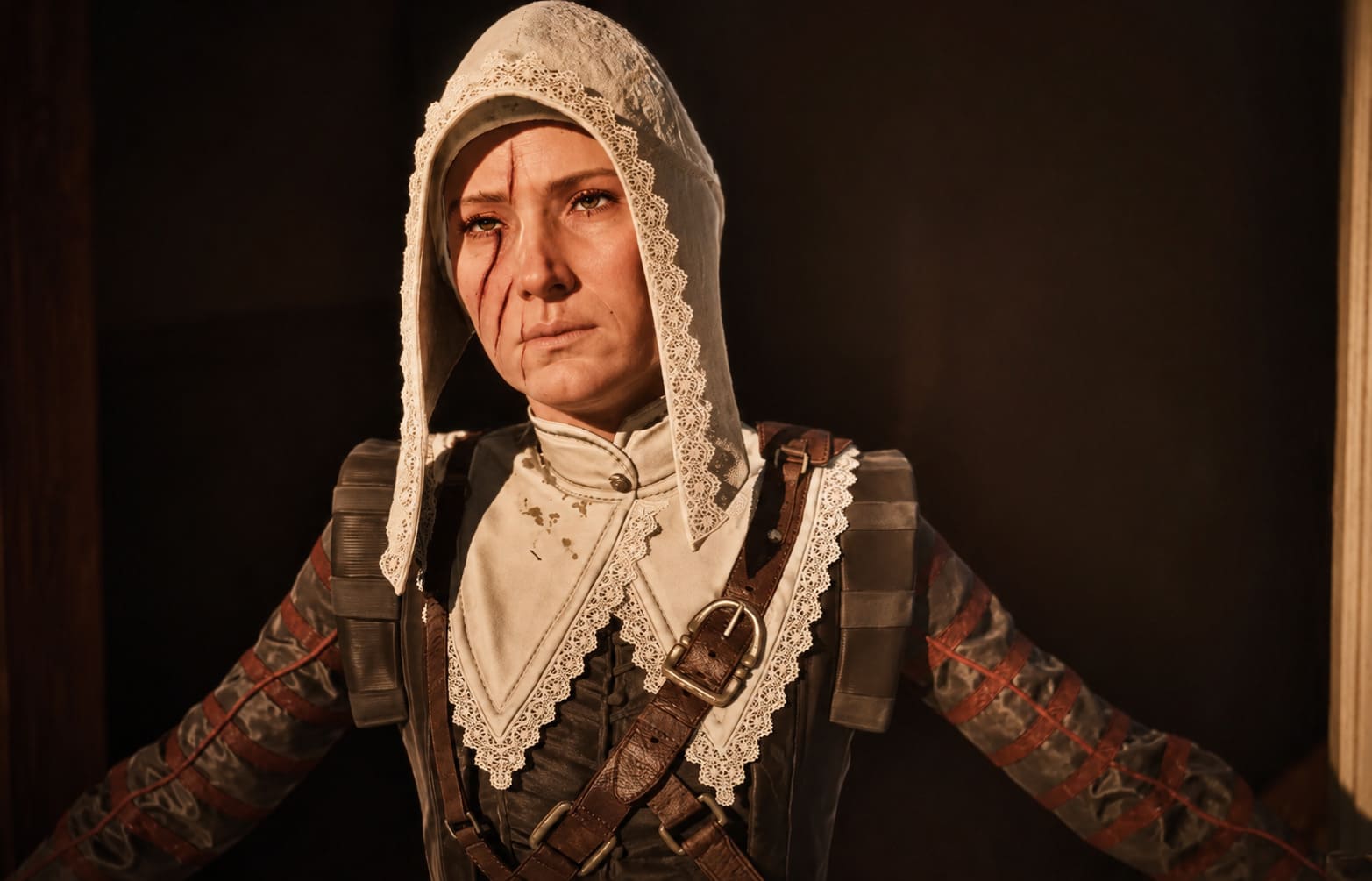
The real problem for Noa Brooklyn is that an Original doesn’t spend the afternoon walking around Amsterdam looking like a demon.
They hide behind human identities.
That’s what makes the investigation system so interesting. You aren’t simply following a glowing enemy marker across the map. You have to combine different pieces of information and decide which seemingly ordinary person deserves closer attention.
From my perspective, that’s one of the strongest ideas behind the game’s entire gameplay loop.
| Investigation Element | What You Should Look For | Why It Matters |
|---|---|---|
| Esoteric Sight | Strange auras and distortions | Separates suspicious targets from normal citizens |
| Environmental Clues | Occult traces and unusual locations | Helps narrow down an investigation area |
| NPC Conversations | Rumors and strange behavior | Provides indirect clues about potential Originals |
| Aaron | Hidden areas and elevated viewpoints | Makes scouting much easier |
The Daytime Investigation Is Your Real Preparation Phase
The first mistake I would avoid is thinking of the daytime section as downtime.
It isn’t.
Daytime is when you build your entire case.
Amsterdam becomes a social stealth playground. You have crowds, markets, houses, narrow streets, docks, courtyards, and countless opportunities to observe what is happening around you.
Noa isn’t supposed to start throwing magic around whenever someone looks suspicious. Doing that would completely defeat the purpose of the investigation.
Instead, I recommend slowing down.
Look at the environment. Listen to conversations. Check suspicious locations. Use your supernatural abilities when something feels wrong. The city is effectively giving you pieces of a puzzle, and your job is to put them together before night arrives.
The more information you collect during the day, the less chaotic the eventual hunt becomes.
Use Esoteric Sight Before You Commit to a Target
Noa’s supernatural perception is arguably the most important tool in the entire investigation process.

Normal vision tells you what an NPC wants you to see. Esoteric Sight helps reveal what is actually underneath the disguise.
When activated, the normal appearance of Amsterdam gives way to a more supernatural visual layer. People, locations, and objects can reveal traces of spiritual energy that aren’t obvious otherwise.
An ordinary citizen should generally feel… ordinary.
An Original, however, can produce subtle abnormalities.
Look for things such as:
- Unnatural aura activity
- Dark or corrupted visual distortions
- Shadows that don’t seem to behave normally
- Strange spiritual residue around people or locations
The important word here is subtle.
Don’t expect every demon to glow like a neon sign saying “KILL ME.” If the game follows the investigation philosophy established around its premise, the fun comes from recognizing patterns rather than waiting for a giant obvious indicator.
Personally, I’d activate Esoteric Sight whenever I reach an area connected to a clue instead of leaving it active constantly. That makes suspicious details easier to notice and keeps the ability feeling like an investigative tool rather than a permanent alternate vision mode.
Investigate Everything That Looks Slightly Wrong
The environment is just as important as the people.
Interaction is a major part of Noa’s investigation toolkit. On a standard PC control scheme, the E key is used for interacting with objects and points of interest.
You’ll want to get comfortable with it.
Documents, ritual locations, suspicious objects, environmental traces, and other clues can help establish where an Original has been operating.
The key is to think like a detective rather than a traditional action-game protagonist.
If you discover a strange ritual site, don’t immediately move on because there isn’t an enemy standing beside it.
Ask yourself:
Who would have a reason to use this place?
Where could they have gone afterward?
Does another clue connect this location to a specific person?
That mindset can dramatically improve your efficiency.
Don’t Ignore Ordinary NPC Conversations
One of my favorite potential aspects of this system is the role of gossip.
In a historical city packed with people, information doesn’t always come from official quests. Sometimes the most useful clue could come from something you overhear while moving through a marketplace.
Listen for stories about:
- A merchant behaving strangely.
- Someone who seems impossible to age.
- A house that locals avoid.
- Strange objects appearing in a neighborhood.
- Animals behaving unusually.
- People disappearing or acting differently after visiting certain locations.
Not every rumor should be treated as fact.
That’s important.
A suspicious rumor is a lead, not proof.
Use conversations to determine where you should investigate next, then confirm the information through Noa’s supernatural abilities and environmental evidence.
Aaron the Cat Is More Than a Cute Companion
Let’s talk about Aaron, because I think players could easily underestimate how valuable this character is.
Aaron is a black cat connected to a man from another timeline, which fits perfectly with the strange multi-era mythology surrounding the game.
From a gameplay perspective, though, his real value is mobility.
Noa can explore Amsterdam effectively, but Aaron can approach spaces in completely different ways. He can climb rooftops, move through smaller openings, access elevated positions, and scout areas that would be difficult or risky for Noa to approach directly.
That makes Aaron incredibly useful for reconnaissance.
Use Aaron Before Entering Risky Areas
If you suspect an area is important, I’d scout it with Aaron first whenever possible.
Check rooftops.
Look into courtyards.
Search for hidden entrances.
Observe suspicious activity from a safer position.
This can save you from blindly walking into an area without knowing what you’re dealing with.
Aaron’s enhanced senses also make him particularly useful for detecting unusual activity and supernatural traces. Even when Noa doesn’t immediately have enough information to identify an Original, Aaron can help narrow down where you should concentrate your attention.
For me, that’s where the companion mechanic becomes more than a gimmick.
Aaron expands the investigation rather than simply helping during combat.
Follow Environmental Anomalies
The city itself can act like a warning system.
When an Original has influenced an area, the environment may begin displaying strange abnormalities. These aren’t necessarily giant supernatural events. Sometimes the clue is something that would be easy to walk past.
Pay attention to:
- Plants that appear unhealthy in otherwise normal surroundings.
- Unusual concentrations of rats or birds.
- Locations associated with unexplained fear.
- Strange ritual markings.
- Areas repeatedly mentioned by NPCs.
- Buildings that seem connected to multiple clues.
The trick is correlation.
One strange crow isn’t proof that you’ve found an Original.
A strange crow, a suspicious merchant, an occult symbol, and several rumors about the same house?
Now you’ve got something worth investigating.
The Multi-Timeline Story Can Change How You Read Clues
One of the more unusual aspects of 1666: Amsterdam is its connection between different historical periods, including 1333, 1666, and 1999.
That isn’t just background lore.
If the game’s investigation structure fully embraces its timeline concept, information from one era can potentially provide context for another. Family names, symbols, historical events, and old agreements can become relevant when identifying supernatural figures centuries later.
This means I would avoid skipping lore documents just because they don’t immediately provide a quest marker.
A family crest found in an old location may seem meaningless at first.
Later, you might recognize the same symbol somewhere else.
That’s when the puzzle starts making sense.
Marking an Original Is the Moment Your Investigation Pays Off
Once you’ve collected enough evidence and identified the likely target, you need to mark them.
This is one of the most important steps because the target’s location becomes significantly more useful once it is associated with your investigation.
Think of marking as turning your suspicion into an actionable target.
You don’t want to spend an entire day following someone without confirming that they are actually connected to the supernatural activity you’re investigating.
My preferred approach would be:
- Find a suspicious area.
- Gather environmental clues.
- Listen to nearby NPCs.
- Use Esoteric Sight.
- Scout with Aaron.
- Compare the evidence.
- Confirm the suspicious individual.
- Mark the target before nightfall.
That gives you a much cleaner transition into the hunting phase.
Nightfall Changes Everything
Once night arrives, the game stops feeling like a detective story and starts feeling like a supernatural action game.
This is where the preparation finally pays off.
The Original can no longer rely on the same level of anonymity. Under the conditions of an Esbat, the supernatural side of the target becomes much more important, and Noa can confront the entity directly.
And honestly, this is why I think rushing through the daytime investigation is such a bad idea.
The better your investigation, the more controlled your night hunt becomes.
Instead of wandering around searching for an enemy, you already know:
Who you’re hunting.
Where they’re likely to be.
Why they’re suspicious.
What clues led you there.
That feeling of turning detective work into a supernatural assassination hunt is what makes the concept stand out.
Preparing for the Actual Fight
Once the Original reveals its true nature, you need to switch mental gears.
Noa’s witchcraft becomes the primary weapon, while mobility and positioning become much more important.
Her broom provides aerial movement and can help with positioning, while her magical attacks allow her to deal with supernatural enemies and their potential followers.
Aaron can also contribute by creating distractions and helping you control the battlefield.
Don’t assume that every Original should be fought identically.
If the game gives each entity different abilities or encounter structures, adapting to the specific enemy will be much more effective than trying to force the same combo into every encounter.
I prefer to think of the hunt as having two separate stages:
Stage One: Outsmart the demon.
Stage Two: Outfight it.
If you fail at the first stage, the second becomes unnecessarily messy.
1666 Amsterdam Gameplay Loop Guide: Mastering Day Investigation and Night Combat
My Biggest Tips for Finding Hidden Originals
After looking at the investigation mechanics as a whole, these are the habits I’d recommend adopting early.
1. Don’t Rush Through Crowded Areas
The crowds are not just decoration. They can hide conversations, clues, and suspicious behavior.
2. Use Esoteric Sight Intelligently
Don’t rely on it blindly. Use it when you already have a reason to investigate something.
3. Treat Every Clue as Part of a Larger Pattern
A single strange detail means very little. Multiple connected details can identify an Original.
4. Scout With Aaron
If a location looks difficult to approach, don’t immediately force Noa through it. Aaron may reveal another route.
5. Explore Above and Below Street Level
Amsterdam’s rooftops, courtyards, interiors, and hidden spaces can all contribute to an investigation.
6. Mark Targets Before the Hunt Begins
There is little worse than doing all the detective work and then losing track of your suspect when the investigation transitions into combat.
Final Verdict: Think Like a Hunter, Not a Hero
The biggest lesson I take from 1666: Amsterdam is that the game’s supernatural fantasy works best when you don’t treat it like a straightforward action game.
Noa is powerful, but raw power isn’t the answer to every problem.
The Originals are dangerous precisely because they understand how to hide. They can exist in the middle of a populated Amsterdam street without immediately revealing themselves. Your job is to notice the things that don’t fit.
Watch the people. Read the environment. Listen to rumors. Use Esoteric Sight. Let Aaron scout. Connect the historical clues. Then mark your target.
Only after you’ve done all of that should you worry about killing the demon.
That day-to-night structure is what makes the concept particularly appealing to me. During daylight, I’m looking for the smallest detail that doesn’t belong. At night, I’m finally allowed to unleash everything Noa has.
And that’s exactly how a supernatural hunt should feel.