Mortal Shell 2 Lore Explained: Who is the Harvester and False Gods Breakdown
After spending years playing Soulslikes, I’ve learned that the games I remember most aren’t necessarily the ones with the hardest bosses or the most complicated builds. They’re the ones that leave me thinking about their worlds long after I’ve turned the game off. The original Mortal Shell was one of those games for me.
It was strange, hostile, deliberately cryptic, and almost uncomfortable in the way it presented its world. You weren’t handed a clean explanation of what was happening. Instead, you were expected to dig through item descriptions, environments, characters, and fragments of memory and slowly assemble the truth yourself.
Mortal Shell 2 takes that idea and pushes it much further.
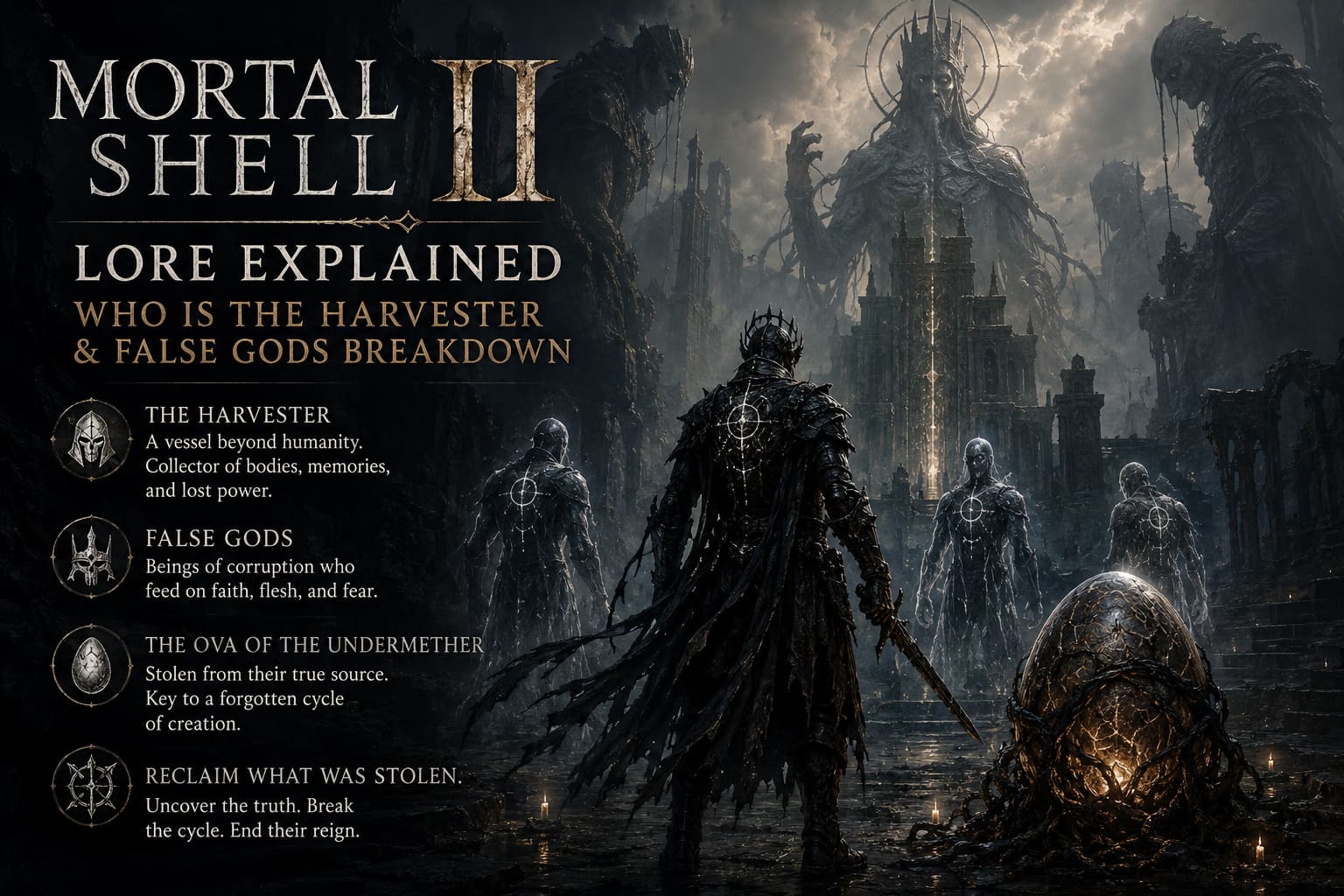
The sequel expands the world beyond the claustrophobic atmosphere of Fallgrim and introduces a much larger, more interconnected setting filled with ruined temples, forgotten forests, ancient dungeons, and powerful entities that have effectively crowned themselves gods. At the center of this story is the mysterious Harbinger, a figure that many lore discussions refer to as the Harvester.
And honestly, the more I look at the story, the more I think that name fits.
The Harbinger isn’t simply another warrior wandering through a dying world. It is something fundamentally different from the people it encounters. Its ability to inhabit the bodies of the dead, absorb their skills, and uncover their memories makes the protagonist both a weapon and a walking archive of a civilization that has already collapsed.
So, who exactly is the Harbinger? What are the False Gods? And why are the Ova of the Undermether so important?
Let’s break down the lore.
Who Is the Harbinger in Mortal Shell 2?
The easiest way to understand the Harbinger is to look back at the protagonist of the original game.
The Foundling was a strange, almost embryonic being that existed outside normal human society. Rather than simply becoming stronger through traditional training, the Foundling could inhabit the bodies of dead warriors known as Shells. By doing so, it effectively borrowed their physical abilities, combat knowledge, and fragments of identity.
Mortal Shell 2 develops that concept instead of abandoning it.
You play as the Harbinger, a mysterious entity whose existence appears to be tied to an ancient purpose. It isn’t simply a human warrior who happens to have supernatural abilities. The Harbinger functions more like a vessel designed for a task that existed long before the player ever arrived.
This is where the term Harvester becomes particularly interesting.
The Harbinger constantly collects what the dead leave behind: their bodies, their abilities, their memories, and eventually the remnants of the cosmic power being fought over by the False Gods.
That makes the protagonist almost uniquely suited to the world.
Everyone else is trying to survive the collapse of reality. The Harbinger is essentially walking through the ruins and collecting the pieces.
And I think that’s one of the sequel’s strongest ideas.
The Shells Are More Important Than They First Appear
If you’ve played the original Mortal Shell, you already understand the basic mechanic. A Shell isn’t merely a suit of armor or an alternate character class. It represents a dead person whose body can be inhabited.
In the sequel, this idea becomes much more important from a storytelling perspective.
Characters such as Eredrim the Venerable, Proxima the Broodseeker, and Tiel the Acolyte aren’t simply combat options. Their histories provide different perspectives on the world and the consequences of its religious corruption.
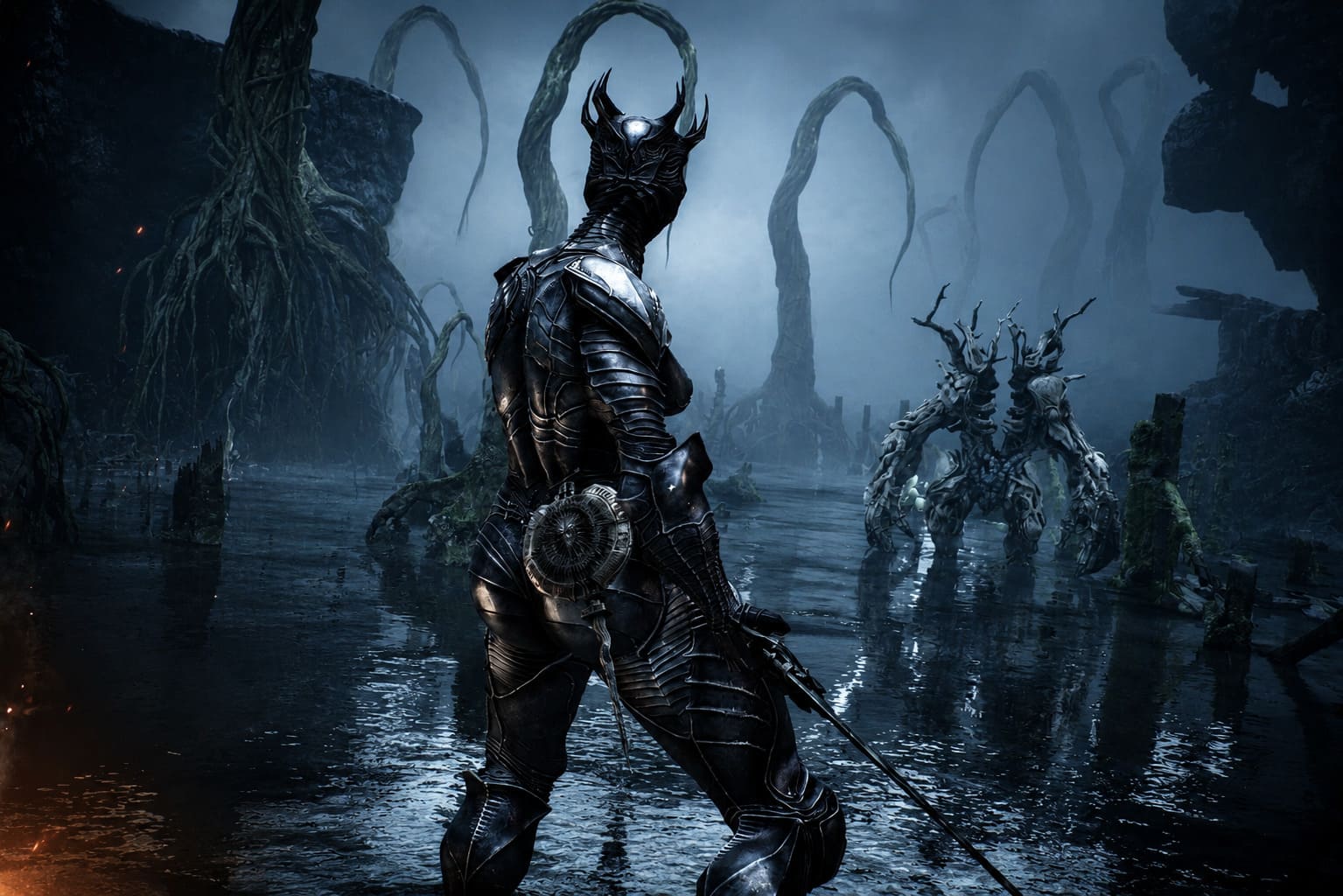
Every Shell gives the Harbinger another piece of the puzzle.
One warrior may have served a religious order that eventually discovered the horrifying truth behind its supposed gods. Another may have been a believer who genuinely thought the promise of immortality was salvation. Someone else may have spent their final days watching their community slowly transform into something unrecognizable.
This approach reminds me of what I enjoyed about the best environmental storytelling in games like Dark Souls, Bloodborne, and Lies of P. The game doesn’t necessarily stop to explain everything. Instead, the player becomes the detective.
The corpses are evidence.
The ruins are evidence.
The Shells are evidence.
And the Harbinger is the one character capable of putting those pieces together.
What Are the False Gods?
This is where the lore gets considerably darker.
The world of Mortal Shell 2 is filled with beings that have claimed divine authority. But the important distinction is that these entities aren’t necessarily gods in the traditional sense.
They are False Gods.
Their power comes from manipulating humanity’s desire for something it can never naturally possess: immortality.
This concept was already present in the original Mortal Shell, particularly through mysterious substances such as Tar and True Nektar. These substances represented humanity’s dangerous relationship with supernatural power. People believed they were receiving blessings, but the results were often horrifying transformations.
The sequel expands this concept into a much larger mythology.
The False Gods appear to have built their power by exploiting humanity and manipulating the sacred forces that underpin the world. Rather than creating genuine salvation, they offer a corrupted imitation of it.
And that’s what makes them frightening.
They aren’t powerful because they are benevolent divine beings.
They are powerful because people believed in them.
Faith becomes a resource. Flesh becomes a resource. Memory becomes a resource.
Eventually, even the distinction between religion and predation begins to disappear.
The Undermether and the Stolen Ova
The biggest mystery surrounding the Harbinger’s mission involves the Undermether and its Ova.
The Undermether represents something fundamentally different from the False Gods. Where the False Gods are associated with corruption, manipulation, and stolen power, the Undermether appears to represent a more primordial form of creation.
Its Ova are therefore much more than ordinary eggs.
They are pieces of a sacred lineage, representing the continuation of something ancient and potentially essential to the natural order of the world.
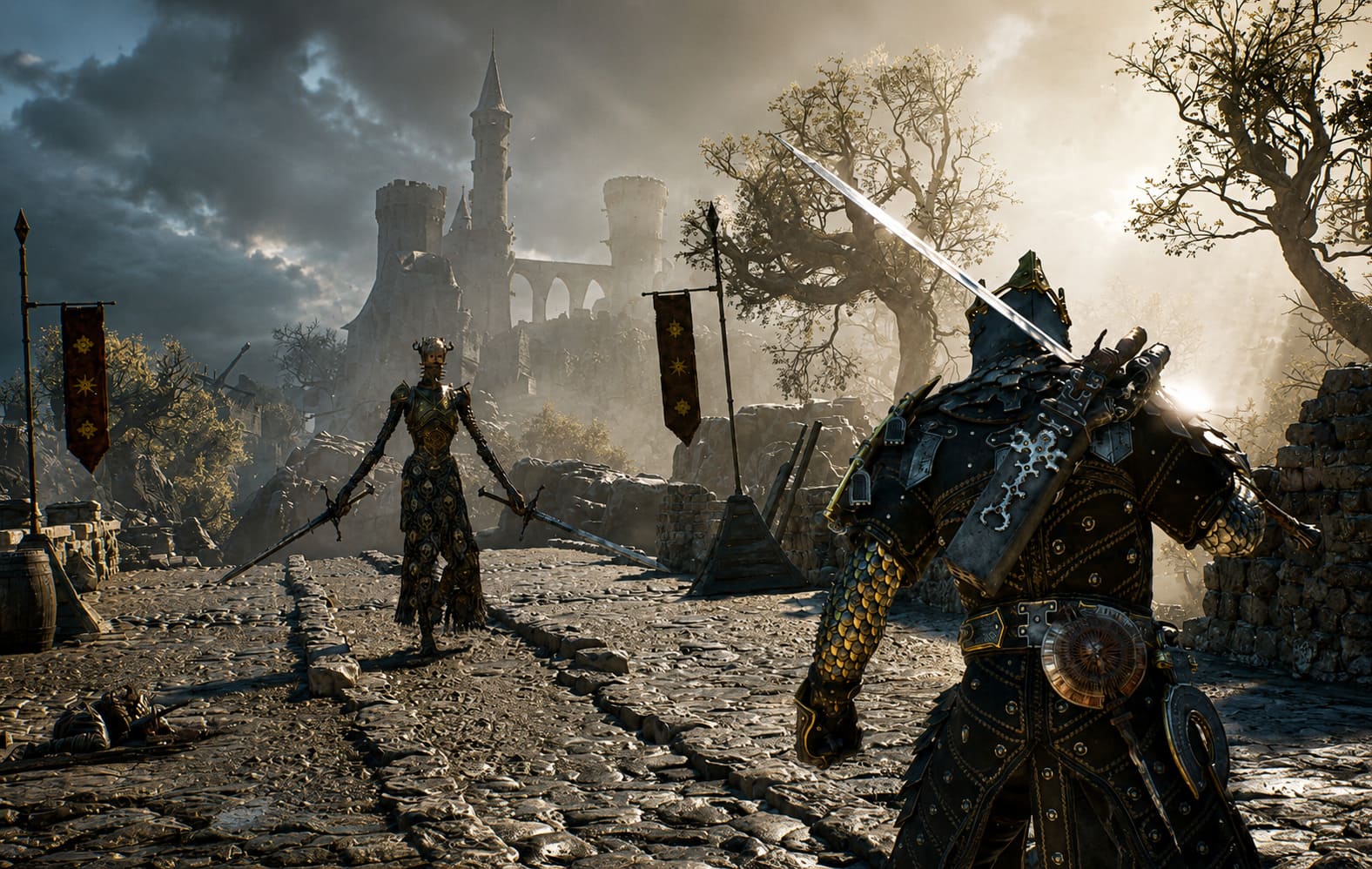
The False Gods stealing these Ova is significant because they aren’t simply stealing physical objects. They are interfering with a cosmic cycle of creation.
This is one of the points where I think Mortal Shell 2 becomes particularly interesting from a thematic perspective.
The villains aren’t satisfied with ruling over humanity.
They want to control the source of something greater than themselves.
They’ve essentially taken a piece of the universe’s natural order and turned it into a tool for their own survival.
That makes the Harbinger’s mission much more meaningful than simply “kill the bosses.”
The objective is to recover what was stolen.
Why the Harbinger Is Called the Harvester
The Harvester interpretation makes sense when you look at the protagonist’s role from beginning to end.
The False Gods harvest humanity.
They consume faith, flesh, memories, fear, and devotion to strengthen themselves.
The Harbinger does something remarkably similar, but for a completely different purpose.
It harvests the remains of fallen warriors.
It takes their bodies.
It absorbs their abilities.
It uncovers their memories.
And eventually, it seeks to reclaim the stolen Ova from the beings that have imprisoned them.
There is almost a deliberate mirror between the protagonist and the antagonists.
| The False Gods | The Harbinger |
|---|---|
| Exploit human faith | Learns from human memories |
| Consume flesh and sacrifice | Inhabits fallen bodies |
| Steal sacred power | Reclaims stolen power |
| Create artificial immortality | Attempts to restore the natural order |
| Rule through fear and deception | Destroys their false authority |
That parallel is, in my opinion, one of the most compelling aspects of the story.
The Harbinger may be horrifying, but the game constantly forces us to ask whether it is actually more monstrous than the beings it is hunting.
False Truths and a World Built on Lies
Another important concept surrounding the sequel is the idea of False Truths.
The phrase sounds contradictory, but that’s exactly the point.
The world has been built around beliefs that have become accepted as reality. Generations of people have worshipped beings they believed were divine. Religious structures were created around those beliefs. Wars were fought in their names.
Eventually, the lie became more powerful than the truth.
This is classic Soulslike storytelling, but Mortal Shell 2 gives it a particularly bleak flavor.
The problem isn’t simply that humanity was tricked once.
The problem is that humanity kept choosing to believe the lie because the alternative was terrifying.
Immortality is difficult to reject when death is staring you in the face.
That’s why the False Gods work so well as villains. They don’t necessarily need to force everyone to worship them. They can simply offer desperate people what they want.
And once people accept the bargain, the consequences become almost impossible to reverse.
How the Shells Reveal the Collapse of Civilization
One thing I particularly appreciate about this approach is that the Shell system isn’t disconnected from the lore.
In many RPGs, different armor sets, classes, or characters exist primarily because the gameplay needs variety.
Here, the bodies themselves are part of the story.
The Shells demonstrate how different groups experienced the collapse.
Eredrim represents strength, duty, and the consequences of following a cause that may have been corrupted from the beginning.
Tiel offers a different perspective, one closer to religious devotion and the suffering created by blind belief.
Other Shells expand that picture by showing that there was never a single version of the apocalypse. Every person experienced the rise of the False Gods differently.
The Harbinger therefore becomes a kind of historian.
It doesn’t read history from books.
It wears history.
That is a fantastic concept for a Soulslike protagonist.
The Gameplay Changes Actually Support the Lore
One of the most interesting things about Mortal Shell 2 is how its gameplay changes can be interpreted through the protagonist.
The move toward stamina-free combat makes the Harbinger feel fundamentally different from the fragile Foundling of the original game.
In the first Mortal Shell, stamina management was a constant reminder of physical limitations. Every attack, dodge, and movement mattered because your body had limits.
The Harbinger feels much less restricted.
Its movement is more aggressive. Combat flows faster. Posture-breaking and executions make encounters feel less like desperate survival and more like controlled predation.
I don’t think that’s accidental.
The Harbinger isn’t supposed to feel like an ordinary warrior.
It is something that exists beyond normal human physical limitations.
Even the defensive mechanics reinforce that idea. The various Seals and their abilities suggest a character capable of manipulating the physical relationship between flesh, stone, impact, and space.
The classic Hardening mechanic fits particularly well into this mythology. Temporarily turning the Shell into something almost immovable feels less like putting on magical armor and more like forcing the body to anchor itself to the physical world.
For a game obsessed with flesh and identity, that’s an appropriately strange defensive mechanic.
Mortal Shell 2 Cross Progression: How to Transfer Saves on PS5, Xbox, and PC (2026)
The Real Horror of Mortal Shell 2
After looking at all of these pieces together, I don’t think the central horror of Mortal Shell 2 is really the monsters.
The monsters are symptoms.
The real horror is the idea that humanity willingly participated in its own destruction.
People wanted immortality.
They wanted gods.
They wanted protection from death.
And when something appeared that could offer those things, they accepted the bargain without fully understanding the price.
The False Gods simply took advantage of that weakness.
The Harbinger exists on the other side of that equation.
It doesn’t seem interested in worship.
It doesn’t ask humanity to believe in it.
It simply moves forward, inhabiting the dead and tearing down the entities that have built their kingdoms on stolen power.
That makes the protagonist strangely fascinating.
The Harbinger may be a cosmic weapon, but it also becomes the only character capable of remembering what the world has lost.
Mortal Shell 2 Steam Deck Optimization Guide: Best Settings for Stable 45 FPS
Final Thoughts: A Soulslike Story About Stolen Immortality
After playing through plenty of Soulslikes, I’ve become skeptical whenever a game promises an enormous mythology full of gods, ancient civilizations, mysterious beings, and cryptic prophecies. It’s very easy for this kind of storytelling to become meaningless background noise.
But Mortal Shell 2 has an interesting advantage: its lore is built around a very simple human idea.
People are terrified of death.
Everything else grows from that fear.
The False Gods exploit it. Humanity worships them because of it. The Shells preserve the consequences of it. The Undermether represents a natural cycle that the gods attempt to corrupt. And the Harbinger walks through the aftermath, harvesting the remains of a world that believed it could cheat mortality.
That’s why I think the Harbinger/Harvester interpretation works so well.
The protagonist isn’t simply a chosen hero destined to defeat evil.
It is a collector of the dead, a vessel for forgotten memories, and ultimately a force capable of dismantling the artificial divinity that has poisoned the world.
The biggest question, however, may not be whether the Harbinger can defeat the False Gods.
It’s whether restoring the Undermether’s stolen Ova will actually restore the world—or simply begin another cycle of death, rebirth, and false ascension.
And knowing how Mortal Shell likes to tell its stories, I wouldn’t expect the answer to be comforting.
The deeper you dig into the lore, the less certain it becomes that anyone in this world is truly a god.
Maybe that’s the point.