
IL-2 Series Korea Full Flyable Aircraft List: Every Jet and Prop Detailed
The first time I loaded into Korea: IL-2 Series, I immediately realized this wasn’t simply another expansion built on familiar ideas. After spending years flying everything from IL-2 Sturmovik: Great Battles and DCS World to Microsoft Flight Simulator for civilian flying and even lighter combat simulators like War Thunder, I could tell within a few sorties that this project aims for something different.
The Korean War has always fascinated aviation enthusiasts because it represents the exact moment when military aviation stood with one foot in the past and the other in the future. One mission might have you chasing piston-powered fighters over mountain valleys, while the next throws you into a high-speed duel between early jet fighters barely approaching the sound barrier.
That contrast is exactly what makes the launch aircraft lineup feel surprisingly complete despite its relatively modest size.
Instead of stuffing the game with dozens of aircraft that overlap in performance, the developers chose machines that each have their own identity. After spending time flying every available aircraft, here’s my personal breakdown of the launch roster and why each one deserves attention.
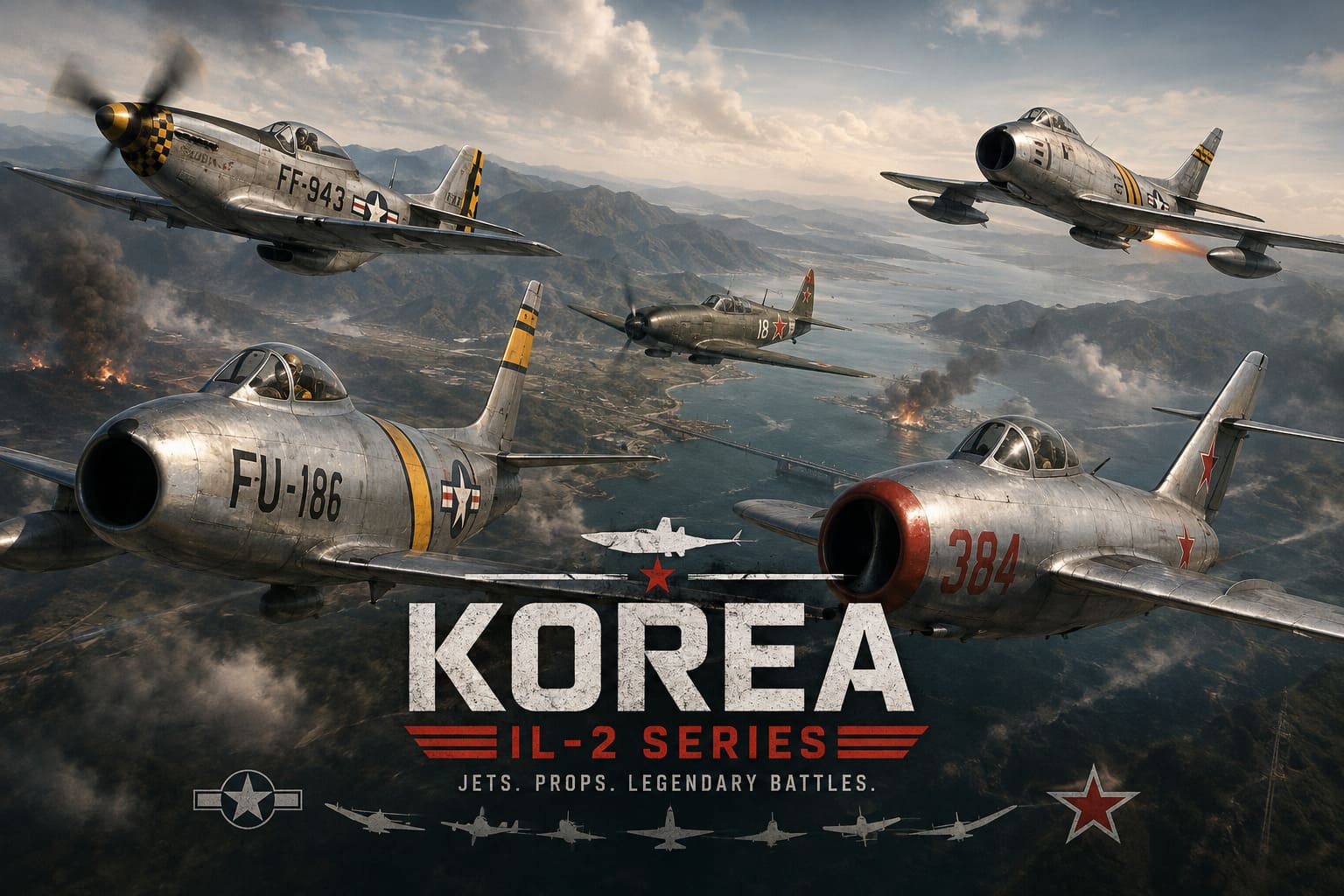
A Carefully Balanced Starting Roster
One thing I appreciated almost immediately is that every aircraft fills a meaningful role.
Rather than feeling like minor variants of one another, each aircraft changes the way you approach combat.
| Aircraft | Nation | Primary Role | Difficulty |
|---|---|---|---|
| F-86A Sabre | United Nations | Air Superiority | Medium |
| F-80C Shooting Star | United Nations | Fighter / Ground Attack | Easy |
| F-51D Mustang | United Nations | Close Air Support | Easy |
| F-84E Thunderjet* | United Nations | Strike Fighter | Medium |
| MiG-15bis | Eastern Bloc | Jet Interceptor | Hard |
| Yak-9P | Eastern Bloc | Dogfighter | Easy |
| IL-10 Sturmovik | Eastern Bloc | Ground Attack | Medium |
| La-11* | Eastern Bloc | Long-Range Fighter | Medium |
*Collector Aircraft
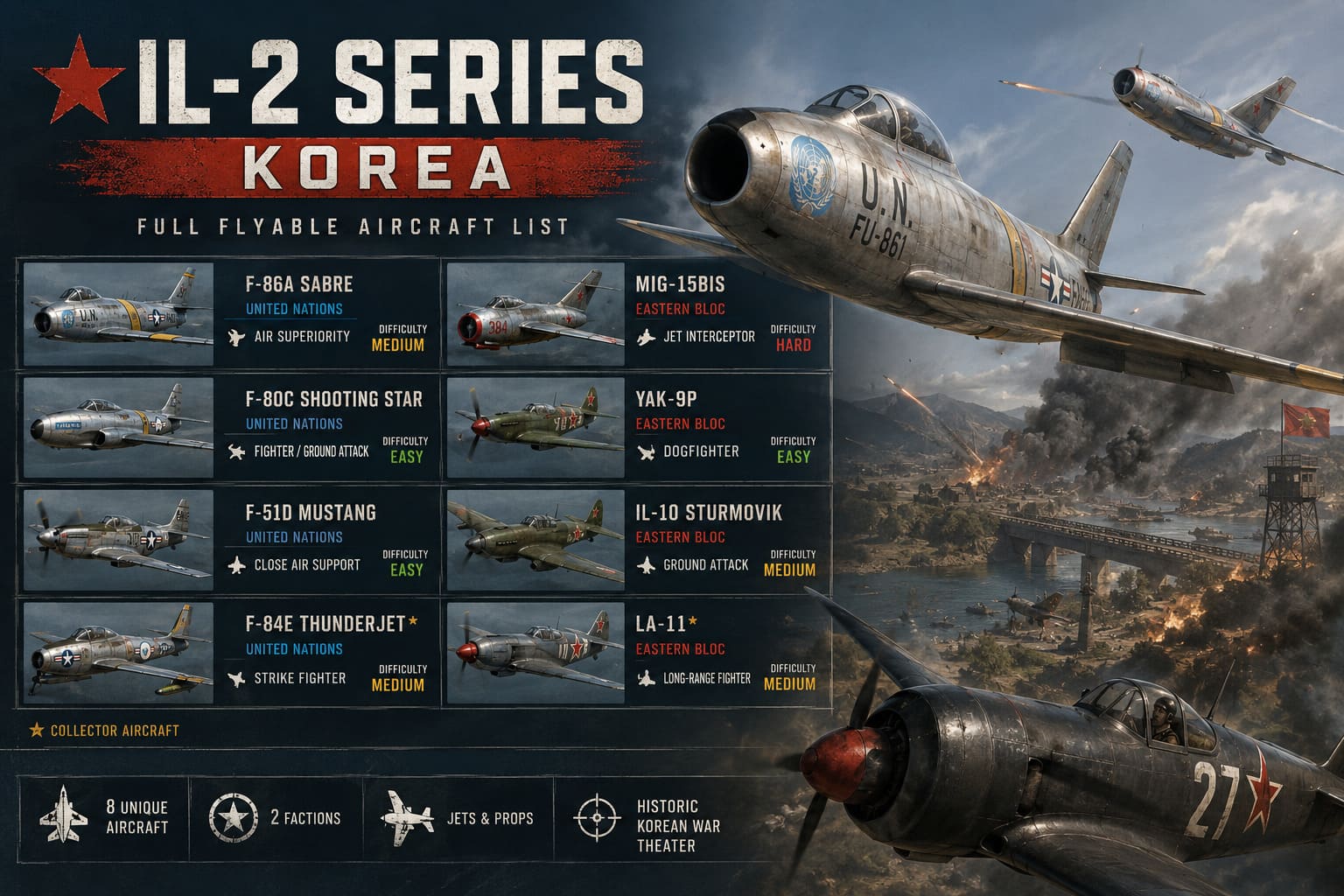
Even after dozens of missions, I never felt like one airplane completely invalidated another. Every machine has strengths that become obvious once you spend enough time learning its flight characteristics.
F-86A Sabre — Still One of Aviation’s Greatest Fighters
If you’re new to Korean War aviation, chances are you’ll gravitate toward the Sabre first.
There’s a reason.
The aircraft simply feels polished. The cockpit visibility is excellent, energy retention is predictable, and high-speed handling inspires confidence. During several multiplayer matches I found the Sabre rewarded patience far more than aggressive turning fights.
Instead of trying to out-turn opponents, maintaining speed and altitude usually produces better results.
What stood out most
- Excellent cockpit visibility
- Stable gun platform
- Reliable energy fighting performance
- Outstanding control at high speed
The radar-ranging gunsight is another highlight. Once you become comfortable with it, landing accurate bursts becomes much easier than with traditional fixed sights, making the Sabre an ideal aircraft for players who enjoy precision shooting.
MiG-15bis — The Aircraft That Demands Respect
The MiG-15 remains every bit as intimidating as aviation history suggests.
Unlike the Sabre, this aircraft constantly encourages vertical fighting. The climb rate feels incredible, and several times I found myself recovering altitude so quickly that opponents simply couldn’t follow without sacrificing all of their energy.
That said, the MiG is less forgiving than it first appears. Push it too aggressively in steep dives and compression quickly reminds you that early jet technology still had its limitations.
For experienced simulator pilots, however, that’s exactly what makes it rewarding. Every successful engagement feels earned rather than handed to you.
The heavy cannon armament is equally impressive. You rarely need extended firing opportunities because a single well-placed burst is often enough to end a fight.
F-80C Shooting Star — Better Than I Expected
I’ll admit something before going any further.
Before flying it, I assumed the Shooting Star would simply exist as the “starter jet.” After several hours, I completely changed my opinion.
The aircraft handles beautifully at lower speeds, remains remarkably stable during attack runs, and feels approachable without becoming boring. It may not dominate pure dogfights against the MiG-15, but it shines during mixed missions where versatility matters more than outright performance.
If someone asked me which aircraft to learn first, I’d probably recommend the F-80 before moving into either the Sabre or MiG.
F-51D Mustang Proves Props Still Matter
Many players may wonder why a World War II fighter belongs in a Korean War simulator.
After flying several close air support missions, the answer became obvious.
Flying low through valleys while avoiding anti-aircraft fire creates some of the most memorable moments in the entire game. The Mustang still turns exceptionally well and rewards smooth flying rather than brute speed.
Against careless jet pilots willing to slow down, it remains surprisingly dangerous. Skilled Sabre pilots still hold the advantage, but that difference feels historically authentic rather than artificially balanced.
The F-84E Is Built for Speed
The premium Thunderjet feels purpose-built for players who enjoy strike missions over traditional dogfighting.
It isn’t especially agile, but it excels at entering combat quickly, delivering bombs with precision, and escaping before enemy fighters have time to react.
Its external model is also one of the best-looking aircraft currently available. The detailed textures, fuel tanks, and cockpit presentation demonstrate the developers’ attention to detail.
Yak-9P Is the Hidden Multiplayer Favorite
I honestly didn’t expect to enjoy the Yak-9P as much as I did.
Its controls feel natural almost immediately, visibility is excellent, and it performs beautifully during extended turning engagements. Several multiplayer encounters ended with overconfident Sabre pilots slowing down just enough for the Yak to capitalize on the mistake.
Moments like those remind you that newer technology doesn’t automatically guarantee victory.
IL-10 Continues the Sturmovik Legacy
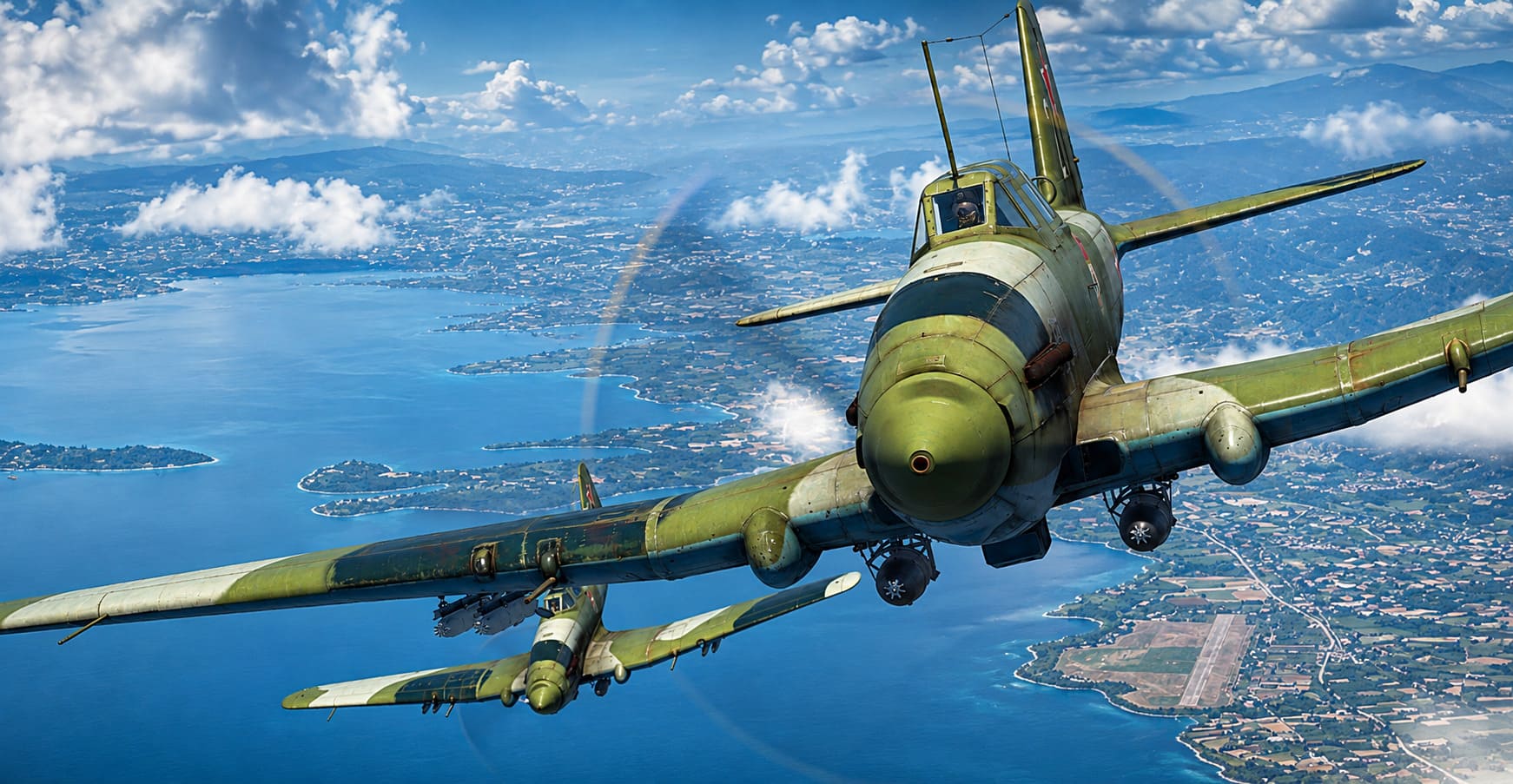
Ground attack has always been one of IL-2’s greatest strengths, and the IL-10 continues that tradition perfectly.
The aircraft feels heavy in exactly the right way. Instead of chasing fighters, you’re focused on surviving concentrated anti-aircraft fire while destroying vehicles, supply depots, and fortified positions.
The updated damage model deserves special praise. Oil leaks, damaged control surfaces, reduced engine power, and visible structural damage combine to create one of the most immersive ground attack experiences I’ve seen in recent flight simulators.
La-11 Offers Something Different
The La-11 may not receive as much attention as the jet fighters, but it’s far from forgettable.
Its three powerful 23 mm cannons deliver tremendous firepower, while its long operational range makes escort and patrol missions genuinely enjoyable. Players who appreciate classic piston-engine aircraft will likely spend far more time flying the La-11 than they originally expected.
The AI Aircraft Add More Than Background Scenery
One feature I wasn’t expecting to appreciate as much as I did was the presence of large AI-controlled bomber formations.
Watching B-29 bombers crossing the Korean sky completely changes the atmosphere of a mission. Whether you’re escorting them to their objective or attempting to intercept them before they reach their target, they create a sense of scale that’s difficult to achieve through fighter engagements alone.
The addition of Tu-2 bombers further reinforces the feeling that you’re participating in a massive conflict rather than isolated multiplayer matches.
Korea IL-2 Series Standard vs Founders Edition: Is It Worth the Price?
What I Hope Arrives Next
If the developers continue expanding the simulator, there are several aircraft I’d personally love to see added.
- F9F Panther
- F4U-4 Corsair
- AD Skyraider
- Gloster Meteor
- Sea Fury
Each would introduce entirely new mission opportunities while significantly expanding naval aviation, which currently feels like the largest missing piece of the overall experience.
Korea IL-2 Series Full Game Review: Is 1C Game Studios’ New Jet Age Sim Worth It?
Final Thoughts
After spending considerable time with the launch version, I believe Korea: IL-2 Series succeeds because it understands something many flight simulators forget.
More aircraft doesn’t automatically create a better simulator. Meaningful aircraft do.
Every airplane in the current lineup has its own strengths, weaknesses, and personality. Switching from an F-86 to a Mustang doesn’t simply change your speed—it changes your entire approach to combat.
As someone who’s invested hundreds of hours across multiple combat flight simulators over the years, I walked away genuinely impressed by how authentic these aircraft feel without becoming inaccessible to newcomers willing to invest time learning their strengths.
If you’re buying the game primarily for jet combat, you’ll find outstanding duels between the Sabre and MiG-15. If piston-engine aircraft remain your favorite era, the Yak-9P, Mustang, IL-10, and La-11 offer plenty of reasons to stay close to the terrain. And if ground attack missions are your passion, the strike aircraft provide enough variety to keep every sortie feeling fresh.
The launch roster may only include eight flyable aircraft, but after many hours in the cockpit, I never found myself wishing these planes were replaced. Instead, they made me excited to see how the simulator evolves over the coming years, and that’s probably the highest compliment I can give any new combat flight simulator.


