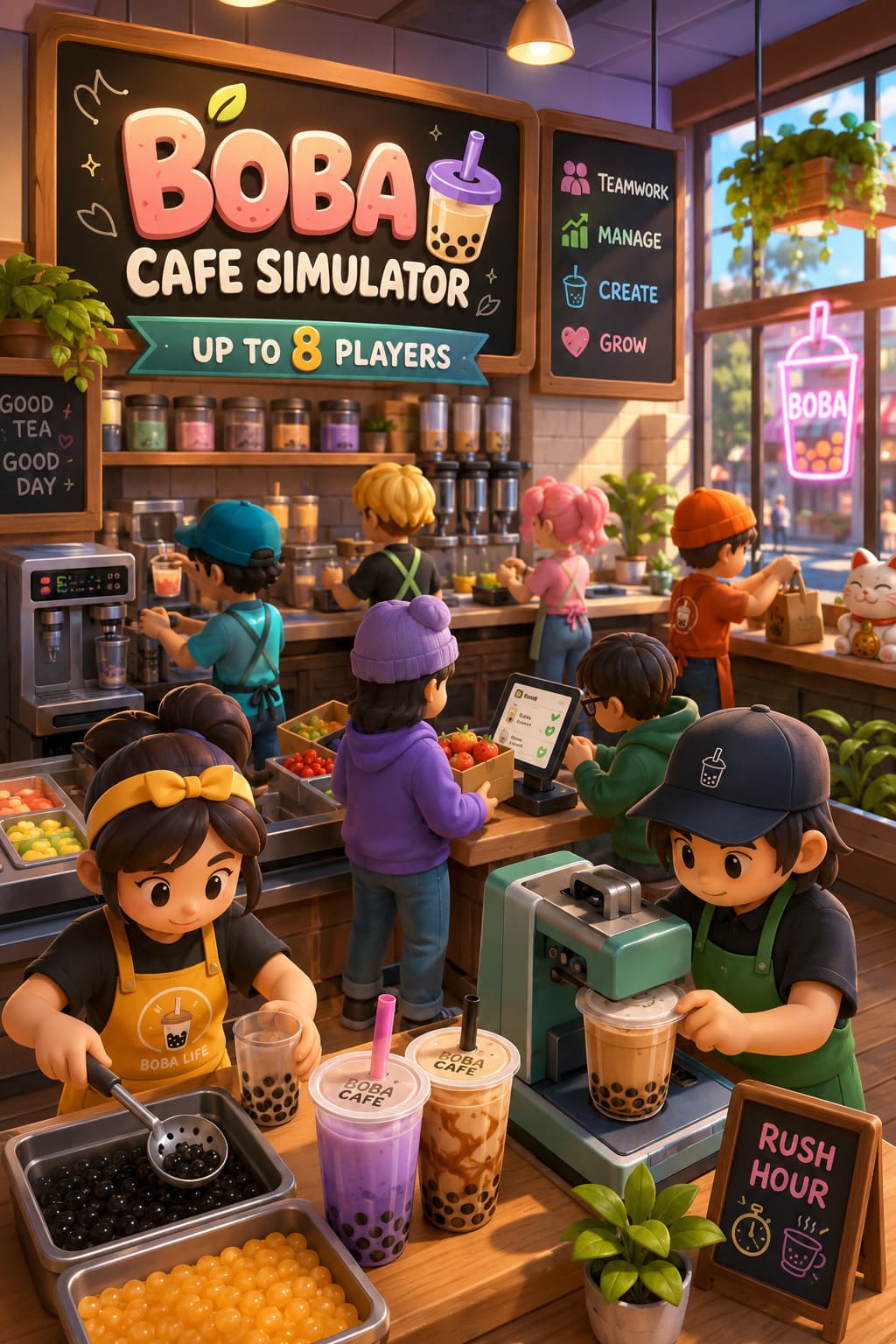
Boba Cafe Simulator Multiplayer Guide: How to Run an 8-Player Boba Shop Without Losing Your Friends
There are plenty of management simulators on Steam, and after spending years jumping between restaurant games, farming simulators, city builders, and cooperative cooking titles, I honestly thought I had already seen every possible variation of the formula. Then Boba Cafe Simulator arrived, and after several long multiplayer sessions with friends, I realized it manages to feel both familiar and surprisingly fresh.
At first glance, it looks like another cozy business simulator filled with cute visuals and relaxing music. That’s exactly what fooled me. Underneath the colorful presentation is a game that constantly tests teamwork, communication, and organization. One small mistake can send your perfectly planned workday into complete chaos, and that’s exactly why it became so addictive.
Instead of trying to copy games like Overcooked or PlateUp!, this title builds its own identity by allowing up to eight players to run a bubble tea business together. That single design decision completely changes how every shift feels.
A Surprisingly Funny Beginning
The game’s opening immediately tells you not to take everything too seriously.
Your previous business failed spectacularly, competitors crushed your dreams, and after a rather ridiculous reincarnation twist, you’re given another chance to become a successful entrepreneur. This time your destiny revolves around bubble tea instead of another doomed startup.
Normally I skip story introductions in simulation games, but this one actually made me laugh. It sets the tone perfectly for everything that follows.
Soon you’re running a tiny tea shop that slowly grows into a thriving business, provided your team doesn’t accidentally destroy it first.
Making Bubble Tea Is More Complex Than It Looks
One thing I appreciated almost immediately is that drink preparation never feels automated.
Many management games eventually become little more than clicking menus and watching timers. Here, every recipe requires your direct attention.
A typical order involves multiple individual steps.
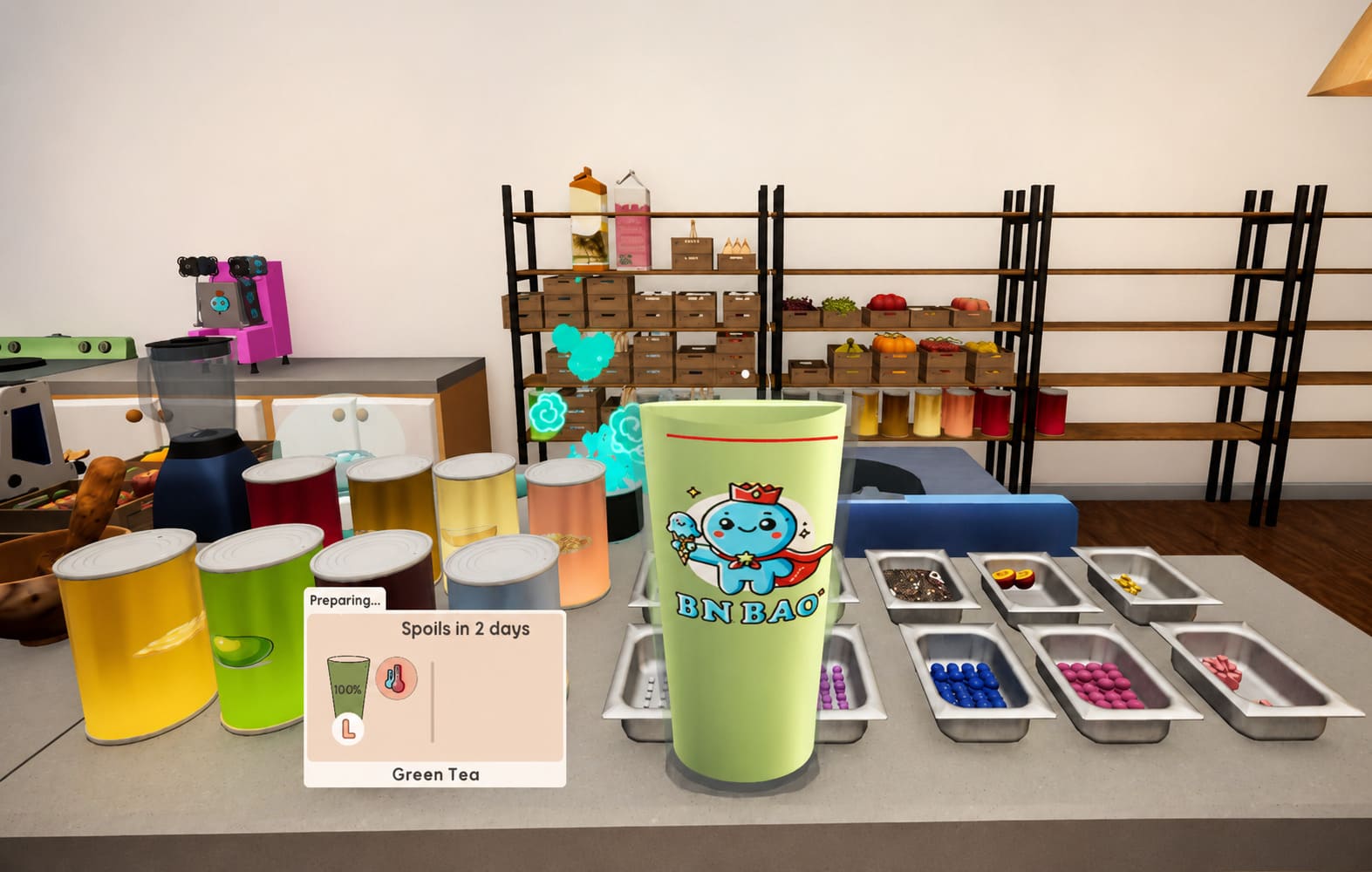
- Brewing the correct tea base.
- Preparing coffee when required.
- Cooking tapioca pearls without burning them.
- Cutting fresh fruit.
- Adding syrups and milk.
- Measuring ice correctly.
- Sealing the finished cup.
- Applying the correct order label.
That sounds simple on paper.
It absolutely isn’t when twenty customers suddenly arrive together.
The game currently includes well over one hundred recipes, and remembering them becomes a genuine skill. After several hours I stopped looking at recipe cards because muscle memory slowly took over, which felt incredibly satisfying.
Eight Players Changes Everything
The biggest reason I kept returning wasn’t the recipes.
It was the multiplayer.
Supporting eight players sounds excessive until you actually experience it.
With only two or three people, everyone ends up doing a bit of everything.
With eight?
The restaurant starts feeling like a real workplace.
Without anyone assigning jobs, our group naturally developed specialized roles.
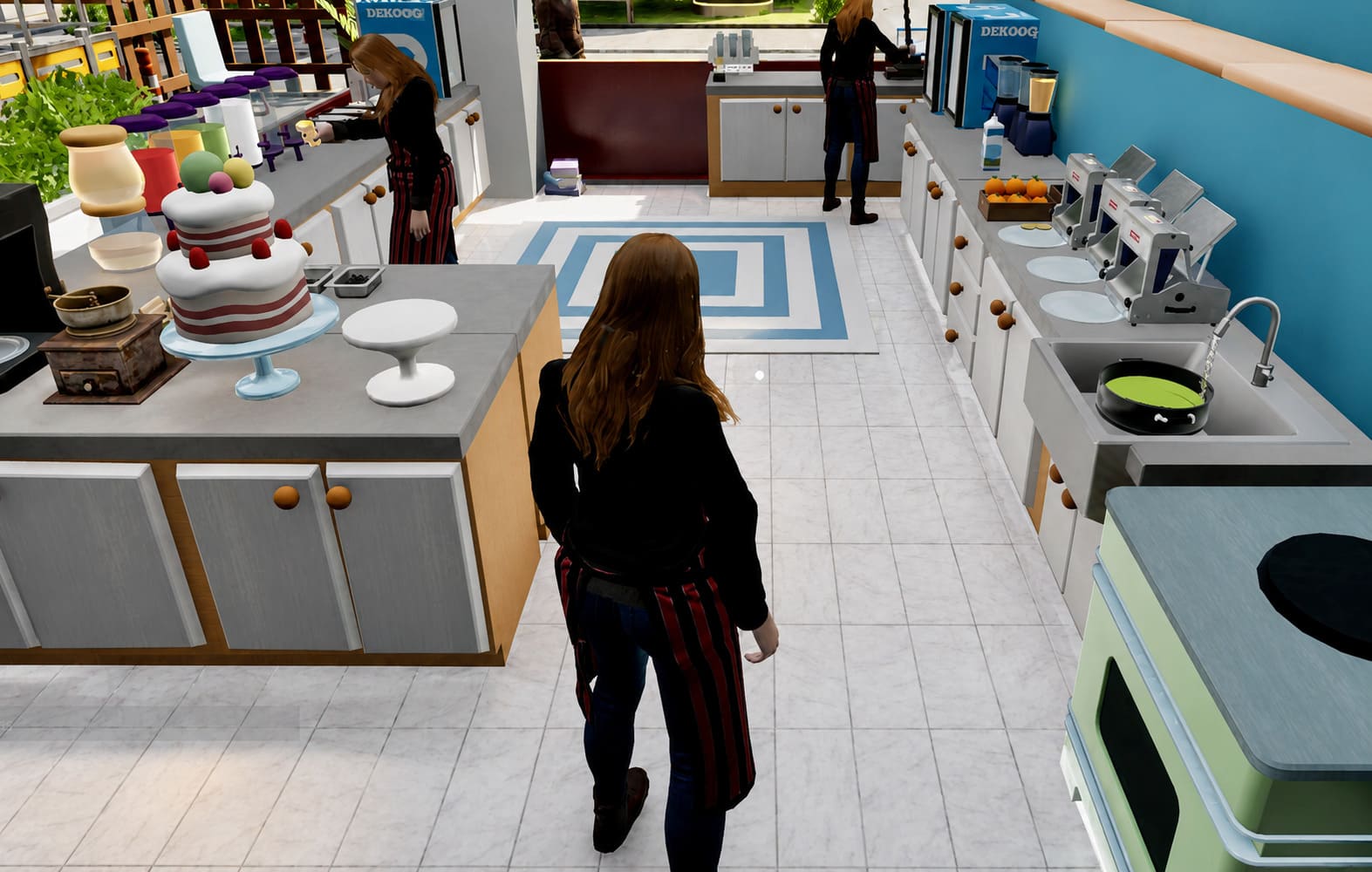
| Role | Main Responsibility | Importance |
|---|---|---|
| Brewing Team | Preparing tea and cooking toppings | Keeps ingredients flowing |
| Prep Station | Cutting fruit and stocking supplies | Prevents production delays |
| Drink Assembly | Mixing recipes and sealing cups | Handles most customer orders |
| Front Counter | Payments, customer interaction and deliveries | Maintains shop efficiency |
What impressed me most was how naturally these roles evolved.
Nobody forced us into them.
The game simply rewards organization.
Whenever someone wandered away from their station to “help,” another area immediately became overloaded.
Communication Is Worth More Than Speed
One lesson became obvious after a few evenings.
The fastest player isn’t always the most valuable one.
The best teammate is the person constantly communicating.
Simple phrases like:
- “More pearls cooking.”
- “Fruit station is empty.”
- “Need black tea.”
- “Delivery order ready.”
…can completely prevent disasters before they happen.
I’ve played competitive shooters where communication mattered less than it does inside this tiny virtual tea shop.
The Business Management Is Better Than Expected
The cooking is only half of the experience.
Outside working hours, you’re constantly improving your business.
This includes choosing menu prices, redesigning the café, buying decorations, rearranging furniture, and expanding your workflow.
I spent far more time moving counters around than I expected.
Why?
Because layout genuinely matters.
If ingredients are too far away, every employee wastes several seconds walking.
That doesn’t sound important until hundreds of orders arrive during rush hour.
A poorly designed café becomes your own worst enemy.
After redesigning our kitchen, we noticeably finished orders faster without changing anything else.
That’s the kind of management mechanic I always enjoy because it rewards planning instead of luck.
Pricing Actually Feels Meaningful
Unlike some simulators where pricing barely changes anything, Boba Cafe Simulator makes your decisions feel important.
- Charge too much and customers become unhappy.
- Go too cheap and profits disappear.
- Find the balance between popularity and sustainability.
Finding the balance became one of my favorite long-term goals.
Instead of constantly chasing maximum profit, our group eventually focused on maintaining customer satisfaction while steadily upgrading equipment.
That strategy felt far more rewarding than trying to squeeze every possible dollar from each drink.
Weather Keeps Every Day Different
One feature I didn’t expect to enjoy was the dynamic weather.
Different weather conditions influence what customers actually order.
During hotter days our café suddenly became overwhelmed with fruit teas and iced drinks.
Cold weather completely shifted demand toward warm milk tea.
It’s a relatively small mechanic, but it prevents the gameplay loop from becoming repetitive over longer sessions.
I always appreciate systems that quietly encourage adaptation instead of repeating identical routines forever.
Cozy Activities Between Busy Shifts
Thankfully, the game isn’t constant pressure.
Outside business hours there are several relaxing activities that help break the routine.
Players can spend time:
- Fishing.
- Growing ingredients.
- Exploring nearby areas.
- Decorating the café.
- Spending time with pet companions.
These quieter moments create a surprisingly pleasant rhythm.
Rush hour becomes intense.
Evenings become relaxing.
Then another hectic morning begins.
That pacing kept our group playing much longer than we originally planned.
The Humor Never Takes Itself Seriously
One reason clips from this game spread so quickly online is its ridiculous sense of humor.
The developers clearly understood that multiplayer games become memorable because of unexpected moments.
When difficult customers appear, things don’t always end politely.
Without spoiling too much, let’s just say customer service occasionally becomes… unconventional.
Moments like these regularly turned our voice chat into complete laughter.
It’s silly.
It’s over-the-top.
And somehow it fits the game’s personality perfectly.
Small Quality-of-Life Features Matter
The newest version also includes several improvements that make daily management much smoother.
Some of my favorites include:
- Staff NPCs that can assist with repetitive work.
- Better inventory handling.
- Mixed box carrying for quicker restocking.
- Improved dine-in customer behavior.
- More comfortable multiplayer management.
None of these features sound revolutionary alone.
Together, however, they remove many of the little frustrations that often slow down simulation games.
How to Fix Boba Cafe Simulator Network Error Server Disconnected in Co-Op Mode
Is It Worth Playing With Friends?
Absolutely.
While the game technically supports solo play, I genuinely believe multiplayer is where it truly shines.
Every session creates different stories.
- Someone burns the pearls.
- Someone forgets to brew tea.
- Someone blocks the hallway with ingredient boxes.
- Someone accidentally prepares six drinks nobody ordered.
Instead of becoming frustrating, those mistakes usually become the funniest moments of the evening.
Very few management games consistently generate that kind of unscripted entertainment.
How to Fix Boba Cafe Simulator Black Screen on Startup in Windows 11 (2026 Guide)
Final Thoughts
After playing countless simulation and management games over the years, I rarely find one that genuinely surprises me. Boba Cafe Simulator managed to do exactly that.
Its adorable presentation hides an unexpectedly deep business simulator, while the 8-player cooperative mode transforms ordinary restaurant management into hilarious teamwork where planning is just as important as speed.
What impressed me most wasn’t any single mechanic. It was how every system supports another. Brewing, preparation, customer flow, café design, pricing, weather, and multiplayer communication all connect naturally, making every successful day feel earned.
If you’re looking for a relaxing solo simulator, there are quieter alternatives on Steam.
If you’re looking for one of the funniest cooperative management experiences released in 2026—especially with a full group of friends—this is easily one of the most memorable games I’ve played this year.
You’ll come for the cozy bubble tea aesthetic.
You’ll stay because someone inevitably forgot to cook the tapioca… again.