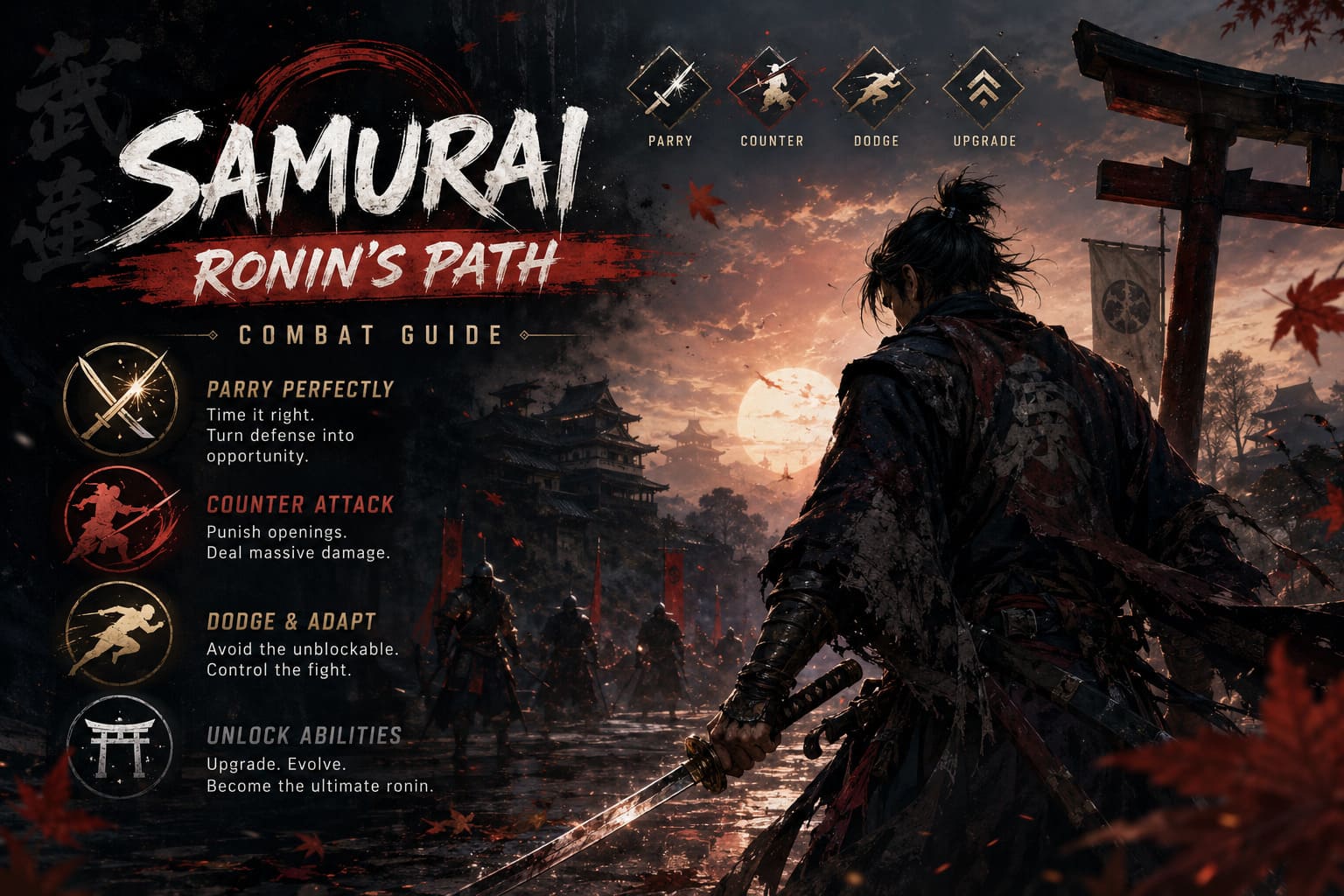
Samurai Ronin’s Path Combat Guide: How to Parry, Counter, and Unlock Abilities
There are action games that reward fast fingers, and then there are games that demand discipline. Samurai: Ronin’s Path belongs firmly in the second category. After spending hours learning enemy attack patterns, dying to careless mistakes, and slowly mastering every mechanic, I realized something important: this isn’t a game that wants you to overpower enemies—it wants you to outsmart them.
At first, I honestly thought the combat felt a little too simple. A light attack, a heavy attack, a block, and a dodge didn’t exactly scream “deep combat system.” But the more I played, the more I understood that the real gameplay doesn’t begin until you start unlocking advanced abilities and learning how the defensive mechanics truly work.
If you’re struggling with difficult encounters or simply want to improve faster, here’s everything I’ve learned from my time with the game.
Why Combat Feels Better the Longer You Play
One mistake I see many new players make is judging the combat after only the opening stages.
The first hour intentionally limits your options. You’re supposed to feel like an inexperienced ronin surviving with basic swordsmanship. Once new skills become available, combat opens up dramatically.
Instead of repeatedly attacking and dodging, you’ll begin chaining together:
- Perfect guards
- Counterattacks
- Dodge transitions
- Combo extensions
- Heavy punish attacks
That progression makes every new stage feel rewarding rather than repetitive.
Unlock Combat Skills as Early as Possible
Unlike many action RPGs, new abilities aren’t automatically handed to you after leveling up.
Progression happens between stages, meaning your decisions outside combat are almost as important as the fights themselves.
Whenever you complete an area, you’ll gain access to the progression menu where collected resources can be invested into permanent upgrades.
My recommendation is simple.
| Upgrade Priority | Why It Matters |
|---|---|
| Counterattack | Completely changes combat flow. |
| Combo Extensions | Increases damage opportunities. |
| Dodge Follow-ups | Keeps pressure on agile enemies. |
| Defensive Skills | Improves survivability during boss fights. |
I experimented with saving resources for expensive upgrades, but honestly, early investments made every later mission significantly easier.
Waiting too long only makes the game harder than it needs to be.
Learn the Difference Between Blocking and Perfect Parries
This is probably the single biggest lesson every new player has to learn.
A normal block and a perfect guard may look similar, but mechanically they’re worlds apart.
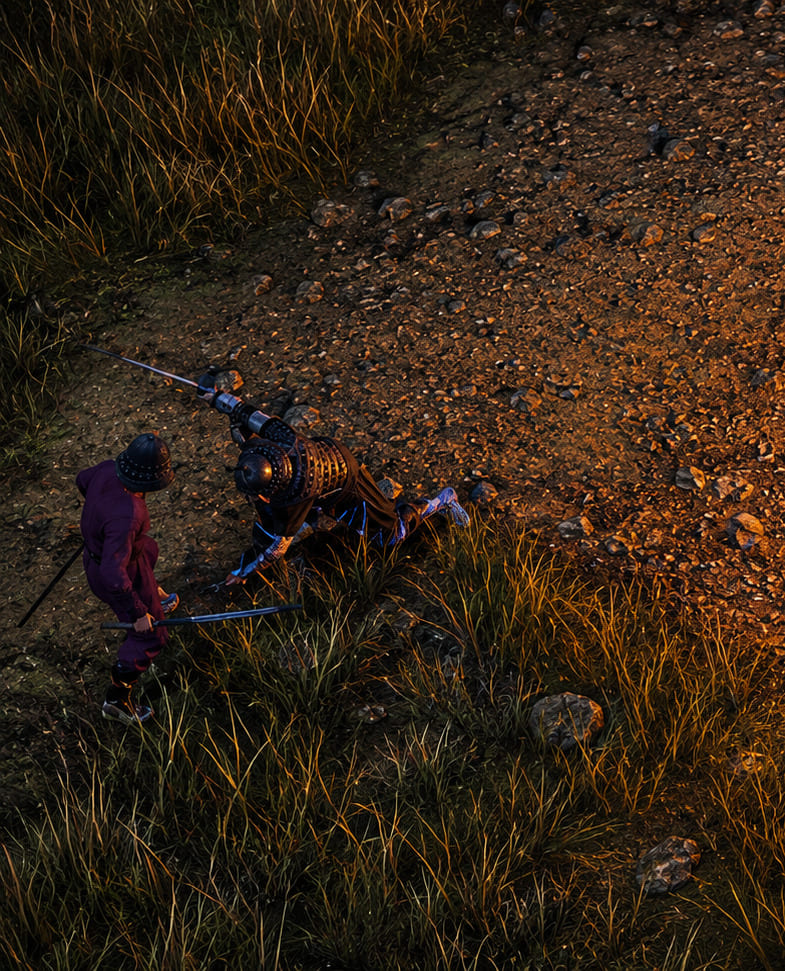
Standard Guard
Holding your guard button is perfectly acceptable when you’re learning enemy patterns.
It will:
- Prevent direct health damage.
- Buy you time.
- Keep you alive during unfamiliar encounters.
However, there’s a major downside.
Every blocked strike drains stamina.
If your stamina empties completely, you’ll suffer a posture break that usually leads to a devastating punishment.
Against tougher enemies, this can mean instant death.
Perfect Parry
A perfect parry happens when you press guard at the exact moment an attack lands.
When successful, you’ll immediately notice:
- Bright spark effects.
- A satisfying impact animation.
- Enemy momentum interrupted.
- No stamina consumption.
That’s the magic.
Instead of sacrificing stamina, you completely neutralize the attack.
After practicing for several hours, I stopped relying on standard blocking almost entirely.
Perfect parries simply feel better—and they’re dramatically more rewarding.
Counterattacks Are the Heart of the Combat System
One misconception I had early on was assuming counterattacks were available from the beginning.
They’re not.
You must unlock the ability first.
Once I finally purchased the counter skill, combat immediately became far more dynamic.
Every successful perfect parry suddenly transformed into a devastating offensive opportunity.
The sequence looks like this:
- Let the enemy begin attacking.
- Time a perfect guard.
- Watch for the successful deflection animation.
- Immediately perform the counter command.
- Deal massive damage while the opponent is vulnerable.
The timing feels incredibly satisfying once it becomes muscle memory.
Instead of surviving battles, you’re controlling them.
Patience Wins More Battles Than Aggression
Coming from faster action games, I initially tried overwhelming enemies with nonstop attacks.
That strategy rarely works here.
Most experienced players eventually realize that waiting is often the strongest move.
Enemies telegraph attacks.
Bosses reveal openings.
Elite warriors expose themselves after heavy swings.
If you slow down and watch instead of rushing forward, the combat becomes surprisingly predictable.
That’s one of my favorite aspects of Samurai: Ronin’s Path.
The game rewards observation more than button mashing.
Red Attacks Change Everything
Eventually you’ll encounter enemies surrounded by a bright red glow before attacking.
Treat these attacks with respect.
- They cannot be blocked.
- They cannot be perfectly parried.
- They exist specifically to punish defensive habits.
Whenever I see that red warning animation now, I don’t even think about guarding.
I dodge immediately.
Trying to squeeze in one extra hit almost always ends badly.
After the enemy misses, you’ll usually have enough time to land your own heavy attack.
Think of these moments as punishment windows rather than counter opportunities.
Stamina Is More Valuable Than Health
One thing the game never directly explains is just how precious stamina becomes later on.
Running out doesn’t simply prevent attacking.
It removes your options.
No stamina means:
- Poor defense.
- Limited mobility.
- Slow recovery.
- Vulnerability to posture breaks.
Personally, I try never to let my stamina fall below roughly a quarter of the bar.
That reserve has saved me countless times against unexpected unblockable attacks.
Friendly Fire Is Surprisingly Powerful
One mechanic I absolutely love is enemy-friendly fire.
If several swordsmen surround you, their own attacks can damage each other.
Rather than panicking when outnumbered, I actually try positioning myself so enemies swing through one another.
It doesn’t always work, but when it does, entire groups practically eliminate themselves.
It’s one of those subtle mechanics that makes encounters feel less scripted.
Boss Strategy That Helped Me Improve
After dozens of difficult fights, my approach became surprisingly simple.
Instead of chasing damage, I focus on consistency.
My general rhythm now looks like this:
- Observe the opening attacks.
- Learn the combo timing.
- Use standard guard only when uncertain.
- Transition into perfect parries once comfortable.
- Counter whenever possible.
- Dodge every unblockable attack.
- Stay patient.
Ironically, the slower I played, the fewer mistakes I made.
Best Early Priorities
If you’re wondering where to spend your resources first, this order worked extremely well for me.
| Priority | Recommendation |
|---|---|
| ★★★★★ | Unlock Counterattack immediately. |
| ★★★★☆ | Increase combo variety. |
| ★★★★☆ | Improve dodge transitions. |
| ★★★☆☆ | Upgrade defensive abilities. |
| ★★★☆☆ | Invest in offensive reach later. |
Trying to maximize raw damage before improving survivability usually isn’t worth it.
The better your defense becomes, the more opportunities you’ll naturally have to deal damage.
Samurai Ronin’s Path Combat Guide: Melee Tips to Master the Blade
Common Mistakes New Players Make
During my first several hours, I repeated the same errors over and over.
Looking back, these were the biggest problems:
- Attacking before learning enemy timing.
- Blocking every attack instead of practicing perfect guards.
- Ignoring stamina management.
- Delaying important combat upgrades.
- Standing still against unblockable attacks.
- Getting greedy after landing successful hits.
Breaking those habits completely transformed my experience.
Samurai Ronins Path PS5 Release: The Next Unforgiving Souls Like Action Game to Watch in 2026
Final Thoughts
What surprised me most about Samurai: Ronin’s Path is how much its combat evolves. The opening hours barely hint at the depth waiting underneath. Once perfect parries, counterattacks, stamina management, and advanced abilities all come together, every duel starts feeling like a carefully choreographed sword fight rather than a frantic hack-and-slash.
As someone who spends far too many evenings chasing difficult action games, I’d say this title rewards patience more than raw reflexes. The best victories aren’t the fastest ones—they’re the cleanest. Landing a perfectly timed parry, following it with a crushing counter, and defeating an opponent without taking damage is one of the most satisfying feelings the game offers.
If you’re just beginning your journey, don’t get discouraged by the early difficulty. Invest in your core abilities, practice your timing instead of your aggression, and pay close attention to enemy animations. Eventually, you’ll stop reacting to combat and start controlling it—and that’s when Samurai: Ronin’s Path truly shines.