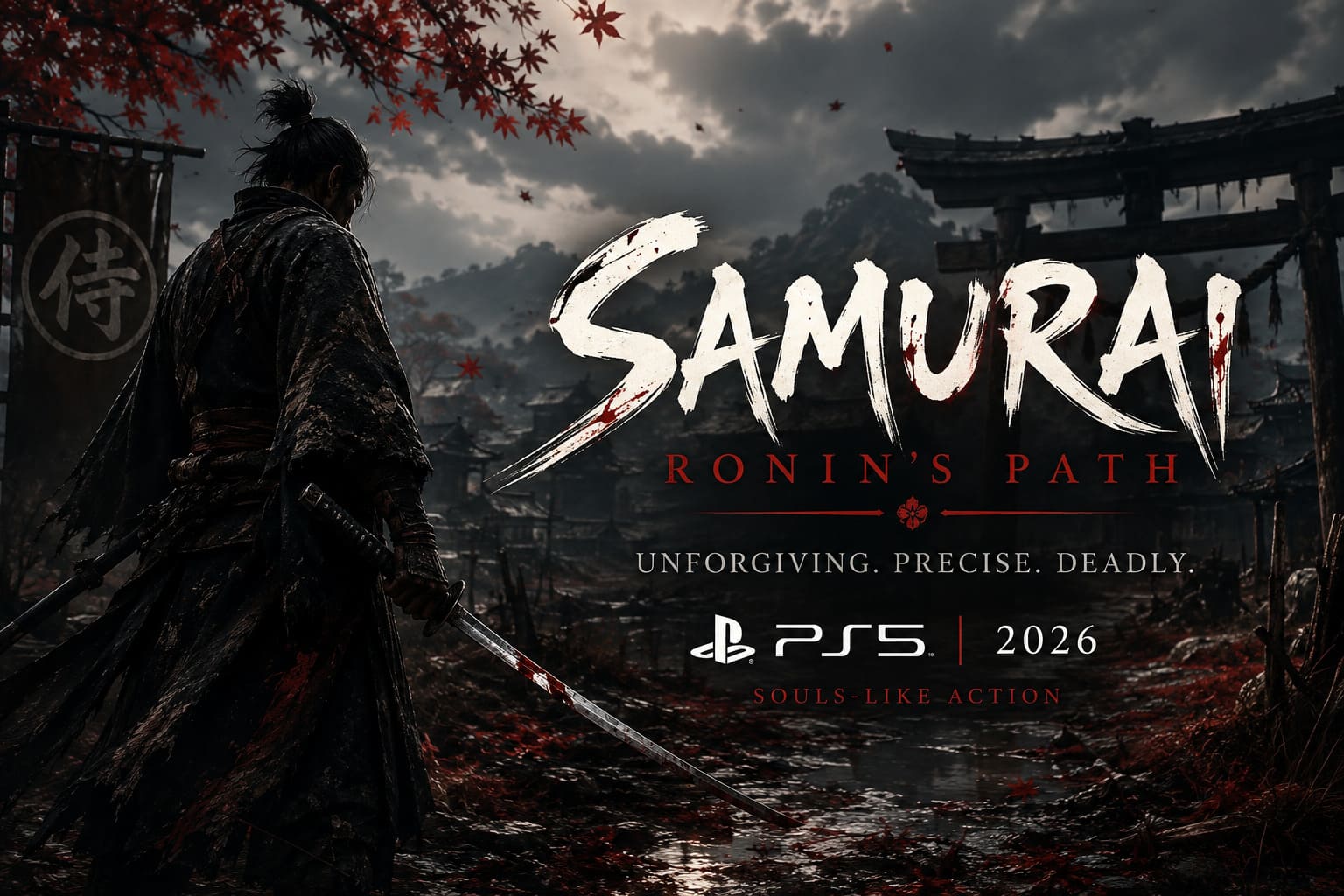
Samurai Ronins Path PS5 Release: The Next Unforgiving Souls Like Action Game to Watch in 2026
The Souls-like genre has become one of the hardest spaces to impress me. Over the years I’ve poured hundreds of hours into games like Sekiro: Shadows Die Twice, Nioh, Wo Long: Fallen Dynasty, Lies of P, Ghost of Tsushima, and countless smaller indie projects trying to capture that same feeling of tension and mastery. Most of them borrow familiar ideas, but only a handful manage to make every duel feel meaningful.
After spending time with Samurai: Ronin’s Path, I came away thinking this could become one of those pleasant surprises that nobody expects at first. It certainly isn’t perfect, and it isn’t trying to appeal to everyone. Instead, it feels like a game designed specifically for players who enjoy learning difficult combat systems rather than simply finishing another open-world adventure.
With the PC launch arriving first, many PlayStation players are already wondering whether a PS5 version is on the horizon. While nothing has been officially confirmed, everything about this project feels like it belongs on Sony’s console. After experiencing what the game offers, I can absolutely understand why so many Souls-like fans are hoping for a PlayStation release.
A Smaller Game With Big Ambitions
One thing became obvious almost immediately: Samurai: Ronin’s Path isn’t chasing blockbuster spectacle.
Instead of overwhelming players with cinematic cutscenes every few minutes or filling the screen with magical explosions, the developers focus on something much more important—combat.
That decision reminds me of older action games where the mechanics always came before visual spectacle.
The atmosphere is grounded, quiet, and surprisingly oppressive. Feudal Japan has been represented in many games recently, but this title takes a darker approach. Villages feel abandoned, battlefields look exhausted rather than heroic, and every encounter carries the feeling that one mistake can end everything.
It creates a constant sense of pressure that I genuinely enjoyed.
Combat Is Clearly the Main Attraction
If there is one reason to pay attention to Samurai: Ronin’s Path, it’s the combat system.
The developers clearly understand what makes melee combat satisfying. Every sword swing has noticeable weight, every dodge has commitment, and every successful counter feels earned instead of scripted.
Unlike many modern action games where aggressive button mashing eventually wins, this game immediately punishes impatience.
The combat rewards:
- Careful positioning
- Learning enemy attack animations
- Managing stamina intelligently
- Perfect defensive timing
The first few fights taught me an important lesson: attacking first isn’t always the correct answer.
Sometimes waiting for your opponent is actually the safest strategy.
That slower pace gives every duel a level of tension that reminded me of some of the best moments in Sekiro.
Parries Feel Like the Heart of the Experience
I’ve always believed that great Souls-like games create memorable defensive mechanics rather than simply stronger attacks.
Samurai: Ronin’s Path follows exactly that philosophy.
Landing a perfectly timed parry feels incredibly satisfying because the timing window isn’t overly generous.
Miss the timing by even a fraction of a second and you’ll likely be punished immediately.
When you succeed, however, the reward is significant.
Enemies become vulnerable to devastating finishing attacks that make every successful defense feel worthwhile.
Rather than simply blocking damage, the defensive system becomes your primary offensive tool.
That’s something I always appreciate in difficult action games because it encourages learning instead of grinding.
Enemy Groups Are Smarter Than I Expected
One feature that genuinely surprised me was how enemies interact with one another.
Many action games create difficulty simply by throwing more enemies into an arena.
Here, positioning matters much more.
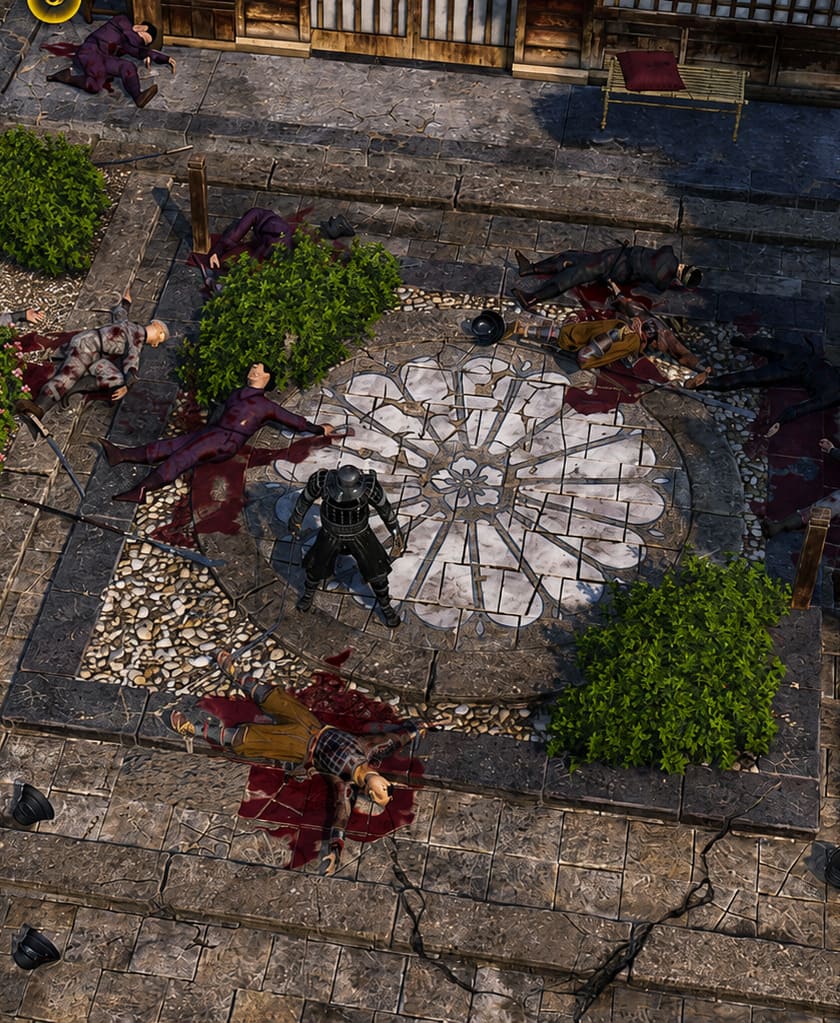
Enemy attacks can actually strike their own allies.
That changes the flow of battle completely.
Instead of desperately trying to eliminate everyone as quickly as possible, I often found myself manipulating enemy positioning until one aggressive spear user accidentally hit another opponent.
It sounds like a small mechanic, but during larger encounters it adds another layer of strategy that makes fights far more interesting.
You’re not simply fighting enemies.
You’re controlling the battlefield.
Character Growth Feels Practical
Progression in Samurai: Ronin’s Path doesn’t revolve around watching numbers constantly increase.
Instead, improvements feel much more physical.
As you continue playing, you gradually unlock:
| Progression Feature | Gameplay Benefit |
|---|---|
| New combat techniques | Expands offensive options |
| Advanced dodges | Better survivability |
| Weapon mastery | Supports different fighting styles |
| Improved mobility | Creates more tactical opportunities |
I personally prefer this style of progression.
Learning a completely new technique feels more rewarding than simply increasing attack damage by a few percentage points.
It also gives experimentation much more value throughout the adventure.
This Definitely Won’t Be a Game for Everyone
One thing I think potential buyers should understand is that Samurai: Ronin’s Path isn’t trying to be accessible.
That’s not necessarily a criticism.
In fact, I think it’s one of the game’s strengths.
Modern action games often become afraid of frustrating players, so developers reduce difficulty until every encounter feels predictable.
This game goes in the opposite direction.
Death comes quickly.
Bosses don’t hesitate.
Recovery animations are punishable.
Poor stamina management usually leads to disaster.
If you’re looking for a relaxing samurai adventure similar to Ghost of Tsushima, you may find this game surprisingly unforgiving.
However, if you enjoy overcoming difficult challenges through repetition and gradual improvement, there’s a good chance you’ll appreciate what the developers are building.
Why a PS5 Version Makes Perfect Sense
Although the current focus remains on PC, I honestly think PlayStation would be the ideal home for this game.
Sony players have consistently supported historical action titles over the past decade.
More importantly, several features seem naturally suited to PS5 hardware.
A future PlayStation release could benefit from:
- DualSense adaptive triggers that create resistance during heavy sword strikes.
- Detailed haptic feedback that distinguishes successful parries from blocked attacks.
- Fast SSD loading, minimizing downtime after inevitable deaths.
- Stable 60 FPS performance, which is extremely important for reaction-based combat.
Timing windows become much more reliable when frame pacing remains consistent, making performance just as important as graphical quality.
If the developers eventually announce a console version, these are exactly the improvements I’d like to see.
Visual Presentation Prioritizes Mood Over Spectacle
Graphically, Samurai: Ronin’s Path doesn’t try to compete with massive AAA productions.
Instead, it succeeds through atmosphere.
The lighting is subdued.
Colors remain muted.
Blood effects stand out without becoming exaggerated.
There are long stretches where silence dominates the environment before another deadly confrontation begins.
That slower pacing actually strengthens the overall experience.
Rather than constantly throwing visual effects onto the screen, the game allows environments to build tension naturally.
It feels grounded.
That artistic direction fits the gameplay remarkably well.
Community Opinions Are Understandably Divided
The early community reception has been interesting to watch.
Some players immediately connected with the combat philosophy.
Others expected something closer to an open-world RPG and walked away disappointed.
Honestly, I understand both perspectives.
The game isn’t trying to become another massive exploration-focused adventure.
Its emphasis remains squarely on tightly designed combat encounters.
If someone buys it expecting endless exploration and dozens of side activities, they may be disappointed.
If someone buys it because they enjoy mastering difficult melee systems, the experience becomes much easier to appreciate.
That difference explains why early reactions have been somewhat mixed.
The game knows exactly what audience it’s targeting.
What Makes It Stand Out in a Crowded Genre?
With so many Souls-like games arriving every year, developers need something unique.
I think Samurai: Ronin’s Path separates itself through several design decisions.
Highlights include:
- Methodical sword combat that rewards patience.
- Meaningful parry mechanics instead of simple blocking.
- Enemy-friendly fire, creating tactical opportunities.
- Grounded historical atmosphere without excessive fantasy elements.
- Skill-focused progression rather than endless statistical upgrades.
None of these ideas are completely revolutionary on their own.
Combined together, however, they create a combat loop that feels refreshing.
Soulbound Online Guide: Best Starter Builds & Progression System Explained (2026)
My Overall Thoughts
After experiencing Samurai: Ronin’s Path, I left with cautious optimism.
No, it doesn’t reinvent the Souls-like genre.
No, it doesn’t have the enormous production budget of the biggest publishers.
But it doesn’t need either of those things.
What impressed me most was the confidence behind its design philosophy.
The developers clearly understand the audience they’re targeting, and they never seem interested in compromising that vision simply to attract more casual players.
Every difficult encounter teaches something.
Every defeat feels understandable.
Every successful duel feels earned.
That’s exactly what I look for in games like this.
If you’re someone who enjoys studying enemy attack patterns, gradually improving through repetition, and finally defeating a boss that seemed impossible an hour earlier, Samurai: Ronin’s Path deserves a place on your watchlist.
As for PlayStation 5 owners, I genuinely hope an official console announcement arrives sooner rather than later. The combat style, the pacing, and the overall atmosphere feel like a natural fit for Sony’s platform. Assuming the developers can deliver smooth performance and make full use of the DualSense controller, this could become one of the more memorable action RPG releases outside the AAA spotlight.
Sometimes the biggest surprises aren’t the games backed by enormous marketing budgets—they’re the projects built around a single idea executed exceptionally well. Samurai: Ronin’s Path has the potential to be exactly that, and I’ll be keeping a close eye on it as we move through the rest of 2026.