Strikers Club Beginner Guide 2026: Master Physics-Driven Football Mechanics, Controls, and Goalkeeping
The first thing that surprised me after jumping into Strikers Club wasn’t the graphics or the stadium atmosphere—it was how brutally honest the gameplay feels.
If you’ve spent years playing traditional football games, your instincts will betray you during your first few matches. There are no invisible passing assists, no scripted first touches, and no magical animations that rescue poor decisions. Every pass, every shot, every tackle, and every save depends on what you do at that exact moment.
That’s exactly why I’ve been enjoying it so much.
Developed by the team behind Slapshot: Rebound, Strikers Club takes the same philosophy of physics-based competition and applies it to football. It isn’t trying to replace arcade football games—it offers something completely different. It rewards patience, positioning, teamwork, and mechanical skill instead of memorizing overpowered exploits.
After spending plenty of time experimenting with different roles and watching experienced players improve at an incredible pace, I’ve gathered the lessons that helped me stop making beginner mistakes. If you’re just starting your journey, these are the things I genuinely wish someone had explained before my first match.
Why Strikers Club Feels So Different
The biggest adjustment isn’t learning the controls.
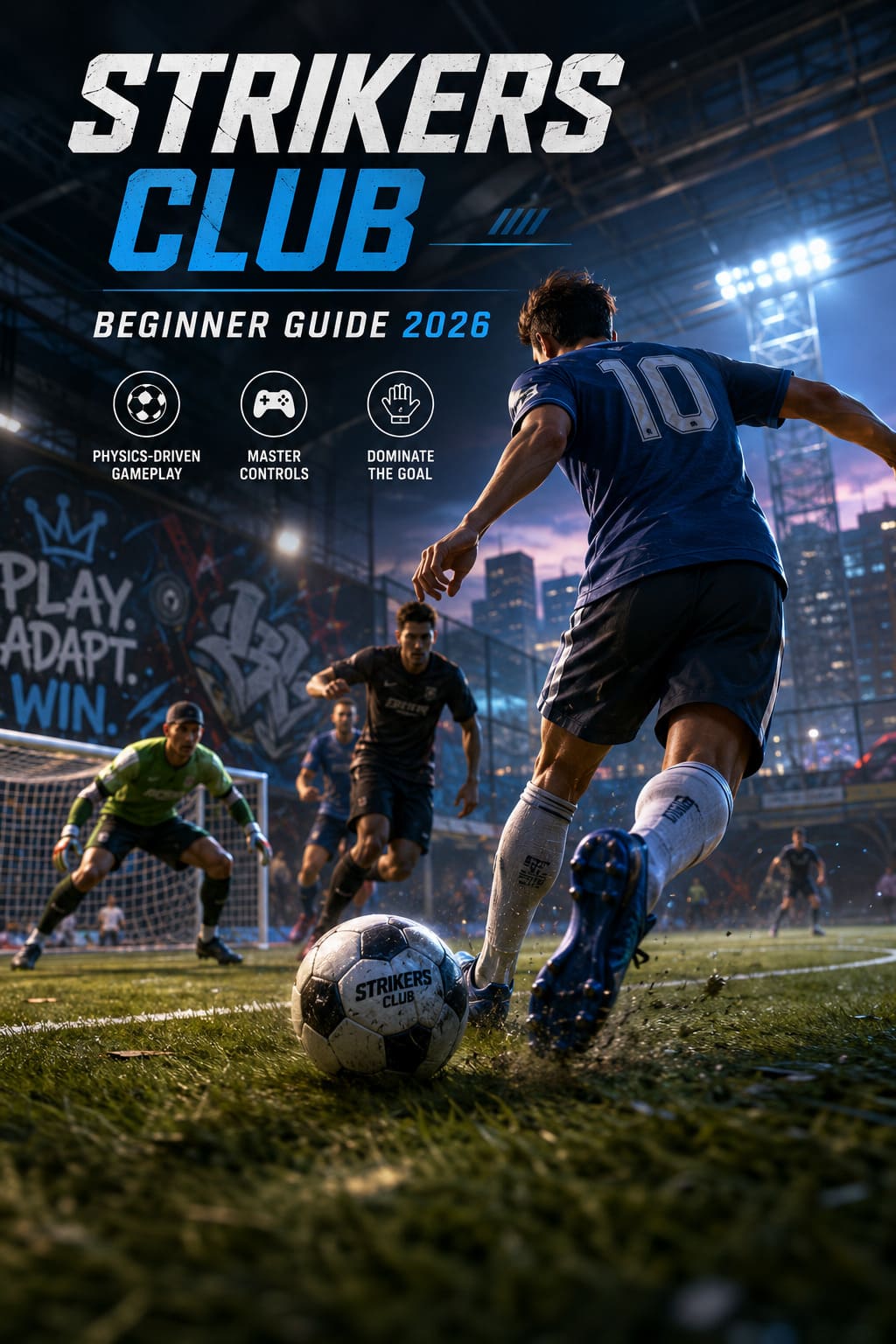
It’s changing the way you think.
Most football games secretly help players. You press the pass button, the game identifies a teammate, and the animation does most of the work.
Strikers Club doesn’t.
The ball is its own physical object with momentum, friction, bounce, spin, and collision detection. You’re not commanding an animation—you are interacting with an object that behaves according to physics.
That means mistakes are completely your responsibility.
- Miss your angle by a few degrees? The pass misses.
- Hit the ball too hard? It rolls thirty meters away.
- Approach the ball from the wrong side? Expect an awkward touch that gives possession away instantly.
At first this feels frustrating.
Then something clicks.
Suddenly every successful attack feels earned instead of scripted.
Controller or Keyboard?
Both input methods are perfectly playable, but after testing both, I strongly believe controllers have the advantage.
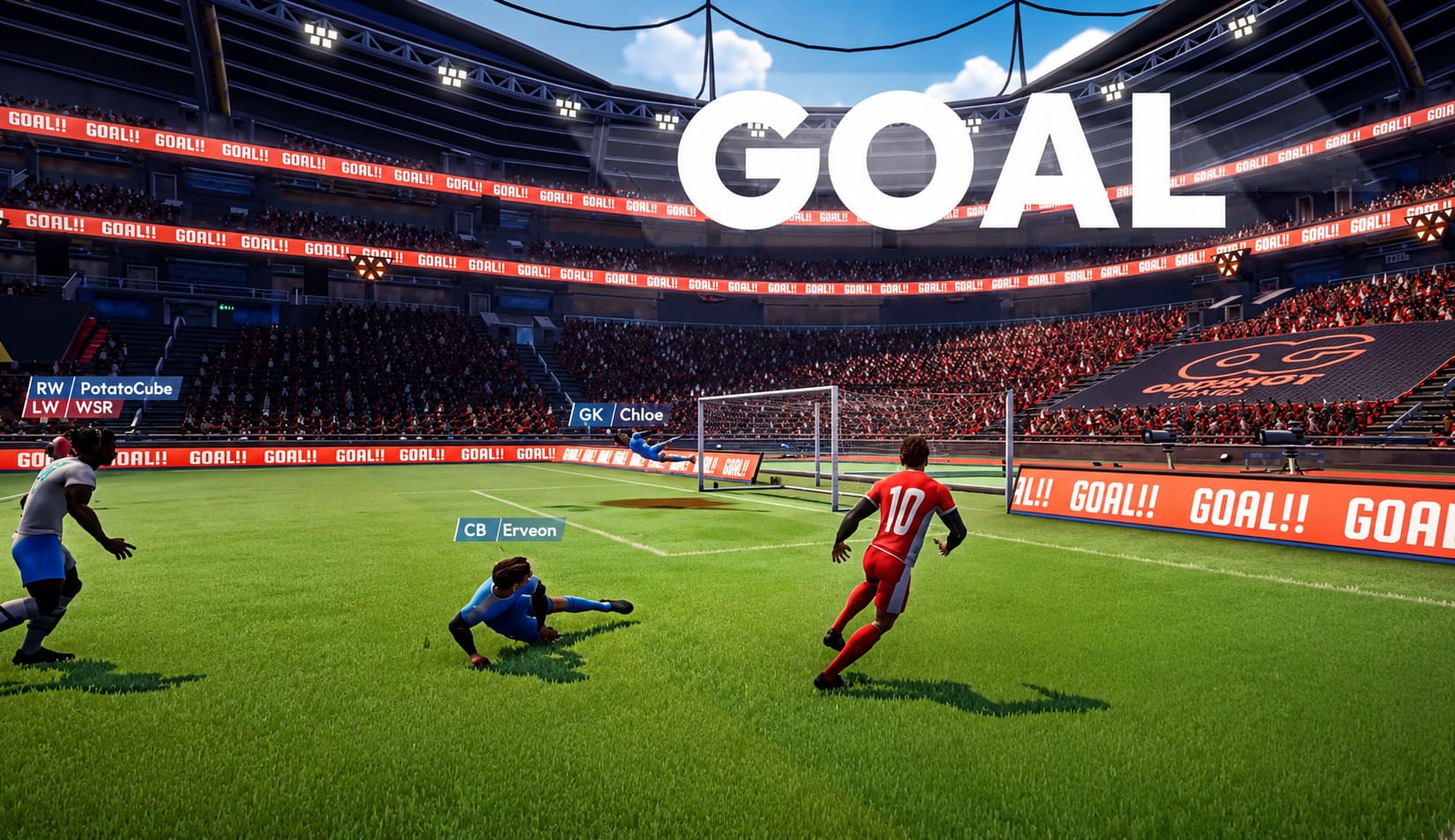
The second analog stick makes aiming significantly smoother because movement and vision become completely independent.
| Input | Strengths | Weaknesses |
|---|---|---|
| Controller | Excellent camera control, smoother dribbling | Requires practice with stick precision |
| Keyboard & Mouse | Familiar for PC players | Harder to make fluid directional adjustments |
One mistake nearly every new player makes is looking only where they’re running.
Instead, always remember:
Movement direction and camera direction are two separate skills.
Once you begin rotating your camera independently while continuing your run, passing lanes become much easier to spot.
That single habit probably improved my game more than anything else.
Dribbling Isn’t About Fancy Skills
Many players enter expecting FIFA-style skill moves.
That’s not how Strikers Club works.
Good dribbling comes from controlling your own momentum, not activating special animations.
The less force you apply to the ball, the more control you keep.
When I first started playing, I constantly sprinted.
The result?
The ball rolled several meters ahead, defenders intercepted it effortlessly, and I wondered why everyone else looked so composed.
The solution was surprisingly simple:
- Take shorter touches.
- Slow down before pressure arrives.
- Accelerate only after creating space.
- Keep yourself directly behind the ball.
Think of yourself as guiding the ball instead of kicking it every second.
Once that mindset develops, everything becomes smoother.
Small Direction Changes Beat Flashy Tricks
One thing I noticed while watching skilled players is that they rarely attempt anything flashy.
Instead, they constantly manipulate defender momentum.
- A quick shoulder fake.
- A tiny change in running angle.
- A sudden camera adjustment.
Those subtle movements force defenders into overcommitting.
Because every player has physical momentum, recovering after moving the wrong direction takes valuable time.
Sometimes the smallest movement creates the biggest opportunity.
Passing Wins More Matches Than Dribbling
One habit carried over from other football games nearly ruined my early experience.
I tried to beat everyone alone.
That doesn’t work here.
The fastest teams are almost always the ones moving the ball instead of carrying it.
Think Ahead, Not At
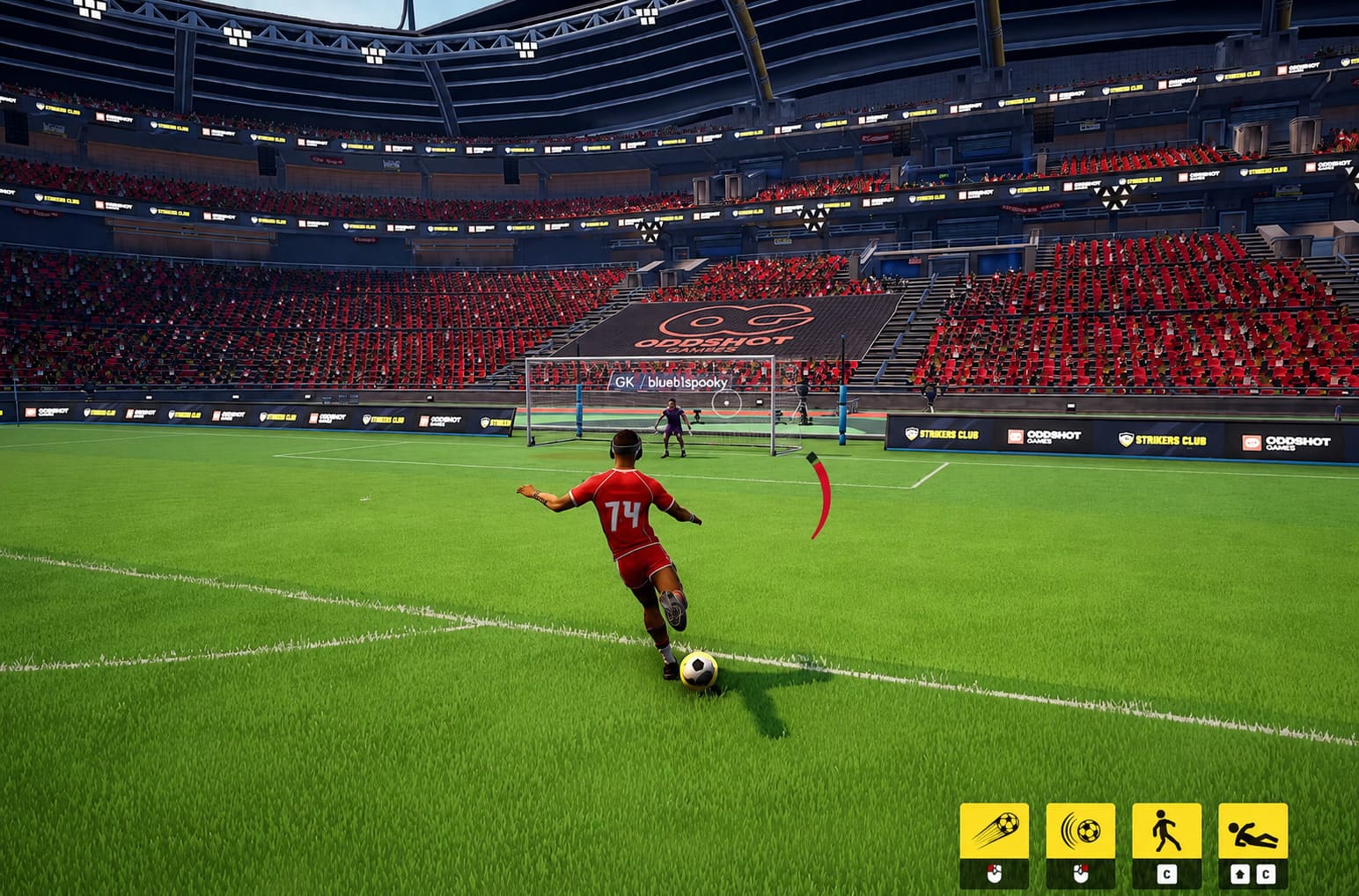
Passing directly toward a teammate is often the wrong decision.
Instead, imagine where they’ll be one second later.
Lead the pass into open space.
The receiver keeps running.
The attack never loses momentum.
That tiny adjustment makes an enormous difference during counterattacks.
Choosing the Right Pass
| Situation | Best Choice |
|---|---|
| Nearby teammate | Soft ground pass |
| Breaking midfield pressure | Powerful driven pass |
| Switching wings | Long diagonal ball |
| Crossing into the box | Lofted cross |
Remember that stronger passes travel faster—but they also become much harder for teammates to control.
Finding the balance is part of developing game sense.
Crossing Requires More Than Power
Early on I assumed crossing was simply holding the pass button longer.
Not even close.
Camera angle matters just as much.
Tilting your view upward changes how you strike the ball and naturally creates lift.
Too much power, though, and you’ll watch the ball fly harmlessly over everyone before landing behind the goal.
After enough practice you begin recognizing how much elevation each situation actually needs.
Shooting Is Mostly About Preparation
A lot of beginners blame missed chances on bad luck.
In reality, many shots are lost before you even press the shoot button.
Good finishes usually follow three simple steps.
- Push the ball slightly ahead.
- Aim your camera before shooting.
- Strike through the center of the ball.
Skipping any of those usually reduces accuracy.
Personally, I stopped rushing finishes.
Taking half a second longer often produces much cleaner shots.
My Favorite Way to Score
After experimenting with different techniques, I consistently score more goals using low driven shots.
They’re fast.
They’re difficult to react to.
They also create awkward bounce angles for goalkeepers.
High-power shots aimed toward the grass often force rushed saves.
Another reliable option is aiming for the far post after approaching from a wide angle.
Goalkeepers naturally expect near-post attempts.
Changing the angle late can catch them leaning the wrong direction.
Defending Is About Patience
If there’s one role that punishes impatience more than striker, it’s defender.
Running directly at attackers almost never works.
Experienced dribblers actually want you to overcommit.
Once you dive forward, they simply change direction.
Now you’re completely out of the play.
Instead, focus on controlling space.
- Stay a couple of steps away.
- Mirror their movement.
- Force them toward the sideline.
- Wait for the heavy touch.
- Only then should you challenge.
It feels slower—but it’s dramatically more effective.
Tackling Without Giving Away Free Kicks
Because Strikers Club includes realistic foul detection, timing matters.
Standing tackles should target the ball—not the player’s legs.
Slide tackles deserve even more caution.
They’re satisfying when successful.
They’re disastrous when mistimed.
Missing a slide usually removes you from the play for several seconds, giving attackers enormous space.
Unless I’m absolutely certain I’ll reach the ball first, I simply stay on my feet.
It saves far more goals than risky lunges ever have.
Goalkeeping Is Surprisingly Addictive
I honestly didn’t expect goalkeeper to become one of my favorite positions.
It’s stressful.
It’s demanding.
But it’s also incredibly rewarding.
Unlike many sports games, goalkeeping here isn’t automated.
Your positioning determines almost everything.
Cut the Angle
New goalkeepers often stand directly on the goal line waiting for shots.
That’s usually the wrong decision.
Stepping forward reduces the attacker’s visible target.
Every meter off your line makes the shooting angle smaller.
Learning when to advance—and when to retreat—is one of the biggest skills you’ll develop.
Saving Isn’t Always Catching
Another lesson I learned quickly:
Sometimes the safest save isn’t catching the ball.
Powerful shots can bounce unpredictably.
Punching or deflecting dangerous attempts toward the sidelines often prevents easy rebound goals.
Clearing danger is usually smarter than gambling on a difficult catch.
Training Before Ranked Is Worth It
One recommendation I completely agree with is spending time inside Free Play before joining competitive matches.
Even fifteen minutes helps.
Focus on simple drills like:
- Keeping close control while sprinting
- Passing toward moving targets
- Practicing first touches
- Switching camera angles quickly
These aren’t exciting exercises.
They work.
Your confidence during real matches improves much faster than simply grinding multiplayer games.
Strikers Club 2026 Strategy Guide: How to Choose Player Roles and Master Goalie Mode Mechanics
Beginner Mistakes to Avoid
| Mistake | Better Habit |
|---|---|
| Sprinting constantly | Control your pace |
| Passing directly at teammates | Lead passes into space |
| Chasing every attacker | Defend patiently |
| Diving too early as goalkeeper | Wait for the shot commitment |
| Shooting immediately after receiving | Set up the ball first |
Avoiding these mistakes alone will noticeably improve your consistency.
Strikers Club 11v11 Matchmaking Mode Secrets: Master the Pitch in 2026
Final Thoughts
What I appreciate most about Strikers Club is that improvement feels genuine.
When you lose, it’s usually because someone played better—not because they owned stronger cards, unlocked hidden upgrades, or abused an overpowered mechanic.
Every session teaches something.
Maybe your passing angles become cleaner.
Maybe your first touch improves.
Maybe you finally learn when not to sprint.
That constant sense of progression is what keeps me coming back.
If you’re willing to be patient through the rough first few hours, Strikers Club becomes one of the most satisfying competitive football games available on PC today. Master the fundamentals first, communicate with teammates, and resist the urge to rush every play. Once the physics begin to feel natural instead of intimidating, you’ll discover why so many players are already calling it one of the freshest takes on multiplayer football in years.