Strikers Club 2026 Strategy Guide: How to Choose Player Roles and Master Goalie Mode Mechanics
When I first jumped into Strikers Club, I expected another arcade football game where individual mechanics would carry every match. After spending dozens of hours learning the movement system, testing different positions, and watching both brilliant and disastrous teammates, it became obvious that Oddshot Games built something very different.
This isn’t a game where one superstar dribbles through an entire defense every possession. Strikers Club is built around communication, positioning, and understanding exactly what your role contributes to the team. The physics engine rewards smart decisions just as much as mechanical skill, and sometimes even more.
One player abandoning their assignment can completely collapse a defensive structure. On the other hand, five players who understand spacing and trust each other can dominate opponents who individually may be more skilled.
This guide covers the best way to assign player roles before kickoff, explains how every position should be played, and dives deep into the manual mechanics that make Goalie Mode one of the most rewarding roles in the entire game.
Why Team Roles Matter More Than Individual Skill
Unlike traditional football titles where everyone controls an entire squad, Strikers Club places you in charge of only one athlete throughout the entire match.
That single design choice changes everything.
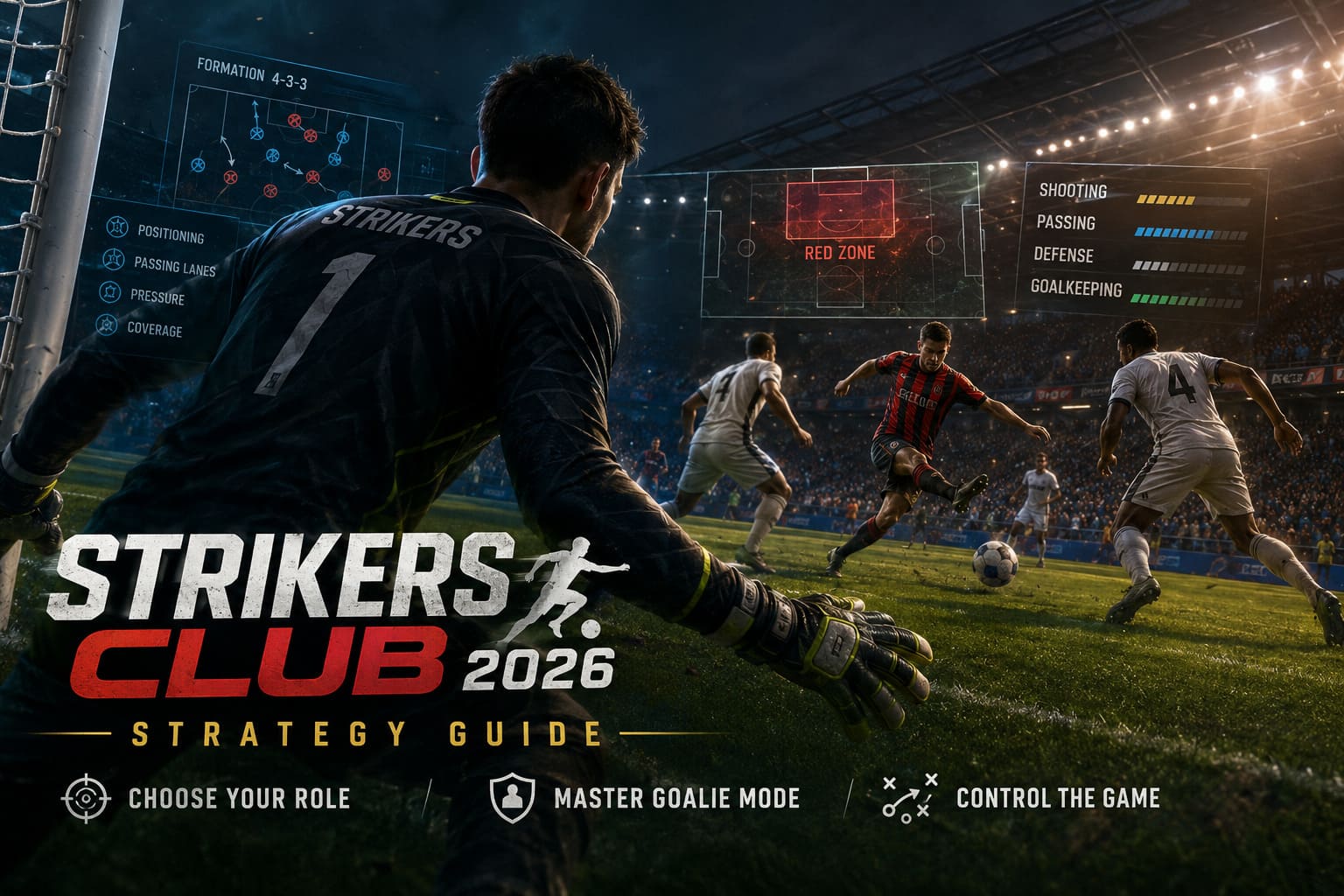
Every run, tackle, interception, missed pass, and defensive rotation comes directly from one player’s decisions. There is no AI teammate covering mistakes for you. If your midfielder decides to chase every ball, someone else must cover the space that gets left behind.
Before kickoff even begins, successful teams already have a plan.
Good squads decide:
- Who attacks first
- Who controls midfield
- Who stays back defensively
- Who plays goalkeeper
- Who supports counterattacks
Random matchmaking can sometimes produce hilarious situations where three players immediately choose striker and nobody wants defensive responsibilities. Against organized clubs, those games rarely stay competitive for long.
Choosing the Right Position for Your Playstyle
One of the smartest things new players can do is stop picking positions based on what sounds exciting.
Instead, choose the role that naturally fits your strengths.
| Position | Best For | Main Responsibility |
|---|---|---|
| Striker | Aggressive players | Finishing attacks and creating scoring chances |
| Midfielder | Tactical players | Controlling possession and connecting both halves |
| Goalkeeper | Calm, defensive players | Preventing goals and organizing the defense |
Every position requires different mechanical skills, so let’s break them down individually.
Playing as a Striker
Forwards live under constant pressure.
Your teammates expect goals.
Your opponents know you’re the biggest threat.
Unlike many football games where sprinting forward constantly creates chances, Strikers Club rewards intelligent movement. Timing your runs matters much more than endlessly charging toward goal.
A good striker should focus on:
- Reading defensive positioning.
- Creating passing angles.
- Anticipating rebounds.
- Mastering manual shooting.
- Using quick direction changes instead of predictable sprinting.
Camera control also becomes surprisingly important.
Because shooting relies heavily on aiming rather than automated targeting, experienced forwards constantly adjust their camera before striking the ball. Small angle changes often create opportunities that defenders simply cannot anticipate.
The best attackers rarely touch the ball more than necessary.
The Midfielder Is the Engine of Every Team
If there is one position that quietly wins matches, it is midfield.
A skilled midfielder controls the pace of the game without necessarily appearing on the scoreboard.
Every successful attack usually begins with intelligent distribution from midfield.
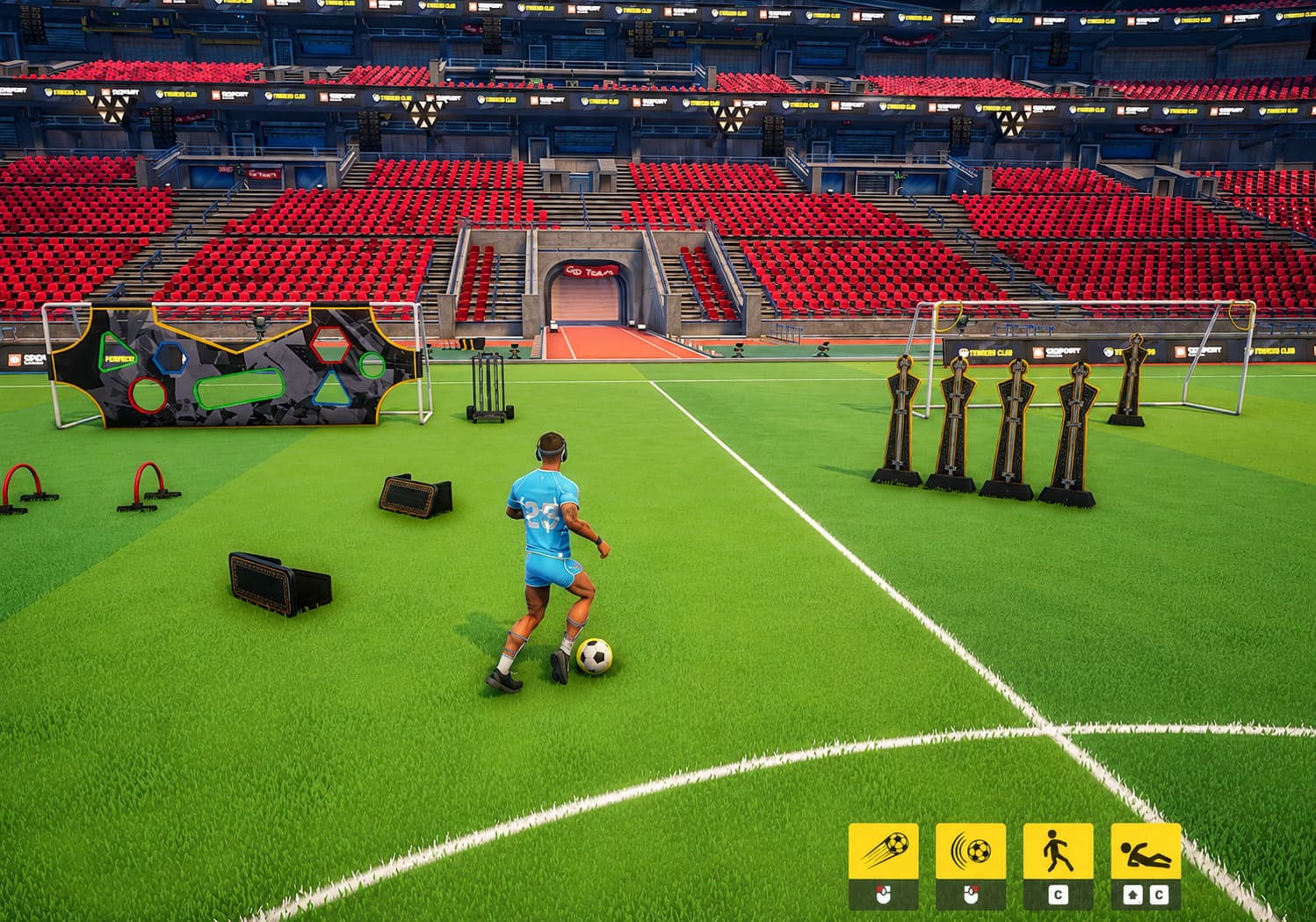
Your responsibilities include:
- Breaking up opponent attacks.
- Offering safe passing options.
- Switching play across the field.
- Supporting defenders.
- Feeding through balls into dangerous spaces.
Many players underestimate how valuable simple passing can be.
Instead of forcing risky dribbles through multiple defenders, elite midfielders constantly recycle possession until the defense finally opens a gap.
That patience wins games.
Why Goalkeeper Might Be the Most Difficult Position
Most people assume goalkeeper is the easiest role because you spend less time running.
That assumption disappears after your first competitive match.
Unlike arcade football games that rely on automatic save animations, Strikers Club expects goalkeepers to manually react to every incoming shot.
Nothing is handed to you.
You must predict.
You must position correctly.
You must commit.
And if you guess wrong, the ball usually ends up in the back of the net.
Oddshot Games clearly wanted goalkeeping to feel like its own game inside the larger football experience, and honestly, it succeeds.
Understanding Goalie Mode Mechanics
Selecting goalkeeper before kickoff unlocks several mechanics that outfield players never receive.
These tools dramatically change how you defend your net.
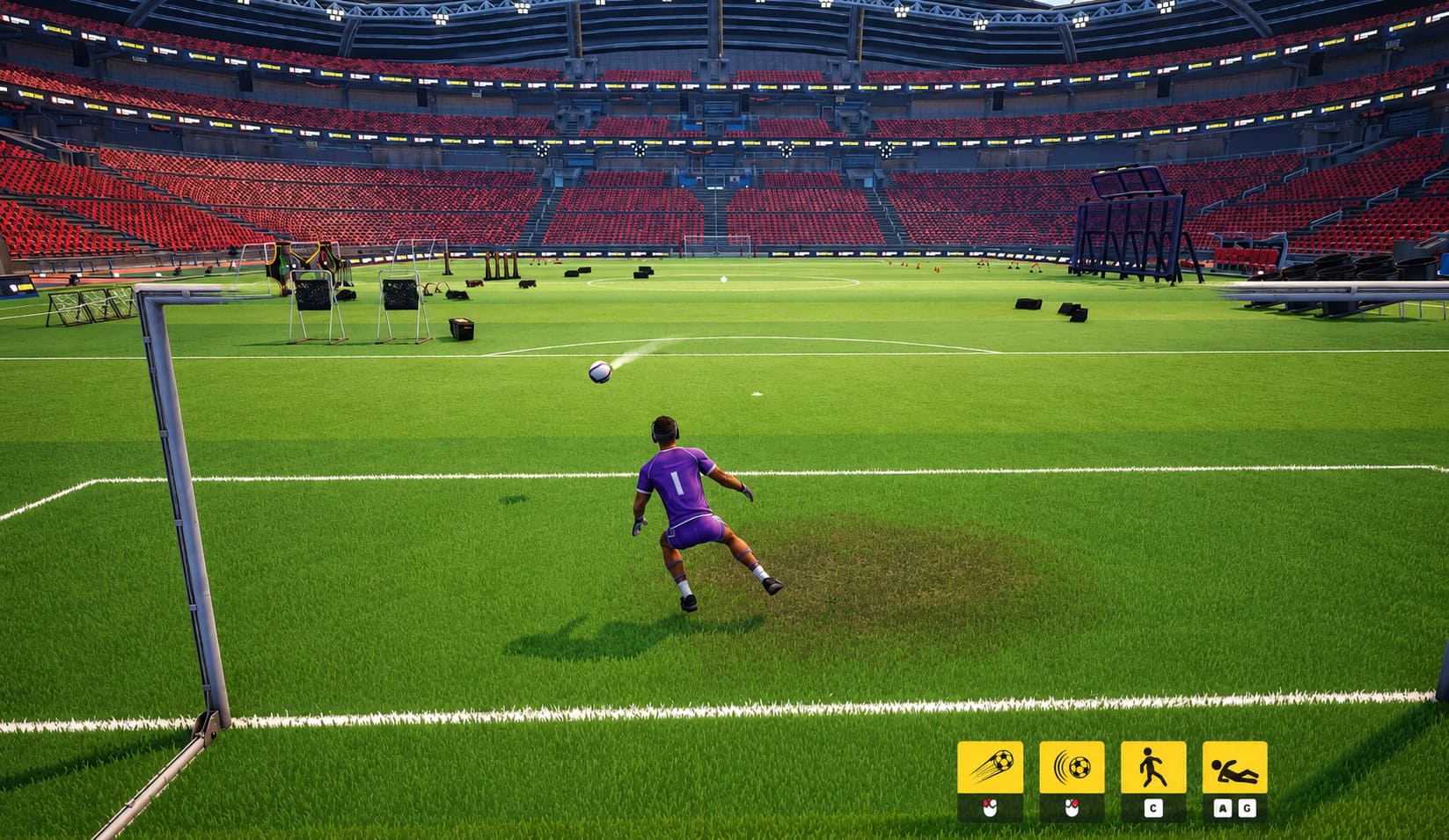
Manual Positioning
Your positioning determines nearly everything.
Instead of relying on automatic movement, you constantly adjust your location based on:
- Ball trajectory
- Opponent body angle
- Passing lanes
- Shot probability
Standing just half a meter too far toward one post can expose the opposite corner.
Tiny mistakes become goals.
Defensive Jockey System
One mechanic I quickly fell in love with is the defensive jockey stance.
Activating this mode locks your focus onto the ball while improving short lateral movement.
Rather than making large uncontrolled steps, your goalkeeper performs quicker side-to-side adjustments that are perfect for reacting to close-range attacks.
Used correctly, jockey mode dramatically increases consistency.
Used at the wrong time, however, it limits mobility enough for clever attackers to exploit.
Learning when to toggle it becomes part of mastering goalkeeper.
Manual Dive Timing
There is no magic save button.
Timing your dives correctly is everything.
Experienced shooters often fake one direction before snapping their aim toward the opposite corner.
The goalkeeper’s job is to recognize body language before the ball even leaves the attacker’s foot.
That mental battle becomes one of the most satisfying parts of Strikers Club.
Controlling the Dangerous Red Zone
After watching countless high-level matches, one tactical concept appears over and over again.
Veteran players constantly talk about protecting the Red Zone.
Think of this area as the most dangerous section directly in front of goal.
When attackers receive the ball inside this pocket with enough space to shoot, goalkeepers suddenly lose most of their reaction advantage.
The combination of short distance and powerful manual shooting creates incredibly difficult save situations.
Instead of relying on miracle saves every attack, strong teams focus on preventing opponents from entering this zone in the first place.
Defenders should pressure aggressively before attackers reach dangerous shooting distance.
Midfielders should interrupt passing lanes leading into this area.
Goalkeepers should communicate continuously whenever someone slips through.
Defense begins long before the shot happens.
Advanced Goalkeeper Techniques
Once you become comfortable making saves, Goalie Mode starts offering opportunities beyond simple shot stopping.
Become an Extra Defender
Many inexperienced keepers remain glued to the goal line.
That often limits their team’s options.
Whenever your defenders establish solid control, you can safely move higher outside the immediate goal area.
Doing so lets you:
- Intercept long balls.
- Support possession.
- Start counterattacks.
- Reduce pressure on defenders.
Naturally, positioning requires good judgment.
Overcommitting leaves the goal exposed.
Controlled Ball Management
One of the biggest beginner mistakes is instantly launching every saved ball toward midfield.
Most of those panic clearances simply return possession to the opposition.
Instead, take a second.
Control the ball.
Watch your teammates spread into open space.
A short controlled touch often creates a much cleaner passing opportunity than a rushed clearance.
The physics system rewards composure.
Stay Calm Instead of Constantly Moving
This may sound counterintuitive, but standing still is often the correct decision.
Many goalkeepers continuously shuffle left and right while waiting for a shot.
Unfortunately, unnecessary movement makes reacting harder.
Maintaining a balanced central position gives you equal access to both corners and prevents awkward recovery animations.
Move only when you have information.
Not because you’re nervous.
Building Better Kickoff Strategies
Kickoffs decide far more possessions than many players realize.
Strong teams already begin spreading into formation before the whistle.
The player taking kickoff should almost never force an immediate solo attack.
Instead, consider safer opening sequences:
| Situation | Recommended Play |
|---|---|
| Heavy opponent pressure | Pass backward and reset possession |
| Open wing available | Switch play immediately |
| Midfield overloaded | Quick lateral combination |
| Defensive uncertainty | Slow the tempo and reorganize |
Spacing remains incredibly important.
Crowding around the ball only creates easy interceptions.
Wide passing lanes stretch defenses and immediately create room for future attacks.
Strikers Club 11v11 Matchmaking Mode Secrets: Master the Pitch in 2026
Common Mistakes That Lose Matches
After spending significant time in public matchmaking, several habits appear repeatedly.
Avoid these if you want consistent wins.
- Everyone choosing striker.
- Midfielders abandoning defensive responsibilities.
- Goalkeepers diving too early.
- Panic clearances directly to opponents.
- Players chasing the ball instead of protecting space.
- Ignoring communication during kickoff.
Most losses are not caused by poor mechanics.
They’re caused by poor decisions.
Final Thoughts
Strikers Club feels refreshing because it asks players to think before acting. The realistic physics engine, manual controls, and emphasis on teamwork create matches where positioning often matters more than flashy mechanics.
Personally, I think the goalkeeper role deserves far more attention than it’s currently receiving. It has one of the highest skill ceilings in the game, and mastering its manual systems can completely change the outcome of close matches. A confident keeper doesn’t just stop shots—they organize the defense, launch counterattacks, and give the entire squad confidence to push forward.
Whether you enjoy scoring spectacular goals, controlling the rhythm from midfield, or becoming the last line of defense, success always begins before kickoff. Assign clear roles, respect your team’s formation, communicate every chance you get, and never underestimate how much proper positioning can outperform raw mechanical talent.
The clubs climbing the ranked ladder aren’t necessarily filled with the fastest players—they’re the ones that understand spacing, trust each other, and execute their roles with discipline. Learn your position, protect the Red Zone, stay composed under pressure, and Strikers Club quickly transforms from a chaotic football brawler into one of the most satisfying competitive sports experiences available today.