Strikers Club 11v11 Matchmaking Mode Secrets: Master the Pitch in 2026
When I first jumped into Strikers Club, I expected another multiplayer football game where flashy skills and quick reactions would carry every match. After spending dozens of hours playing, streaming, and watching organized community games, I realized I was completely wrong.
This game rewards something that many sports titles have slowly moved away from—discipline.
Oddshot Games created a football experience where every touch, every sprint, and every pass actually matters. There are no invisible systems correcting your mistakes. If you overhit a pass, that’s on you. If you dive into a tackle at the wrong time, you’re probably giving away a goal.
After playing plenty of custom matches and following how experienced teams approach full 11v11 games, I’ve developed my own style and learned several lessons that completely changed the way I play. These aren’t hidden developer secrets—they’re practical things that separate organized clubs from groups that fall apart after ten minutes.
Why 11v11 Is the Real Way to Experience Strikers Club
The standard matchmaking modes are fun.

They’re fast.
They’re chaotic.
They’re also nothing like full 11v11 football.
When every single player controls one position—including the goalkeeper—the game suddenly transforms into something much closer to an actual football match than a traditional sports game.
You immediately notice several differences:
| Feature | Quick Matches | Full 11v11 |
|---|---|---|
| Individual Impact | Very High | Shared Across Team |
| Tactical Importance | Medium | Extremely High |
| Communication | Helpful | Essential |
| Position Discipline | Often Ignored | Absolutely Required |
As someone who streams competitive games, I honestly enjoy this slower tactical pace much more.
Instead of trying to be the hero every possession, you’re constantly thinking several passes ahead.
The Physics Engine Is Both Your Best Friend and Worst Enemy
One thing I absolutely love is how unforgiving the physics feel.
Many football games secretly assist your passes.
Not here.
Your body position changes everything.
Running at full speed before passing?
The ball behaves differently.
Trying to shoot while turning?
Expect less accuracy.
Passing while off balance?
Good luck.
At first I blamed the game.
Then I realized the game wasn’t broken—I was simply rushing everything.
The biggest improvement in my gameplay came after I started slowing down before making important decisions.
Small adjustments make huge differences.
Instead of constantly sprinting, I began controlling my momentum, taking cleaner touches, and suddenly my pass accuracy improved dramatically.
Team Organization Wins More Games Than Individual Skill
One thing that surprised me after joining community matches is how much preparation matters.
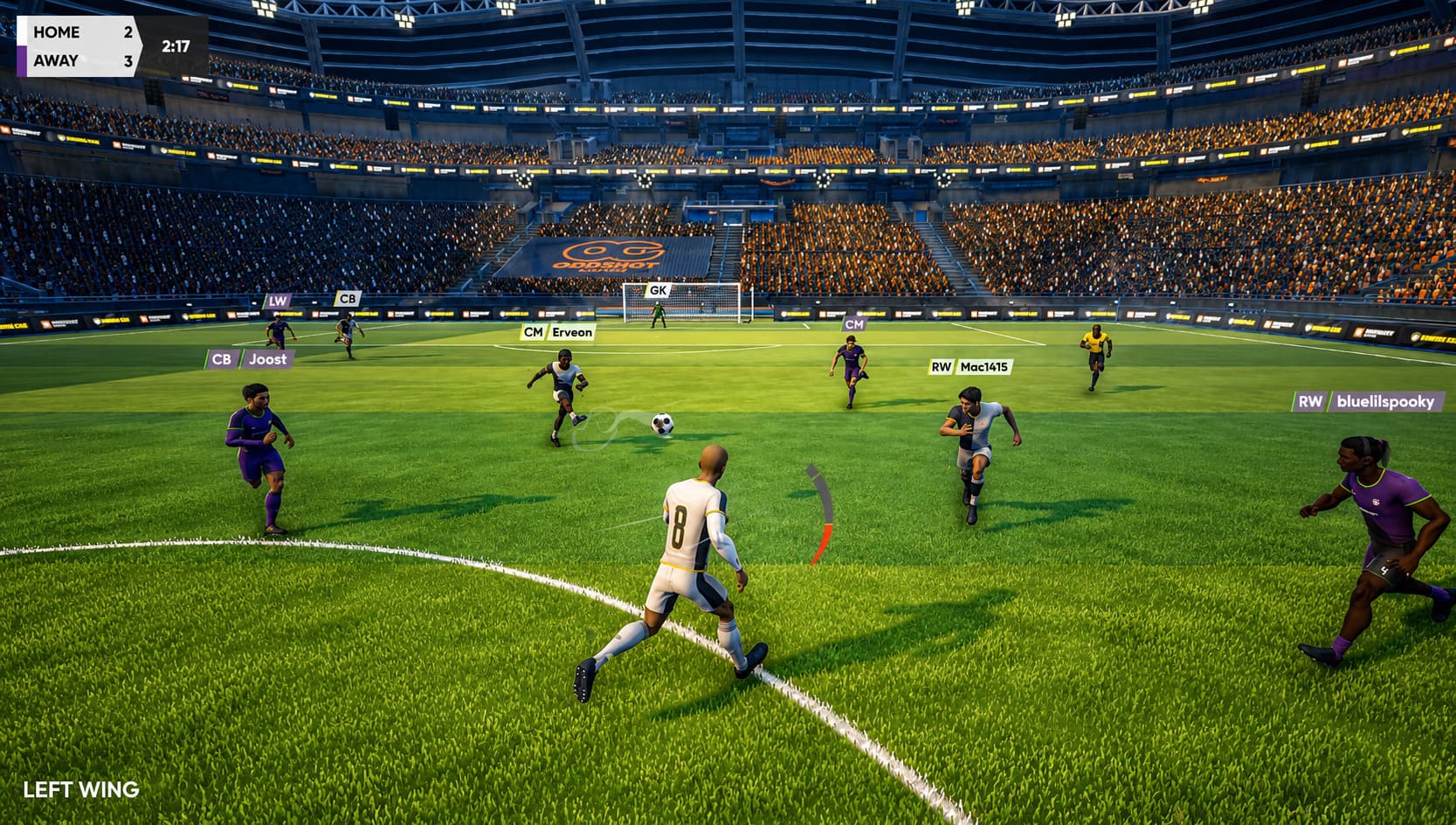
Random teams usually look identical.
Everyone wants to score.
Nobody wants to defend.
Nobody stays in position.
After fifteen minutes the formation barely exists.
The strongest clubs I’ve seen don’t simply gather eleven talented players.
They assign responsibilities before kickoff.
That alone solves countless problems.
Some examples include:
- Dedicated defensive midfielders.
- Players comfortable staying wide.
- Fullbacks who actually enjoy defending.
- Goalkeepers who communicate constantly.
It sounds simple, but organized roles make the entire match feel smoother.
From my own experience, I’d rather play with an average coordinated team than a collection of individually brilliant players.
My Favorite Formation Right Now
I’ve experimented with several tactical systems.
Some work.
Some completely collapse once pressure starts building.
The formation I keep returning to is 4-2-3-1.
Why?
Because it naturally creates balance.
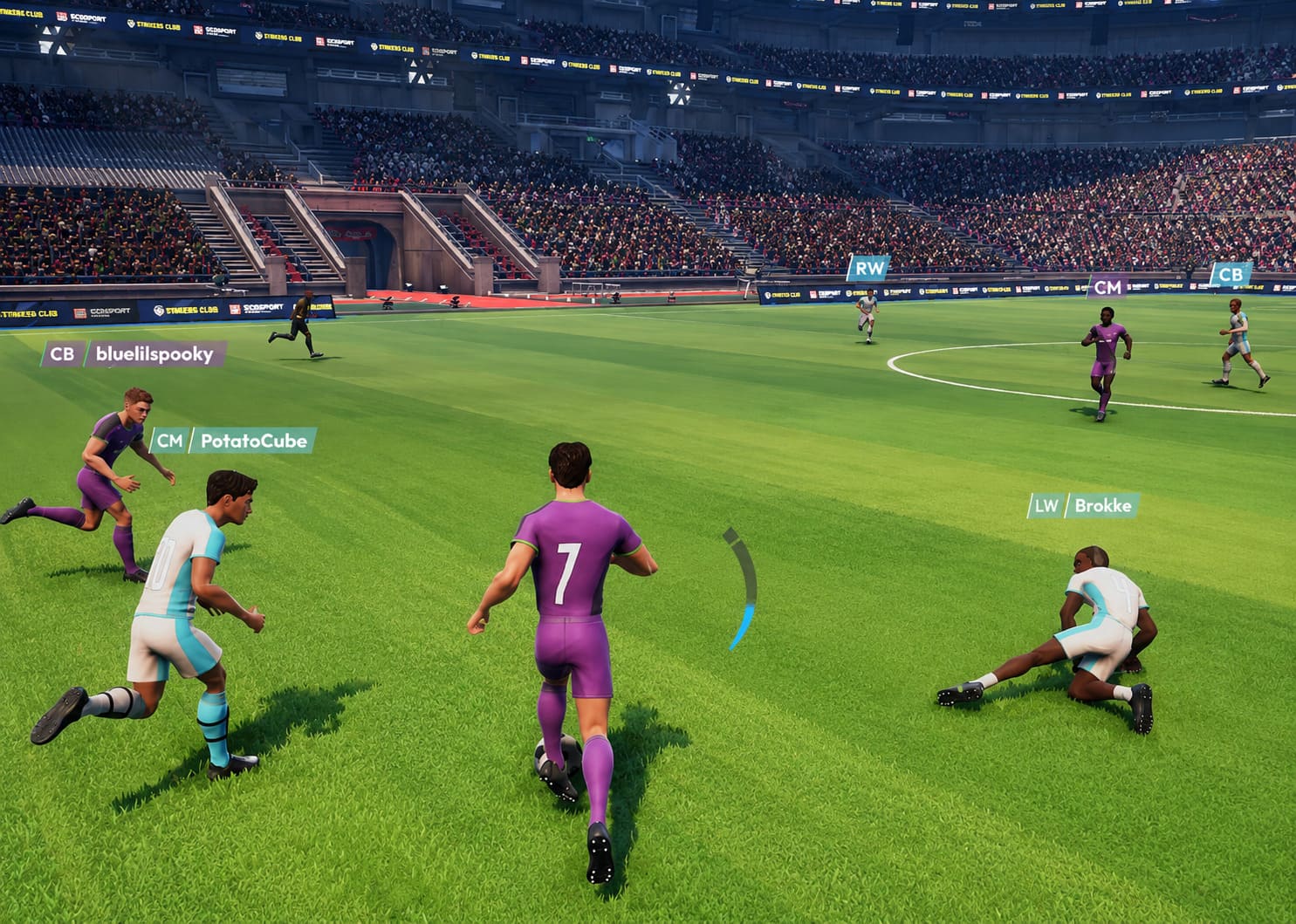
- You always have passing options.
- You rarely expose your center backs.
- Counterattacks become easier to stop.
- Nobody has to cover unrealistic amounts of space.
The two holding midfielders quietly become the heroes of almost every match.
They rarely appear on highlight clips.
They rarely score.
Yet they constantly recover possession and keep attacks alive.
As a viewer, they may look invisible.
As a teammate, they’re invaluable.
Wide Play Creates More Chances Than Fancy Dribbling
Something I’ve noticed while streaming is that newer players often try to beat three defenders by themselves.
It almost never works.
Instead, stretching the field horizontally changes everything.
Keeping your wingers close to the touchline forces defenders into uncomfortable decisions.
Do they stay compact?
Do they press wide?
Every choice creates space somewhere else.
That’s why I always encourage teammates to stay patient.
Sometimes the smartest move is simply recycling possession until the defense finally makes a mistake.
Football rewards patience far more than panic.
Finishing Isn’t About Power
One lesson completely changed how I score goals.
I stopped trying to blast every shot.
Human goalkeepers react differently than AI.
They’re reading your movement.
They’re watching your body angle.
They’re predicting your intentions.
Because of that, subtle changes become incredibly effective.
Some habits that improved my finishing include:
- Shooting early instead of taking extra touches.
- Changing direction at the last possible moment.
- Keeping shots low when defenders are nearby.
- Watching goalkeeper positioning before deciding the corner.
Interestingly, many of my easiest goals came from simple first-time finishes.
No tricks.
No unnecessary dribbling.
Just good positioning.
Midfield Players Quietly Decide Every Match
Whenever someone asks me which position is hardest, I don’t immediately answer goalkeeper.
I usually say central midfield.
Why?
Because you’re responsible for almost everything.
- Supporting defenders.
- Helping attackers.
- Maintaining possession.
- Reading transitions.
- Covering passing lanes.
- Making safe decisions under pressure.
It’s mentally exhausting.
The best midfielders aren’t constantly making spectacular plays.
They’re making the correct play.
Again and again.
Sometimes that means playing backwards.
Sometimes that means slowing the tempo.
Sometimes it means refusing a risky through ball.
Good football isn’t always exciting football.
Defending Requires Patience More Than Aggression
I used to chase every attacker.
That habit disappeared quickly.
Good strikers actually want defenders to overcommit.
Once you leave your position, the space behind you becomes an invitation.
These days I focus on three priorities:
- Protect space before chasing the ball.
- Force attackers toward less dangerous areas.
- Wait for teammates before committing.
This simple mindset has reduced defensive mistakes more than any mechanical improvement.
Positioning often beats speed.
Sprinting Less Actually Makes You Faster
This sounds strange.
But hear me out.
New players sprint almost continuously.
The problem is obvious after twenty minutes.
Fatigue builds.
Recovery runs become slower.
Reaction times suffer.
Meanwhile, experienced players conserve energy.
They jog into position.
They accelerate only when needed.
Late in the match they’re still capable of explosive runs while everyone else feels exhausted.
Managing stamina may not be flashy, but it wins games.
Goalkeepers Deserve More Respect
I’ll admit something.
I avoided goalkeeper for a long time.
Now it’s one of my favorite roles.
Playing keeper in Strikers Club is stressful because every decision feels important.
Should you leave the line?
Stay near post?
Expect a cross?
Rush the striker?
Every second forces another decision.
One thing I learned quickly is that positioning saves more shots than reflexes.
If you’re already standing in the correct location, many difficult saves suddenly become routine.
Distribution also deserves attention.
Launching a quick counterattack after catching a cross can completely change momentum.
Some of the fastest goals I’ve witnessed actually started with the goalkeeper.
Small Habits That Instantly Improve Your Team
These are little things I’ve started doing that consistently make matches feel easier:
- Talk before the kickoff about player roles.
- Avoid bunching around the ball.
- Look for easy passes instead of highlight plays.
- Respect defensive shape even while attacking.
- Keep communication calm after mistakes.
It’s amazing how much difference these simple habits create over ninety virtual minutes.
Guildrun Demo Crash on Launch Fix: How to Stop Low FPS, Stutters, and Lag on Steam
Final Thoughts
After spending plenty of evenings streaming and grinding matches, I honestly think Strikers Club delivers one of the freshest multiplayer football experiences in recent years.
It’s not perfect.
Sometimes communication breaks down.
Sometimes teammates ignore positioning.
Sometimes physics punish tiny mistakes.
But that’s also exactly why I keep coming back.
Every match feels earned.
Every goal feels deserved.
Every clean defensive sequence feels satisfying.
If you’re looking for an arcade football game where one superstar carries the team, this probably isn’t it.
If, however, you enjoy competitive games that reward teamwork, patience, tactical thinking, and genuine mechanical improvement, Strikers Club’s 11v11 mode is easily where the game truly shines.
From my perspective as both a player and streamer, that’s where the real magic happens. The best moments aren’t solo highlight reels—they’re those perfectly timed passing sequences where eleven players think as one. Those are the matches you’ll remember long after the final whistle, and they’re exactly why I’ll keep coming back for another kickoff.