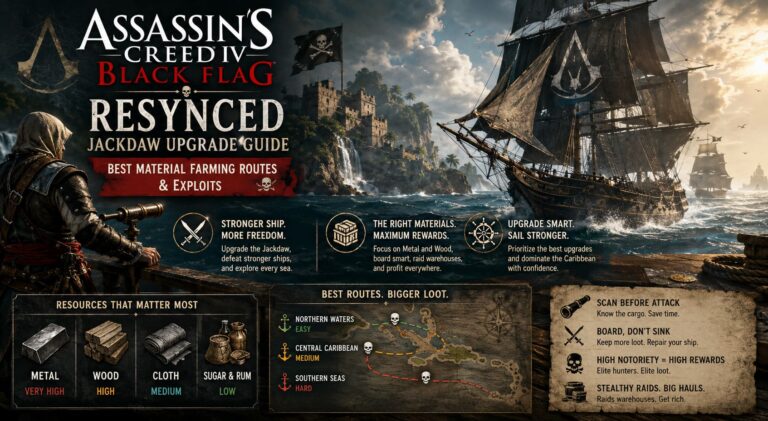
Assassin’s Creed Black Flag Resynced: How to Use Map Restoration Service and Increase Fleet Capacity Fast
When I first jumped into Assassin’s Creed Black Flag Resynced, I expected prettier visuals, smoother combat, and a modern version of one of Ubisoft’s best pirate adventures. What surprised me most, though, wasn’t the graphics—it was how much time I could save by focusing on the new settlement systems instead of endlessly sailing around looking for random loot.
After spending dozens of hours experimenting with different upgrade paths, testing fleet management strategies, and comparing progression speeds, I found that two mechanics completely changed how quickly my pirate empire grew: the Map Restoration Service and Kenway’s Fleet expansion.
Many players naturally invest all of their early money into the Jackdaw, but I actually think that’s only half the equation. Your ship is important, but your hideout quietly becomes the engine that funds everything else. Once I shifted my priorities, upgrades started coming much faster, legendary rewards appeared earlier, and earning Reales stopped feeling like a grind.
Here’s the approach that worked best for me.
Why Great Inagua Should Become Your Main Investment
One thing I appreciated about Resynced is that Great Inagua finally feels like a true pirate headquarters instead of simply being another location on the map.
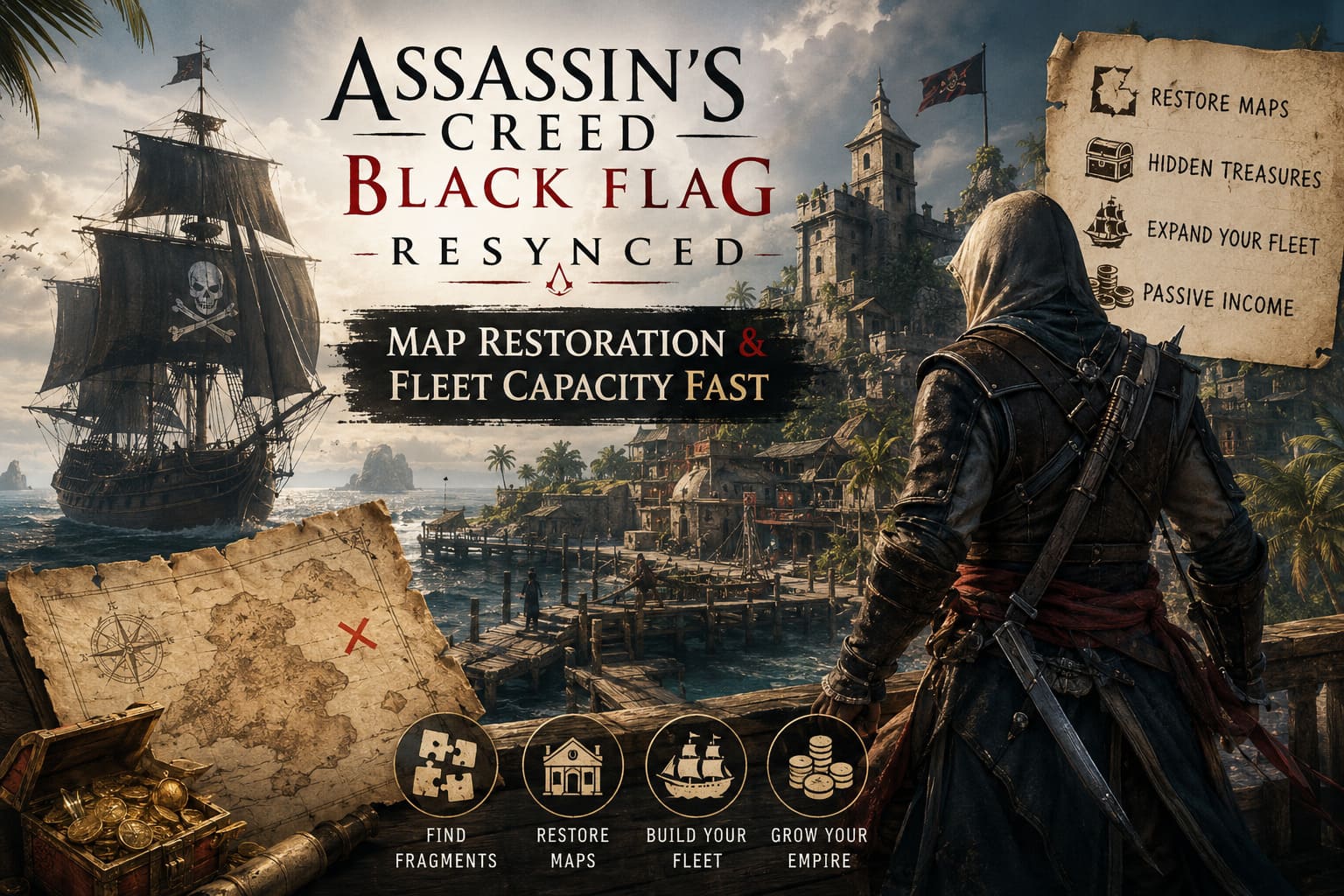
Every improvement you make has a practical purpose. Some upgrades generate passive income, others unlock merchants, while several directly improve your long-term progression.
Rather than rushing every story mission, I found it worthwhile to pause for a while after unlocking the settlement. Spending several hours improving the island paid off far more than immediately chasing the next sequence.
The Map Restoration Service Is More Valuable Than It Looks
At first glance, damaged treasure maps seem like another collectible.
They’re not.
The new Map Restoration Service transforms broken map fragments into complete treasure maps that reveal hidden rewards across the Caribbean. Some of these treasures include cosmetic ship upgrades, valuable equipment, and unique collectibles that would otherwise remain inaccessible.
Unlike many open-world collectibles, these maps actually feel rewarding because every completed restoration leads to something tangible.
Instead of wandering randomly, you always have a destination waiting for you.
Unlocking the Restoration Merchant
Fortunately, reaching this feature doesn’t require finishing the entire campaign.
My progression looked like this:
| Objective | Why It Matters |
|---|---|
| Reach Sequence 4 | Unlocks advanced settlement management. |
| Repair the Tavern | Opens additional merchant options. |
| Restore the General Store | Enables settlement development. |
| Hire the Treasure Dealer | Unlocks Map Restoration permanently. |
The Treasure Dealer quickly became one of my favorite NPCs because almost every visit resulted in another worthwhile expedition.
Where I Farmed Map Fragments
This was the biggest lesson I learned.
Initially, I searched islands, explored beaches, and cleared forts expecting damaged maps to appear naturally.
That wasn’t very efficient.
Instead, I discovered that increasing naval notoriety dramatically improved my chances.
My routine became very simple:
- Attack merchant convoys.
- Raise your Wanted Level.
- Fight Pirate Hunter ships.
- Board every defeated vessel.
- Always search the captain’s lockbox.
The stronger Hunter ships consistently produced better rewards than ordinary merchant vessels.
Since you already earn plenty of money and resources from naval combat, farming map pieces never felt repetitive.
Restoring Treasure Maps
Once enough fragments have been collected, return to Great Inagua and visit the Treasure Dealer.
Restoring maps requires both currency and trading resources, making it important to keep a healthy stockpile of common goods during exploration.
I recommend avoiding the temptation to immediately sell absolutely everything after each voyage. Keeping some resources in reserve makes map restoration much smoother later.
One Treasure Hunt That Really Stood Out
The first restored map I completed led me toward the Florida coastline.
Without spoiling every detail, the location rewards players who carefully explore the shoreline rather than simply following the objective marker.
The loot was easily worth the effort.
Among the highlights were several impressive cosmetic upgrades alongside useful ship equipment that immediately found a place on my Jackdaw.
Moments like this remind me why Black Flag remains one of my favorite Assassin’s Creed games. Treasure hunting actually feels like piracy instead of another checklist activity.
Don’t Ignore Kenway’s Fleet
If I could give one piece of advice to new players, it would be this:
Expand your Fleet early.
Most people spend nearly all their Reales upgrading cannons, mortars, and hull armor.
Those upgrades certainly matter.
However, Kenway’s Fleet quietly generates money while you’re busy completing missions or exploring islands.
The earlier your fleet grows, the sooner your investment begins paying for itself.
My Preferred Fleet Expansion Order
After experimenting with multiple playthroughs, this order consistently gave me the fastest overall progression.
| Priority | Upgrade | Benefit |
|---|---|---|
| 1 | Purchase early berths | Immediate fleet growth. |
| 2 | Campfire restoration | Two additional fleet slots. |
| 3 | Mansion upgrades | Passive income plus more berths. |
| 4 | Continue buying berths | Expand capacity further. |
This strategy let me avoid expensive late-game purchases while maintaining enough room for better ships.
Why the Campfire Upgrade Is Underrated
Many players overlook the Campfire because it doesn’t look particularly exciting.
That would be a mistake.
For its cost, it’s one of the strongest investments available.
Besides improving your settlement, it instantly increases Fleet capacity without requiring separate berth purchases.
Considering how expensive additional docks become later, those free slots are surprisingly valuable.
Building a Better Fleet
One habit I developed carried over from countless strategy games:
Never keep mediocre units longer than necessary.
The same rule applies here.
Whenever I captured stronger ships, I wasn’t afraid to dismantle weaker ones.
My fleet gradually shifted toward higher-quality vessels instead of becoming a museum of outdated ships.
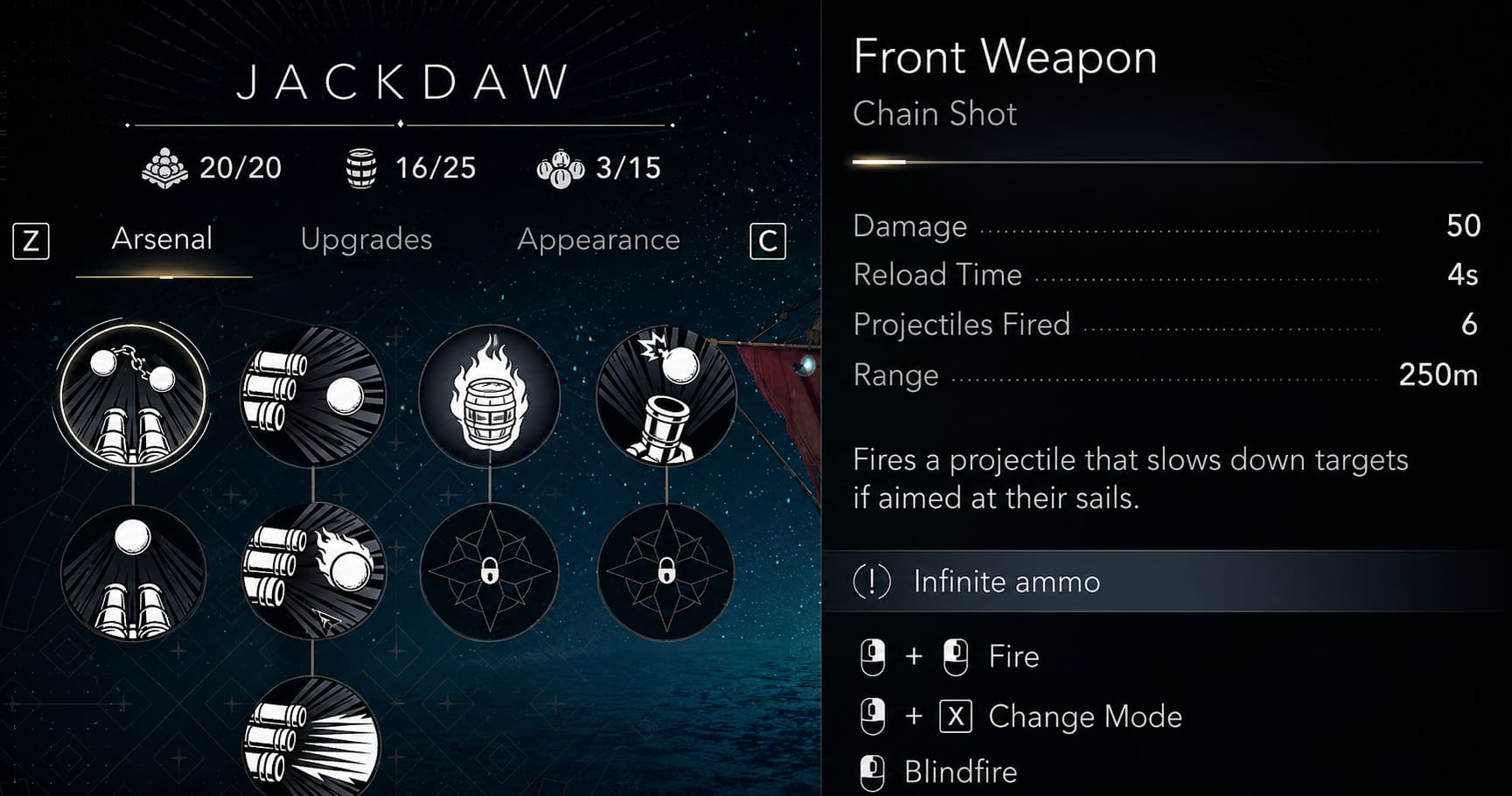
A few simple habits helped enormously:
- Prioritize higher-rated ships whenever possible.
- Replace weaker vessels instead of collecting everything.
- Capture larger warships once your Jackdaw becomes powerful enough.
- Leave one berth empty during extended naval hunting sessions.
That final tip saved me several times when unexpectedly encountering elite enemy ships.
Forts Are Worth More Than Their Rewards
Conquering forts isn’t only about the immediate loot.
Each captured fort improves the safety and efficiency of Fleet trade routes.
As more regions become secure, your trading missions become less risky and more profitable.
I actually delayed several story missions just to eliminate nearby forts because the long-term financial benefits were impossible to ignore.
Assassin’s Creed Black Flag Resynced Hideout Guide: Best Passive Income Strategies
My Favorite Early Money Strategy
Early progression often feels slow because players hesitate to spend money.
Ironically, spending wisely is exactly how you become rich faster.
Whenever I needed quick capital, I targeted cargo vessels carrying valuable trade goods.
Selling excess commodities funded almost every important settlement upgrade during my early hours.
Rather than hoarding every resource indefinitely, I focused on maintaining enough materials for future upgrades while converting surplus cargo into Reales whenever possible.
That steady cash flow made purchasing new Fleet berths far less painful.
Final Thoughts
After playing countless open-world RPGs and naval adventures over the years, I’ve noticed a familiar pattern: players often invest everything into direct combat upgrades while ignoring economic systems.
Black Flag Resynced rewards the opposite approach.
The Jackdaw absolutely deserves upgrades, but Great Inagua quietly becomes your greatest source of power.
Every restored treasure map leads to valuable discoveries.
Every additional Fleet berth increases long-term profits.
Every settlement improvement makes future progression noticeably easier.
Instead of treating these mechanics as optional side content, I would argue they’re among the smartest investments you can make.
If you’re aiming to unlock legendary cosmetics, gather rare ship upgrades, and earn enough Reales to outfit Edward Kenway without endless grinding, prioritize your settlement early, expand Kenway’s Fleet whenever possible, and never ignore damaged treasure maps when they appear.
In my experience, this approach transformed the game from a steady progression into a rapidly growing pirate empire, allowing me to spend less time farming resources and far more time doing what Black Flag has always done best—commanding the Caribbean from the deck of a fully upgraded Jackdaw.