The Mound Omen of Cthulhu vs Lethal Company: Which Co-op Horror Game Rules?
The cooperative horror genre has exploded over the past few years, but let’s be honest—one game changed everything. Lethal Company turned simple extraction missions into unforgettable stories filled with panic, laughter, betrayal, and some of the funniest accidental deaths I’ve ever experienced in multiplayer gaming. Every session felt different, and that unpredictability made it nearly impossible to stop playing.
Now another contender is stepping into the spotlight. The Mound isn’t trying to copy the formula shot for shot. Instead, it twists it into something darker, heavier, and far more psychological. Rather than sending players into abandoned industrial facilities on distant moons, it throws four explorers into a cursed jungle where reality itself slowly falls apart.
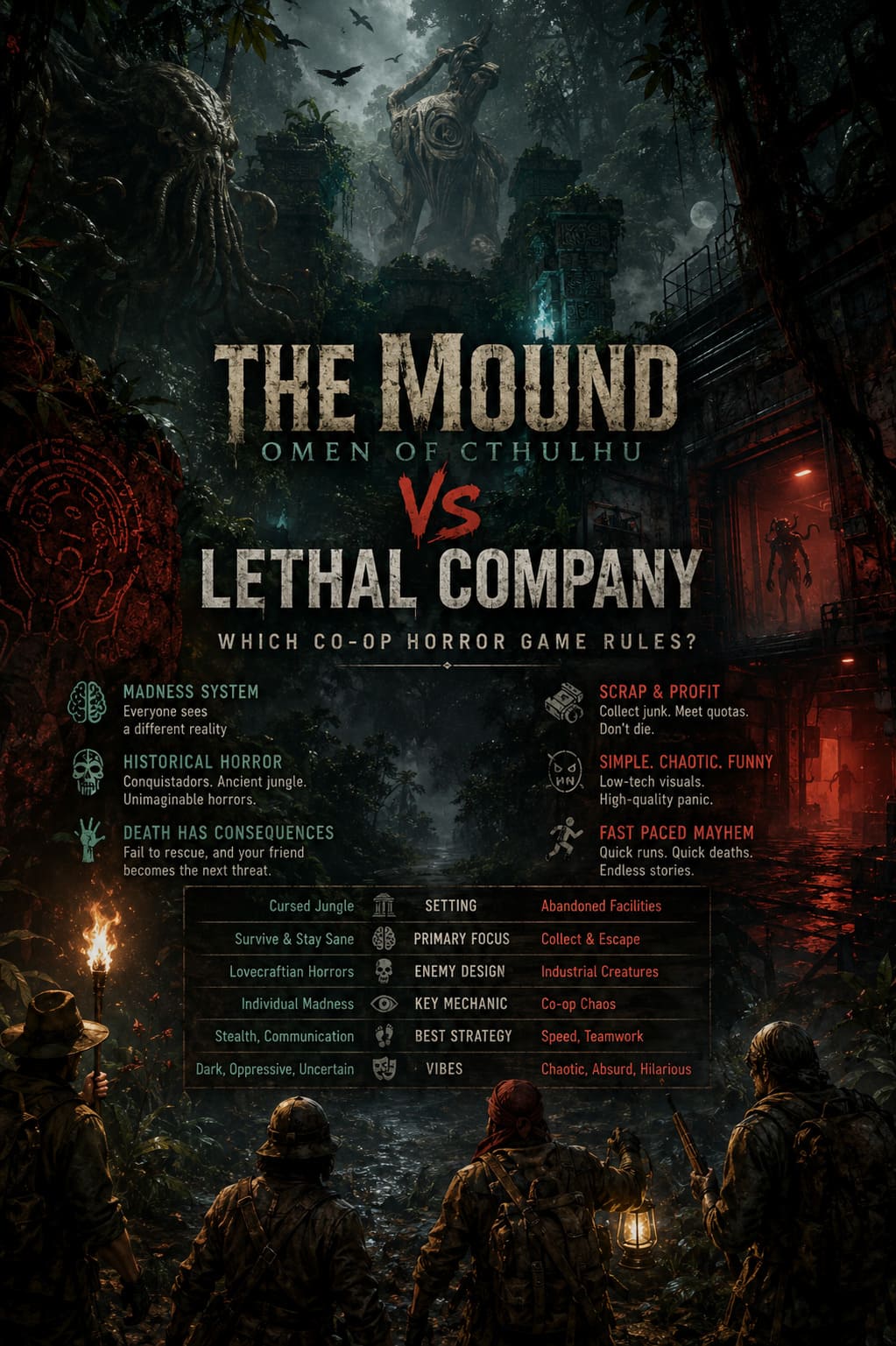
After digging into both games, one thing became clear: they may belong to the same genre, but they aim to scare players in completely different ways.
Two Similar Foundations, Two Completely Different Experiences
On paper, the structure looks familiar. You enter dangerous territory with friends, search for valuable loot, survive long enough to escape, and improve your next expedition. That’s where the similarities mostly end.
In Lethal Company, you’re basically an expendable employee working for a mysterious corporation. Every mission revolves around meeting increasingly demanding profit quotas by collecting junk scattered throughout abandoned facilities. It sounds ridiculous—and somehow that’s exactly why it works. Every rusty fan, broken toy, or random piece of scrap suddenly becomes incredibly valuable once the timer starts ticking.
The Mound, meanwhile, replaces science fiction with historical horror. Instead of corporate greed driving the story, players become explorers during the age of conquistadors, accepting dangerous expeditions into an ancient jungle rumored to hide impossible treasures beneath the earth.
The setting immediately changes the mood. You’re no longer wandering sterile corridors lit by flickering fluorescent lights. Every expedition feels like walking deeper into a place humanity was never supposed to discover.
Setting Matters More Than You Think
One of the biggest surprises is just how much the environment shapes every decision.
Lethal Company’s abandoned moons feel empty. The silence is uncomfortable. Every metallic footstep echoes through endless hallways. Then something moves. That’s usually when everyone starts screaming.
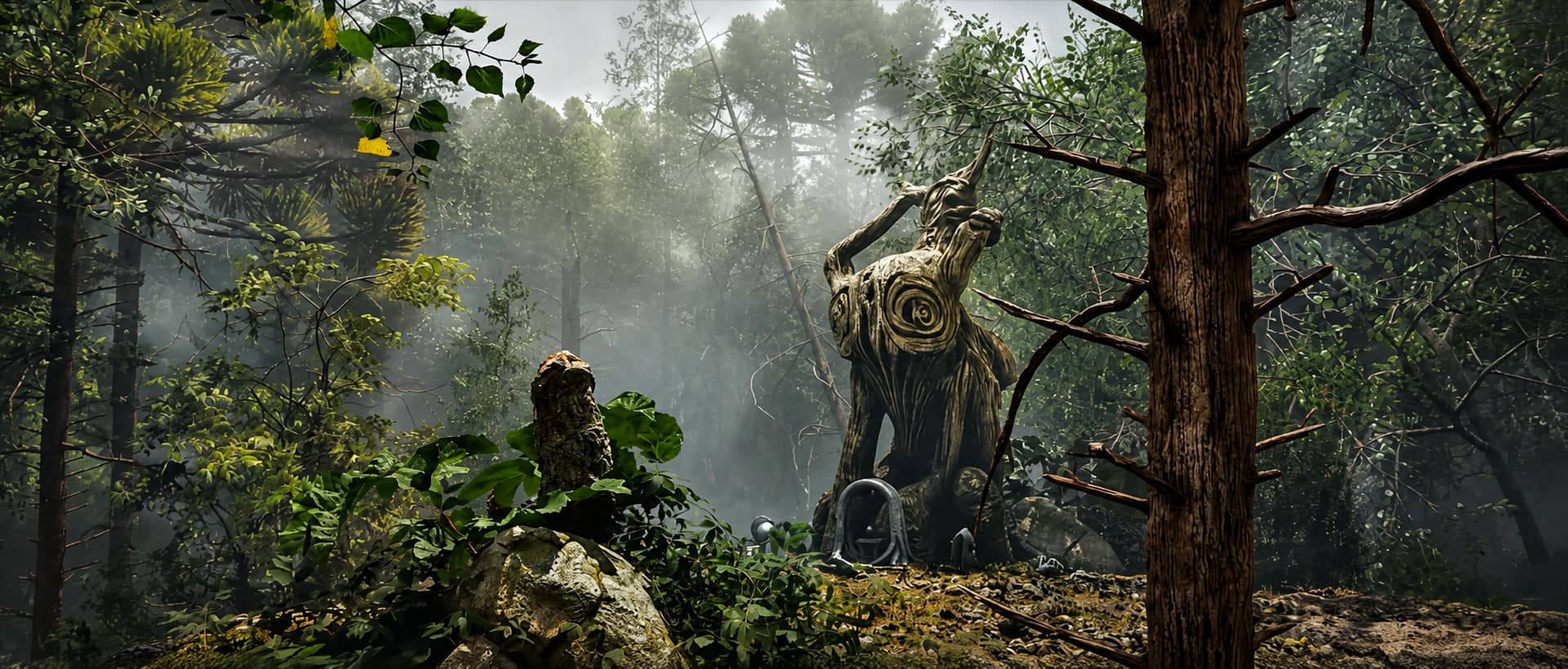
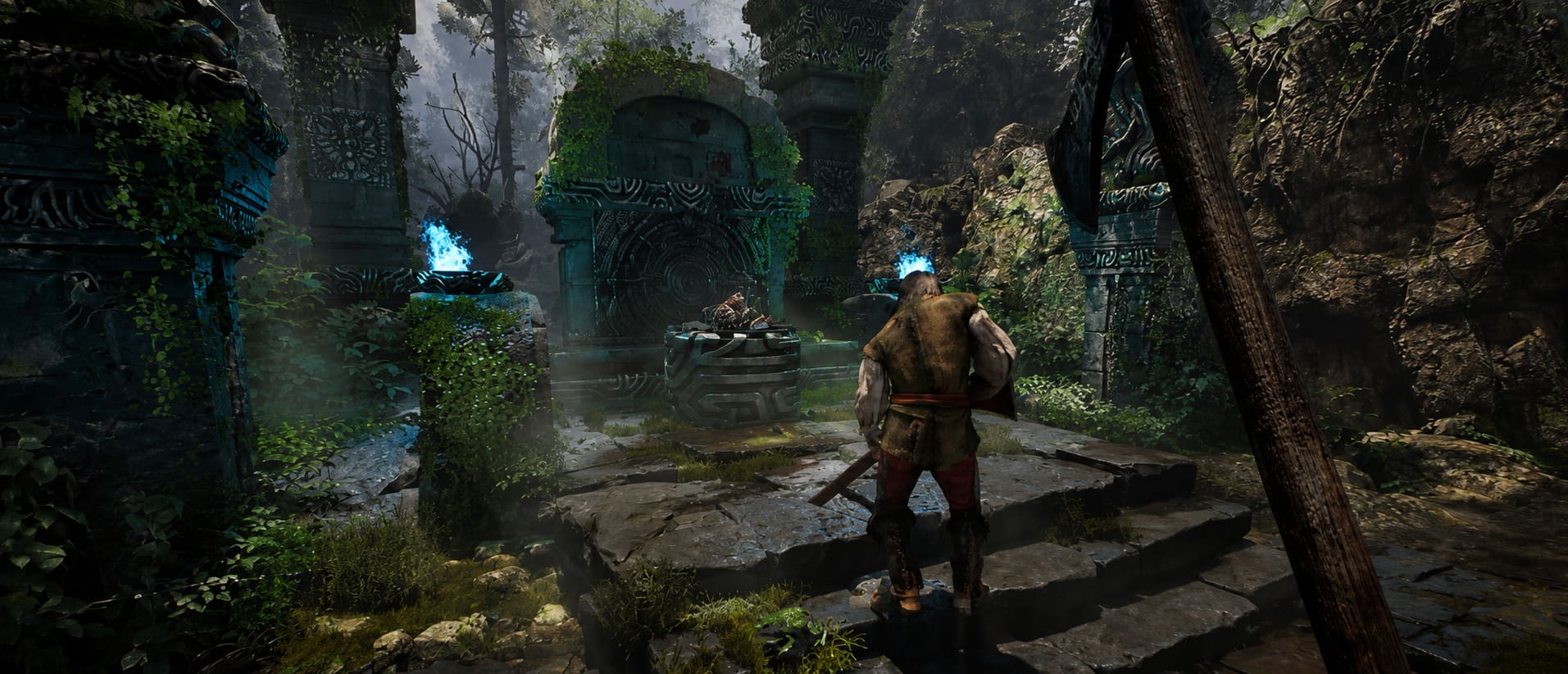
The Mound creates tension differently. The jungle never truly feels quiet. Leaves rustle. Strange wildlife calls from somewhere nearby. Mist rolls between massive trees. Ancient ruins appear almost hidden beneath thick vegetation.
Instead of wondering if something is chasing you, you begin wondering whether what you’re seeing is even real. That subtle difference completely changes how players approach exploration.
Visual Presentation: Indie Simplicity vs Modern Horror
There is no denying that Lethal Company succeeds despite its intentionally simple graphics. Its low-poly style gives the game personality. Monsters don’t need cutting-edge animations to be terrifying when they suddenly appear three feet away while your flashlight battery dies. The visual limitations almost become part of the horror.
The Mound takes the opposite approach. Dense vegetation, dynamic lighting, realistic weather effects, and detailed environments make every location feel oppressive. The jungle isn’t simply beautiful. It’s overwhelming. Sometimes you can’t even tell whether movement in the bushes comes from an enemy, another player, or your own imagination. That uncertainty becomes one of the game’s greatest strengths.
The Real Star Is the Madness System
This is where The Mound genuinely separates itself from nearly every co-op horror game released in recent years.
Most horror games include some kind of sanity mechanic. Usually it’s fairly simple. Darkness affects your character. Stress causes hallucinations. Maybe your heartbeat gets louder. Maybe shadows become harder to interpret.
Lethal Company touches on these ideas, but they remain secondary mechanics. Your teammates generally see the same world you do.
The Mound throws that rule straight into the fire. Players experience completely different realities. Imagine standing beside your friend. You see an open path leading toward treasure. Your teammate sees a massive pit filled with sharpened stakes.
Who’s right? Neither of you knows. Suddenly basic communication becomes the most important survival tool in the game.
Instead of simply saying, “Monster on the left!“, conversations become filled with doubt. One player asks if everyone else can see the creature. Another insists there’s nothing there. Someone starts questioning whether they’re losing their mind. Those moments create a completely different kind of fear than traditional jump scares ever could.
Those interactions sound simple on paper, but they’re exactly the kind of unpredictable situations that make multiplayer horror unforgettable.
Teamwork Has Never Felt More Fragile
Both games demand cooperation, and neither rewards selfishness for very long. However, they encourage teamwork in very different ways.
How Lethal Company Rewards Team Play
- Efficient loot collection
- Resource management
- Navigation through dangerous facilities
- Planning a safe escape before time runs out
How The Mound Raises the Stakes
- Constantly confirming reality with teammates
- Watching each other’s sanity
- Sharing conflicting information
- Deciding who can actually be trusted
That final point becomes surprisingly important. If someone insists they’re seeing monsters everywhere, are they warning the group or has the jungle already broken their mind? Every decision becomes a gamble because nobody experiences the expedition exactly the same way.
Death Carries Much Greater Consequences
One mechanic instantly caught my attention.
In Lethal Company, death is bad. Really bad. Your teammates often need to recover your body or suffer financial penalties. After that, you’re mostly watching until the mission ends.
The Mound refuses to let dead players disappear quietly. If teammates fail to rescue you in time, the jungle transforms your body into another nightmare. Instead of removing you from the action, your former character becomes another threat hunting the surviving squad.
That’s brilliant. Every failed rescue directly increases the difficulty for everyone still alive. It creates constant pressure during dangerous encounters. Do you risk saving your teammate, or retreat before the situation gets even worse? Neither answer feels safe.
Combat Isn’t About Becoming a Hero
Anyone expecting an action game should probably lower those expectations. Neither title encourages fighting. Running remains your best weapon.
There are noticeable differences, however. Lethal Company focuses almost entirely on avoiding danger, while The Mound provides limited historical weapons without ever letting players feel overpowered. Ammunition remains scarce, supplies disappear quickly, and every confrontation feels like a desperate attempt to survive rather than win.
| Feature | Lethal Company | The Mound |
|---|---|---|
| Primary Focus | Avoid danger | Manage fear and survive |
| Combat Style | Extremely limited | Historical weapons with scarce ammo |
| Enemy Design | Industrial creatures | Lovecraftian horrors |
| Resources | Basic equipment | Limited supplies |
| Best Survival Strategy | Speed and teamwork | Stealth, positioning and sanity management |
Personally, I enjoy horror games that make every bullet feel valuable. When ammunition is everywhere, monsters become obstacles. When resources are scarce, monsters remain terrifying. The Mound clearly understands that philosophy.
Which Game Creates Better Stories?
This might actually be the most important question. People rarely remember statistics. They remember moments.
Lethal Company has produced thousands of viral clips because everything can go wrong within seconds. Someone forgets to close a door. Someone activates a trap. Someone screams. Everyone dies. It’s comedy wrapped inside horror, and it never gets old.
The Mound seems built around a different type of storytelling. Its madness system constantly creates uncertainty between players. Friends argue over hallucinations. Explorers accidentally split apart. Nobody fully trusts what they’re seeing. Those situations naturally create suspense without relying solely on scripted scares.
For streamers and content creators, that’s incredibly exciting. Every expedition has the potential to generate reactions that nobody could have predicted beforehand.
Crossplay Could Become a Huge Advantage
Accessibility matters more than many players realize. Launching with cross-platform multiplayer immediately removes one of the biggest barriers modern co-op games often face.
Friends playing on different systems don’t have to wait months for updates. Whether someone owns a gaming PC, PlayStation 5, or Xbox Series X|S, joining the same expedition becomes much easier. That alone could help build a healthy online community much faster than platform-exclusive releases.
Quick Comparison
| Category | Winner |
|---|---|
| Casual Fun | Lethal Company |
| Psychological Horror | The Mound |
| Atmosphere | The Mound |
| Replayability | Lethal Company |
| Visual Quality | The Mound |
| Unique Mechanics | The Mound |
| Comedy Potential | Lethal Company |
| Tension | The Mound |
Final Verdict
After spending countless hours with cooperative horror games over the years, I don’t see The Mound replacing Lethal Company outright—and honestly, it doesn’t need to.
Lethal Company still delivers one of the best party experiences available today. Its simple design, hilarious failures, active modding community, and endlessly replayable structure make it almost impossible not to recommend. If your group enjoys laughing just as much as screaming, it’s still one of the strongest multiplayer horror games on the market.
The Mound feels like the genre growing up. Instead of chasing cheap jump scares, it attacks players psychologically. The historical setting, oppressive jungle, individualized hallucinations, and brutal death mechanics create a completely different rhythm that rewards communication far more than reflexes. Every expedition feels tense because you can never be completely certain whether your greatest enemy is hiding in the trees—or standing right beside you.
If your squad wants unpredictable comedy, Lethal Company remains unbeatable.
If you’re craving something darker, smarter, and genuinely unsettling, The Mound looks ready to become one of the most fascinating cooperative horror releases in years.
And personally? I’ll happily keep both installed. Sometimes I want to laugh while my friends accidentally doom the entire team. Other nights, I want a game that makes me question everything I see—and that’s exactly where The Mound seems prepared to shine.