HUNGER Game Lore Explained: The Napoleonic Plague, Bacterium Origins, and Survivor Backstories
Every few years a game appears that immediately feels different from everything else in its genre. Sometimes it is the mechanics, sometimes the setting, and occasionally it is the atmosphere that refuses to leave your head long after you stop watching gameplay footage. HUNGER gave me exactly that feeling.
I’ve spent years playing survival games, extraction shooters, tactical military simulators, hardcore RPGs, and countless horror titles. After seeing another zombie apocalypse set in modern cities for what feels like the hundredth time, I honestly didn’t expect a new project to surprise me. Yet HUNGER managed to do exactly that.
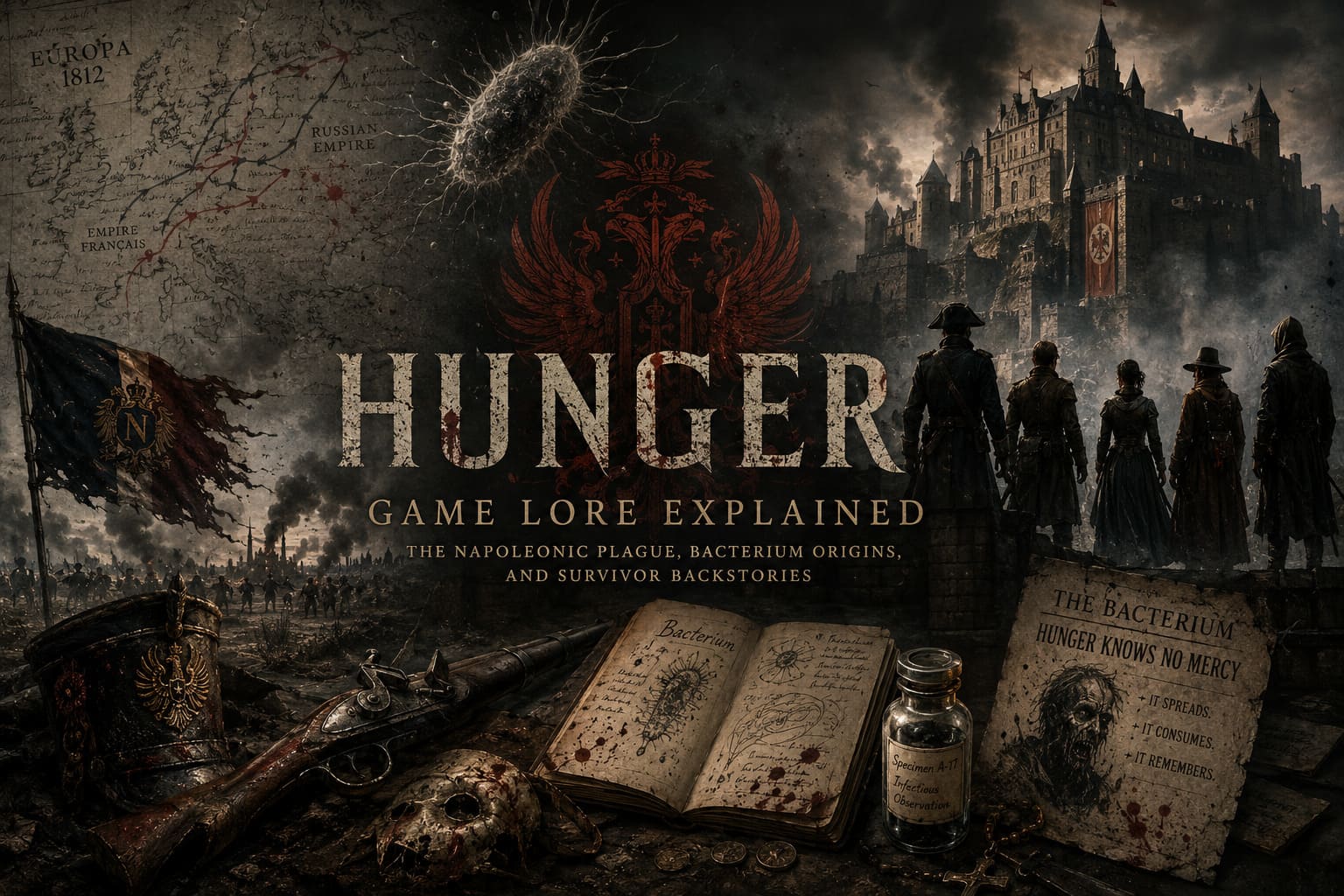
Instead of another futuristic wasteland or abandoned American suburb, the developers chose Napoleonic Europe, transforming one of history’s bloodiest military eras into a horrifying survival nightmare. That decision alone completely changes how the world feels.
What impressed me most isn’t simply the historical backdrop. It’s how every gameplay system seems connected to the world’s lore instead of existing purely for balance reasons. Whether that promise survives launch remains to be seen, but the foundation is one of the most interesting I’ve seen in years.
A Different Kind of Apocalypse
Most survival games begin after civilization has already collapsed.
HUNGER approaches things differently.
The world is still recognizable. Kingdoms, armies, castles, military traditions, and social classes continue to exist—but they’re all falling apart under the pressure of something humanity barely understands.
Rather than relying on supernatural curses or magical artifacts, the game introduces the Bacterium, a mysterious biological organism that spreads through Europe during the chaos of the Napoleonic Wars.
Personally, I like this direction much more.
A biological catastrophe feels disturbingly believable, especially during a period where enormous armies marched across Europe, sanitation barely existed by modern standards, and battlefields were left covered with thousands of corpses.
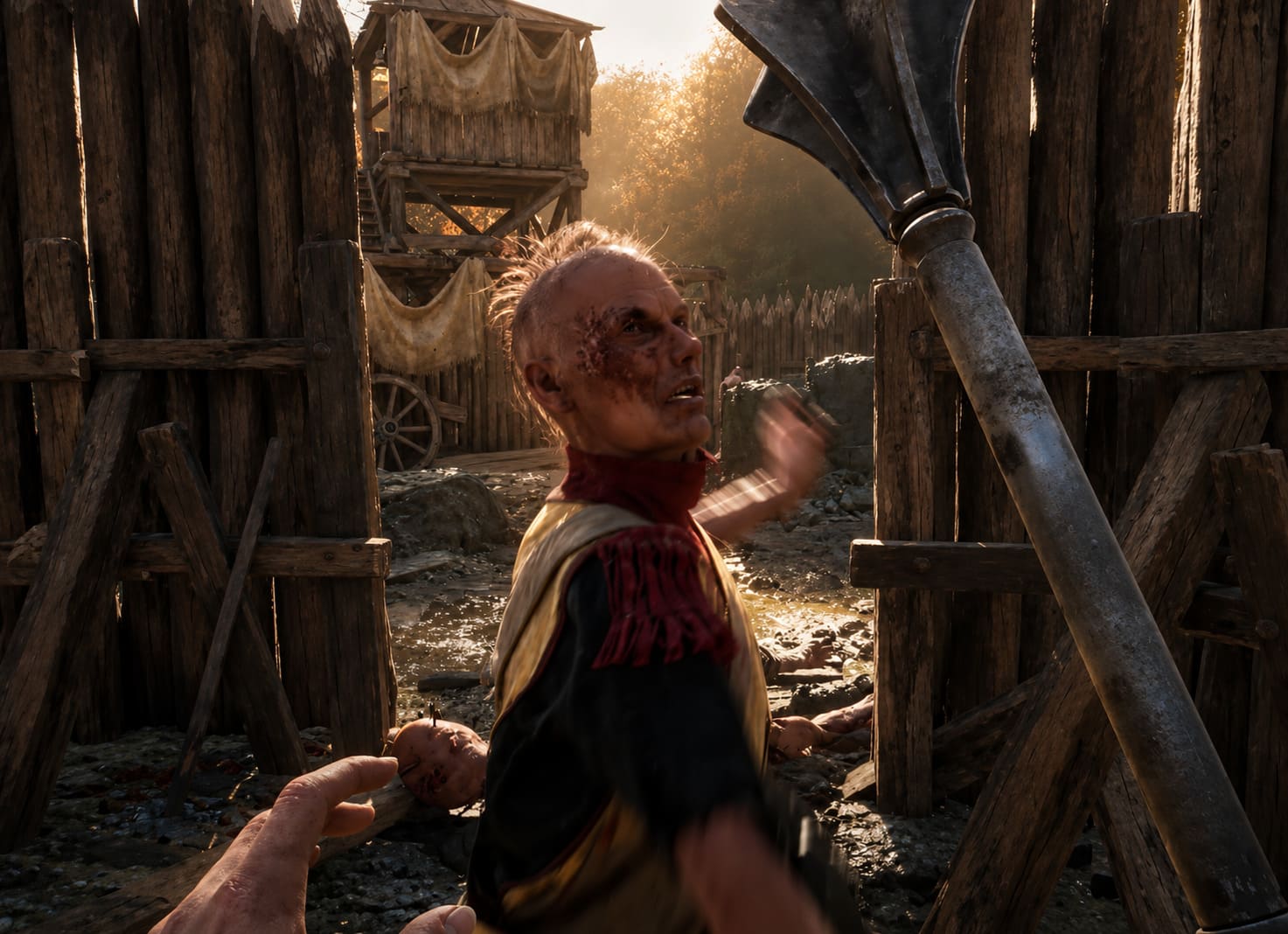
Instead of simply creating zombies, the infection gradually destroys both the body and the mind until victims become creatures driven by endless hunger.
That small detail makes the infected feel more tragic than evil.
The World Feels Built Around History
One reason the setting stands out is because the developers didn’t simply dress modern gameplay in old clothing.
Everything appears designed around the technology of the early nineteenth century.
That changes combat dramatically.
Instead of automatic rifles and endless magazines, players rely on:
- Flintlock pistols
- Muskets
- Sabers
- Axes
- Heavy melee weapons
Reloading takes precious seconds.
Missing a shot isn’t just inconvenient—it could easily become the mistake that ends an expedition.
As someone who enjoys slower tactical combat far more than arcade shooters, this immediately caught my attention.
Every bullet should matter.
Every swing should cost stamina.
That naturally creates tension without artificially inflating enemy health.
The Bacterium Is More Interesting Than Traditional Zombies
One thing I appreciated while learning about the game’s world is that the infected aren’t simply walking corpses.
The disease fundamentally alters living tissue.
Victims retain fragments of who they once were.
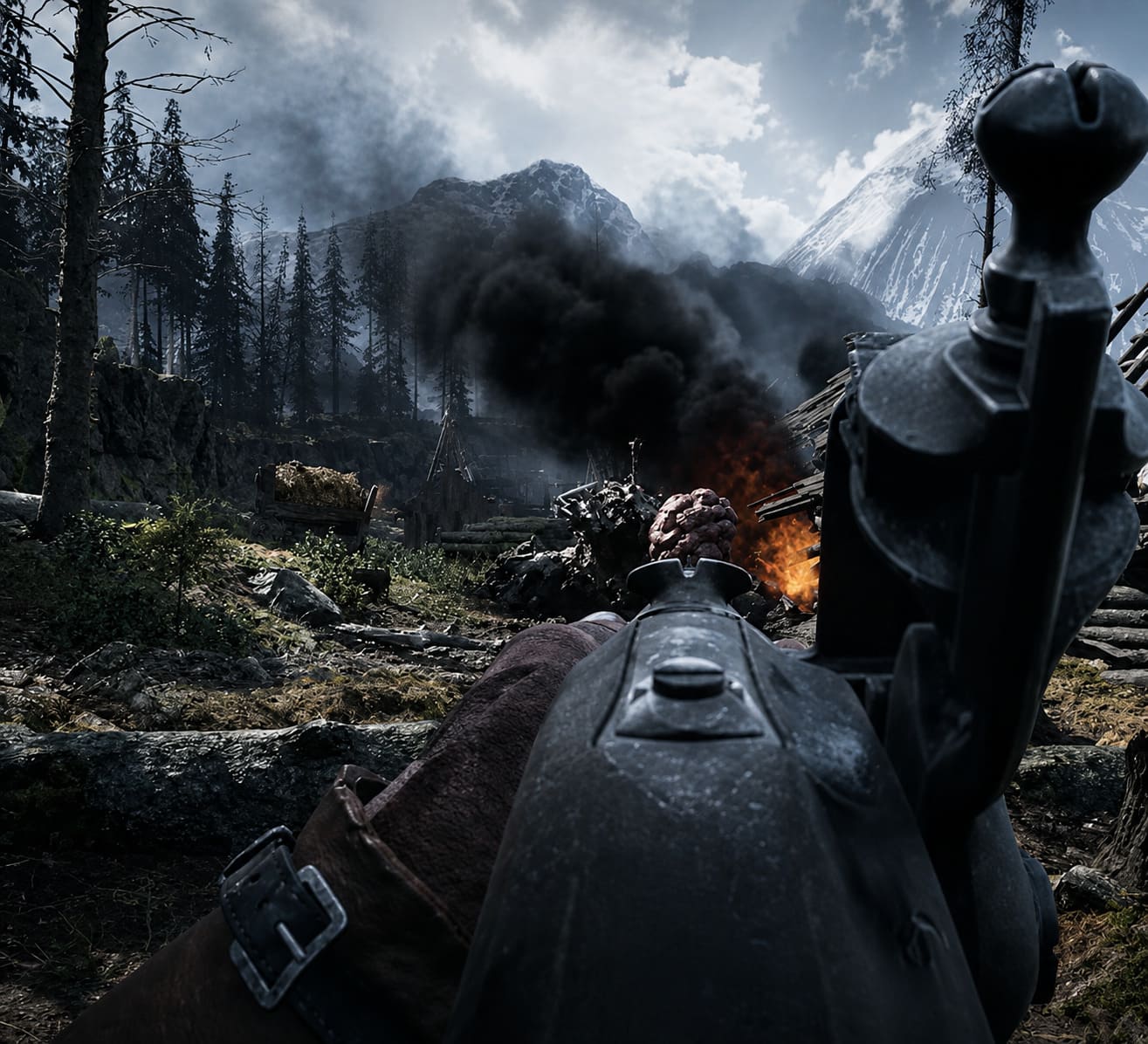
You might recognize:
- Military uniforms
- Broken armor
- Old tools
- Battlefield equipment
Their humanity is gone, but traces of their previous life remain.
That visual storytelling is something great horror games do extremely well.
Rather than telling players through dialogue, the environment itself constantly reminds you that every monster used to be a real person.
I always find that far more unsettling than faceless monsters.
The Chateau Is More Than Just a Safe Zone
Many extraction games include a hub where players upgrade equipment before returning to combat.
The Chateau appears to go much further.
Instead of functioning as a glorified menu, it’s presented as one of humanity’s final surviving strongholds.
Different political groups coexist there.
Religious organizations have their own beliefs.
Military factions pursue separate goals.
Researchers desperately search for answers.
That creates the possibility that not every mission exists simply to collect loot.
Some expeditions may actually reveal more about the world’s collapse.
If the developers continue expanding that narrative after release, the Chateau could become one of the strongest parts of the game.
The Survivors Actually Feel Like Characters
Another thing I appreciated is that the playable cast doesn’t seem like interchangeable skins.
Each survivor carries emotional baggage from the collapse.
| Character | Background | Gameplay Role | My Impression |
|---|---|---|---|
| Captain Jean-Luc Fontaine | Former Napoleonic officer haunted by impossible decisions. | Team leader. | Perfect for coordinated squads. |
| Silas Thorne | British deserter who chose survival over duty. | Stealth specialist. | Probably my first choice for solo play. |
| Dr. Amara Vance | Physician searching for answers after failed experiments. | Support and chemistry. | One of the most original concepts. |
| Countess Eleonora | Noblewoman driven by revenge. | Melee duelist. | High-risk but rewarding gameplay. |
| Mateo Rossi | Military engineer and trap expert. | Area control. | Ideal for defensive teams. |
| Chloe | Survivor raised entirely after civilization collapsed. | Mobility and scavenging. | Likely underestimated but extremely useful. |
Rather than giving everyone generic military backgrounds, each story reflects a different aspect of society during Europe’s downfall.
That variety makes the world feel much more believable.
Why Extraction Mechanics Actually Fit This World
I’ve played plenty of extraction games where losing equipment feels frustrating simply because the mechanics demand punishment.
Here, however, the system feels naturally connected to the lore.
When supplies are limited…
When every expedition risks death…
When humanity barely survives…
…bringing valuable resources back home should feel meaningful.
Knowing you’ll lose rare equipment if you fail immediately raises the stakes.
It transforms every decision into risk management.
Do you search one more abandoned village?
Do you investigate another ruined church?
Or do you leave while you’re still alive?
Those moments usually create the best stories.
RPG Progression Looks Surprisingly Deep
Progression appears to be more than simply unlocking stronger weapons.
Players gradually develop specialized skills and professions.
Examples include:
- Blacksmithing
- Gathering
- Alchemy
- Equipment crafting
That’s something I hope receives plenty of post-launch support.
Extraction games become far more engaging when players develop their own identities instead of everyone eventually using identical builds.
A dedicated alchemist should feel completely different from a trap-building engineer.
Likewise, someone focused on crafting ought to contribute to the community in meaningful ways beyond simply dealing damage.
Atmosphere Might Become HUNGER’s Greatest Strength
Visual fidelity alone never keeps me playing a game.
Atmosphere does.
Everything shown so far suggests HUNGER understands that.
Fog-covered battlefields.
Collapsed monasteries.
Burned villages.
Stone fortresses.
Dark forests hiding infected soldiers.
Combined with slow firearm combat and heavy melee fighting, the entire experience looks oppressive in the best possible way.
Rather than overwhelming players with endless action, the game seems designed to make silence just as frightening as combat.
That’s exactly what survival horror should accomplish.
HUNGER Game Skill Tree & Mastery Guide: Best Builds and No-Wipe Mechanics Explained (2026)
My Biggest Hope Before Release
No game launches perfectly.
I’ve learned that lesson countless times.
What matters is whether the developers continue improving the experience after release.
For HUNGER, my biggest hope isn’t bigger maps or stronger weapons.
It’s deeper storytelling.
The world they’ve created has enormous potential.
I’d love to uncover journals from fallen officers, abandoned laboratories researching the Bacterium, ruined cathedrals hiding desperate survivors, and forgotten battlefields that slowly reveal how Europe collapsed.
Those discoveries often stay with players much longer than loot rewards ever do.
Final Thoughts
After following countless upcoming survival games over the years, it’s surprisingly rare for one to genuinely stand apart.
HUNGER manages to do that through its setting alone, but what keeps my interest is how consistently everything connects together.
The Napoleonic era influences the weapons.
The weapons influence the pacing.
The pacing reinforces the horror.
The horror strengthens the survival mechanics.
And all of it feeds back into a world where every expedition feels like a desperate attempt to preserve what little humanity remains.
Of course, the final verdict will depend on balance, technical performance, long-term content, and developer support after release.
Still, as someone who has spent hundreds of hours exploring extraction shooters, survival RPGs, tactical military games, and atmospheric horror experiences, I can honestly say HUNGER is one of the few upcoming titles that feels like it’s trying to build its own identity instead of copying what’s already popular.
If the developers successfully deliver on the ideas they’ve presented, this could become one of the most memorable extraction RPGs of the decade—not because it’s bigger than its competitors, but because it dares to feel different.
And in today’s gaming landscape, that’s exactly what I want to see.