What Is the Uprising Rule in Virtua Fighter? New Battle Rules Explained
I’ve put more hours into fighting games than I’d ever admit in a public setting. The kind of hours where you start recognizing frame traps in your sleep and arguing with yourself about whether a jab was actually +2 or just felt like it. So when SEGA and RGG Studio started pulling the curtain back on the new direction for Virtua Fighter, my first reaction wasn’t hype. It was suspicion.
Then the details kept coming: Flow Guard, Break & Rush, Stunner Combos… and finally the thing that made the whole community pause mid-rant — the Uprising Rule.
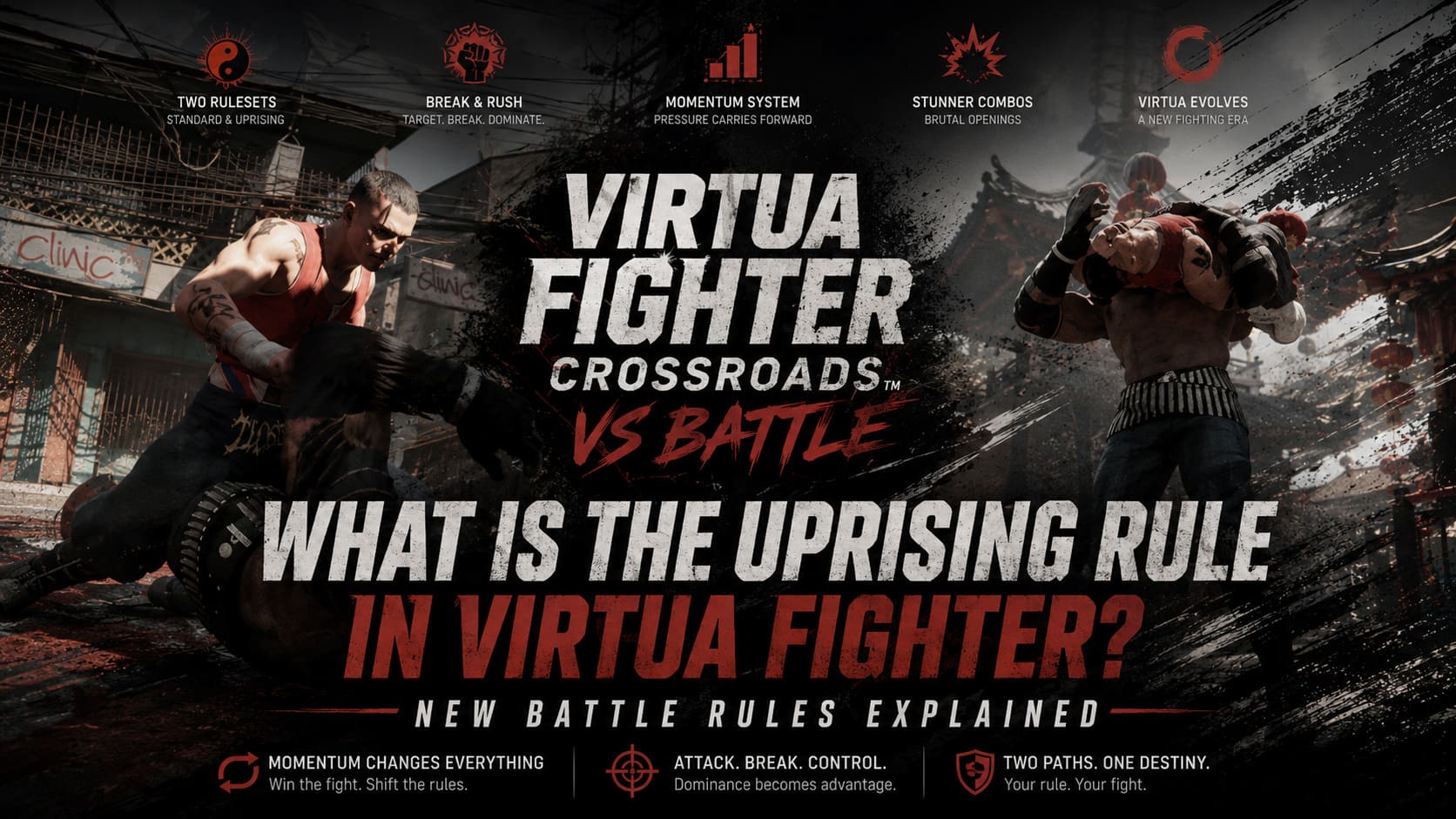
This isn’t just another “new mode.” It feels like someone took the DNA of Virtua Fighter, shook it until the old assumptions fell out, and rebuilt it around momentum instead of purity.
And yeah, that alone is already splitting the room.
Virtua Fighter Crossroads New Characters and Complete Roster Analysis
Two Rules, Two Philosophies: Standard vs Uprising
Before anything else, you’ve got to understand that the game is now effectively running on two parallel identities. One is familiar. Almost sacred. The other feels like it came from a different design universe.
Standard Rule – The Museum Piece That Still Slaps
Standard mode is classic Virtua Fighter through and through. No gimmicks. No safety nets. Just spacing, reads, punishment, and the eternal dance of advantage states.
It plays like this:
- You win by depleting health or scoring a ring out
- First to three rounds takes the match
- Neutral game is everything — absolutely everything
This is the version competitive players will immediately recognize. The kind of mode where you lose because you hesitated for 0.3 seconds, not because the game decided to give your opponent a comeback miracle.
It’s cold. Precise. Almost surgical. And honestly? That’s why people love it.
Uprising Rule – The Momentum Engine That Won’t Let Go
Now Uprising is where things get messy in the best possible way.
Instead of treating every round as a clean reset of health bars and positioning, Uprising introduces a momentum-driven system that actively tracks how the fight is flowing. Not just damage. Not just hits. Actual pressure, aggression, and control of tempo.
If Standard is chess, Uprising is chess where the board slowly tilts depending on who’s dominating. The more you control the fight, the more the system starts to subtly bend in your favor. And I don’t mean cosmetic effects. I mean mechanical shifts that actually affect how your attacks behave.
How Uprising Actually Feels in Motion
After digging through developer commentary and community breakdowns, a rough picture emerges: when you’re winning exchanges consistently, the game starts rewarding you with altered frame advantages, more oppressive knockback behavior, and reduced ability for opponents to reset neutral easily.
This creates a feeling where momentum is no longer abstract — it becomes something you can feel in every exchange. Every hit starts to matter not just for damage, but for how the next five seconds of the match will unfold.
Break & Rush + Uprising = Controlled Violence
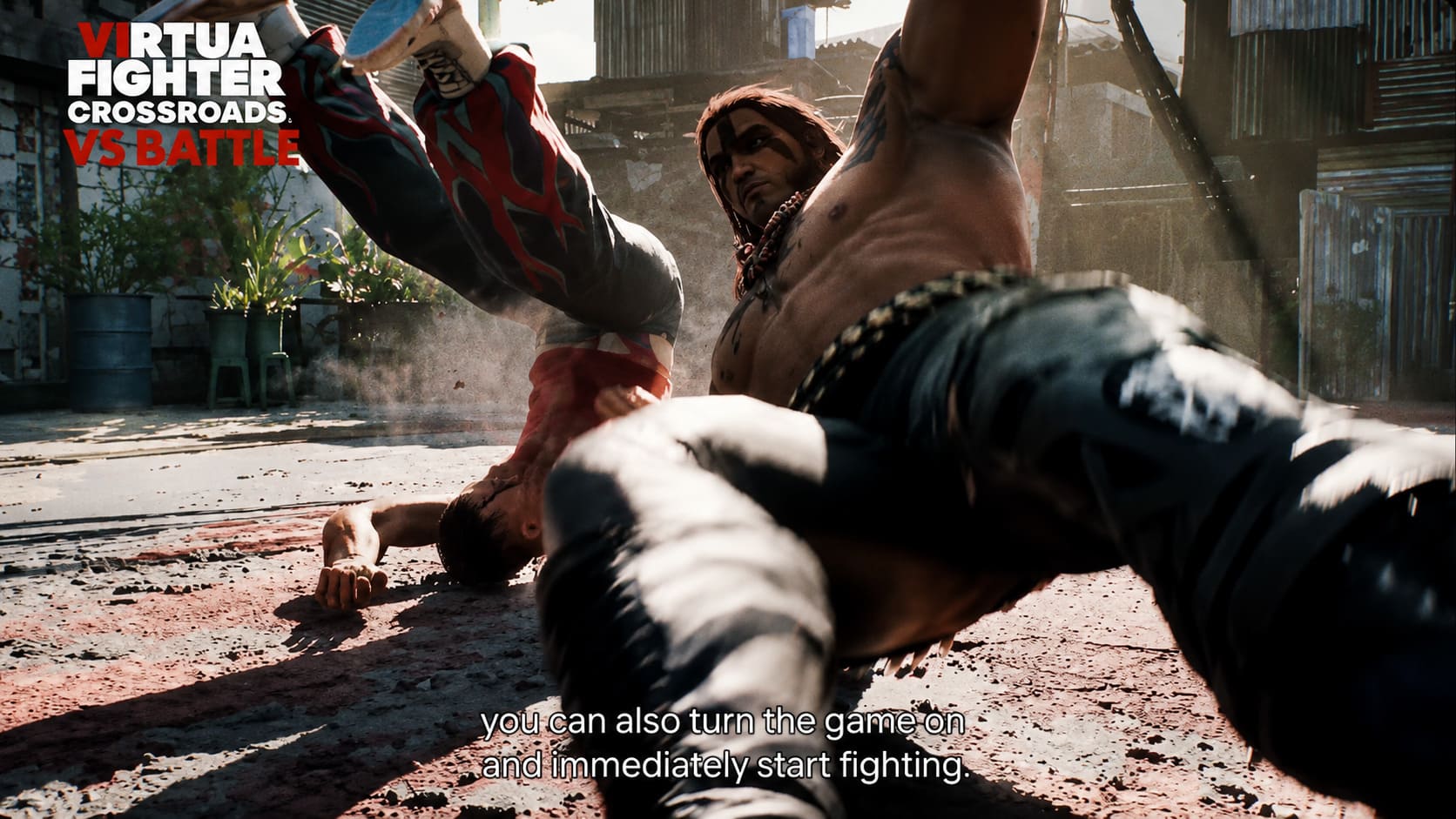
The real nightmare (or dream, depending who you ask) comes when Uprising interacts with the Break & Rush system. Break & Rush is already aggressive by design, targeting specific body regions — legs, arms, torso — building up damage until something gives.
Once a region breaks, you unlock huge offensive opportunities. Now combine that with momentum carryover and things get ugly fast.
- You focus a player’s legs in Round 1
- They enter Round 2 already structurally compromised
- You start Round 2 with momentum advantage
- Their defensive options shrink immediately
This creates a snowball effect that traditional Virtua Fighter actively avoided for decades. And that’s exactly why people are arguing.
Standard vs Uprising – The Core Difference
| Feature | Standard Rule | Uprising Rule |
|---|---|---|
| Match Flow | Reset each round | Momentum carries forward |
| Core Focus | Neutral, spacing, punishment | Pressure, aggression, control |
| Balance Philosophy | Absolute equality | Performance-based advantage shifts |
| Comeback Design | Pure skill, no assist mechanics | Momentum can amplify leads |
| Player Expression | Defensive precision rewarded | Offensive dominance rewarded |
Why the FGC Is Losing Its Mind (Again)
Every fighting game community has that moment where something new drops and everyone pretends they’re fine while secretly refreshing Twitter every 12 seconds. This is one of those moments.
The debate is basically two camps yelling past each other.
The “This Is Exactly What We Needed” Crowd
These players see Uprising as evolution, not betrayal. They argue that modern fighting games need spectacle, momentum systems make matches more exciting to watch, and new players struggle less with pure defensive stalemates.
- Enhanced Spectator Value through dramatic shifts
- Fresh tactical layers beyond old combo routes
- Diverse playstyles rewarding aggression
The “Don’t Touch My Frame Data Religion” Crowd
Then you’ve got the purists. Their concerns are sharp: risk of splitting the player base, fear of reduced competitive integrity, and concern that early leads become too oppressive.
Virtua Fighter has always been built on one idea — you lose because you were outplayed, not because the system tilted the outcome. Uprising threatens to blur that line.
What This Does to Competitive Play
If tournaments stick with Standard mode, nothing changes. The competitive scene continues its legacy of tight, methodical execution.
But if Uprising gets adopted at high-level play, everything shifts. Tier lists evolve, aggression becomes king, and training focuses less on neutral perfection and more on momentum control.
It could even split the competitive ecosystem into two parallel scenes running inside the same game.
Final Thoughts: A Franchise Standing at a Crossroads
The introduction of Uprising doesn’t erase what made Virtua Fighter great. Instead, it exposes how carefully that greatness was constructed in the first place. Now the series is doing something rare — betting on emotion over purity in one half of its identity.
Whether it succeeds or collapses into a side mode curiosity depends entirely on how players and tournaments embrace it. Either way, SEGA isn’t playing safe here. And that alone makes this one of the most interesting design risks in modern fighting games. Do we want fighting games to be perfectly fair… or dangerously exciting?
Virtua Fighter just refused to answer that question for us.