Best Co-Op Indie Horror Games Like Lethal Company and Choo-Choo Charles
The indie horror space didn’t just “evolve” in the last few years — it got shoved off a cliff and came back wearing a clown mask, screaming into proximity chat. There was a time when horror games meant slow corridors, scripted jumpscares, and a flashlight that dies at the worst possible moment. Now it’s you and your friends yelling over each other while a mutant entity drags someone into the ceiling and the rest of the squad argues about loot.
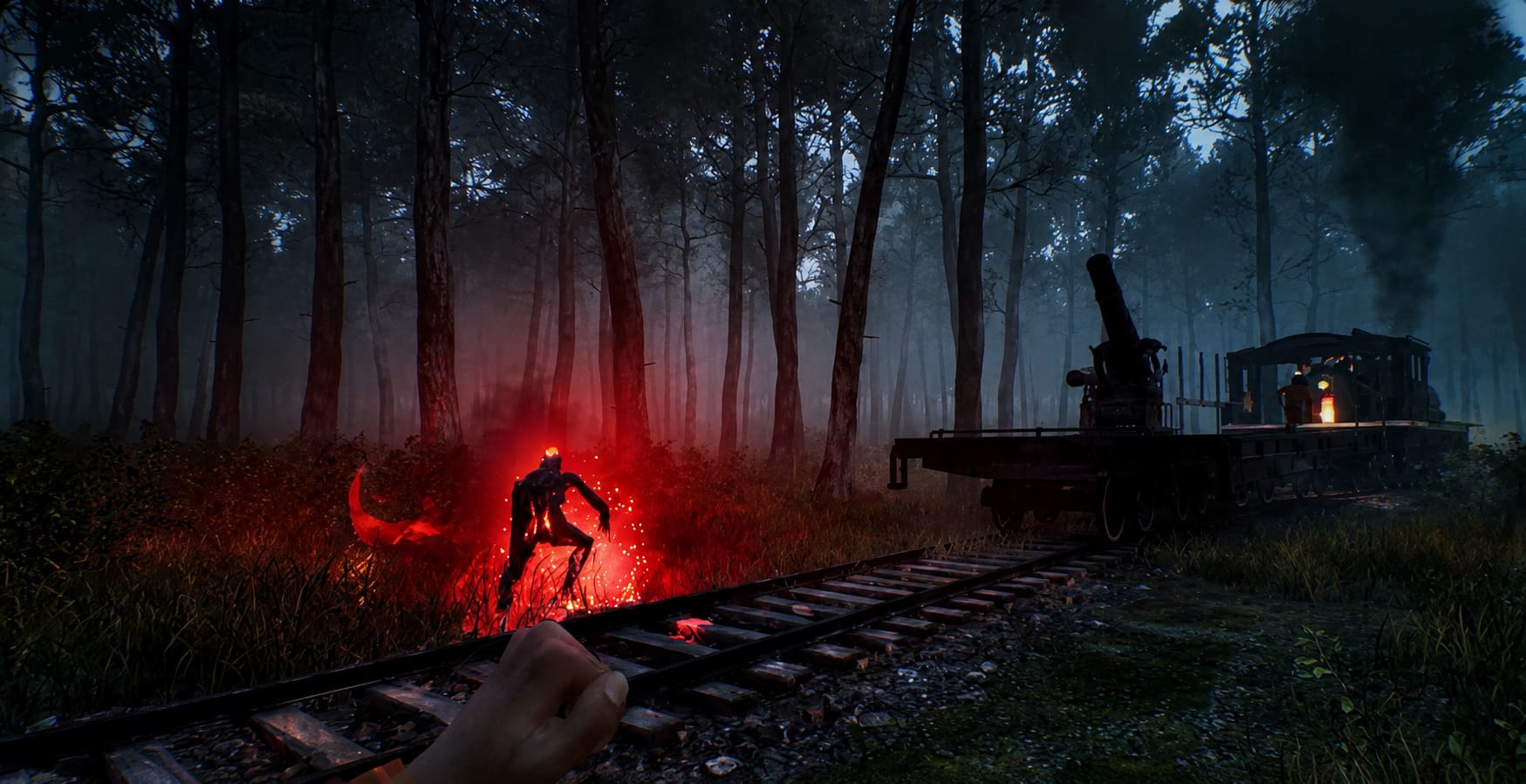
Games like Choo-Choo Charles and Lethal Company didn’t politely join the genre — they hijacked it. One turned a childhood train fear into a roaming boss battle across an open island. The other turned corporate scavenging into a comedy-horror disaster simulator where failure is basically part of the business model. That mix of panic and laughter is exactly what keeps players hooked.
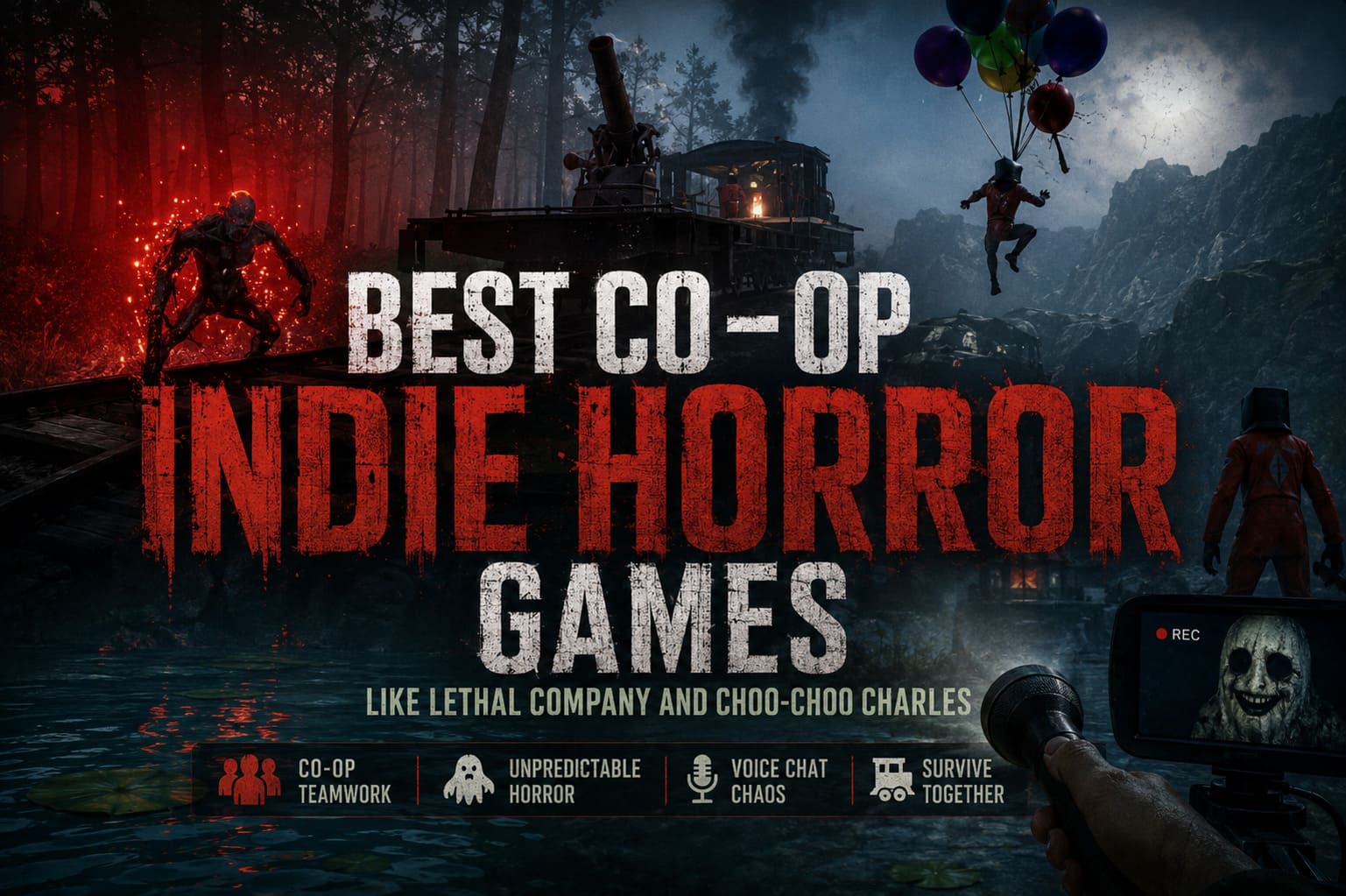
If you’ve already min-maxed your train upgrades or memorized every moon in Lethal Company, you’re probably chasing that same chaotic adrenaline loop again. These are the indie horror co-op games that come closest — not clones, but chaotic cousins of the same beautiful mess.
Forest Escape Last Train Early Access Release Date, Gameplay, and Trailer Details
Why Modern Co-Op Horror Works So Well
What makes this new wave hit differently is that it never fully takes control away from the player. You always think you can handle it. That illusion lasts right until everything collapses at once.
Voice chat becomes part of the gameplay. Planning breaks down into screaming. Coordination turns into improvisation. The horror is no longer just in the monster — it’s in watching your team fall apart in real time.
Content Warning — Horror as Viral Chaos
Content Warning takes everything Lethal Company started and filters it through internet culture. You and your friends don’t just survive monsters — you film them for content. The goal is to go viral on “SpookTube” by capturing terrifying moments deep underground.
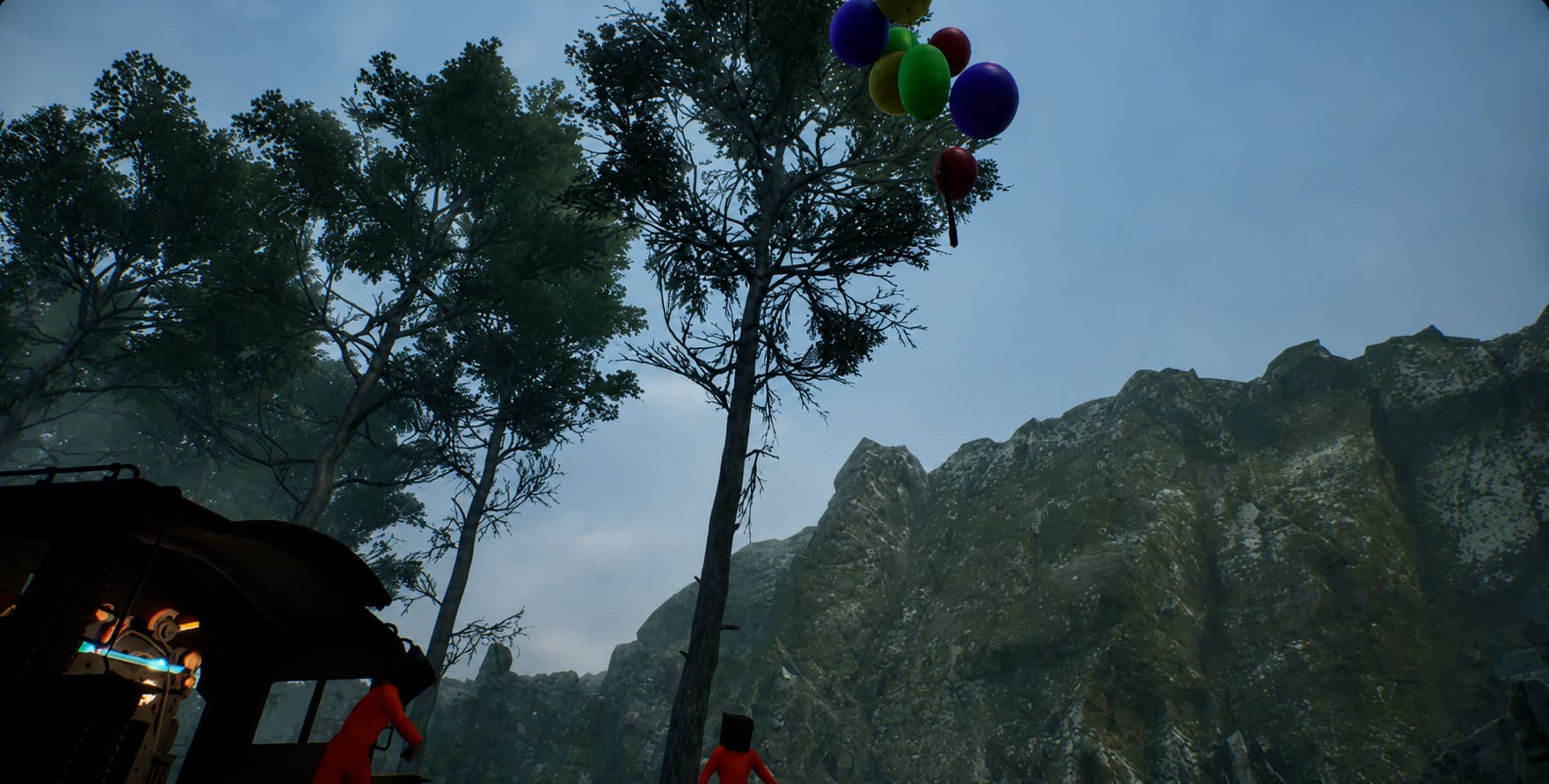
The loop is simple but dangerously effective: go down, record something horrifying, try to get out alive. The problem is that the underground world actively tries to turn your entire run into a disaster clip. One moment you’re framing a shot, the next your teammate is being dragged into darkness still holding the camera.
It’s chaotic physics-based horror where failure is not just expected — it’s monetized. And that’s exactly why it works.
Phasmophobia — The Voice That Gets You Killed
Phasmophobia remains one of the most influential co-op horror games ever made. You’re paranormal investigators entering haunted locations to identify the type of ghost haunting the place. But the real twist is that the game listens to you.
Speaking out loud can trigger reactions. Saying the wrong name can start a hunt. Even casual communication becomes risky when you realize the entity is paying attention.
Compared to more chaotic games, Phasmophobia is slower and more methodical, but the tension is arguably higher. It builds silence, then snaps it instantly with panic.
Pacific Drive — Driving Through Reality Breaking Apart
Pacific Drive looks like a survival driving game, but emotionally it sits in the same space as Choo-Choo Charles. Your car is everything — your shield, your storage, your only safe zone in a world that actively wants to dismantle it piece by piece.
You explore the Olympic Exclusion Zone, a surreal and hostile environment filled with anomalies and environmental hazards. Every trip outside the garage feels like gambling with reality itself.
The deeper hook is the bond with your vehicle. Every repair and upgrade feels personal because it directly affects whether you survive the next run.
The Outlast Trials — Structured Panic With Friends
The Outlast Trials takes the DNA of the Outlast series and reshapes it into co-op horror designed around controlled chaos. You and your team are test subjects forced into psychological experiments during the Cold War era.
Each trial mixes stealth, puzzles, and pursuit scenarios where coordination matters — until it doesn’t. The game is carefully structured, but players still manage to break it through panic and miscommunication.
It’s less improvisational than indie hits like Lethal Company, but it delivers a more cinematic and tightly designed version of cooperative fear.
Voidtrain — Survival on a Train Through the Void
Voidtrain takes the “moving base under constant threat” idea and pushes it into interdimensional absurdity. You’re building and upgrading a train that travels through a floating void filled with debris, hazards, and strange creatures.
The survival loop revolves around resource gathering, expansion, and defending your mobile base while it moves through unknown space. It’s less pure horror and more atmospheric survival tension, but the sense of isolation is strong.
Co-op makes everything more unpredictable — systems break, roles overlap, and the train becomes a shared disaster management project.
Labyrinthine — Pure Maze Survival Stress
Labyrinthine strips co-op horror down to its core idea: you are lost, and something is hunting you. The game throws players into massive mazes filled with shifting layouts, environmental puzzles, and unpredictable monsters.
Each creature behaves differently. Some respond to sound, others to sight, forcing teams to constantly adjust their approach. Communication becomes essential, but so does silence.
It’s a game built around disorientation, and it never lets you fully feel safe.
Comparison Table — What Each Game Does Best
| Game | Core Focus | Co-Op Style | Horror Type | Replay Value |
|---|---|---|---|---|
| Content Warning | Viral content survival | Chaotic teamwork | Comedy horror | Very high |
| Phasmophobia | Ghost investigation | Structured roles | Psychological tension | High |
| Pacific Drive | Vehicle survival | Solo-focused / indirect co-op feel | Atmospheric dread | High |
| The Outlast Trials | Mission-based survival | Coordinated teamwork | Cinematic horror | Medium–High |
| Voidtrain | Crafting survival | Full co-op building | Light horror tension | Medium |
| Labyrinthine | Maze survival | Split-role teamwork | Pure chase horror | High |
Why This Genre Keeps Growing Instead of Settling
The reason this style of horror keeps exploding is simple: unpredictability shared between players. It’s not just about monsters or environments — it’s about human reaction under pressure.
Traditional horror isolates you. Modern co-op horror does the opposite. It creates systems where failure is social, loud, and often hilarious even when it’s terrifying.
The moment someone disappears from voice chat mid-run is often more impactful than any scripted jump scare. That’s the design language this genre has accidentally perfected.
Final Thoughts — Horror Is Now a Group Experience
The indie horror scene has found its rhythm in chaos. These games don’t rely on isolation anymore — they rely on shared breakdowns, unstable systems, and unpredictable player behavior.
Whether you’re upgrading a haunted train, filming your own demise for views, or getting lost in a maze that refuses to behave logically, the core idea is the same: horror hits harder when it happens to a group that thought they were in control.
And right now, that formula isn’t slowing down — it’s getting louder, stranger, and even more unstable with every new release.