Avatar Legends The Fighting Game Closed Beta Guide: How to Get Access, Steam Preorder Bonuses, and Gameplay Mechanics Explained
When I first heard that Avatar Legends: The Fighting Game was being developed, I honestly expected another licensed arena fighter that would rely more on nostalgia than solid mechanics. We’ve seen plenty of anime and TV adaptations fall into that trap over the years. After spending time with countless competitive fighters—from classic arcade titles to modern rollback-heavy esports games—I approached this beta with cautious expectations.
After several matches and hours experimenting in training mode, I walked away with a completely different opinion.
This isn’t simply an Avatar skin placed over a traditional fighter. The developers have built a combat system that actually captures what bending feels like while still rewarding timing, spacing, and mechanical skill. It’s surprisingly technical without becoming inaccessible, and that balance is something many modern fighting games struggle to achieve.
If you’re wondering whether the Closed Beta is worth joining—or whether the full release deserves a spot on your wishlist—here’s everything I learned.
Getting Into the Closed Beta
Access to the beta is refreshingly straightforward.
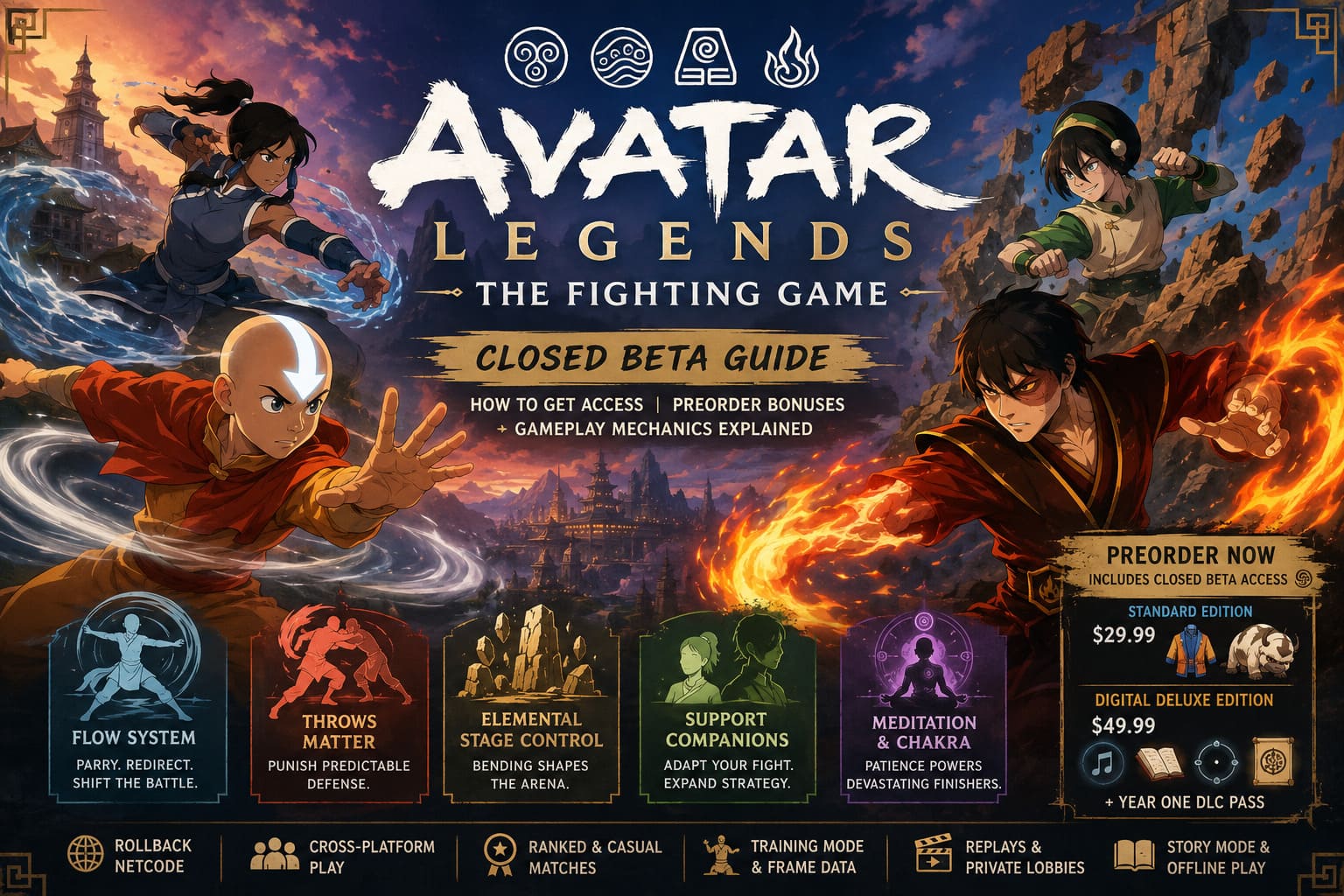
Players who preorder the game on their preferred platform automatically receive beta access during the testing period. Those who don’t want to commit to a purchase still have a chance, as the developers continue distributing a limited number of beta keys through community events and creator partnerships.
If your beta client doesn’t immediately appear after purchasing, don’t panic. Restarting Steam or your console launcher usually solves the issue, while some players receive separate activation instructions through their account email.
For a multiplayer beta, the onboarding process is pleasantly simple.
A Surprisingly Fair Pricing Model
One thing that immediately stood out to me wasn’t even gameplay—it was pricing.
Over the past few years, premium fighting games have become increasingly expensive. Seeing Avatar Legends launch with a much lower entry price feels like a deliberate decision to attract both longtime fighting game fans and casual Avatar players.
| Edition | Price | Includes |
|---|---|---|
| Standard Edition | $29.99 | Full game, Closed Beta access, exclusive costume colors, Samurai Appa cosmetic. |
| Digital Deluxe Edition | $49.99 | Everything in Standard plus digital soundtrack, art book, HUD customization, and Year One DLC Pass. |
The Deluxe Edition naturally offers more value for dedicated fans, but I appreciate that the Standard Edition doesn’t feel stripped down.
Even better, every preorder grants participation in a community vote that determines one future downloadable fighter. That’s a small feature, but it gives players a sense of involvement before launch.
The Combat Feels Different Immediately
The very first match told me this wasn’t trying to imitate existing anime fighters.
Instead of overwhelming players with complicated command lists, Avatar Legends starts with a clean four-button layout.

- Light attacks for speed.
- Medium attacks for spacing.
- Heavy attacks for damage.
- The universal Flow button.
That last button changes everything.
Rather than functioning as another special attack, Flow becomes the center of nearly every interaction.
At first it feels unusual.
After a few matches, it becomes difficult to imagine the game without it.
The Flow System Is the Real Star
Every fighting game has one mechanic that defines its identity.
Street Fighter has Drive.
Guilty Gear has Roman Cancels.
Avatar Legends has Flow.
Instead of simply blocking incoming attacks, players can enter Flow Stance, allowing them to redirect pressure, reposition themselves, and conserve momentum.
What impressed me most wasn’t that Flow acts like a parry.
It’s that every attack changes your character’s movement differently.
- Mid attacks push you backward.
- High attacks trigger evasive movement.
- Projectiles disappear completely.
This constantly changes positioning during neutral, making every exchange feel dynamic rather than repetitive.
Of course, Flow isn’t free.
Using it consumes Chi, and careless players will eventually become vulnerable if they exhaust their resources.
That risk-versus-reward balance gives every defensive decision meaningful consequences.
Throws Finally Matter Again
Many modern fighting games accidentally encourage overly defensive gameplay.
Avatar Legends cleverly avoids that problem.
Flow cannot defend against throws.
If someone becomes predictable by relying on defensive mechanics too often, experienced opponents can punish them immediately with grabs and command options.
As someone who enjoys games where reading your opponent matters as much as executing combos, I found this incredibly satisfying.
Defense is powerful—but never automatic.
Elemental Bending Changes Stage Control
This might be my favorite design decision in the entire game.
Instead of disappearing projectiles flying across the screen, bending abilities actually remain part of the battlefield.
When an earthbender creates a stone pillar, that obstacle stays there.
Players now have to think differently about positioning.
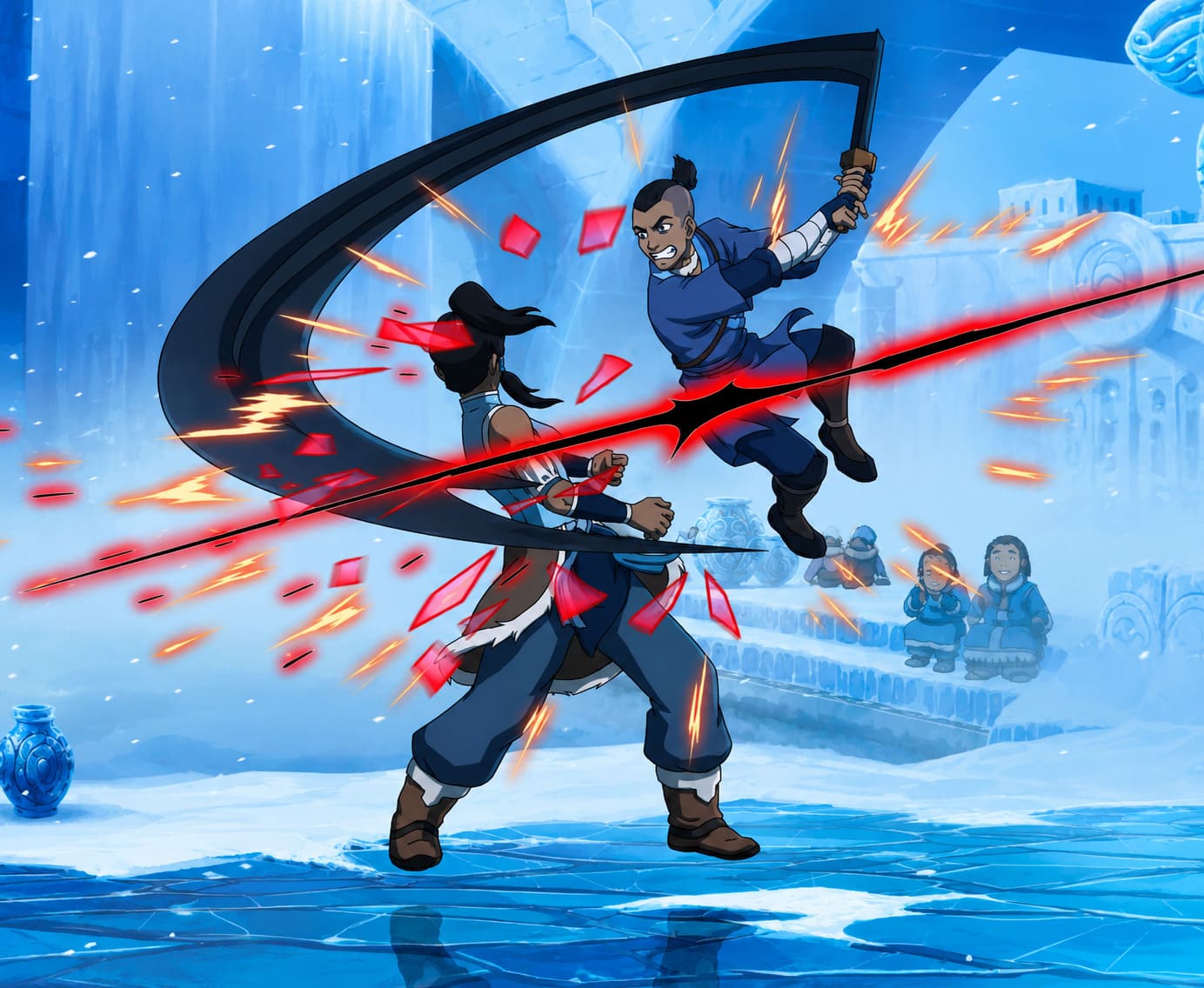
- Jump around environmental obstacles.
- Control space more carefully.
- Use terrain defensively.
- Force awkward movement from opponents.
It sounds like a small detail until you’re actually fighting around multiple environmental objects.
Suddenly spacing becomes far more interesting than simply throwing projectiles from fullscreen.
Support Characters Add Another Layer
Rather than treating assists as combo extenders alone, support characters modify how your fighter behaves.
While testing Aang, I noticed that changing supports genuinely altered my approach.
Some improved aerial mobility.
Others enhanced movement control.
Instead of feeling like secondary attacks, these companions become extensions of your overall strategy.
That flexibility should create plenty of matchup variety once the competitive scene develops.
Meditation Rewards Patience
Aggressive players aren’t the only ones rewarded.
Holding Flow safely for an extended period gradually transitions your character into meditation.
Meditation generates Chakra.
Chakra fuels stronger supers and cinematic finishing techniques.
I like this system because it naturally encourages multiple playstyles.
- Rushdown players constantly pressure.
- Defensive players build valuable resources.
- Both strategies remain viable.
That’s excellent balancing philosophy.
The Animation Is Outstanding
I’ve played plenty of beautiful fighting games, but Avatar Legends surprised me.
Rather than using 3D models with cel shading, every fighter is hand-drawn.
The result looks remarkably close to the animated series.
Movements feel fluid.
Special attacks transition naturally.
Even idle animations contain subtle personality that longtime Avatar fans will immediately recognize.
During intense matches, the visuals remain readable despite the colorful elemental effects—a balance that many anime fighters fail to achieve.
Rollback Netcode Continues to Be the Industry Standard
Thankfully, the developers didn’t compromise online performance.
Rollback netcode is included from day one alongside full cross-platform multiplayer.
During beta testing, online matches felt stable enough that I quickly stopped thinking about connection quality—which is exactly what good networking should accomplish.
- Ranked matchmaking
- Casual matches
- Private lobbies
- Replay system
- Training mode with frame data
- Offline versus
- Story mode
For competitive players, having detailed frame data built directly into training mode is especially welcome.
The Current Roster Already Feels Strong
Although additional downloadable characters are already planned, the launch lineup covers many fan favorites.
| Fighter | Fighting Style |
|---|---|
| Aang | Airbending mobility. |
| Korra | Balanced elemental offense. |
| Zuko | Aggressive fire attacks. |
| Katara | Technical water control. |
| Azula | Fast pressure and lightning. |
| Toph | Defensive earth manipulation. |
| Sokka | Weapon-focused tactics. |
| Kyoshi | Heavy power and range. |
Each fighter immediately feels distinct.
No one appears to simply reuse another character’s moves with different visual effects, which is something licensed games have struggled with historically.
Moonlight Peaks Food Guide: The Meals I Always Cook First for Stamina, Mana, and Long Vampire Nights
PC Performance Looks Accessible
Another pleasant surprise is optimization.
The required hardware isn’t excessive by today’s standards.
Players with older mid-range gaming PCs should still be able to enjoy solid performance.
| Component | Minimum Requirement |
|---|---|
| CPU | Intel Core i5-7500 / AMD Ryzen 5 2600 |
| GPU | NVIDIA GTX 970 / AMD Radeon RX 570 |
| Memory | 8 GB RAM |
Final Thoughts
After spending years jumping between competitive fighters, I’ve learned not to judge a game solely by its license.
Avatar Legends genuinely earns attention on its own merits.
The Flow System introduces meaningful defensive decisions.
Persistent environmental bending creates unique neutral-game situations.
Support characters add strategic flexibility.
Rollback networking ensures online play remains enjoyable.
Most importantly, the game actually feels like Avatar.
That might sound obvious, but it’s surprisingly rare for licensed titles to capture the identity of their source material while still standing confidently as competitive games.
Will it replace long-established esports giants overnight?
Probably not.
But it doesn’t need to.
Instead, Avatar Legends seems positioned to become something much more valuable—a fighting game that’s approachable for newcomers while offering enough mechanical depth to keep experienced players experimenting for months.
After my time with the beta, I’m genuinely optimistic.
If the developers continue polishing balance, expand the roster thoughtfully, and support the competitive community after launch, Avatar Legends could become one of the biggest surprises in the fighting game genre this year.
For both Avatar fans and fighting game veterans, this is one release that deserves far more attention than I initially expected.