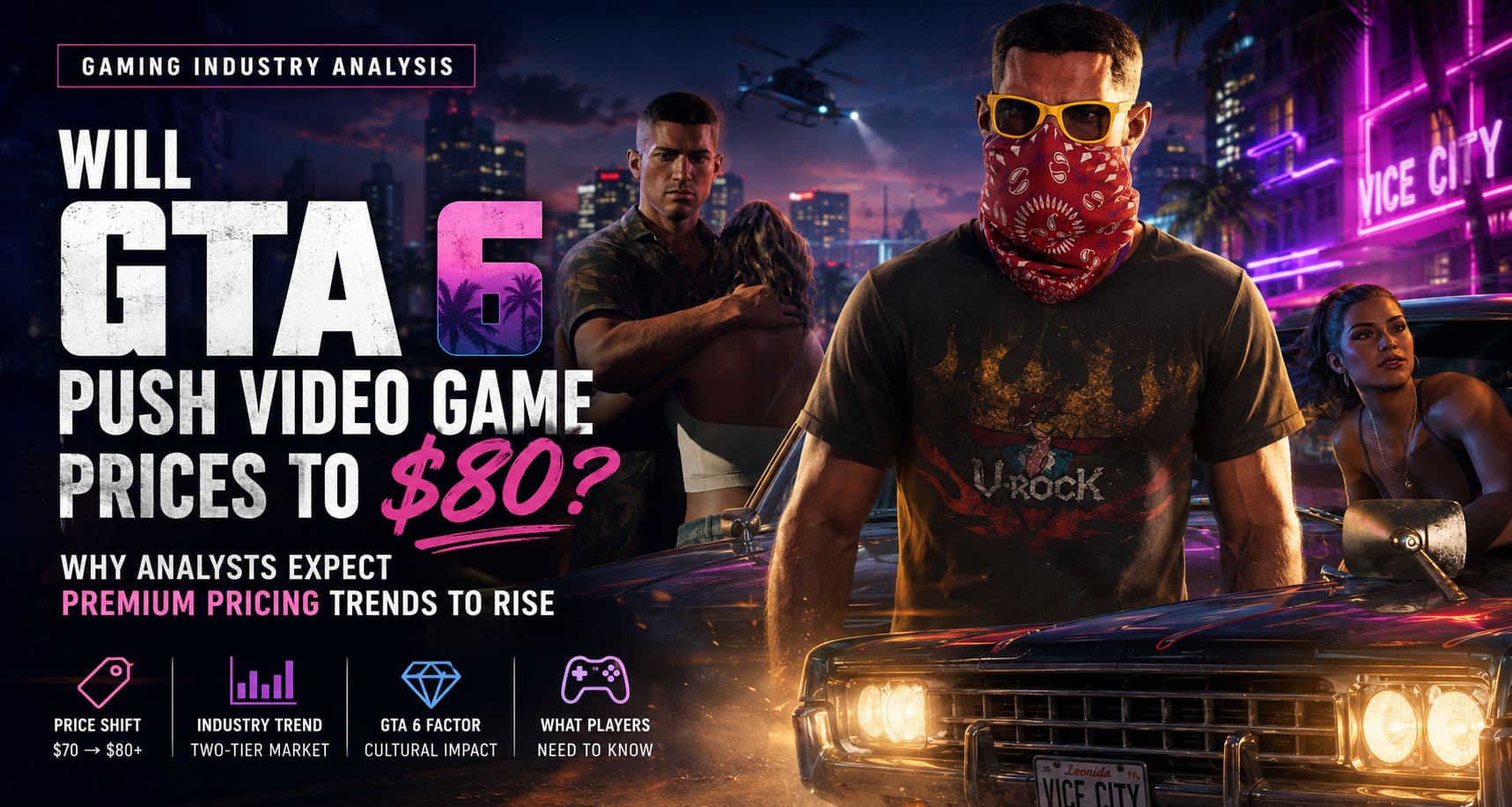
Will GTA 6 Push Video Game Prices to $80? Why Analysts Expect Premium Pricing Trends to Rise
There’s a strange feeling in gaming right now—like the industry is quietly lining up for a price shift that everyone senses but no one fully wants to admit out loud. With Grand Theft Auto VI on the horizon, the conversation around $80 AAA games is no longer just forum speculation. It’s becoming part of how publishers, analysts, and even players mentally prepare for the next era of gaming economics.
As someone who has bounced between indie gems, massive RPGs, competitive shooters, and open-world time sinks for years, I can’t shake the feeling that this isn’t just about one game. It’s about the entire pricing philosophy of modern gaming being rewritten in real time.
Assassin’s Creed Black Flag Resynced Trophy Guide & Platinum Roadmap
The GTA 6 Factor: Why This Game Changes Everything
The weight behind GTA 6 isn’t just hype—it’s structural. Rockstar Games has spent years building a reputation for releasing games that don’t just sell well, but dominate culture itself. When a single title becomes a global entertainment event, pricing stops behaving like a normal market and starts acting more like a luxury release model.
The rumored development cost—spanning hundreds of millions and possibly over a billion including marketing—changes the math completely. This isn’t a typical AAA production cycle anymore. It’s closer to building a long-term digital ecosystem than making a traditional game.
From a player’s perspective, Rockstar games often justify their cost through sheer density. You don’t just “finish” them—you live inside them for months. That’s where publishers begin to argue that $70 simply doesn’t reflect the value being delivered.
Value vs Price: The Industry’s Core Argument
One of the most repeated arguments from executives at Take-Two Interactive is that pricing should match entertainment value. In theory, it makes sense: a $15 movie ticket gives you two hours, while a massive open-world game can stretch into hundreds of hours of engagement.
But as a player who has experienced both polished masterpieces and disappointing launches, this comparison only works when the game actually delivers a complete experience at release. Otherwise, higher pricing feels less like value reflection and more like shifting financial risk onto consumers.
Still, analysts believe GTA 6 is uniquely positioned to break the psychological $70 barrier because demand is essentially unstoppable. This kind of cultural gravity gives publishers leverage they rarely get in the broader market.
The Emerging Two-Tier Pricing System
The most realistic future isn’t a universal jump to $80. Instead, the industry is slowly splitting into tiers where only certain “untouchable” releases can demand premium pricing while others remain competitive or discounted.
The structure being discussed by analysts looks increasingly like a prestige ladder rather than a flat market. This means pricing power depends entirely on cultural relevance, brand strength, and demand elasticity.
| Tier | Example Games | Expected Pricing Behavior |
|---|---|---|
| Elite Cultural Releases | GTA 6, major Rockstar titles | $70–$90+ possible |
| Premium AAA | Major Sony exclusives, large RPGs | Stable at $70 |
| Mid-Tier AAA | Annual franchises and sequels | Frequent discounts and sales pressure |
| Indie & AA Games | Smaller studios and experimental titles | Flexible pricing $20–$50 range |
The key takeaway is simple: not every game can survive a price increase, but a few can force one. GTA 6 sits at the top of that very small list.

Why Players Are Both Angry and Predictable
If you spend time on YouTube discussions or Reddit threads, you’ll notice a strange contradiction. Players complain about rising prices, but also openly admit they will still buy the biggest releases on day one.
This is what analysts call inelastic demand. With culturally dominant games, hype overrides rational budgeting decisions. Even players who insist they will wait often end up purchasing early to avoid missing the shared cultural moment.
However, there is a breaking point. Player tolerance is not infinite, especially when games launch in unfinished states or rely heavily on monetization systems that feel disconnected from the base price.
The Monetization Problem No One Can Ignore
One of the biggest tensions in this entire debate is not just the base price—it’s everything layered on top of it. Modern AAA gaming often includes microtransactions, battle passes, and downloadable content strategies that extend far beyond launch.
Many players argue that if a game is priced at $80, it should represent a complete experience without aggressive monetization systems. The concern is that higher base pricing could simply become an additional revenue layer rather than a replacement for existing monetization.
This is where trust becomes the real currency of the industry. Even if GTA 6 launches at a higher price, its long-term reception will depend heavily on how fairly its online ecosystem is structured.
Subscription Services as the Escape Route
As prices continue to rise, subscription services like Xbox Game Pass and PlayStation Plus are becoming increasingly attractive. Instead of paying full price for multiple games per year, players can access large libraries for a fixed monthly fee.
Financially, the comparison is straightforward. Buying three AAA titles at $80 each can approach $240 annually. A subscription model offers a significantly lower entry point, even if it comes with limitations on ownership and availability.
This shift doesn’t eliminate traditional purchases, but it does change consumer behavior. Many players now mix purchases with subscriptions depending on the type of game and their personal interest level.

My Perspective as a Long-Time Gamer
Having played across nearly every genre—from massive RPGs to experimental indie titles—I don’t think $80 is automatically unreasonable. What matters more is consistency between price, quality, and completeness at launch.
A well-made, content-rich game that respects player time can justify a premium price. A broken or heavily monetized release cannot, regardless of budget or branding. That inconsistency is what fuels most of the frustration in the gaming community today.
GTA 6 represents a turning point not just in pricing, but in trust. If it launches as a polished, complete experience with fair monetization, it may normalize higher pricing across the industry. If it fails to meet expectations, it could slow or even reverse that trend.
Final Outlook: A Market Splitting in Real Time
The future of gaming pricing is not moving in a single direction. Instead, it is splitting into layers where a handful of elite titles define premium pricing standards while the rest of the industry adjusts more cautiously.
At the center of this shift is GTA 6, a game large enough to influence not just its own price, but the expectations for the entire AAA industry. Whether players accept higher prices or push back strongly will determine how the next generation of gaming is priced and consumed.
One way or another, the era of uniform AAA pricing is fading, replaced by a more flexible—and more unpredictable—system where value, hype, and cultural demand decide what a game is truly worth.