The Kharaa Bacterium in Subnautica 2: Is the Plague Truly Gone?
I’ve spent enough time in survival games to recognize when a supposedly “resolved” threat is anything but resolved. And in the Subnautica universe, nothing ever truly disappears. It just waits.
With Subnautica 2 approaching, the conversation in the community has once again turned toward one of the most disturbing pieces of lore in the entire franchise: the Kharaa bacterium.
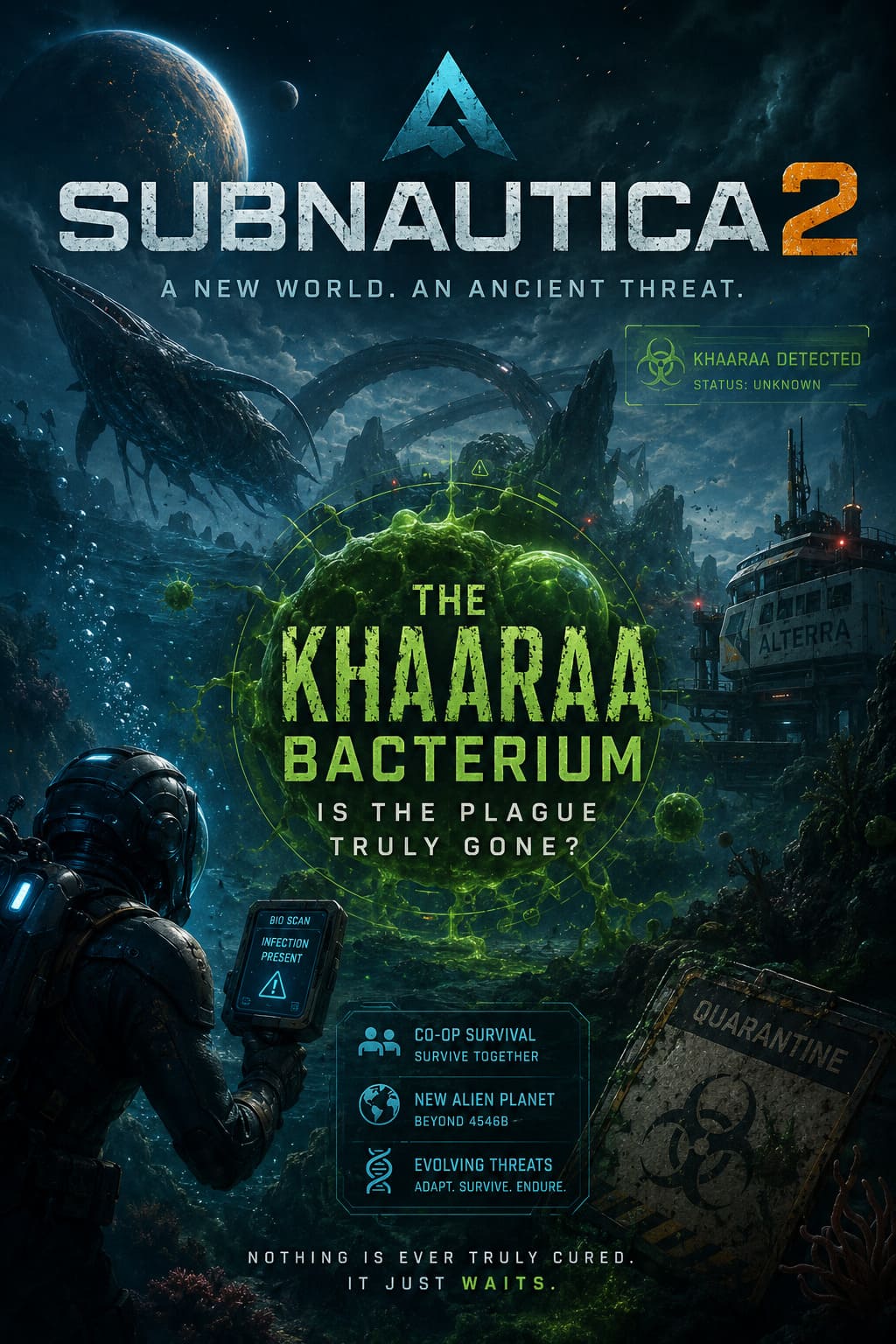
This isn’t just another infection in a sci-fi setting. It’s a galaxy-level catastrophe that shaped civilizations, destroyed species, and nearly erased the Architects themselves.
And now the question returns with force: is Kharaa really gone, or has it simply evolved beyond what we understood?
Leaving 4546B Behind: Why Subnautica 2’s New Setting Works
The Kharaa Bacterium: A Plague That Refused to Stay Dead
The Kharaa bacterium is not just a biological hazard. It is a systemic extinction event disguised as microscopic life. Introduced to Planet 4546B by the Architects, it rapidly spiraled into a civilization-ending outbreak that spread across multiple species and star systems.
What makes it terrifying is not just its lethality, but its behavior. It adapts. It evolves. It spreads with a level of efficiency that feels almost intentional. Entire civilizations collapsed under its weight long before any cure could even be conceptualized.
Even after the events of the original Subnautica, the sense of closure never felt absolute. It always felt like containment rather than elimination.
Why Subnautica 2 Brings Kharaa Back Into Discussion
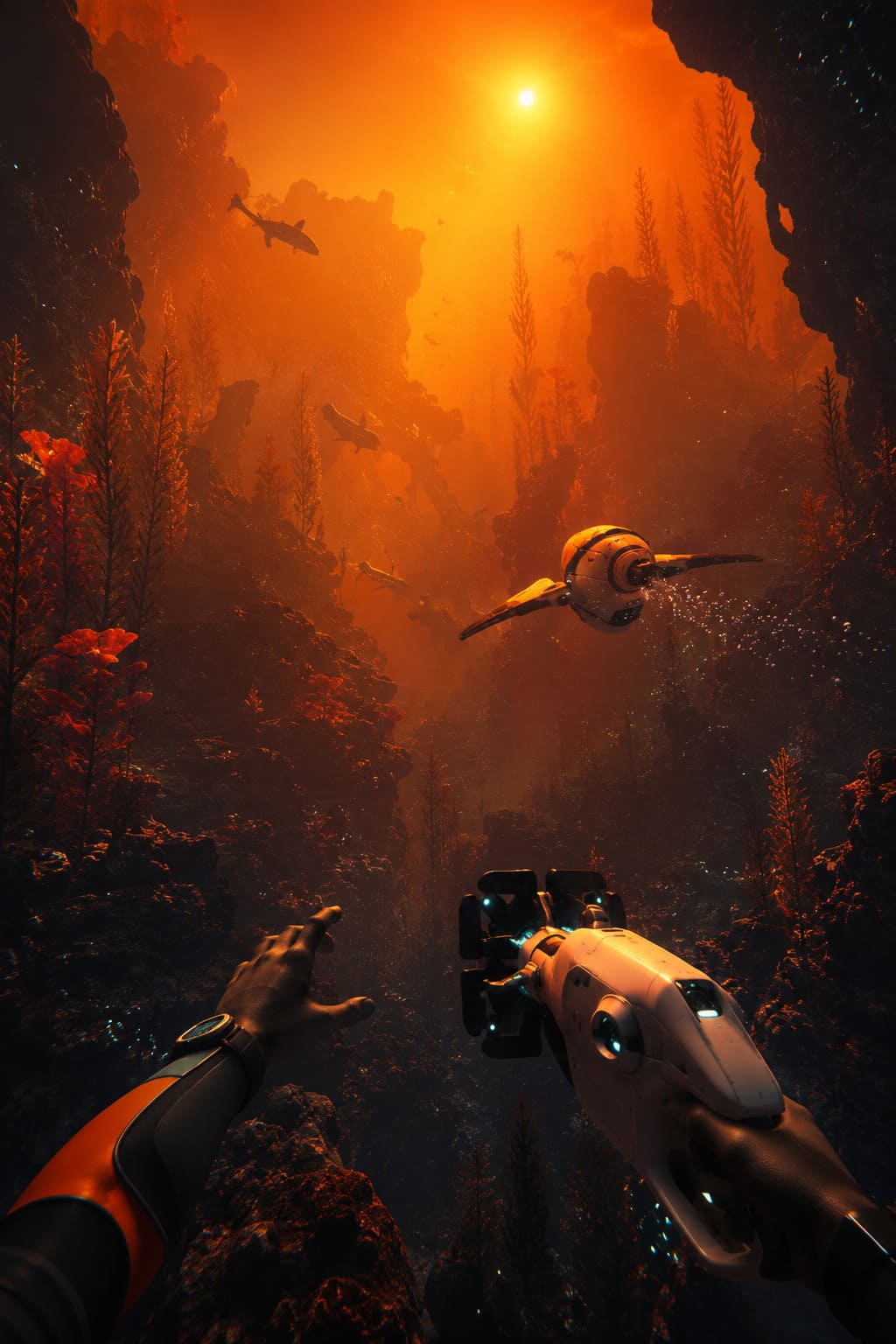
Subnautica 2 expands beyond Planet 4546B into an entirely new world and system. That alone changes everything. A new environment means new ecological rules, new survival challenges, and potentially new biological threats.
The confirmed direction of the game includes:
- A new alien planet unrelated to 4546B
- Expanded co-op survival mechanics
- Deeper systems of environmental interaction
When you combine these elements with the established lore of Kharaa being a galaxy-spanning infection, the possibility of its return becomes more than just fan speculation—it becomes a logical continuation of unresolved narrative threads.
My Perspective as a Survival Game Player
From my experience with survival games, developers rarely introduce existential threats like Kharaa just to neatly conclude them. These kinds of elements are usually designed to evolve across sequels, shifting form rather than disappearing.
Planet Zazzora Deep Dive: First Impressions of the New Ocean World in Subnautica 2
In Subnautica 2, I don’t expect Kharaa to simply reappear in the same way it did before. If it returns, it will likely be transformed—either biologically, mechanically, or narratively.
And honestly, that approach fits the series better than any clean resolution ever could.

Speculative Evidence and Community Theories
While nothing is officially confirmed, several recurring theories dominate the community discussion:
1. Mutation Hypothesis
The idea that Kharaa has evolved into a more aggressive and adaptive strain, possibly altering ecosystems rather than simply infecting organisms.
2. Corporate Contamination Theory
Some players believe Alterra’s experiments with biological samples may have accelerated or even spread the infection beyond its original containment zones.
3. Multi-System Infection Theory
The most unsettling idea: Kharaa was never limited to one planet. Instead, it exists across multiple Architect sites and potentially entire star systems.
Gameplay Implications in Subnautica 2
If Kharaa plays a role in Subnautica 2, it would likely influence gameplay far beyond simple storytelling. Survival systems in modern games increasingly merge narrative and mechanics, and this is where things get interesting.
Possible Infection Mechanics
Players could be exposed to gradual biological effects requiring constant monitoring through scanning systems, medical tools, or environmental analysis.
Adaptation and Mutation Systems
Survival may require modifying your own biology or equipment to resist infection, potentially creating trade-offs between humanity and survival efficiency.
Co-op Survival Pressure
With multiplayer introduced, infection could become a shared threat. One player’s condition might directly impact the entire group’s survival strategy, introducing tension and trust-based gameplay dynamics.
Comparing Subnautica 1 and the Potential of Subnautica 2
| Feature | Subnautica 1 | Subnautica 2 (Speculative) |
|---|---|---|
| Infection System | Scripted narrative event | Dynamic survival mechanic |
| Threat Scale | Planet-bound | Interstellar implications |
| Player Impact | Cure and escape | Manage evolving biological systems |
| Horror Style | Isolation survival | Isolation plus paranoia and co-op tension |
Why Kharaa Still Works So Well
The Kharaa bacterium remains one of the most effective sci-fi threats in gaming because it operates outside traditional combat systems. You don’t fight it directly. You survive it, study it, and try to delay its effects.
It represents invisible horror. You can’t always see it. You can’t always predict it. And in many cases, you only realize its presence when it’s already too late.
That kind of design sticks with players far longer than traditional enemies ever could.
Final Thoughts: Is the Green Death Returning?
Everything about Subnautica 2 suggests evolution rather than repetition. If Kharaa returns, it will likely not be as a direct remake of its original form, but as a transformed system-level threat embedded into the game’s survival mechanics and narrative structure.
And that’s what makes the idea so compelling. It’s not about whether the infection is back in the same way. It’s about whether it ever truly left at all.
In survival games, nothing is ever truly cured. It just waits for the next dive.