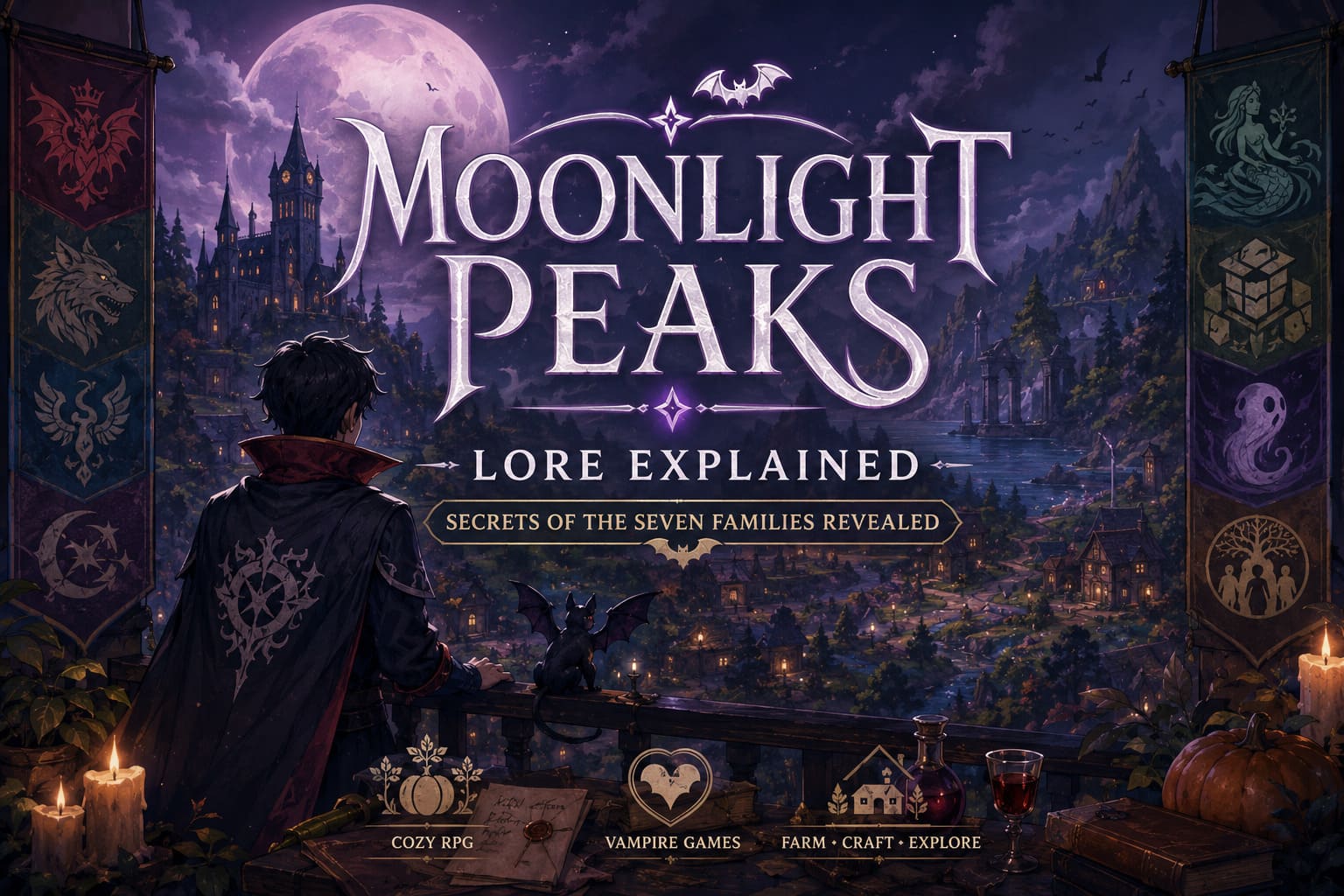
Moonlight Peaks Lore Explained: Secrets of the Seven Families Revealed
If there’s one thing I absolutely love in cozy games, it’s when the world offers much more than farming and decorating. Plenty of life sims give you crops, romance, and crafting, but very few manage to build a setting that actually makes you want to explore every forgotten ruin and talk to every NPC just to uncover another piece of history.
That’s exactly what happened to me in Moonlight Peaks.
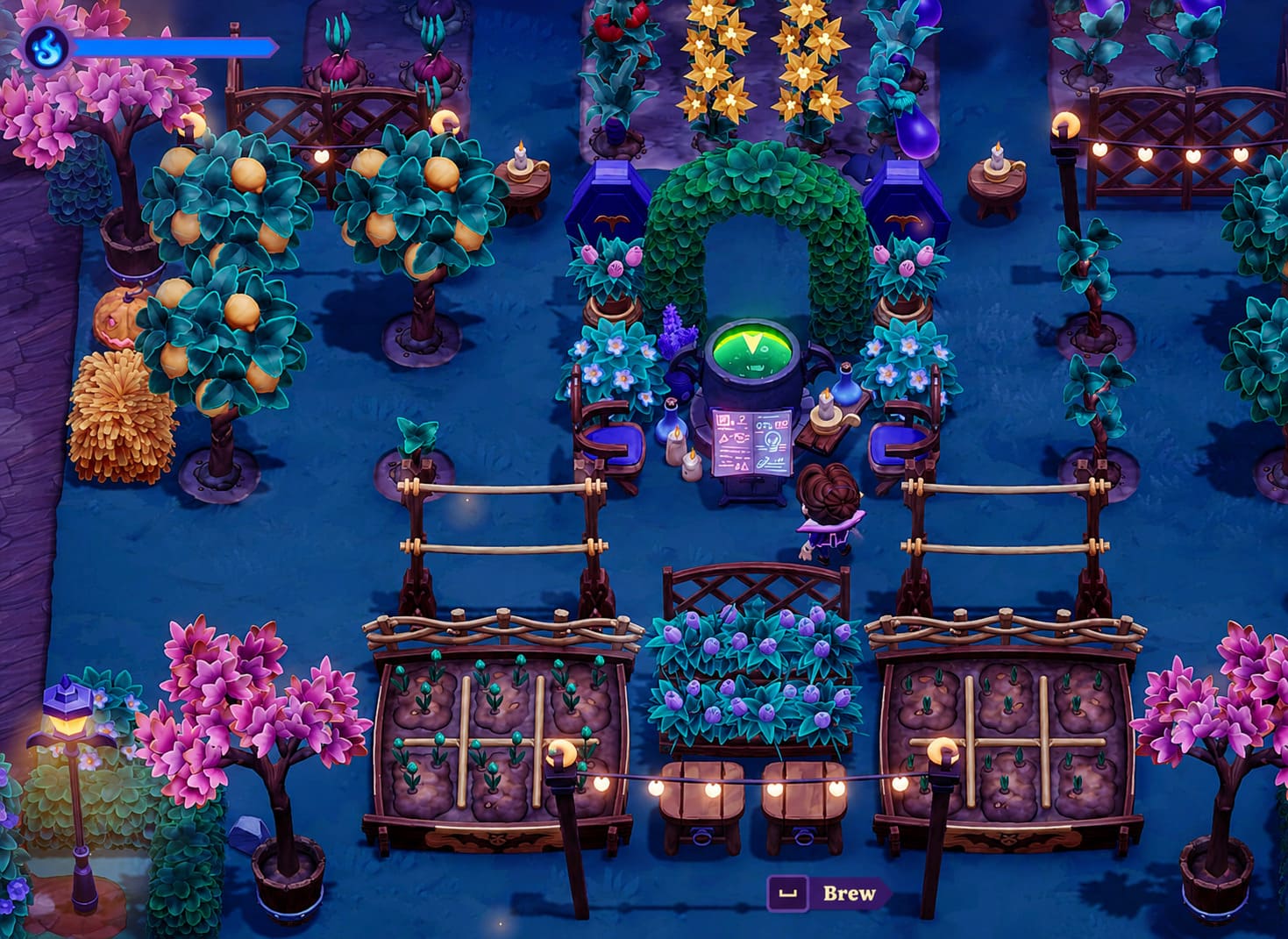
At first glance, it looks like a relaxing gothic farming simulator where you play as Dracula’s child, grow magical vegetables, brew potions, and slowly become part of a quirky supernatural community. But after spending dozens of hours wandering around the valley, I realized something important: the real heart of the game isn’t the farming system.
It’s the lore.
Every major family in Moonlight Peaks hides pieces of a much larger mystery, and once you begin connecting those fragments together, the entire story becomes far more emotional than you might expect from a cozy RPG.
More Than a Cozy Farming Game
Many players jump into Moonlight Peaks expecting another farming simulator with vampires.
That expectation disappears surprisingly quickly.
Instead of simply planting enchanted crops and upgrading your house, you’re constantly encouraged to understand why every supernatural race behaves the way it does. Every quest, every relationship, and every new location slowly reveals another chapter of the valley’s forgotten history.
In my opinion, this storytelling approach is one of the game’s biggest strengths because it rewards curiosity instead of simply checking objectives off a quest log.
The Seven Families Hold the Entire Story Together
The founders of Moonlight Peaks weren’t just different races living in the same place.
They represented completely different philosophies about how supernatural beings should survive.
Some believed isolation was the safest path.
Others believed cooperation would create lasting peace.
Centuries later, those disagreements still shape everyday life throughout the valley.
Here’s a quick overview.
| Family | Represents | Hidden Theme |
|---|---|---|
| House of Dracula | Vampires | Pride, Redemption, Legacy |
| Silverwood Pack | Werewolves | Tradition versus Change |
| Hexenfield Coven | Witches | The Price of Forbidden Magic |
| Coralshore Family | Merfolk | Protecting Forgotten History |
| Golem Shards | Earth Guardians | Unity and Ancient Responsibility |
| Whispering Phantoms | Spirits | Lost Memories and Hidden Truths |
| Human Founders | Ordinary Humans | Balance Between Both Worlds |
House Dracula Is About More Than Vampires
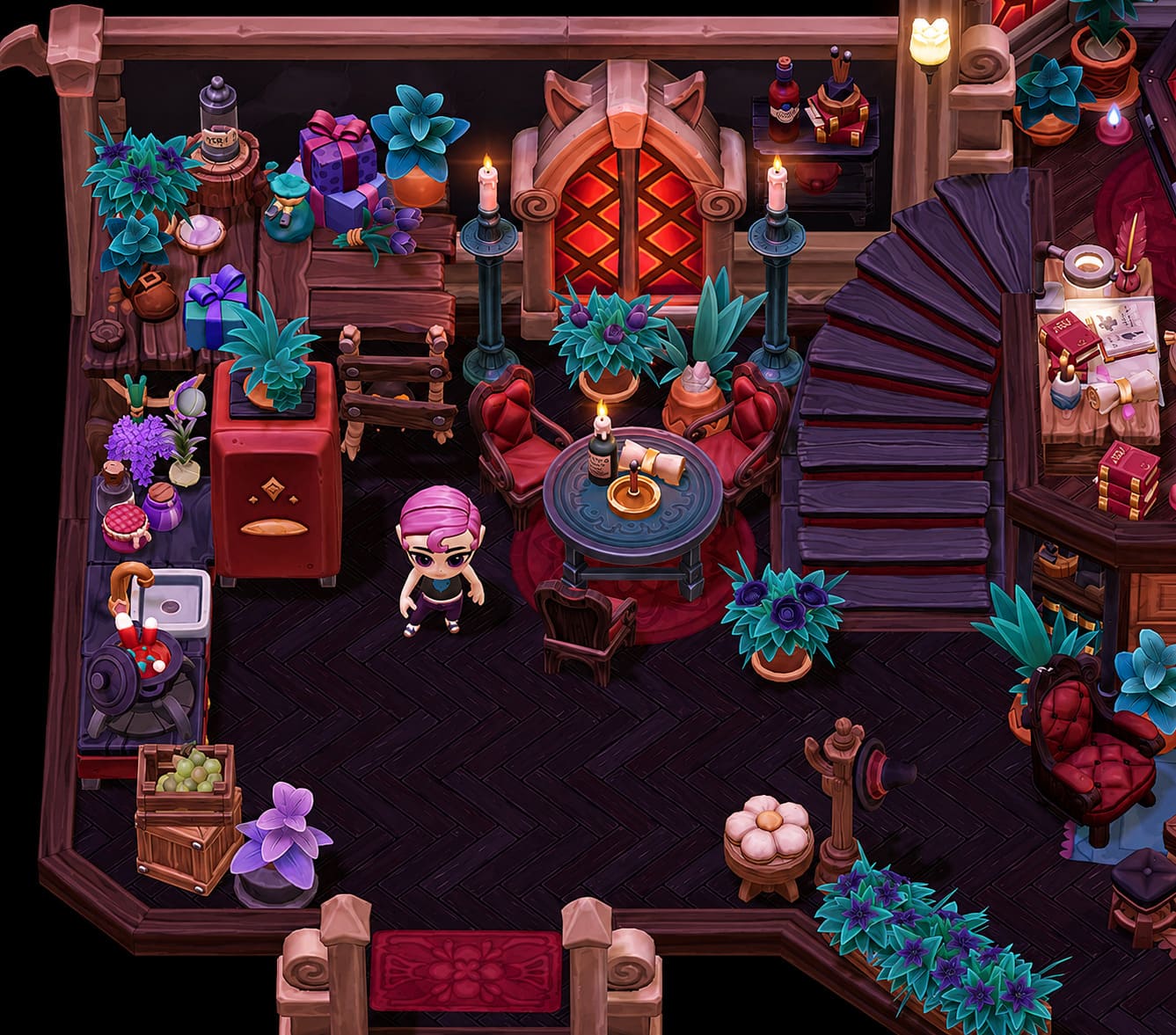
When I first started playing, I assumed Dracula would simply be the strict parent standing in your way.
The reality feels much more interesting.
Your character isn’t fighting evil.
You’re challenging centuries of tradition.
Dracula represents an older generation that believes power earns respect through fear, while your character believes kindness can achieve something even greater.
That conflict makes every improvement you bring to your farm feel symbolic rather than mechanical.
You’re not just harvesting crops.
You’re rebuilding a reputation your family destroyed generations ago.
The abandoned estate scattered across the valley becomes one of the strongest visual metaphors in the game, showing how pride can isolate even immortal beings.
The Werewolves Carry One of the Most Relatable Stories
The Silverwood Pack quickly became one of my favorite factions.
Instead of relying on the classic “vampires versus werewolves” cliché, the developers focused on something much more believable.
Generational conflict.
Older members fear losing centuries of tradition.
Younger werewolves want to interact with other communities instead of hiding forever.
That internal disagreement makes them feel like an actual family rather than a collection of fantasy creatures.
As you complete their quests, it becomes increasingly obvious that the old alliance with Dracula didn’t collapse because either side was evil.
It collapsed because nobody was willing to admit they were wrong.
Witchcraft Comes With a Heavy Cost
The Hexenfield Coven introduces one of the darker storylines in Moonlight Peaks.
Magic isn’t simply an unlimited resource.
Someone always pays for it.
Long before your arrival, the witches made a desperate decision that allowed their magic to survive, but the consequences still affect the valley generations later.
Without spoiling too much, I appreciated that the game avoids making the witches either heroes or villains.
They simply made an impossible choice.
Helping them uncover safer magical practices becomes one of the most satisfying progression arcs because you’re correcting mistakes rather than defeating enemies.
The Ocean Is Hiding More Than Fish
Fishing often becomes an overlooked mechanic in cozy games.
Moonlight Peaks changes that completely.
The Coralshore family guards underwater ruins that hint at an older version of the town buried beneath the sea.
The further you progress, the more obvious it becomes that these ruins aren’t simply environmental decoration.
They’re evidence that Moonlight Peaks survived a catastrophic event long before your story began.
I genuinely enjoyed how exploration gradually rewards patient players instead of revealing everything through dialogue.
Some of the best environmental storytelling happens beneath the water’s surface.
The Golems Deserve More Attention
I’ll admit something.
At first, I thought the stone creatures existed mostly for comic relief.
They look adorable.
They move slowly.
Some have hilarious facial expressions.
Then the story starts revealing who they really are.
The Golem Shards were never ordinary magical constructs.
They served as guardians protecting something buried deep beneath the valley.
Over time, the founding families stopped working together, their memories faded, and the golems slowly forgot their original purpose.
Helping restore them became one of my favorite questlines because every repaired guardian uncovers another forgotten piece of Moonlight Peaks history.
Ghosts Remember What Everyone Else Forgot
The Whispering Phantoms probably contain the game’s most fascinating mystery.
Unlike every other faction, they literally remember history.
The problem?
They can’t freely speak about it.
Ancient magical restrictions prevent them from revealing certain events directly, forcing players to solve environmental puzzles, complete emotional side quests, and rebuild forgotten memorials before pieces of the truth become available.
I especially enjoyed this approach because it avoids simple exposition dumps.
Instead of telling you everything, the game encourages you to become an investigator.
Humans Are Far More Important Than They Seem
One of the biggest surprises for me involved the human residents.
Initially, they appear to exist purely as shopkeepers and friendly neighbors.
That assumption couldn’t be more wrong.
The longer you play, the clearer it becomes that ordinary humans helped establish the magical protection surrounding Moonlight Peaks.
Without them, the hidden valley would likely have been discovered centuries ago.
This completely changes the relationship between humans and supernatural races.
Neither side truly survives without the other.
It’s a refreshing message that fits perfectly with the game’s overall themes of cooperation and understanding.
Why the Lore Works So Well
What impressed me most is that every family tells a different story while contributing to one central narrative.
Rather than presenting isolated questlines, Moonlight Peaks slowly connects every mystery into a larger picture.
- Forgiveness is stronger than revenge.
- Tradition shouldn’t prevent progress.
- Communities survive through cooperation.
- History always influences the present.
Those ideas appear naturally throughout the game without ever feeling preachy.
My Personal Take
After spending a significant amount of time exploring the valley, I honestly believe Moonlight Peaks succeeds because it respects the player’s curiosity.
Nothing feels rushed.
The developers trust players to discover secrets at their own pace instead of constantly pointing toward the next objective.
That’s surprisingly rare in modern games.
Sure, the farming, decorating, romance, and crafting systems are enjoyable, but the world itself kept pulling me back every evening.
Every mysterious cave.
Every abandoned building.
Every forgotten gravestone.
Every conversation hinted that there was still another secret waiting to be uncovered.
That’s exactly the kind of world I love exploring.
Moonlight Peaks Dracula’s Shadow Story: 2026 Cozy Gothic Farm Sim Guide
Final Thoughts
Moonlight Peaks isn’t simply another cozy farming RPG wearing gothic clothing.
Its greatest achievement is creating a world that feels genuinely lived in.
The seven founding families aren’t just background lore designed to fill codex pages—they represent centuries of relationships, betrayals, sacrifices, and reconciliation that continue shaping every corner of the valley.
If you’re the type of player who enjoys reading journals, investigating abandoned ruins, piecing together environmental clues, and uncovering stories hidden beneath everyday gameplay, Moonlight Peaks delivers far more than its relaxing appearance initially suggests.
For me, that’s what elevates it beyond a charming farming simulator. Beneath the pumpkins, enchanted crops, and vampire romance lies one of the most engaging supernatural worlds I’ve explored in a cozy game in years, and discovering every family secret ended up being just as rewarding as building the perfect gothic farm.