Hall Sensor Controller Drift 2026: Is It Truly Zero Drift?
I spend most of my time gaming live on stream—ranked shooters, racing titles, and the kind of competitive matches where even a tiny input mistake can cost the game.
So when the entire gaming hardware space started talking about TMR sensor controllers as the supposed “end of stick drift,” I didn’t want marketing claims—I wanted real experience.
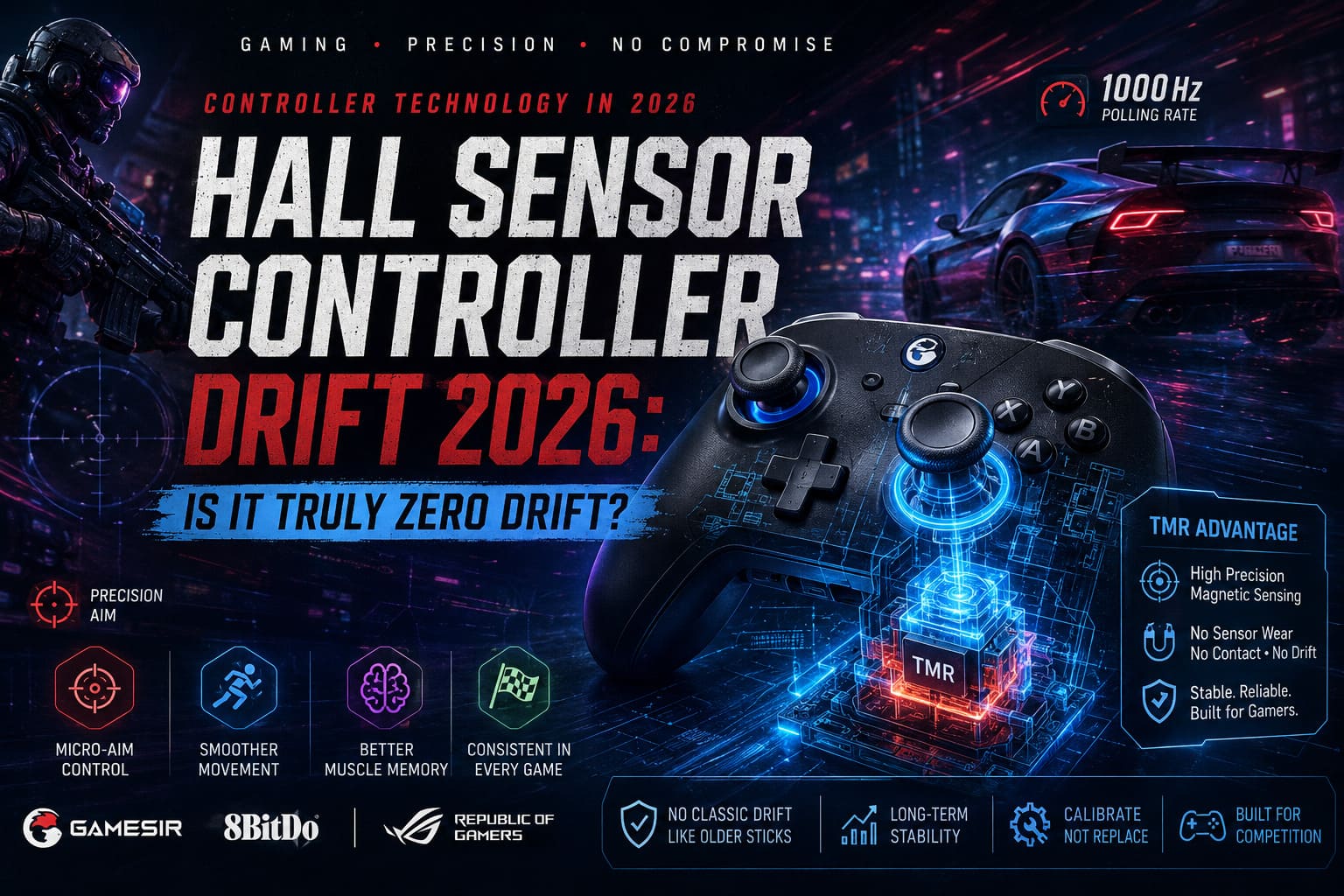
After months of testing, swapping controllers, and running them through sweaty sessions, I can say this clearly: TMR is not magic, but it is the most stable controller tech I’ve used so far.
The hype in 2026 isn’t completely wrong—it’s just incomplete.
Roblox Lawsuit Update 2026: California MDL 3165 Status, Timeline, and Settlement Payout Forecasts
What TMR Controllers Actually Changed for Me
Before TMR, I went through the same cycle every gamer knows too well. Potentiometer sticks degrade, Hall Effect improves things but still feels slightly off in high-precision aiming, and eventually every controller starts drifting in one way or another.
Then I started using TMR-based controllers from modern hardware ecosystems, including devices from companies like GameSir, early hardware from 8BitDo, and integrated systems in newer ASUS handheld gaming devices.
The difference wasn’t instant hype—it was consistency over time.
Mortal Kombat 1 Guest Fighter Voice Line Leak Breakdown (Streamer Reaction)
My Real Gameplay Observations
After extended use, here’s what actually changed in my sessions:
- Micro-aim corrections became more predictable
- Less overcorrection in fast shooters
- Better muscle memory transfer between sessions
- More stable diagonal movement in racing and FPS games
The biggest improvement wasn’t “feeling faster”—it was removing doubt about whether my input was the problem.
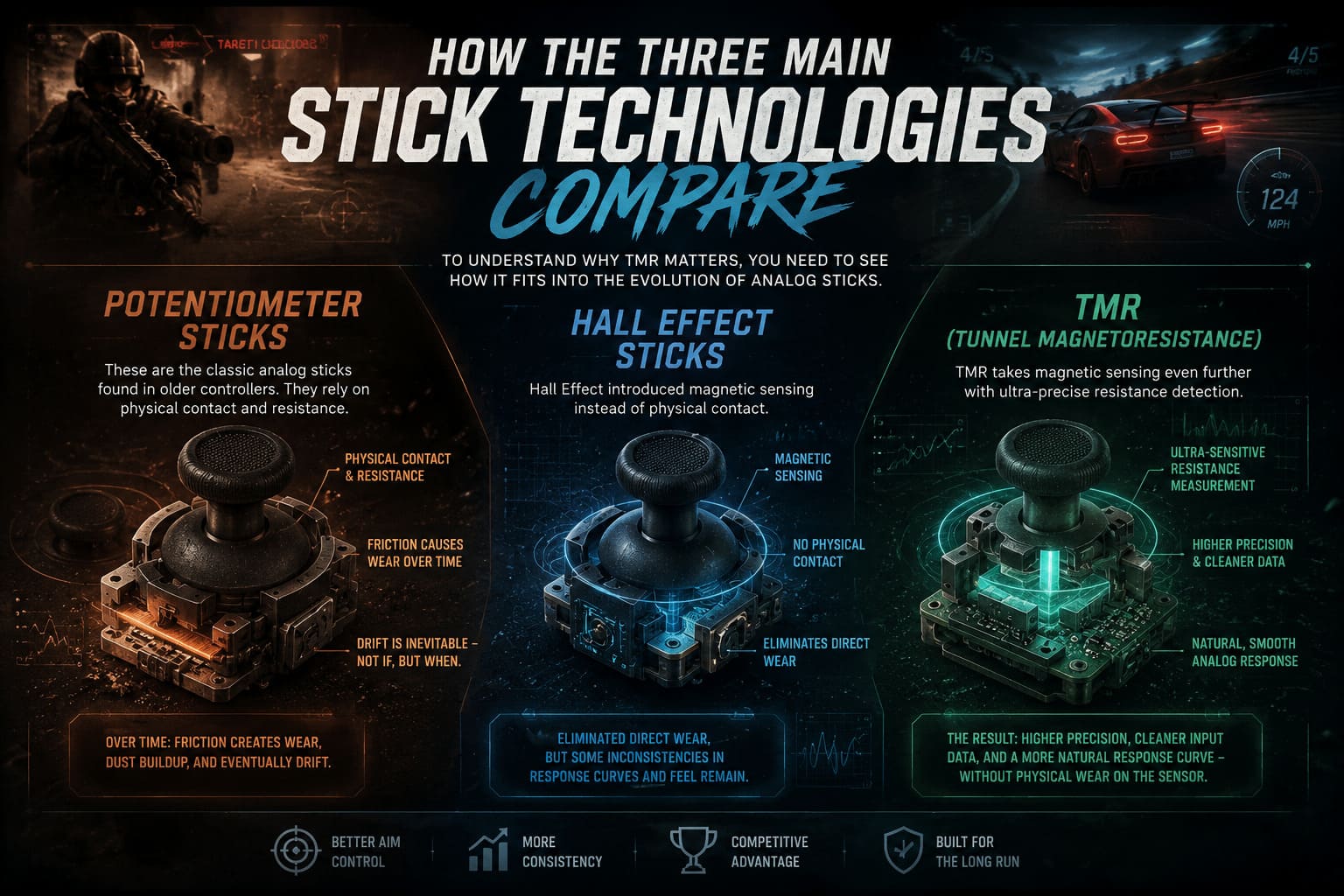
How the Three Main Stick Technologies Compare
To understand why TMR matters, you need to see how it fits into the evolution of analog sticks.
Potentiometer Sticks
These are the classic analog sticks found in older controllers. They rely on physical contact and resistance. Over time, that friction creates wear, dust buildup, and eventually drift. In practice, drift is not “if,” but “when.”
Hall Effect Sticks
Hall Effect introduced magnetic sensing instead of physical contact. This eliminated direct wear, which was a massive step forward. However, some gamers still reported slight inconsistencies in response curves and feel, especially in competitive shooters.
TMR (Tunnel Magnetoresistance)
TMR improves magnetic sensing further by measuring resistance changes at a much more sensitive level. The result is higher precision, cleaner input data, and a more natural analog response curve closer to traditional sticks—but without physical wear on the sensor itself.
Why TMR Feels Better in Real Games
On paper, specs are one thing. In real gameplay, especially fast competitive titles, things feel very different.
In games like Rocket League and Apex Legends, input precision matters more than raw speed. Small directional corrections, tracking movement, and diagonal consistency all become noticeable when your input system is inconsistent.
With TMR, I noticed smoother transitions and fewer “micro-stutters” in directional input. It doesn’t make you a better player—but it removes hardware randomness from the equation.
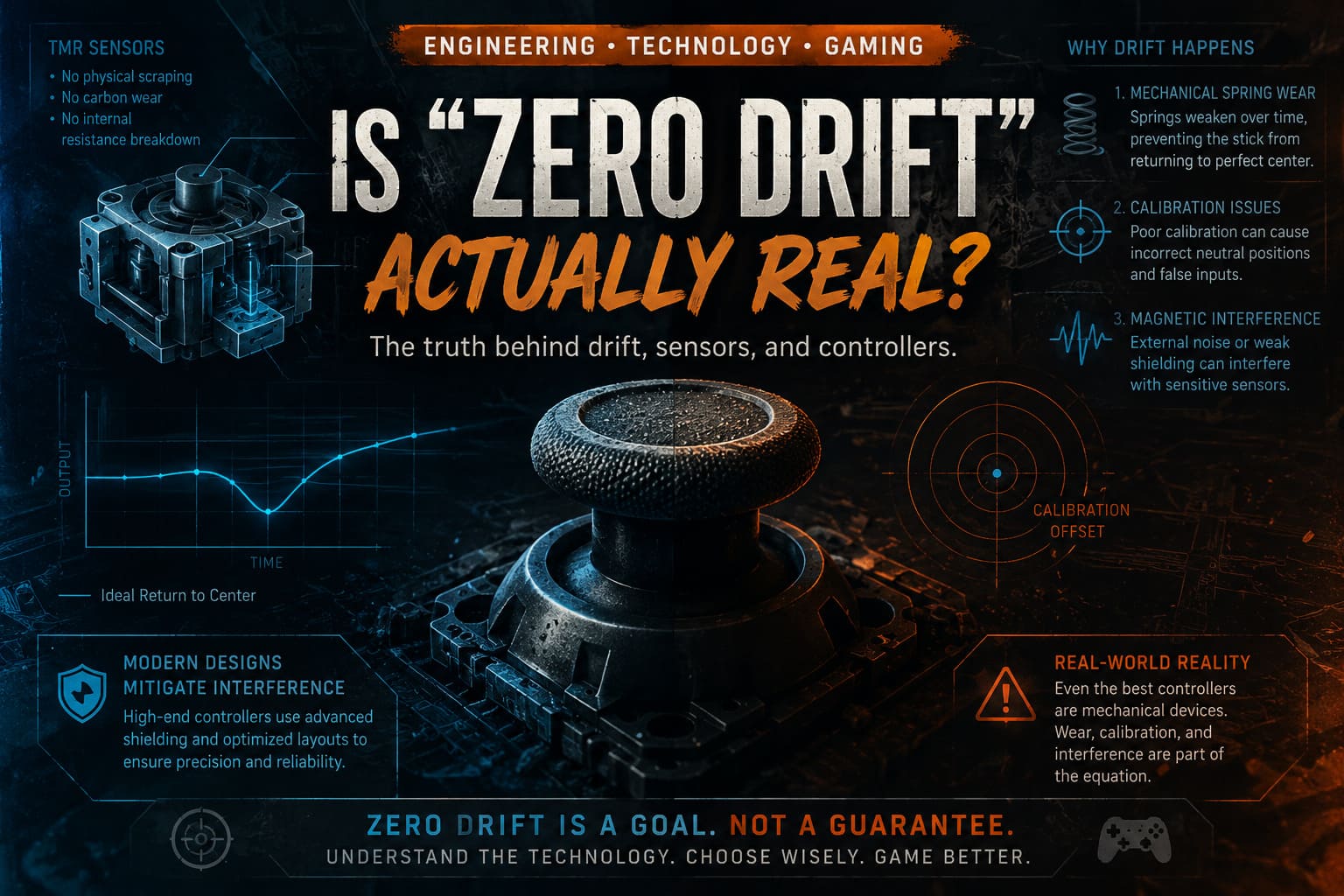
Is “Zero Drift” Actually Real?
This is where marketing and reality split.
Technically, TMR sensors themselves do not degrade like potentiometer systems. There is no physical scraping, no carbon wear, and no internal resistance breakdown that leads to classic drift.
But in real-world usage, controllers are still mechanical devices.
What Actually Causes Drift-Like Behavior
1. Mechanical Spring Wear
The joystick still relies on internal springs to return to center. Over time, those springs can weaken. When that happens, the stick may not physically return to perfect center, and the sensor correctly reads that offset as input.
2. Calibration Issues
Aftermarket TMR upgrades or poorly calibrated controllers can introduce incorrect neutral positions. This often gets mistaken for drift, even though the sensor is functioning correctly.
3. Rare Magnetic Interference
Because TMR systems are extremely sensitive, poor shielding or bad internal layouts can occasionally cause interference. Modern high-end designs mostly mitigate this, but cheaper implementations can still struggle.
Long-Term Use: What I Actually Experienced
After months of heavy gaming sessions, including competitive ranked play and long streaming hours, here’s the honest breakdown:
- No classic drift like older analog controllers
- No gradual accuracy decay over time
- One instance of center looseness caused by spring wear
- Quick fix via recalibration, not hardware replacement
The biggest difference is psychological as much as technical. I stopped worrying about my controller failing mid-match.
Performance and Responsiveness
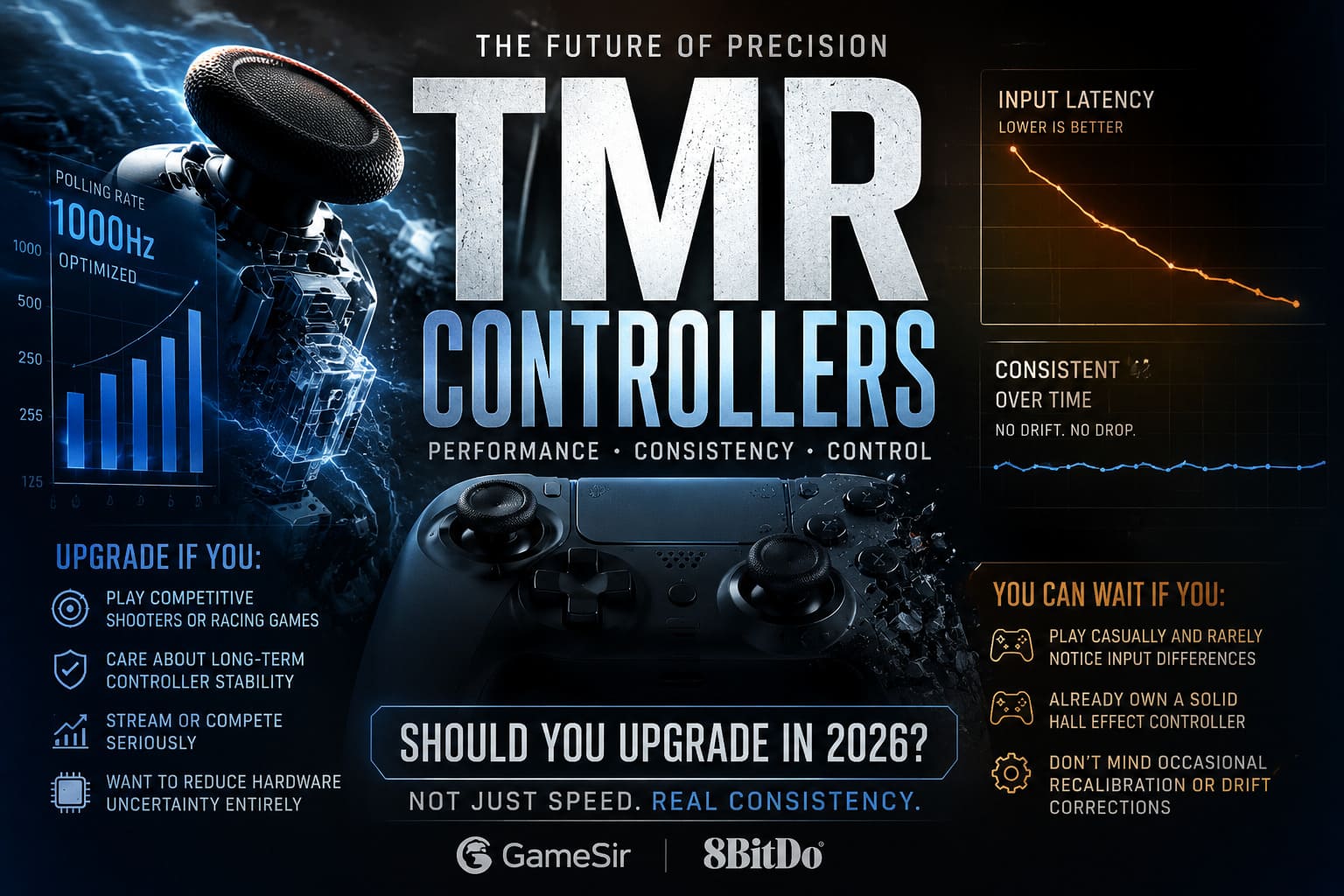
Modern TMR controllers are often paired with high polling rates, sometimes reaching 1000Hz in optimized configurations. That reduces input latency and improves responsiveness in competitive environments.
But the real win isn’t just speed—it’s consistency.
Hall Effect sticks sometimes feel slightly “smooth but floaty.” TMR feels closer to traditional analog control, but without degradation over time. That balance is what makes it stand out.
Should You Upgrade in 2026?
Here’s the honest breakdown based on real usage, not hype.
Upgrade if you:
- Play competitive shooters or racing games regularly
- Care about long-term controller stability
- Stream or compete seriously
- Want to reduce hardware uncertainty entirely
You can wait if you:
- Play casually and rarely notice input differences
- Already own a solid Hall Effect controller
- Don’t mind occasional recalibration or minor drift corrections
Brands like GameSir and 8BitDo are pushing this technology forward fast, and it’s clear that TMR is becoming the new premium standard rather than a niche experiment.
Final Thoughts From a Gamer Who Uses This Daily
TMR is not a miracle solution, and it doesn’t completely erase every possible form of stick drift in existence. Springs still wear out. Calibration still matters. Physics still exists.
But it does solve the biggest real problem: sensor degradation.
From my experience, that alone changes how long controllers stay usable and how consistent they feel over time.
I went from expecting to replace controllers every couple of years to actually trusting them for long-term use with only minor maintenance.
So no—it’s not just hype. But it’s also not invincible. It sits in a much more realistic middle ground: the first major step in years where controller hardware actually feels like it’s evolving for serious players instead of just being recycled.