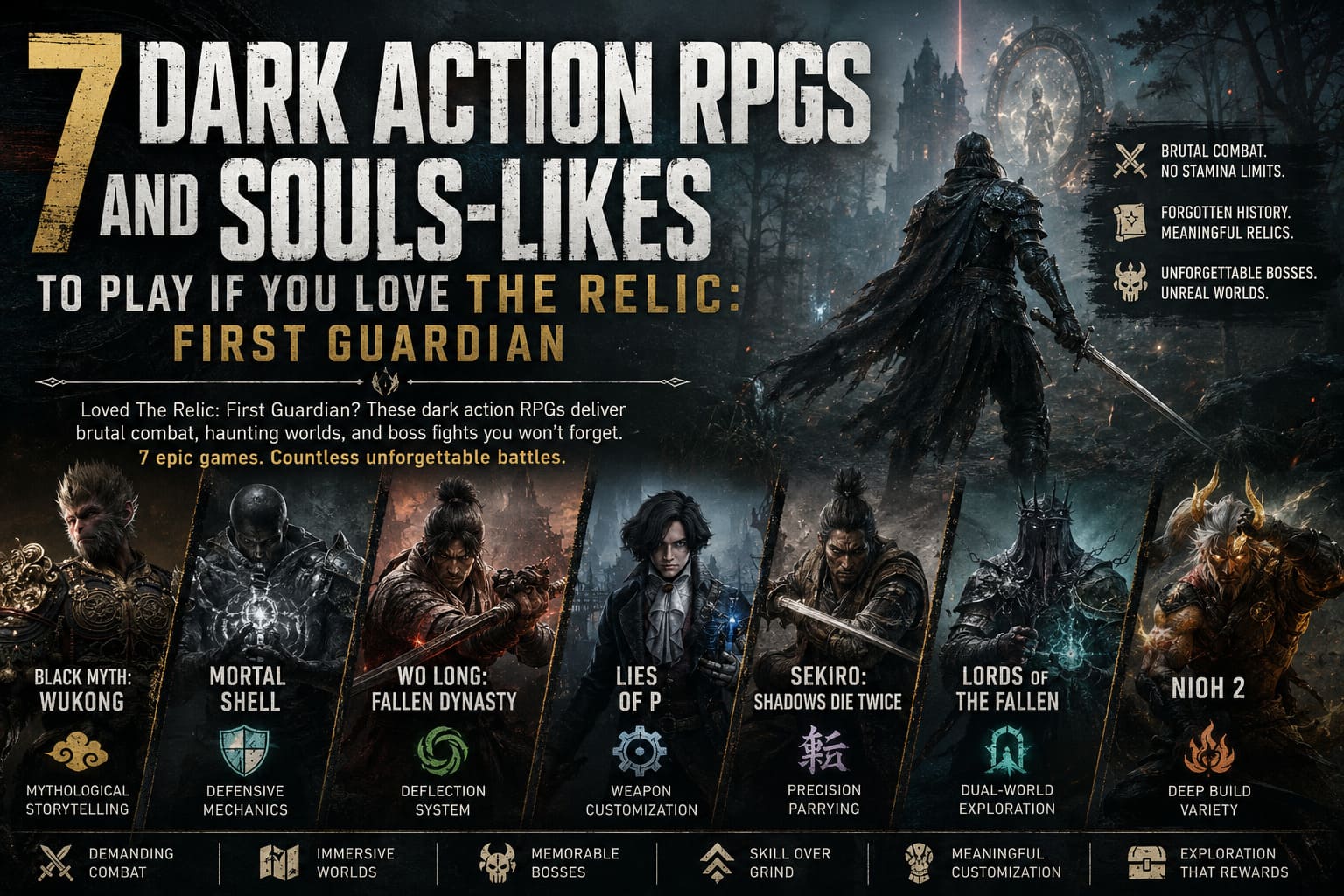
7 Dark Action RPGs and Souls-Likes to Play If You Love The Relic: First Guardian
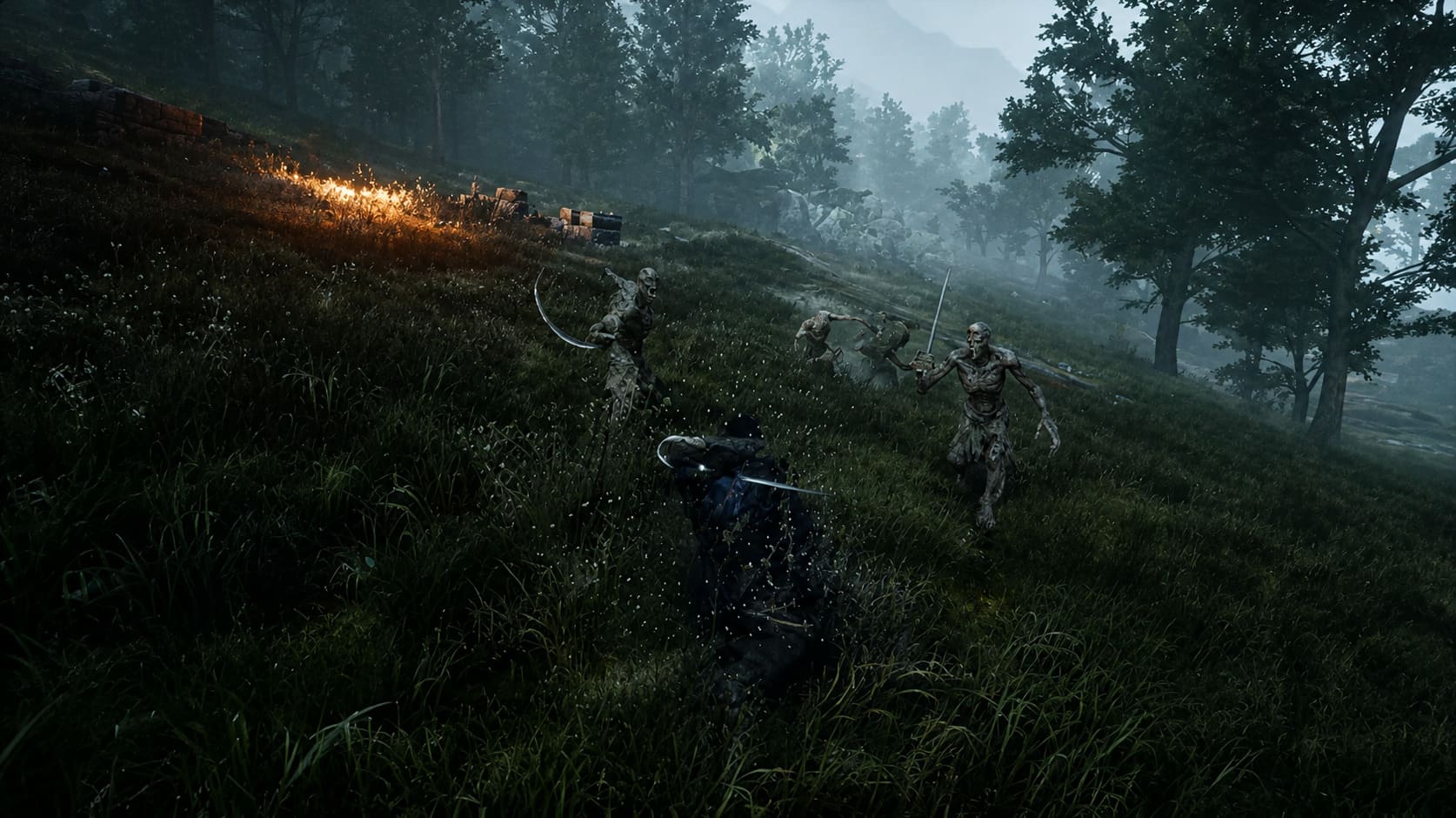
The Relic: First Guardian surprised me more than almost any action RPG released in recent years. I jumped into it expecting another Souls-inspired adventure with familiar mechanics, but after several hours I realized Project Cloud Games wasn’t interested in copying the formula—they wanted to bend it. Instead of chasing experience points or endlessly farming levels, I found myself chasing fragments of history, forgotten memories, and relics that actually mattered to the world around me.
What impressed me even more was the combat philosophy. Removing stamina costs from attacks completely changed how I approached every encounter. Suddenly aggression wasn’t punished—it was encouraged. Every dodge, every parry, every perfectly timed block became the real resource management system, making battles feel faster and surprisingly tactical.
If you’re anything like me, you’ve probably finished exploring Arsiltus and immediately started looking for another game capable of delivering that same mixture of brutal combat, haunting worlds, and unforgettable boss fights. The good news is there are several outstanding titles that scratch a very similar itch—even if each does it in its own way.
Let’s dive into the games that deserve a place in every The Relic: First Guardian fan’s library.
The Relic: First Guardian Steam Deck Compatibility Guide – Settings, Performance, & Fixes
Games at a Glance
| Game | Best Feature | Combat Style | Difficulty |
|---|---|---|---|
| Black Myth: Wukong | Mythological storytelling | Fast offensive combat | High |
| Mortal Shell | Defensive mechanics | Methodical and heavy | High |
| Wo Long: Fallen Dynasty | Deflection system | Aggressive martial arts | High |
| Lies of P | Weapon customization | Technical Souls-like | High |
| Sekiro: Shadows Die Twice | Precision parrying | Rhythm-based swordplay | Very High |
| Lords of the Fallen | Dual-world exploration | Classic Souls combat | High |
| Nioh 2 | Deep build variety | Fast technical combat | Very High |
Black Myth: Wukong
If there was one game that immediately reminded me of The Relic’s dramatic atmosphere, it was Black Myth: Wukong. Rather than relying on gloomy medieval castles, Wukong builds its identity around Chinese mythology. Every location feels handcrafted, every creature has centuries of folklore behind it, and almost every major boss encounter tells a tragic story without drowning players in endless dialogue.
Combat feels wonderfully aggressive. You’re constantly weaving together staff attacks, magical abilities, transformations, and perfectly timed dodges. The pace never slows down, yet it rarely feels unfair. One thing both games absolutely nail is making boss battles memorable. You’re not simply defeating oversized monsters—you feel like you’re overcoming legendary figures whose stories existed long before your character arrived.
Why It Works for The Relic Fans
- Fast offensive combat.
- Beautiful dark fantasy environments.
- Emotionally driven boss encounters.
- Deep mythological storytelling.
Mortal Shell
This game doesn’t receive nearly enough attention. When I first played Mortal Shell, I expected another indie Souls clone. Instead, I got one of the most creative defensive combat systems I’ve ever experienced.
The famous Hardening mechanic completely changes the rhythm of battle. Timing becomes everything. Instead of rolling endlessly around enemies, you’re encouraged to absorb devastating blows before launching an equally devastating counterattack. That philosophy feels surprisingly close to The Relic: First Guardian because both games reward patience without sacrificing intensity.
Another brilliant touch is the Shell system itself. Rather than selecting traditional character classes, you inhabit fallen warriors, each carrying their own strengths, weaknesses, and identity. Progression feels personal instead of mathematical, making every new Shell feel like discovering another chapter of the world’s history.
Wo Long: Fallen Dynasty
Team Ninja has always understood how to make action games satisfying, and Wo Long may be one of the studio’s strongest achievements. Forget passive stamina management because the Spirit Gauge constantly encourages players to stay on the offensive instead of retreating.
Successful attacks build positive momentum while hesitation often leads to disaster. Every duel becomes a balance between confidence and precision. This immediately reminded me of countless encounters in The Relic where staying aggressive often proved safer than backing away.
The combat gains even more depth thanks to elemental wizardry. Mixing martial arts with supernatural powers keeps every build feeling fresh, and mastering enemy deflections never gets old. If timing is your favorite mechanic in action RPGs, Wo Long deserves a permanent place in your collection.
Lies of P
I’ll admit it—I wasn’t convinced when Lies of P was announced. A dark version of Pinocchio sounded like an odd concept, but after only a couple of hours I completely understood why it became one of the most celebrated Souls-likes outside FromSoftware.
The Belle Époque setting creates an unforgettable atmosphere. Elegant city streets slowly decay into terrifying nightmares while murderous puppets become some of the creepiest enemies you’ll face in the genre. The visual storytelling constantly rewards exploration without relying on endless exposition.
The weapon assembly system deserves enormous praise. Mixing different blades with different handles creates entirely new movesets, allowing players to build weapons that genuinely match their personal playstyle. That level of experimentation feels very familiar if you enjoyed trying different combat approaches throughout The Relic.
Sekiro: Shadows Die Twice
There are action games, there are Souls-likes, and then there’s Sekiro. Even after years of playing difficult RPGs, Sekiro forced me to completely rethink how I approached every fight.
Rolling away rarely solves problems. Playing cautiously often delays defeat instead of preventing it. Success comes from perfect deflections, relentless pressure, and breaking your opponent’s posture before they break yours. Every victory genuinely feels earned.
The Relic: First Guardian shares that same philosophy. Defensive mechanics aren’t panic buttons—they’re the core of the entire combat system. If mastering parries became your favorite part of Arsiltus, Sekiro should be your next destination.
Lords of the Fallen
Atmosphere matters more than many developers realize, and Lords of the Fallen understands that perfectly. Exploration feels unsettling long before enemies appear because the environment itself constantly builds tension.
The game’s dual-realm mechanic lets players travel between Axiom, the land of the living, and Umbral, a terrifying dimension consumed by darkness. Every hidden path, puzzle, and shortcut asks whether you’re willing to risk everything for another secret.
That constant uncertainty reminded me of wandering through Arsiltus. Both games reward curiosity while reminding players that every reward usually comes with a dangerous price.
Nioh 2
If build diversity is your favorite part of action RPGs, Nioh 2 is almost impossible to ignore. After hundreds of hours experimenting with weapons, Guardian Spirits, Yokai abilities, armor combinations, and combat techniques, I still find new strategies every time I return.
Every weapon type feels like learning an entirely new combat system. High stance rewards power, low stance emphasizes speed, and mid stance creates balanced defensive opportunities. Mastering stance switching eventually becomes second nature, creating one of the deepest combat systems available today.
While The Relic simplifies progression in several areas, both games celebrate player creativity instead of forcing everyone into identical builds. That’s exactly what keeps both adventures replayable long after the credits roll.
What Makes These Games Feel Similar?
Although every title on this list has its own identity, they all capture some of the qualities that made The Relic: First Guardian so memorable. None of them rely solely on difficulty to impress players. Instead, they combine mechanical depth, immersive worlds, and rewarding progression systems.
- Demanding but rewarding combat.
- Dark fantasy worlds filled with environmental storytelling.
- Memorable boss encounters.
- Skill-based progression over endless grinding.
- Meaningful build customization.
- Exploration that rewards curiosity.
Which Game Should You Play First?
If someone asked me where to go after finishing The Relic: First Guardian, this would honestly be my recommendation.
- Black Myth: Wukong — The closest match in atmosphere and cinematic storytelling.
- Sekiro: Shadows Die Twice — Still the king of precision-based combat.
- Lies of P — Outstanding balance between challenge and accessibility.
- Wo Long: Fallen Dynasty — Aggressive gameplay that constantly rewards confidence.
- Nioh 2 — Endless replayability through incredible build diversity.
- Mortal Shell — A refreshing defensive twist on the Souls-like formula.
- Lords of the Fallen — One of the strongest atmospheric experiences in modern dark fantasy.
Final Verdict
I honestly believe The Relic: First Guardian represents one of the freshest ideas the Souls-like genre has seen in years. Rather than asking players to endlessly grind statistics, it challenges them to understand combat mechanics, explore its tragic world, and overcome every battle through skill rather than numbers.
Each game on this list captures a different part of that experience. Some focus on lightning-fast aggression, others emphasize defensive precision, haunting atmosphere, or nearly limitless character customization. Together they represent some of the finest action RPGs available today.
After spending hundreds of hours across all of these adventures, I’ve come to one conclusion. Great action RPGs aren’t remembered simply because they’re difficult. They’re remembered because every boss tells a story, every weapon changes the way you fight, and every hard-earned victory becomes a memory you’ll still be talking about years later.
If you’re still chasing that feeling after leaving Arsiltus behind, these seven games are more than worthy of your time.