Solarpunk Game Guide: 15 Essential Tips, Tricks, and Automation Secrets for 2026
When I first launched Solarpunk, I expected another relaxing crafting game with pretty skies and a few solar panels. What I got instead was something that reminded me why I fell in love with survival games in the first place. After years of playing titles like Valheim, Satisfactory, Raft, and No Man’s Sky, I thought I knew every trick the genre had to offer. Solarpunk surprised me.
Its peaceful atmosphere hides a surprisingly deep progression system. There are no monsters trying to eat you, no endless combat loops, and no artificial pressure. Instead, the game rewards smart planning, sustainable resource management, and efficient automation.
After spending countless hours experimenting, rebuilding, and making mistakes, here are the biggest lessons I learned.
1. Forget Fancy Houses During Your First Day
I know the temptation. You load into a beautiful floating island and immediately want to build the ultimate cozy home.
Don’t.
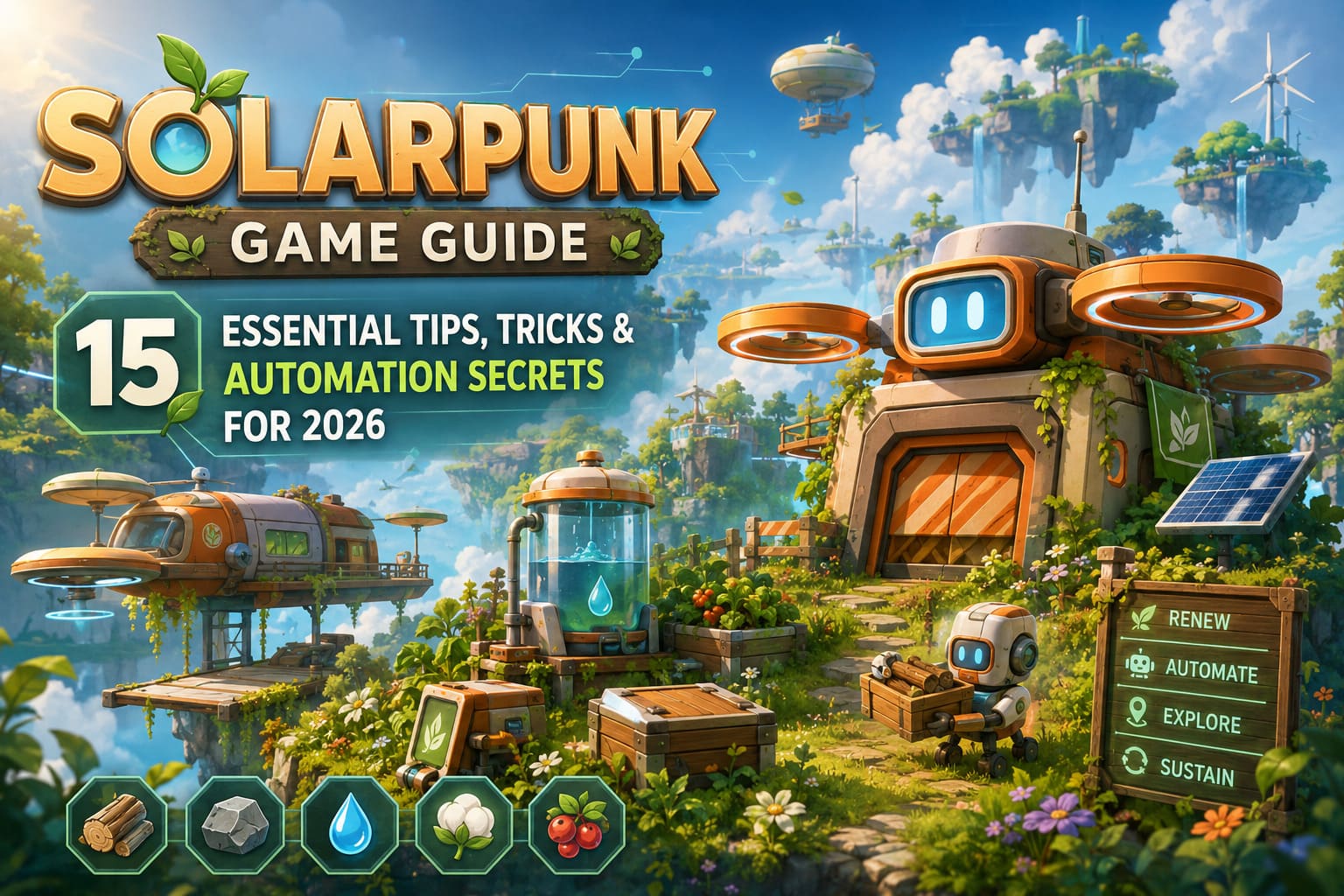
During your first hours, focus entirely on gathering:
- Wood
- Stone
- Cotton
- Sticks
- Berries
Cotton is far more valuable than it seems, and berries are practically your first energy drink. One thing I discovered early is that crafting sticks directly from wood saves a lot of time. Running around searching for them individually isn’t worth it.
2. Resource Collection Is More Efficient Than It Looks
One thing I appreciate about Solarpunk is that harvesting feels smooth. You don’t need to chase every falling tree or dropped item.
Materials automatically enter your inventory, which means you can clear large areas without wasting time running back and forth.
Compared to many survival games where resource gathering becomes tedious, this system feels incredibly satisfying.
3. Getting Your Airship Running Changes Everything
The moment you start exploring beyond your first island, the game opens up.
I wasted hours wandering around before realizing that important airship wreckage is much easier to find than I expected. Once you repair your vessel, Solarpunk suddenly transforms from a survival experience into an exploration game.
Flying between islands never gets old.
Honestly, it reminds me of the first time I built a proper ship in Raft.
4. Water Becomes More Important Than Food
Food is easy.
Water isn’t.
Rainfall is unpredictable, and depending solely on berries is a terrible long-term solution.
My advice:
| Priority | Structure | Importance |
|---|---|---|
| High | Rain Catcher | Essential |
| High | Carafe | Essential |
| Medium | Furnace | Purification |
| Medium | Storage Chest | Backup Supply |
Whenever rain starts, I immediately store extra water. Having reserves saved me countless times during dry periods.
5. Treat Every Tree Like a Renewable Investment
One thing I absolutely love about Solarpunk is its philosophy.
Nothing magically respawns.
If you cut down trees and harvest cotton carelessly, eventually you’ll feel the consequences.
That’s why I developed a simple habit:
Harvest → Replant → Expand
This approach creates a permanent supply chain and removes future bottlenecks.
Believe me, late-game crafting consumes ridiculous amounts of resources.
6. Explore Your Starting Island Properly
I nearly left my first island too early.
Bad idea.
There are hidden rewards and useful materials scattered around the central area, and discovering them naturally gave me a significant head start.
Exploration pays off more than rushing.
Sometimes slowing down is actually the fastest strategy.
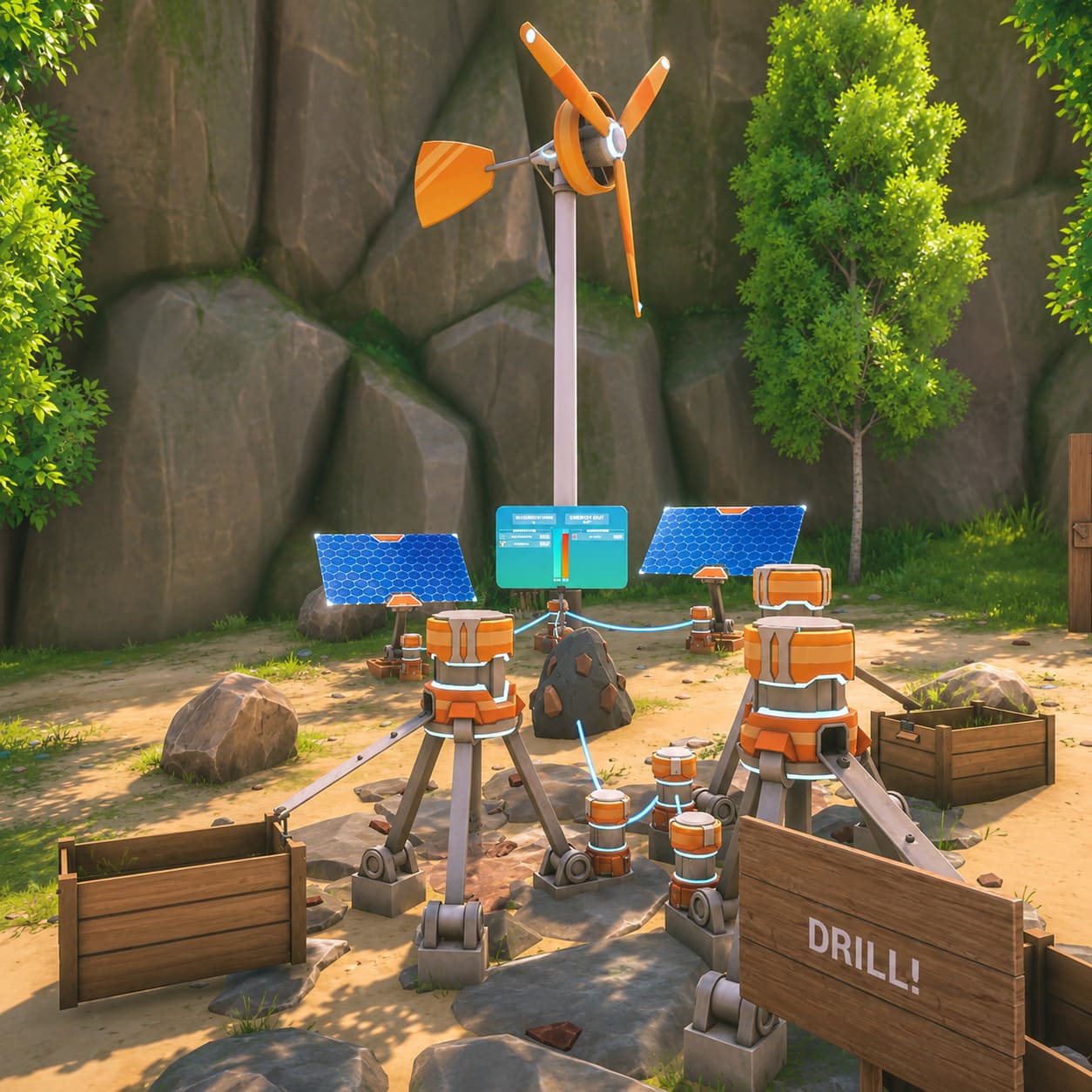
7. Infinite Ore Sources Are Your Best Friends
Not all rocks are equal.
I learned this lesson after wasting several hours mining temporary deposits.
Permanent ore veins are the real treasure.
Once you find reliable iron and copper locations, your priorities should change immediately:
- Mark the location.
- Build around it later.
- Prepare automation.
Those veins become the backbone of your industrial network.
8. Organization Saves More Time Than Extra Resources
I’ve played enough survival games to know one universal truth:
Messy storage kills productivity.
My base eventually evolved into labeled chest rows.
Basic Storage Categories
- Metals
- Farming
- Building Materials
- Electronics
Using stack functions and keeping everything organized reduced my crafting time dramatically.
Trust me, spending ten minutes organizing saves hours later.
9. Energy Management Is More Important Than Production
Coming from Satisfactory and Factorio, I immediately started overproducing energy.
That was a mistake.
Generators don’t reward waste.
Adding too much fuel simply burns resources for nothing.
Instead, I learned to monitor consumption and refill power systems only when necessary.
Efficient energy use feels surprisingly rewarding and perfectly matches the game’s eco-friendly philosophy.
10. Airship Landings Require Patience
Flying is easy.
Landing? Not always.
In my early days, I damaged my ship more times than I want to admit.
A few habits helped:
- Slow down before approaching islands.
- Aim for flat terrain.
- Carry repair kits.
- Avoid panic maneuvers.
After some practice, landing becomes second nature.
Still, bad weather can humble anyone.
11. Animals Are Partners, Not Resources
This may be my favorite feature in Solarpunk.
Most survival games turn animals into walking loot boxes.
Not here.
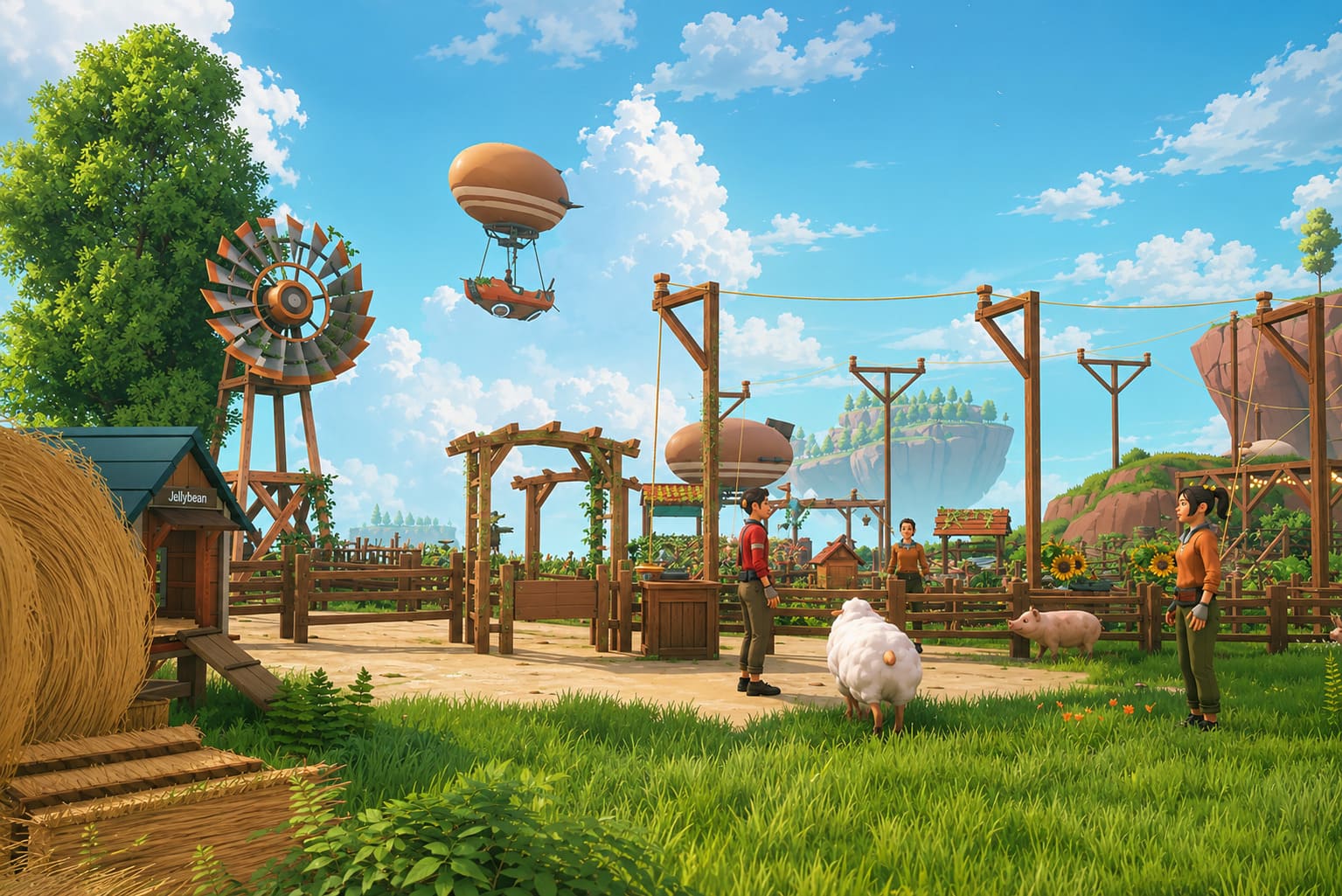
Building relationships with animals actually benefits your settlement. Healthy and well-treated creatures reward you naturally, creating a peaceful ecosystem rather than an exploitative farm.
It feels refreshing.
And honestly, after years of survival games focused on killing everything, this approach is surprisingly relaxing.
12. Weather Can Ruin Your Entire Farm
Rain is wonderful.
Thunderstorms are terrifying.
I learned that lesson the hard way after losing valuable crops.
Building a greenhouse became one of my smartest investments.
Benefits of Greenhouses
| Advantage | Result |
|---|---|
| Lightning Protection | Crop Safety |
| Stable Growth | Better Production |
| Easier Expansion | More Efficiency |
| Weather Independence | Reliability |
Protecting crops means protecting progress.
13. Automation Is Where Solarpunk Truly Shines
Early game is relaxing.
Late game becomes incredibly satisfying.
Once I unlocked drones and automated mining, everything changed.
Instead of spending time manually gathering resources, I focused on:
- Decorating islands.
- Expanding infrastructure.
- Experimenting with architecture.
- Building efficient energy networks.
Watching transport drones fly across the sky carrying resources back home never stopped being satisfying.
This is where Solarpunk becomes something special.
14. Don’t Ignore Trading Systems
I made this mistake.
I assumed research alone would unlock everything.
Wrong.
Some of the most impressive technologies are hidden behind trading progression.
Rare materials suddenly become much more valuable, so avoid selling or wasting everything immediately.
Future-you will appreciate that decision.
15. Multiplayer Works Best When Everyone Has Independence
Playing with friends is fantastic, but I quickly discovered that Solarpunk encourages cooperation without forcing everyone into the same role.
Each player developing their own airship and projects creates a much more enjoyable experience.
And yes, if you somehow end up stuck inside walls—which happened to me more than once—the emergency unstuck feature is a lifesaver.
Final Thoughts: Why Solarpunk Became One of My Favorite Cozy Survival Games
After spending dozens of hours with Solarpunk, I genuinely think it offers something rare in today’s gaming landscape.
Most survival games focus on danger.
Solarpunk focuses on creativity.
Most automation games push maximum efficiency.
Solarpunk encourages balance.
Most sandbox games ask you to conquer nature.
Solarpunk asks you to live alongside it.
That philosophy is what kept me coming back.
If you enjoy cozy games but also love the satisfaction of creating complex production chains, beautiful architecture, and self-sustaining systems, Solarpunk deserves a place on your radar.
And my biggest piece of advice?
Take your time.
The skies aren’t going anywhere, and half the joy of Solarpunk comes from watching your tiny floating camp slowly evolve into a thriving paradise above the clouds.