ReStory Chill Electronics Repairs Characters List: The Ultimate Guide to Customers and Stories
There are plenty of cozy management games on Steam these days. Some let you brew coffee, others have you decorating tiny apartments or running bookstores full of adorable NPCs. ReStory: Chill Electronics Repairs grabbed my attention for a completely different reason. Sure, repairing old electronics is surprisingly relaxing, but that’s not what kept me glued to the screen for dozens of hours.
The real hook is the people.
I came into ReStory expecting a satisfying simulator where I’d spend evenings cleaning dusty circuit boards and swapping broken capacitors. What I actually found was a heartfelt narrative experience where every repair order felt like opening another chapter of someone’s life. Every cracked handheld console, scratched MP3 player, or forgotten flip phone carries memories that are far more valuable than the hardware itself.
That combination makes ReStory feel unlike anything else in the cozy genre.
ReStory Chill Electronics Repairs Hidden Secrets and Character Lore Guide
More Than a Repair Shop
Your workshop sits in a beautifully recreated version of early-2000s Tokyo, dripping with Y2K nostalgia. Neon signs glow outside while shelves slowly fill with aging gadgets that defined an entire generation.
The repair mechanics alone are satisfying.
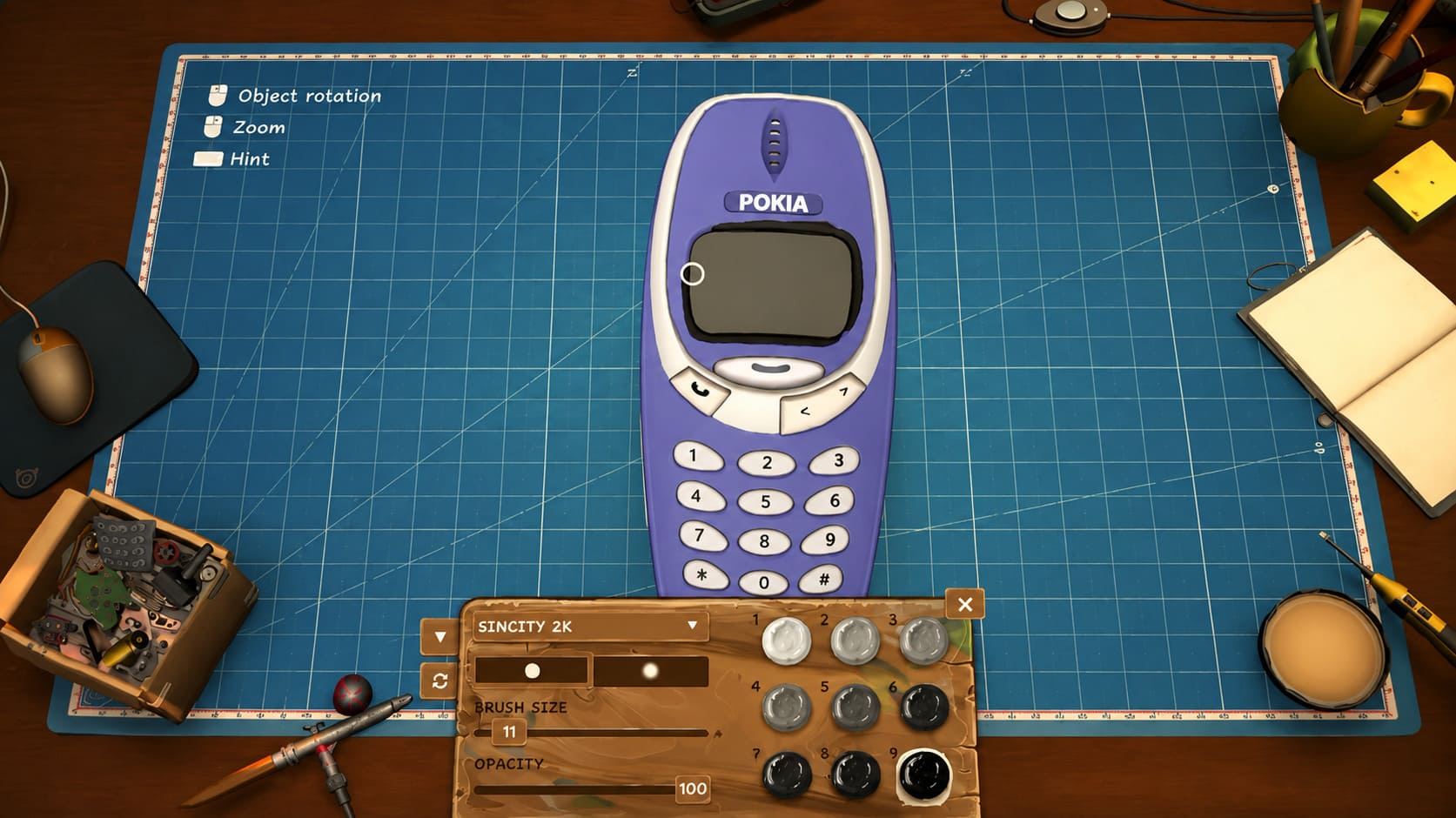
You’ll clean corrosion, replace damaged screens, remove rust from battery contacts, diagnose faulty components, polish scratched plastic shells, and carefully reassemble devices piece by piece. Every successful restoration feels rewarding without becoming overly complicated.
But after a few hours something becomes obvious.
The electronics aren’t actually the stars of the game.
They’re simply the bridge connecting you with people who desperately need something restored—not always their devices, but sometimes their confidence, memories, relationships, or even their future.
That’s where ReStory completely won me over.
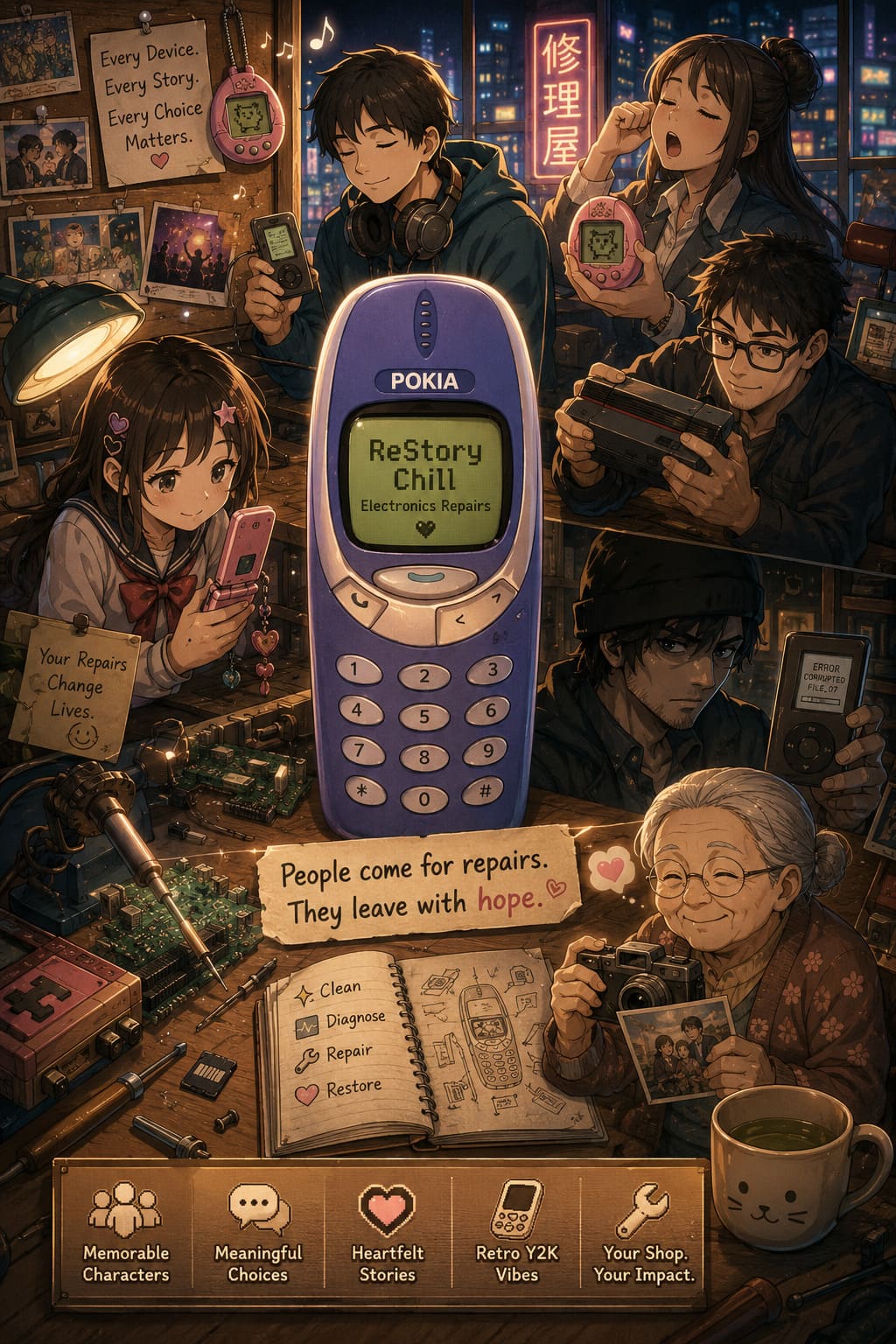
Every Customer Brings More Than Broken Hardware
Unlike traditional management sims where NPCs exist to hand out quests and disappear forever, almost everyone in ReStory returns. You begin recognizing familiar faces, conversations evolve over time, and their situations change depending on how you’ve treated them.
Your interactions usually revolve around several core systems:
- Face-to-face conversations
- Retro-style email exchanges
- Repair quality
- Ethical decisions involving private information
This final mechanic creates some genuinely uncomfortable situations. While repairing someone’s phone or portable media player, you may accidentally uncover personal messages, old photographs, financial records, or conversations they never expected another person to read.
The game constantly asks one difficult question: Just because you can see something… should you?
Those moral choices shape much more than individual storylines.
Character Overview
| Character | Device | Main Theme | Player Impact |
|---|---|---|---|
| Kenji | Portable Music Player | Lost Dreams | Preserve music or erase history |
| Yuri | Virtual Pet | Burnout | Encourage a new beginning |
| Takashi | Retro Console | Preservation | Build collector reputation |
| Hana | Flip Phones | School Pressure | Protect or respect privacy |
| Kazuo | Media Player | Crime & Ethics | Risk profit for justice |
| Grandma Chiyo | Camera & Handheld | Family Memories | Emotional rewards |
Kenji – Music Worth Saving
Kenji quickly became one of my favorite recurring customers. He’s an independent musician carrying around a battered portable music player that contains recordings from a band that no longer exists. Those songs aren’t available anywhere else, so if the storage fails, years of creativity disappear forever.
At first glance the repair seems straightforward, but the damaged memory chips reveal a much bigger problem. You suddenly have two options: spend extra time tracking down rare replacement components that might preserve his recordings, or perform a cheaper repair that restores the player while sacrificing everything stored inside.
It’s one of those moments where the game quietly asks whether convenience matters more than someone’s memories. I loved that there wasn’t an obvious ‘correct’ answer, making the outcome feel much more personal.
Yuri – Escaping the Endless Office Grind
Anyone who’s worked exhausting office jobs will probably connect with Yuri. She arrives looking completely drained, carrying a broken virtual pet from her childhood that reminds her of a happier, simpler life before endless overtime became normal.
While restoring the device, pieces of her personal story slowly emerge. She’s considering quitting, she’s terrified of making the wrong decision, and she has no idea whether chasing happiness is worth abandoning financial security.
Nothing here feels melodramatic. Instead, ReStory tells an incredibly believable story about burnout through subtle conversations rather than dramatic speeches. Helping Yuri slowly regain confidence became one of the most satisfying story arcs I experienced.
Takashi – Every Collector’s Nightmare
If you’ve ever collected retro games, you’ll immediately understand Takashi. His aging Atari console isn’t simply hardware—it’s a piece of gaming history. Every scratch matters, every replacement part matters, and even the finish on the shell has to remain authentic.
Takashi expects perfection, and honestly, I respected that. You can complete the repair using modern replacement components or invest extra time searching for authentic parts through the game’s nostalgic internet browser.
Winning his trust isn’t only satisfying from a story perspective. It also unlocks access to rare collectible hardware and premium restoration jobs that dramatically improve your workshop’s long-term success.
Hana – Growing Up in the Flip Phone Era
Hana perfectly captures the colorful energy of mid-2000s teenage culture. She loves custom ringtones, infrared sharing, decorative phone charms, and everything that made flip phones feel exciting before smartphones completely changed mobile technology.
Then the atmosphere shifts. Hidden inside her damaged phone are messages suggesting she’s been targeted by anonymous harassment. The game never sensationalizes the situation, allowing players to decide how involved they should become.
Do you stay silent? Do you gently encourage her to speak about it? Or do you investigate further? I appreciated how carefully ReStory handled the topic without turning it into cheap drama.
Kazuo – When Repairs Become Dangerous
Not every visitor brings heartwarming stories. Kazuo appears late in the evening, barely making eye contact and always insisting on quick repairs with absolutely no questions asked.
Eventually those suspicions become impossible to ignore. During one repair, sensitive files hidden inside his damaged media player reveal information that clearly shouldn’t exist.
This storyline completely changes the game’s atmosphere. For a while, ReStory stops feeling like a cozy repair simulator and becomes an ethical thriller. Money suddenly competes against personal responsibility. Do you erase the evidence, quietly return the device, or involve authorities and risk your own safety?
Those moments genuinely surprised me because they never felt forced.
Grandma Chiyo – The Heart of the Game
Not every memorable story needs massive stakes. Grandma Chiyo proves that perfectly. She arrives carrying an old camera that refuses to power on because years of battery corrosion destroyed the contacts.
The repair itself isn’t especially complicated, but the emotional payoff is enormous. Recovering long-forgotten family photographs creates one of the warmest moments in the entire game, reminding players that old electronics often preserve priceless memories rather than expensive technology.
Instead of paying huge sums of money, Chiyo rewards your kindness with homemade meals and charming decorations for your workshop. Somehow those gifts felt even more meaningful than cash.
How Reputation Shapes Your Adventure
One mechanic I didn’t fully appreciate during my first several hours was the reputation system. Customers actually remember how you treated them, and their opinions influence your future in meaningful ways.
Building genuine trust creates several long-term advantages:
- More customer referrals
- Exclusive repair opportunities
- Rare collectible electronics
- Positive community reputation
- Steady workshop growth
On the other hand, constantly choosing profit over compassion slowly isolates your business. Certain customers stop returning, unique storylines disappear forever, and valuable opportunities vanish along with them.
That gives every dialogue choice real weight instead of making conversations feel cosmetic.
Why These Characters Feel So Real
Many narrative games try to make characters memorable by giving everyone dramatic backstories. ReStory succeeds because its cast feels refreshingly ordinary.
Someone worries about losing old songs. Someone misses childhood. Someone is exhausted by work. Someone simply wants to preserve a beloved game console that reminds them of better days.
Those problems are believable because we’ve all experienced some version of them. That’s why the stories remain grounded from beginning to end.
I found myself looking forward to seeing familiar customers return almost as much as discovering new repair jobs. That’s a rare achievement for any simulation game.
Final Thoughts
After spending countless hours inside ReStory: Chill Electronics Repairs, I genuinely believe the character writing is what elevates it above most cozy simulation games released in recent years. The repair mechanics are polished, the nostalgic Y2K atmosphere is fantastic, and the soundtrack quietly complements every late-night repair session.
Yet the real reason I kept playing was simple: I wanted to know what happened to the people walking through my workshop door. Every repaired console, restored handheld, and cleaned-up flip phone becomes another opportunity to influence someone’s life in small but meaningful ways. Those choices rarely scream for attention, but they stay with you long after the credits roll.
If you’re searching for a cozy game that’s built on empathy rather than endless grinding, ReStory delivers something genuinely memorable. It isn’t just about fixing electronics—it’s about restoring forgotten memories, rebuilding broken connections, and discovering that sometimes the most valuable thing sitting on your workbench isn’t the hardware itself, but the story attached to it.