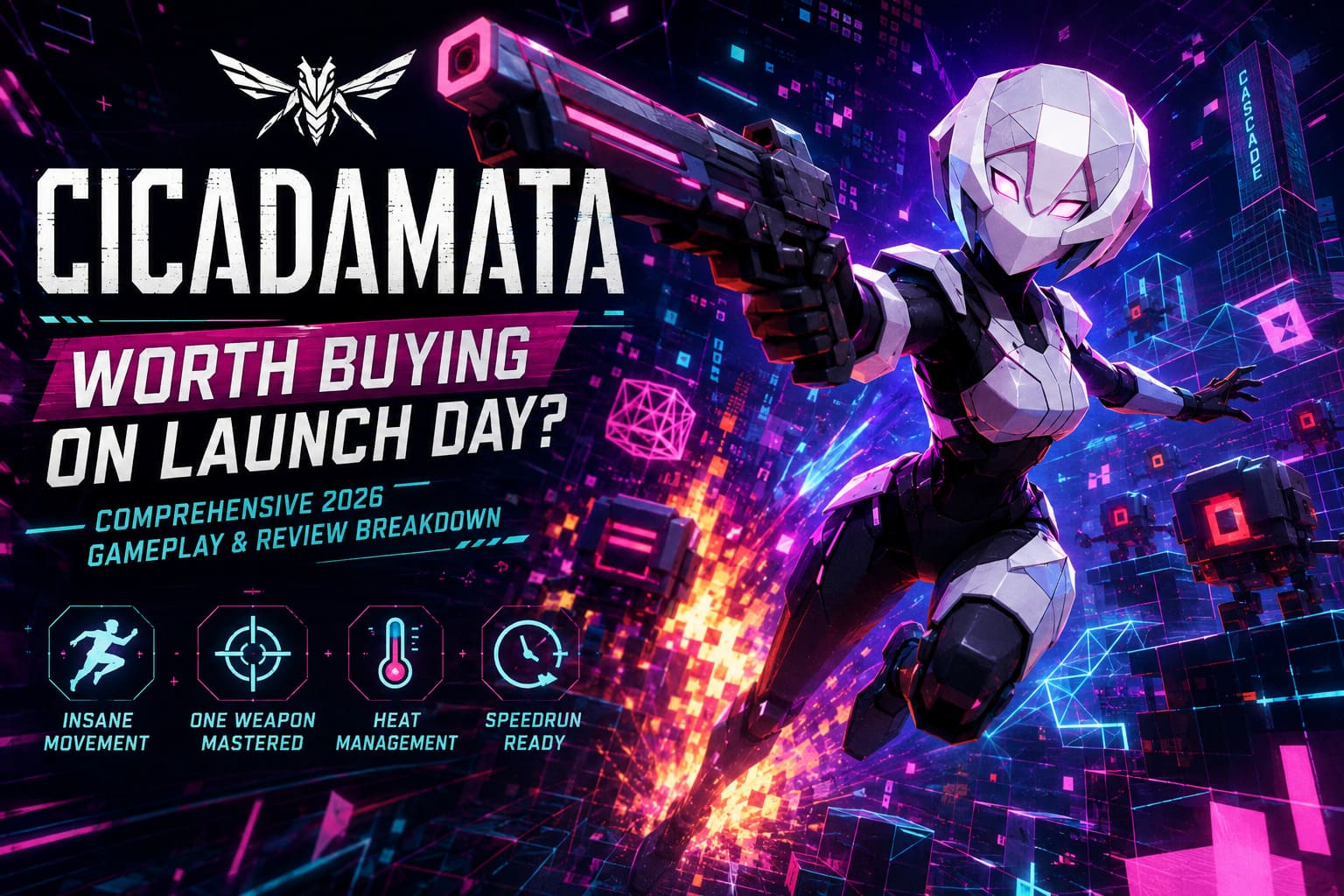
Is CICADAMATA Worth Buying on Launch Day? Comprehensive 2026 Gameplay & Review Breakdown
The indie FPS scene has become crowded with retro shooters trying to recreate the magic of the late ’90s. Every month another game promises insane movement, stylish combat, and nostalgic visuals. Most of them are fun for a weekend and disappear from everyone’s Steam library.
CICADAMATA isn’t one of those games.
After spending hours flying through its surreal arenas, missing jumps, overheating my weapon more times than I’d like to admit, and chasing faster leaderboard times, I came away with one clear impression: this game knows exactly what it wants to be. It doesn’t try to please everyone, and honestly, that’s part of its charm.
If you’re wondering whether CICADAMATA deserves your money on launch day, here’s my honest breakdown from the perspective of someone who spends way too much time playing movement shooters and speedrunning anything with a timer.
This isn’t just a feature list. It’s what the game actually feels like once you’re inside the CASCADE system.
What Exactly Is CICADAMATA?
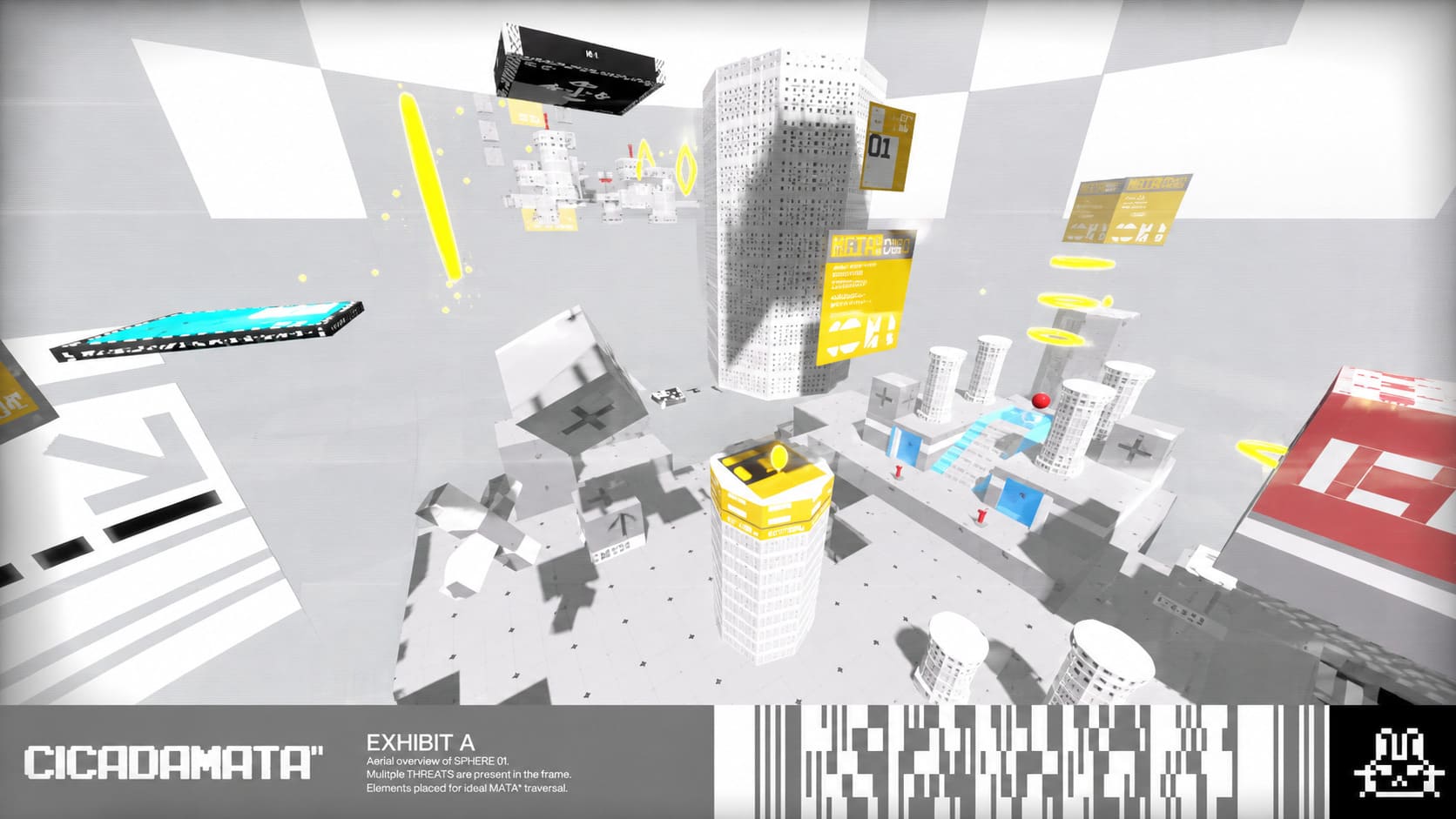
At first glance, CICADAMATA looks like another retro-inspired boomer shooter. Neon colors? Check. Low-poly environments? Check. Giant movement tricks? Definitely.
But after about fifteen minutes, you realize it’s closer to a movement sandbox than a traditional FPS.
Instead of throwing dozens of weapons and upgrades at you, the game builds its entire identity around one simple idea:
Movement is your strongest weapon.
You play as Fawn-A2, a cybernetic pilot known as a CICADA. The story barely explains anything directly. It feeds you strange terminal messages, cryptic dialogue, and fragmented lore while pushing you deeper into a digital world called CASCADE.
The objective sounds simple enough.
- Find four energy cores.
- Eliminate enemies guarding the level.
- Escape through the exit portal.
The challenge comes from how you reach those goals.
Every arena becomes a playground where speed, momentum, and positioning matter more than ammo management or loot collection.
The Gameplay Loop Is Ridiculously Addictive
This is where CICADAMATA completely hooked me.
The first few levels feel manageable. Then the game quietly starts asking you to combine mechanics together without ever slowing down.
You aren’t just jumping.
You’re chaining together triple jumps, air dashes, wall movement, downward slams, and perfectly timed landings while enemies fill the screen with projectiles.
The result feels incredibly satisfying once your muscle memory clicks.
Core Movement Abilities
| Mechanic | Why It Matters |
|---|---|
| Triple Jump | Keeps momentum alive while crossing massive vertical spaces. |
| Directional Dash | Essential for avoiding attacks and maintaining speed. |
| Ground Slam | Converts downward velocity into devastating area damage. |
| Heat Management | Rewards aggressive movement but punishes careless ability spam. |
Everything flows together naturally.
There are moments where you’ll clear an arena without touching the ground for several seconds, and it feels incredible.
That’s the feeling CICADAMATA keeps chasing.
Joyeuse Might Be One of the Coolest Indie FPS Weapons This Year
Most shooters want you cycling through pistols, rifles, rocket launchers, and grenades.
CICADAMATA says: here’s one weapon. Learn it. Master it.
Joyeuse changes behavior depending on how you use it.
| Mode | Purpose |
|---|---|
| Shotgun Blast | Massive close-range damage while staying mobile. |
| Precision Scope | Long-range sniper-style shots without switching weapons. |
| Heat Generation | Every powerful action increases weapon temperature. |
I love this design because it removes unnecessary weapon swapping.
Instead of thinking about inventory, you’re thinking about positioning.
Should you dash closer for a shotgun blast?
Or stay airborne and line up a sniper shot before landing?
The weapon constantly complements movement rather than interrupting it.
Heat Is More Important Than Health
One mechanic surprised me more than anything else.
The Heat system.
Every movement ability builds thermal energy.
Dash too often?
Heat rises.
Spam powerful attacks?
Heat rises even faster.
Once the weapon overheats, you’re suddenly exposed and much weaker.
That tiny mechanic changes the rhythm of combat.
Instead of endlessly flying across arenas, you have to create brief cooldown windows without losing momentum.
It creates tension without feeling unfair.
For experienced FPS players, it’s an excellent skill ceiling.
CASCADE Is Strange, Creepy, and Weirdly Beautiful
I’m a huge fan of games that refuse to explain everything.
CICADAMATA absolutely belongs in that category.
The world feels like someone mixed together:
- abandoned operating systems,
- experimental internet art,
- PlayStation-era sci-fi,
- surreal horror,
- and cyberpunk dream logic.
Nothing feels grounded.
Everything feels intentional.
You’ll read terminal logs that barely make sense, hear unsettling messages, and slowly piece together what CASCADE might actually be.
The story isn’t the main attraction, but it’s interesting enough that I kept stopping between runs just to read hidden text.
That’s rare for a speed-focused shooter.
The Vectorheart Art Style Won’t Be for Everyone
Visually, this game is unforgettable.
The developer calls its style Vectorheart, and that’s honestly a perfect description.
What You’ll See
- Glowing wireframe landscapes.
- Bright neon skies.
- Massive geometric structures.
- CRT-inspired visual effects.
- Colorful explosions.
- Digital interface overlays.
Everything looks alive.
The aesthetic immediately stands out among indie shooters.
What I Loved
- Every arena has its own visual personality.
- Kills explode with satisfying arcade-style feedback.
- Movement leaves bright trails that reinforce speed.
- The world feels energetic instead of realistic.
What I Didn’t Love
After about two hours, I understood why some players mentioned eye strain.
The game is extremely bright.
Lots of flashing effects happen during combat.
Thankfully, launch settings include several comfort options.
Accessibility Options Actually Help
One thing I appreciate is that flowergarden didn’t ignore feedback from the demo.
Several visual settings make long sessions much easier.
| Option | Impact |
|---|---|
| Screen Shake | Reduce intense camera movement. |
| Motion Blur | Optional reduction for clearer movement. |
| Flash Intensity | Tones down bright combat effects. |
| Camera Comfort Filters | Helps reduce visual fatigue. |
I recommend lowering flash intensity immediately if you’re sensitive to bright visuals.
It noticeably improves readability.
Speedrunners Are Going to Love This Game
I honestly think this community will keep CICADAMATA alive.
Every level is built with alternate routes.
Miss a jump?
There’s usually another path.
Land perfectly?
You skip entire sections.
Global Steam leaderboards make every second count.
The game encourages experimentation rather than forcing one optimal route.
That’s exactly what great speedrunning games should do.
Why Replay Value Is So High
- Hidden shortcuts.
- Multiple movement routes.
- Faster core collection strategies.
- Score optimization.
- Global rankings.
Even after finishing levels, I kept replaying them just to improve my time.
But the Score System Feels Slightly Confusing
This is probably my biggest criticism.
The game has two different motivations competing against each other.
On one hand, you want to finish levels as quickly as possible.
On the other, you’re encouraged to maximize score through enemy damage, combos, and collectibles.
Sometimes these goals don’t align.
Where It Gets Weird
| Goal | Best Strategy |
|---|---|
| Fastest Time | Ignore unnecessary fights and rush objectives. |
| Highest Score | Fight more enemies and maximize combo opportunities. |
As someone who naturally plays for speed, this felt contradictory.
I’d love future updates that separate leaderboard categories more clearly.
Enemy Design Keeps You Moving
Enemies aren’t incredibly complicated individually.
The danger comes from combinations.
Some chase aggressively.
Others attack from elevated platforms.
Others punish staying airborne too long.
That forces constant repositioning.
Standing still is basically never an option.
Combat becomes a rhythm game built around movement timing.
I enjoyed that much more than simple bullet sponge encounters.
Performance and PC Optimization
For an indie release, optimization is surprisingly solid.
The game is tiny.
Installation barely takes any storage space.
Official PC Requirements
| Component | Requirement |
|---|---|
| CPU | Intel Core i5 or equivalent. |
| GPU | NVIDIA GTX 1060. |
| Memory | 4 GB RAM. |
| Storage | Approximately 2 GB. |
That’s incredibly accessible for a 2026 release.
My Experience
The game launches quickly.
Loading times are short.
Frame pacing feels smooth during normal gameplay.
Early Launch Issues
I did notice community reports mentioning:
- Startup crashes.
- Occasional loading crashes.
- Integrated GPU instability.
Those seem limited compared to the overall player base, but they’re worth watching if you’re using older hardware.
Who Will Probably Enjoy CICADAMATA?
This game feels built for a very specific audience.
Buy It If You Love
- ULTRAKILL.
- Neon White.
- Marathon.
- Ghostrunner.
- Jumping Flash!
- Old-school arena shooters with modern movement.
Maybe Skip It If You Prefer
- Realistic military shooters.
- Story-heavy FPS campaigns.
- Slower tactical gameplay.
- Minimal visual effects.
CICADAMATA demands constant movement.
If that sounds exhausting instead of exciting, it probably isn’t your game.
Things I Loved Most
- Movement feels incredible. Every successful chain of jumps and dashes feels earned.
- Joyeuse is genuinely unique. One weapon with multiple roles keeps combat clean and skill-focused.
- The soundtrack and audio feedback are fantastic. Every dash, slam, and elimination feels impactful.
- The world is mysterious. I wanted to uncover more lore instead of skipping dialogue.
- Replayability is excellent. Leaderboards make every level worth replaying.
Where the Game Still Needs Improvement
No launch is perfect.
Here are the biggest weaknesses I noticed.
- Visual intensity can become overwhelming. Long sessions may be difficult for players sensitive to flashing effects.
- Score and speed goals don’t always match. The leaderboard philosophy feels split between efficiency and point farming.
- The story is intentionally cryptic. Some players will love that. Others will find it confusing.
- A few launch-day technical bugs remain. Nothing game-breaking for me, but patches will likely improve stability.
Vacation Cafe Simulator Best Graphics Settings for Low-End PCs: FPS Boost Guide
Is CICADAMATA Worth Buying on Launch Day?
My Final Verdict
I’ve played a lot of indie shooters over the past few years, and many of them blend together after a while.
CICADAMATA doesn’t.
It has personality.
It has confidence.
Most importantly, it has mechanics that reward improvement instead of grinding upgrades.
The first hour is fun.
The fifth hour is better because you’re finally learning how the movement system really works.
That progression comes entirely from player skill, and that’s something I always appreciate.
Verdict Table
| Category | My Rating |
|---|---|
| Movement Mechanics | 9.5/10 |
| Combat Feel | 9/10 |
| Visual Style | 9/10 |
| Replay Value | 9.5/10 |
| Accessibility | 7.5/10 |
| Launch Stability | 8/10 |
Overall Score: 9/10
Should You Buy It?
Yes — if you’re the kind of player who enjoys mastering mechanics instead of unlocking gear.
CICADAMATA feels like one of the most distinctive indie FPS releases of 2026. It combines old-school arcade energy with modern movement design, asks players to improve through practice rather than progression systems, and delivers a gameplay loop that’s incredibly hard to stop replaying.
If you’re comfortable with fast visuals and high-speed action, it’s an easy launch-day recommendation. If motion sickness or flashing effects are a concern, waiting for a few comfort-focused updates might be the smarter move.