Guildrun Demo Guide: How to Unlock New Heroes and Master the Draft Phase (Tips & Tricks)
When I first launched Guildrun Demo, I expected another decent indie auto-battler that would keep me busy for an evening. Twenty minutes later, I realized I had completely lost track of time. One run became three. Three turned into six. Suddenly I was sitting there at two in the morning wondering why my latest build had exploded into an unstoppable machine while the previous one had collapsed before the fourth floor.
That is exactly where Guildrun shines.
Instead of rewarding players for memorizing a single broken strategy, it constantly pushes you to adapt. Every draft throws unexpected heroes, relics, and specialization choices at you, forcing you to rethink your plan on the fly. Coming from someone who has spent years sinking hundreds of hours into games like Slay the Spire, Teamfight Tactics, Backpack Battles, and The Bazaar previews, I can confidently say Guildrun already has that dangerous “just one more run” feeling.
This guide isn’t about repeating tooltips you’ll read inside the game. It’s about the lessons I wish I had understood before wasting several runs experimenting with bad drafts and greedy rerolls.
Why Guildrun Feels Different
Most auto-battlers revolve around competing against other players. Guildrun takes another route entirely.
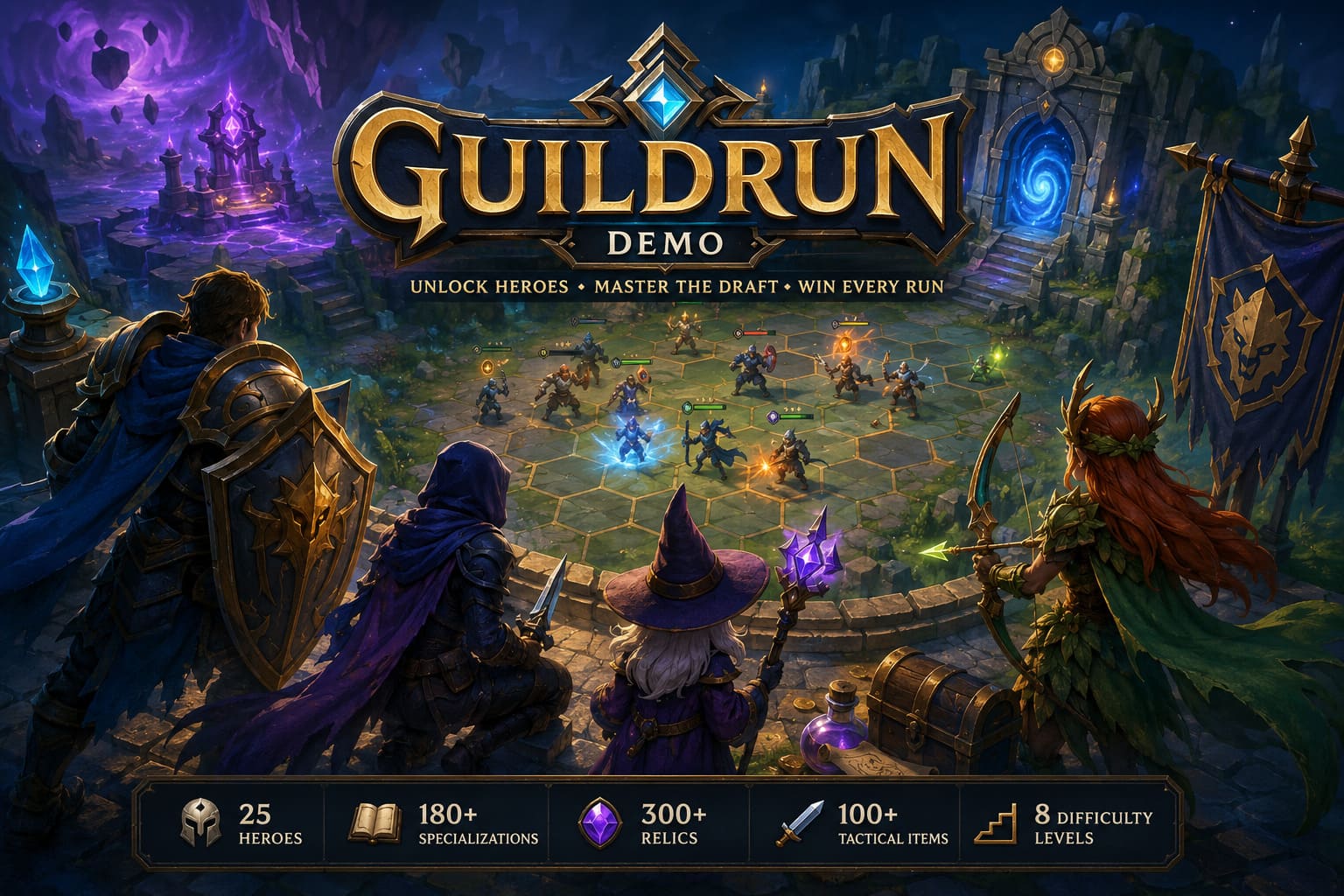
Everything is built around single-player PvE progression, meaning there is no pressure from matchmaking timers or opponents stealing units from a shared pool. You play at your own speed, pause whenever you want, and focus entirely on solving increasingly difficult tactical puzzles.
The demo already offers an impressive amount of content.
| Feature | Available in Demo |
|---|---|
| Heroes | 25 |
| Specializations | 180 |
| Relics | 300+ |
| Tactical Items | 100+ |
| Difficulty Levels | 8 |
Considering this is only the public demo, there’s already enough variety to keep strategy fans experimenting for dozens of hours.
Unlocking New Heroes Efficiently
One of the biggest mistakes beginners make is assuming new heroes appear randomly.
They don’t.
Almost every unlock is connected to your overall progression, meaning every run contributes something—even failed ones.
Farm Rift Essence Consistently
Your first priority should always be collecting Rift Essence.
Think of it as your permanent progression currency.
Unlike gold earned during a run, Rift Essence never disappears after defeat. Even if a boss completely destroys your team, the resources you’ve collected remain attached to your account.
That means every run has value.
Personally, I stopped worrying about “winning every attempt” fairly early. Instead, I focused on collecting as much Rift Essence as possible while learning enemy patterns. Ironically, that relaxed approach actually helped me improve much faster.
Push Higher Difficulty Levels
Guildrun isn’t shy about rewarding players willing to challenge themselves.
Each completed difficulty unlocks the next one, but the real incentive comes from the additional hero rewards tied to milestone progression.
Higher tiers introduce tougher modifiers, stronger enemy combinations, and encounters that punish weak team building.
They’re intimidating at first.
They’re also where the most interesting heroes begin appearing.
If you’re comfortably clearing one difficulty, don’t spend hours farming it. Move up.
The extra rewards are worth the temporary struggle.
Achievement Unlocks Matter More Than You Think
Some heroes refuse to join your roster until you’ve demonstrated mastery over specific mechanics.
These objectives encourage experimenting with different builds instead of repeating the same strategy endlessly.
- Deal enormous elemental damage during a single battle.
- Maintain healthy frontline units throughout an entire floor.
- Stack huge numbers of buffs or status effects.
I actually enjoy this system because it rewards creative gameplay rather than simple grinding.
Endless Mode Is Worth Reaching
After clearing a standard run, Endless Mode becomes available.
That’s where Guildrun starts showing its true personality.
Enemy scaling becomes relentless, mistakes become expensive, and every drafting decision suddenly carries much more weight.
It’s also one of the better places to chase rare progression rewards and prove how ridiculous your builds can become.
Winning Starts During the Draft
If combat is the payoff, the draft is where victories are actually created.
One lesson became obvious after my first several failed attempts.
Never force a composition.
I know it’s tempting.
You discover an amazing Frost build on YouTube, then spend every future run trying to recreate it.
Guildrun punishes that mindset.
Instead, pay attention to what the game naturally offers.
Sometimes poison pieces arrive early.
Sometimes physical assassins dominate the draft.
Other runs practically throw healing synergies at you.
The strongest players don’t chase one composition.
They recognize opportunities.
Learn to Spend Gold Wisely
Gold disappears faster than most newcomers expect.
Early on I rerolled constantly because I wanted “perfect” heroes.
That was a mistake.
Later floors introduce significantly stronger relics and equipment, and you’ll desperately wish you had saved those resources.
A simple approach works surprisingly well:
- Avoid excessive rerolls during the opening floors.
- Prioritize reliable upgrades over gambling.
- Keep enough gold for powerful mid-game shop rotations.
Patience often creates stronger late-game teams than lucky rerolls ever will.
Don’t Judge Heroes by Their Starting Role
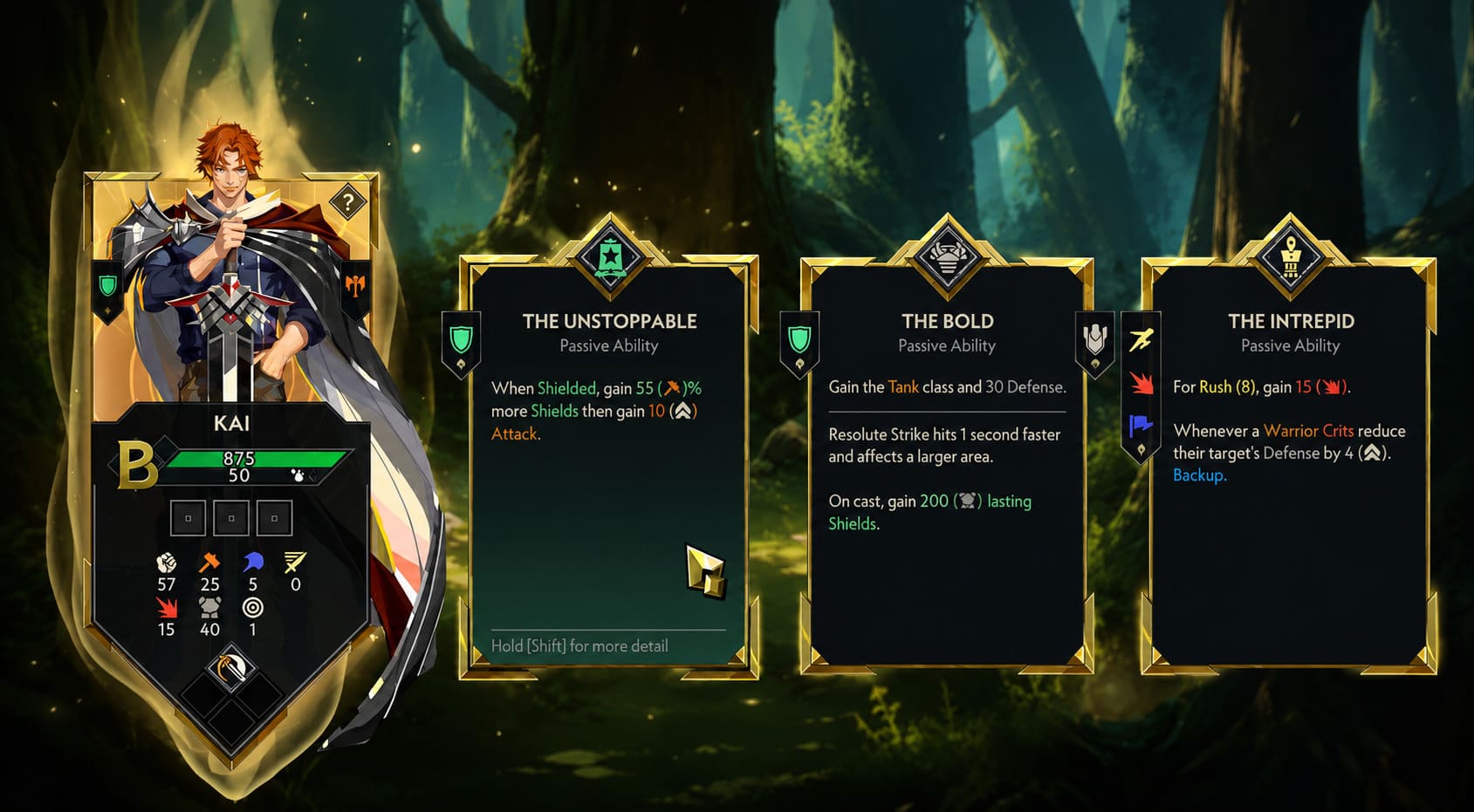
One of Guildrun’s smartest mechanics is its specialization system.
Characters rarely stay in their original role.
A defensive support can eventually become an aggressive frontline bruiser.
A healer might transform into a devastating magical damage dealer.
A tank can evolve into something resembling an unstoppable raid boss.
Because of this, I recommend looking beyond the hero portrait.
Instead, inspect where their specialization tree eventually leads.
Sometimes the weakest-looking early pick becomes the strongest member of your final team.
Drafting Tips That Improved My Runs
After spending quite a few hours with the demo, several habits noticeably increased my win rate.
Build Around Relics
Many players focus on heroes first.
I eventually started doing the opposite.
When an incredible relic drops, I immediately begin drafting heroes capable of maximizing its bonuses.
A legendary relic boosting Frost damage?
Suddenly every future pick should support that theme.
Powerful relics often define entire runs.
Balance Your Formation
Damage alone won’t save you.
One fragile backline can disappear in seconds if your frontline collapses.
I generally try to maintain something close to this structure.
| Position | Priority |
|---|---|
| Frontline | Tanks, Bruisers |
| Middle | Utility, Crowd Control |
| Backline | Damage Dealers |
| Flexible Slot | Synergy Support |
It’s not mandatory, but it creates a reliable foundation for most builds.
Positioning Is Part of Your Damage
Guildrun’s hex battlefield isn’t just visual decoration.
Enemy movement matters.
Flanking matters.
Area attacks matter.
Before each battle, spend a few extra seconds adjusting your formation.
I’ve won encounters simply because I shifted one tank by a single hex.
Adapt Before Every Floor
The game usually gives clues about upcoming enemies.
Pay attention.
If stealth attackers are approaching, invest in protection.
If ranged monsters dominate the next encounter, reinforce your frontline.
Treat every draft as preparation for the next challenge rather than your final build.
That small mindset shift completely changed how I approached difficult runs.
Mistakes New Players Should Avoid
After plenty of failed experiments, these were the habits that hurt my progress the most.
- Forcing one composition every run.
- Spending all gold early chasing perfect drafts.
- Ignoring specialization paths until it was too late.
- Filling the board with damage dealers while neglecting tanks.
- Keeping outdated heroes simply because they’d survived several floors.
Sometimes replacing a familiar unit with a better synergy dramatically increases your overall power.
Don’t become emotionally attached to individual heroes.
Become attached to winning.
Guildrun Demo Beginner’s Guide: Best Strategies, Synergies, and Rift Mechanics
Is Guildrun Already Worth Playing?
Absolutely.
What’s impressive isn’t simply the amount of content.
It’s how naturally the systems work together.
The drafting constantly creates meaningful choices.
The specialization system encourages experimentation.
Permanent progression provides satisfying long-term goals.
Even failed runs rarely feel wasted because you’re always unlocking something, learning new interactions, or discovering another absurd combination waiting to be explored.
As someone who plays strategy games far more than is probably healthy, Guildrun has already earned a permanent place on my wishlist for the full release.
The demo feels polished, addictive, and surprisingly generous with content.
More importantly, it rewards creativity instead of forcing players into one solved meta.
That’s exactly the kind of strategy game I keep coming back to.
Guildrun Hero List: All 25 Demo Heroes, Specializations, and Best Team Comps
Final Thoughts
Guildrun Demo succeeds because it understands what makes roguelikes memorable.
Every decision matters.
Every relic changes your plans.
Every draft tells a different story.
Instead of memorizing one “correct” build, learn the game’s systems. Unlock heroes steadily, spend your resources intelligently, and stay flexible whenever the draft refuses to cooperate.
The players climbing the Endless leaderboards aren’t necessarily the luckiest ones.
They’re the ones who know how to adapt.
If Leyline can maintain this level of design throughout the full release, Guildrun could easily become one of the standout indie strategy games of the year.
Frequently Asked Questions
Does progress from the demo transfer to the full game?
Current developer information suggests competitive rankings will reset before launch. However, certain profile rewards, cosmetic unlocks, and milestone achievements earned during the demo period may carry over as rewards for early players.
How do I unlock Endless Mode?
Complete a full standard run by defeating the final Rift boss. Once you’ve done that, Endless Mode becomes permanently available from the main menu.
Is Guildrun an online-only game?
No. Guildrun focuses on single-player PvE gameplay, allowing you to enjoy runs without mandatory online matchmaking. You can also pause and continue your progress later, making it an excellent strategy game for shorter gaming sessions.
What’s the biggest drafting mistake beginners make?
Trying to force the same composition every run. The strongest teams usually evolve naturally based on the relics, heroes, and synergies offered during the draft instead of following a fixed plan.