Echoes of Aincrad 2026: XeSS vs DLSS Image Quality and Performance Comparison
After spending countless hours exploring massive RPG worlds, tweaking graphics settings, and chasing the perfect balance between beautiful visuals and stable performance, I can confidently say that modern upscaling technology has become one of the most important parts of PC gaming. A game can have incredible art direction, amazing character models, and breathtaking environments, but if the performance falls apart during intense battles, the experience quickly loses its magic.
Echoes of Aincrad, Bandai Namco’s ambitious 2026 JRPG set in the legendary Sword Art Online universe, is exactly that type of game. It delivers a gorgeous anime-inspired world filled with massive environments, detailed character designs, flashy Sword Skills, and chaotic boss encounters. The problem is that all this visual ambition comes with a serious hardware demand.
Many PC players have already noticed performance struggles in dense areas of Aincrad, especially during crowded hub sections and large-scale combat sequences filled with particle effects. Native rendering can put even decent gaming rigs under pressure, making technologies like NVIDIA DLSS and Intel XeSS almost mandatory for anyone who wants smooth gameplay without destroying image quality.
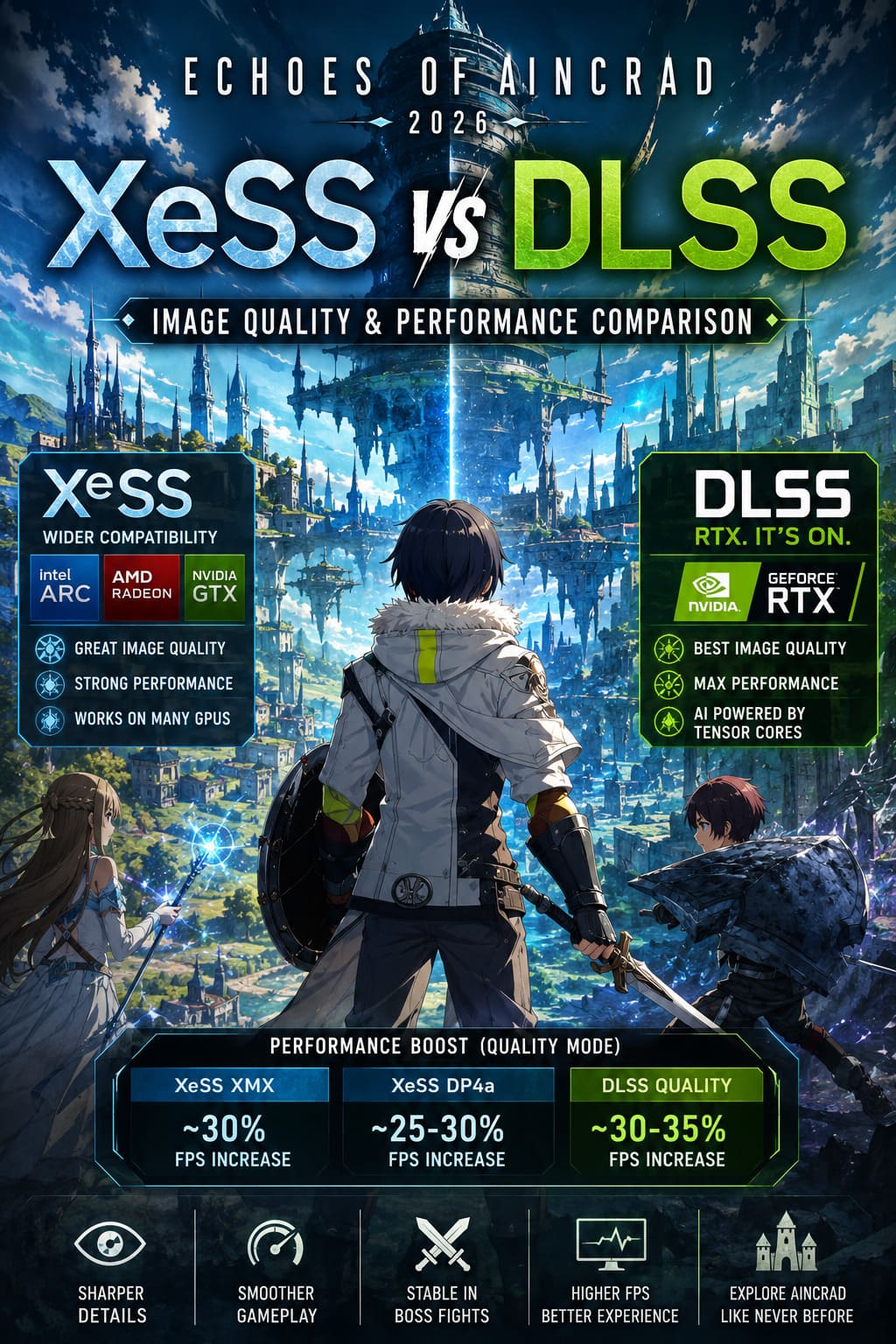
After comparing both technologies across different scenarios, the difference becomes much clearer. DLSS remains the premium solution for RTX owners, while XeSS offers a surprisingly competitive alternative that works across a much wider range of hardware.
How to Fix Echoes of Aincrad Crashing on Intel Arc B580 (2026 Guide)
How DLSS and XeSS Work in Echoes of Aincrad
Both DLSS and XeSS are temporal reconstruction technologies designed to create a higher-resolution image from a lower internal rendering resolution. Instead of forcing your GPU to render every pixel at native resolution, these systems analyze previous frames, motion data, and visual information to rebuild a sharper final image.
The idea sounds simple, but the execution is where these technologies separate themselves. Echoes of Aincrad is a perfect example because the game combines detailed environments, fast combat, and heavy visual effects that quickly reveal the strengths and weaknesses of different upscaling solutions.
| Technology | Hardware Support | Main Advantage | Performance Impact |
|---|---|---|---|
| NVIDIA DLSS | RTX Graphics Cards Only | Superior AI reconstruction using Tensor Cores | Very Low Overhead |
| Intel XeSS XMX | Intel Arc GPUs | High-quality AI scaling using dedicated hardware | Excellent Efficiency |
| Intel XeSS DP4a | AMD, NVIDIA GTX, Older GPUs | Wider compatibility | Slightly Higher GPU Cost |
NVIDIA DLSS uses dedicated Tensor Cores found inside RTX GPUs. This specialized hardware allows DLSS to process AI reconstruction extremely efficiently, which is why it usually delivers impressive image quality while barely affecting performance.
Intel XeSS takes a different approach. On Intel Arc graphics cards, XeSS uses XMX engines, which work similarly to NVIDIA’s Tensor Cores. However, XeSS can also run through the DP4a instruction set, allowing AMD Radeon cards and older NVIDIA GPUs to use the technology.
Image Quality Comparison: DLSS Has the Edge, But XeSS Is Close
The biggest challenge for any upscaling technology is maintaining small details. Echoes of Aincrad is not a simple-looking game. Its world combines anime-style characters with highly detailed fantasy environments, floating castle architecture, vegetation, and complex lighting effects.
This makes image reconstruction incredibly important because blurry textures or unstable edges can completely ruin the atmosphere of a visually ambitious RPG.
DLSS Quality Mode: The Gold Standard
Running DLSS Quality Mode in Echoes of Aincrad produces the cleanest image overall. Fine details like grass, distant objects, armor textures, and character hair remain sharp even when moving through large areas.
One thing that immediately stands out is how well DLSS handles the game’s stylized visuals. Anime-inspired graphics can sometimes suffer from strange sharpening effects or unnatural edges, but DLSS avoids most of these problems.
The image feels closer to native resolution without forcing your graphics card to render everything at full resolution. During exploration, especially in outdoor areas, DLSS keeps distant objects stable. Tree branches, stone textures, and environmental details maintain their shape instead of turning into blurry noise.
For RTX users, this is easily the setting I would recommend.
XeSS XMX Mode: Surprisingly Close to DLSS
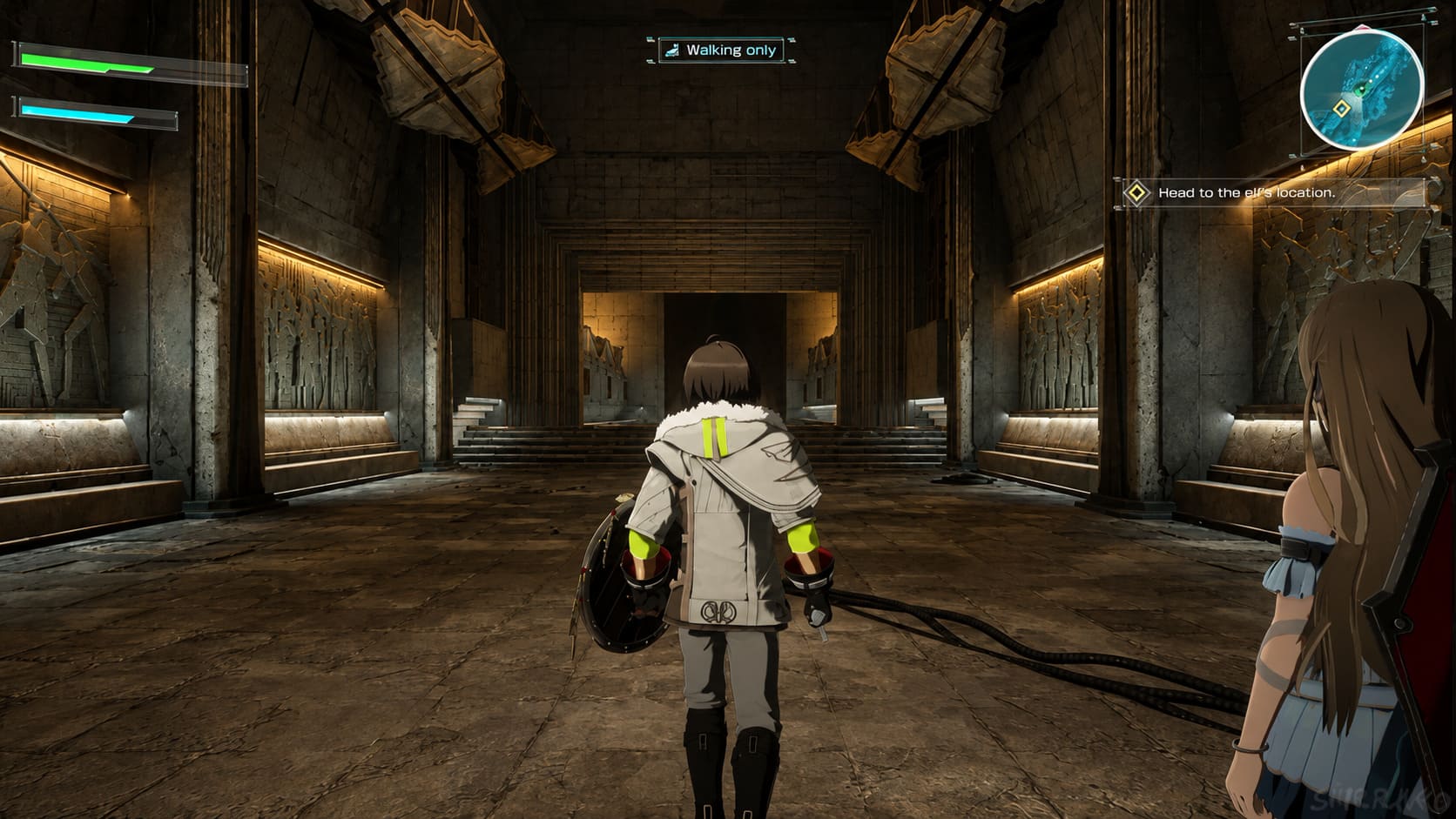
Intel Arc owners are in a very good position because XeSS using XMX hardware performs extremely well. The difference between DLSS and XeSS XMX is much smaller than many players expect.
In normal gameplay, both technologies deliver sharp images with stable reconstruction. Aincrad’s detailed environments look excellent with XeSS enabled, and most players would probably struggle to identify which technology is active without a direct comparison.
However, there is still a slight difference. DLSS usually maintains a small advantage when dealing with extremely fine geometry, especially distant objects and fast movement.
XeSS DP4a Mode: Good Compatibility With Some Trade-Offs
The biggest advantage of XeSS is that it is not locked to one graphics ecosystem. Players using AMD Radeon cards or older NVIDIA GPUs can still benefit from XeSS, but the results are slightly different.
The DP4a version creates a cleaner image than many traditional upscaling methods, but it can appear a little softer compared to DLSS or XeSS XMX. Some players may want to increase the game’s sharpening setting slightly to recover extra texture definition.
For hardware without access to DLSS, XeSS remains one of the best available options.
Combat Performance: Sword Skills Put Upscalers Under Pressure
The real test for Echoes of Aincrad is not walking around peaceful areas. The real challenge begins during boss fights.
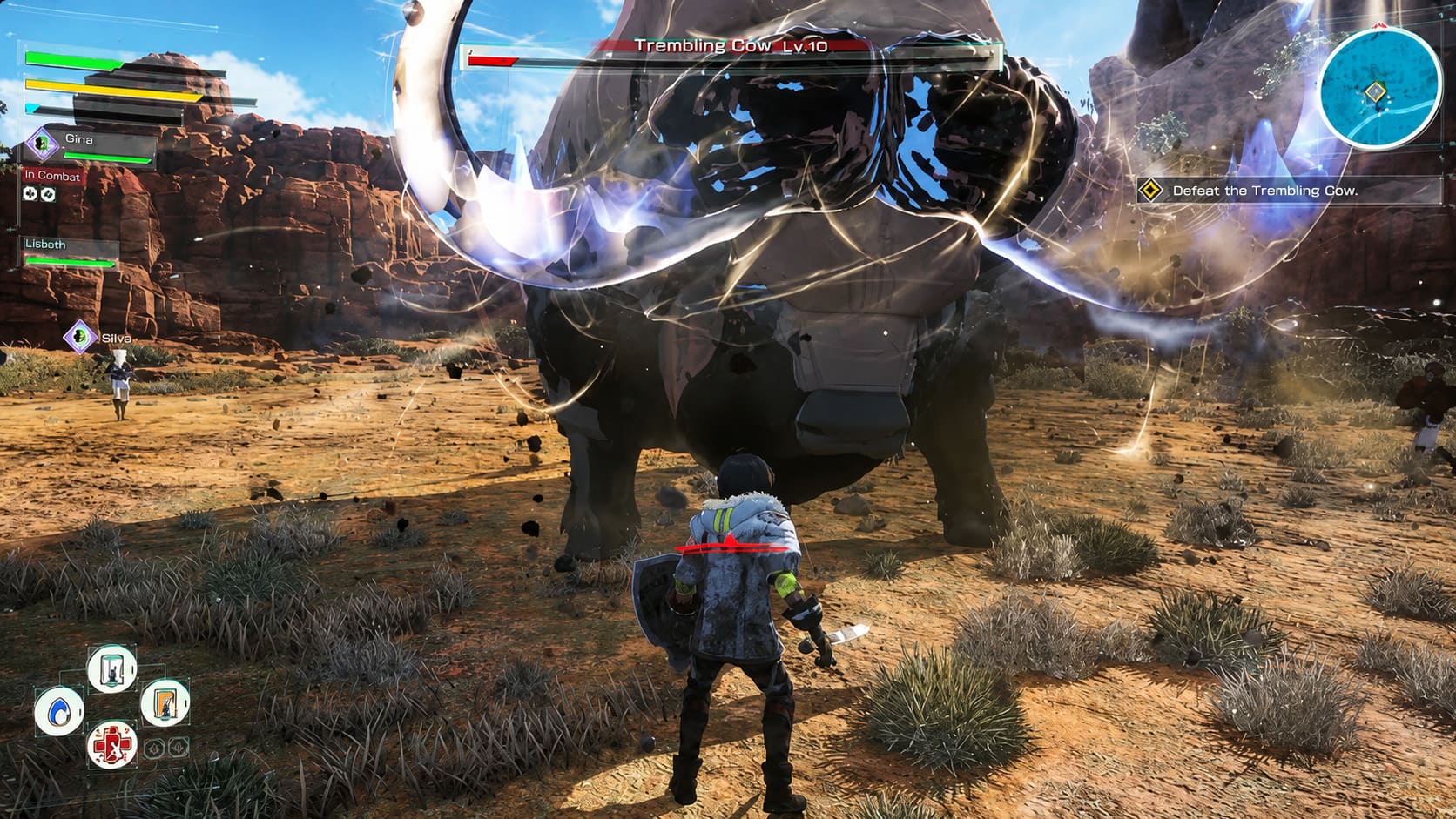
Sword Art Online combat is built around flashy attacks, glowing effects, fast movement, and huge visual explosions. These moments can expose weaknesses in reconstruction algorithms and reveal whether an upscaler can maintain image stability.
DLSS Handles Chaos Better
During intense battles, DLSS shows why NVIDIA continues to dominate this category. Weapon trails remain clean, particle effects maintain their shape, and enemy movement produces fewer visual artifacts.
Ghosting, which creates annoying trails behind moving objects, is extremely limited. This matters a lot in Echoes of Aincrad because combat depends heavily on reading enemy movements and reacting quickly.
A blurry sword effect or unstable character outline can actually affect gameplay, especially during difficult boss encounters.
XeSS Still Performs Well, But Has Minor Issues
XeSS has improved massively compared to its earlier versions. Modern versions are much better at controlling ghosting and maintaining image stability.
However, in extreme situations, especially at lower resolutions, small issues can appear. Fast-moving particle effects may create slight shimmering around characters, and some visual trails can occasionally appear during rapid attacks.
At 4K Quality Mode, these problems are barely noticeable. At 1080p Performance Mode, they become easier to spot. Most players probably will not care, but graphics enthusiasts will see the difference.
Native TAA vs Upscaling: Why DLSS and XeSS Actually Look Better
One interesting discovery from testing Echoes of Aincrad is that native rendering is not always the best-looking option.
The game’s default Temporal Anti-Aliasing (TAA) solution creates a noticeable blur effect. Many players describe it as the classic “vaseline filter” that makes detailed environments look softer than they should.
Ironically, enabling DLSS or XeSS in Quality Mode often produces a cleaner image than native rendering. Advanced reconstruction methods are better at rebuilding missing details and controlling edge problems than basic TAA.
For Echoes of Aincrad, turning on an upscaler is not just about gaining FPS. It can genuinely improve the visual presentation.
Performance Comparison: Which Upscaler Gives More FPS?
The biggest reason players use these technologies is performance. A beautiful game running at unstable 35 FPS is still a frustrating experience.
| Setting | Average Performance Improvement |
|---|---|
| DLSS Quality | 30-35% FPS Increase |
| XeSS XMX Quality | Around 30% FPS Increase |
| XeSS DP4a Quality | 25-30% FPS Increase |
DLSS Performance Advantage
DLSS remains the efficiency champion. Because RTX cards process DLSS through dedicated Tensor Cores, the performance cost is extremely small.
Players can often gain 30% or more FPS while maintaining excellent visual quality. A mid-range RTX card that struggles with native rendering can suddenly reach smooth 60 FPS gameplay.
XeSS Performance Results
XeSS performance depends heavily on your hardware. Intel Arc users get the best experience because XMX acceleration provides excellent efficiency. The results are very close to DLSS.
AMD and older NVIDIA users still receive meaningful improvements, but the GPU has to handle more work through standard shader processing. The difference is not huge, but DLSS remains slightly ahead.
Final Verdict: DLSS vs XeSS in Echoes of Aincrad
Choosing between DLSS and XeSS depends completely on your graphics card.
- RTX GPU owners should use DLSS. It delivers the best combination of sharpness, stability, and performance. The difference is not massive anymore, but DLSS still provides the smoothest experience during chaotic combat.
- Intel Arc users should confidently choose XeSS XMX. It is an excellent match for Echoes of Aincrad and gets surprisingly close to NVIDIA’s solution.
- AMD Radeon and older GPU owners should consider XeSS. It may not perfectly match DLSS, but it provides much better image reconstruction than traditional alternatives and helps preserve the beautiful anime fantasy style of Aincrad.
After testing both options, my personal recommendation is simple: enable an upscaler instead of relying on native TAA. Echoes of Aincrad looks better, runs smoother, and feels much closer to the premium JRPG experience it was designed to deliver when DLSS or XeSS is doing the heavy lifting.